Nucléosides
3569 produits trouvés pour "Nucléosides"
Nicotinic acid riboside
CAS :Nicotinic acid riboside is a nicotinic acid derivative that has been shown to increase NAD+ levels in cells. Nicotinic acid riboside has been shown to increase the activity of enzymes involved in energy metabolism and transfer reactions, as well as target enzymes such as nicotinamide phosphoribosyltransferase (NAMPT) and its substrate, nicotinamide mononucleotide (NMN). It also increases cellular NAD+ levels by inhibiting the degradative enzyme, nicotinamide phosphoribosyltransferase (NAMPT). Nicotinic acid riboside can be used to treat metabolic disorders such as diabetes mellitus type 2.Formule :C11H13NO6Degré de pureté :Min. 95%Couleur et forme :PowderMasse moléculaire :255.22 g/molN6-Benzoyl-5'-O-benzoyl-2'-deoxyadenosine
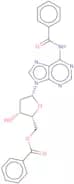
CAS :N6-Benzoyl-5'-O-benzoyl-2'-deoxyadenosine is an antiviral and anticancer compound. It has been shown to be active against a number of viruses, including human immunodeficiency virus type 1 (HIV-1), herpes simplex virus type 1, and influenza A virus. It also inhibits DNA polymerase α and β by competitive inhibition, preventing the incorporation of ribonucleotides into DNA. This compound may be used for the treatment of AIDS or as a cytostatic agent for the treatment of leukemia or lymphoma.Formule :C24H21N5O5Degré de pureté :Min. 95%Masse moléculaire :459.47 g/mol2-Iodoadenosine
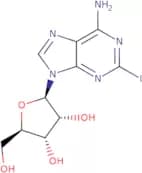
CAS :2-Iodoadenosine is a chemical compound that is produced from the oxidation of uridine. It is used in the synthesis of peptides, which are important for biological processes like signal transduction and cell growth. 2-Iodoadenosine can be made by coupling other molecules to an adenosine molecule. This process involves a cross-coupling reaction with palladium catalysts or hydroxylation reactions with sodium borohydride. The resulting product has been shown to have anticancer and anti-microbial activities against protozoan parasites and cyclic peptide structures.Formule :C10H12IN5O4Degré de pureté :Min. 97 Area-%Couleur et forme :PowderMasse moléculaire :393.14 g/molb-Nicotinamide mononucleotide
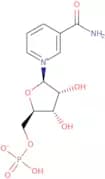
CAS :b-Nicotinamide mononucleotide, or NMN, is a precursor to nicotinamide adenine dinucleotide (NAD+), a coenzyme found in all living cells that is essential for various metabolic processes. NAD+ is involved in critical functions such as DNA repair, gene expression, and cellular stress responses.Formule :C11H15N2O8PDegré de pureté :Min. 95 Area-%Couleur et forme :PowderMasse moléculaire :334.22 g/mol3-Methyl-2-nitropyridine
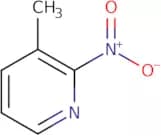
CAS :3-Methyl-2-nitropyridine is a high yield byproduct of formamide, which can be activated to form an intermediate for the synthesis of nucleosides. The kinetics and labeling of this intermediate were studied using a transfer experiment. 3-Methyl-2-nitropyridine is acidic, with a pKa value of 3.6, and is reactive towards nucleophiles. It is also catalytic, yielding methyl groups and dioxane as products when heated at temperatures between 180°C and 220°C. In addition, it undergoes nucleophilic substitutions at methoxy groups.
Formule :C6H6N2O2Degré de pureté :Min. 95%Couleur et forme :PowderMasse moléculaire :138.12 g/molN4-Benzoyl-2'-deoxycytidine
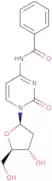
CAS :N4-Benzoyl-2'-deoxycytidine is a fluorescent nucleoside that has been used to study the molecular interactions between sugar residues and the phosphate groups of nucleic acids. It is used as a reagent for glycosidation, which involves the formation of a glycosidic linkage between an alcohol group in a saccharide or oligosaccharide and the hydroxyl group in an aromatic acid. N4-Benzoyl-2'-deoxycytidine has also been synthesized by solid-phase techniques. This synthetic method is based on phosphoramidite chemistry and uses an automated DNA synthesizer to produce oligonucleotides with specific sequences. The synthesis of this nucleoside relies on the use of fluorescent dyes such as fluorescein, rhodamine, and coumarin to monitor progress during synthesis.Formule :C16H17N3O5Degré de pureté :Min. 95%Couleur et forme :White PowderMasse moléculaire :331.33 g/molInosine 5'-triphosphate lithium salt
Inosine 5'-triphosphate lithium salt is a nucleoside that is used as an activator for DNA polymerase in the synthesis of deoxyribonucleotides. It has been shown to have anticancer properties and can be used to treat leukemia, lymphoma, and ovarian cancer. Inosine 5'-triphosphate lithium salt has also been shown to inhibit the growth of bacteria by inhibiting RNA synthesis.Formule :C10H15N4O14P3FDegré de pureté :Min. 95%Masse moléculaire :527.16 g/molN2-Isobutyryl-3',5'-O-(1,1,3,3-tetraisopropyl-1,3-disiloxanediyl)guanosine
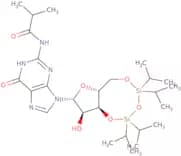
CAS :N2-Isobutyryl-3',5'-O-(1,1,3,3-tetraisopropyl-1,3-disiloxane-diyl)guanosine is a nucleoside that is activated by phosphorylation. It has been shown to be an inhibitor of cancer cell growth and proliferation in vitro. This compound was also found to inhibit the expression of two oncogenes (c-MYC and c-Ki67) and induce the expression of the tumor suppressor gene p53. This nucleoside is synthesized from 2'-deoxyadenosine monophosphate (2'-DAMP) with a modified DNA synthesis protocol.Formule :C26H45N5O7Si2Degré de pureté :Min. 95 Area-%Couleur et forme :White Off-White PowderMasse moléculaire :595.84 g/mol3'-Deoxy-3'-iodothymidine
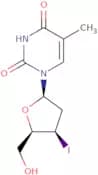
CAS :3'-Deoxy-3'-iodothymidine is a nucleoside that is found in DNA. It has a constant of -1.5 and can be protonated to form the anion. The molecule has a reactive radical anion, which is stabilized by electron delocalization with the aromatic rings. 3'-Deoxy-3'-iodothymidine has been studied for use as a medicine for cancer treatment, but it also has applications in biology and chemistry. This compound can be used in conductometry and electron spectroscopy, as well as other chemical experiments that require ionic compounds or radiation.
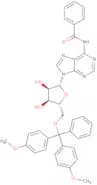
Formule :C10H13IN2O4Degré de pureté :Min. 95%Couleur et forme :PowderMasse moléculaire :352.13 g/molN6-Benzoyl-5'-O-DMT-adenosine
CAS :N6-Benzoyl-5'-O-DMT-adenosine is a synthetic nucleoside with antiviral activity. It is an activator of viral DNA polymerase and inhibits viral replication by inhibiting DNA synthesis in the host cell. N6-Benzoyl-5'-O-DMT-adenosine has shown anticancer activity in tumor cells, which may be due to its ability to inhibit ribonucleotide reductase and diphosphate kinase.
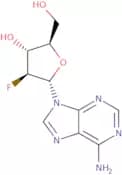
Formule :C38H35N5O7Degré de pureté :Min. 95%Couleur et forme :White PowderMasse moléculaire :673.73 g/mol9-(2'-Deoxy- 2'- fluoro- a- D- arabinofuranosyl) -9H- purin- 6- amine
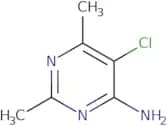
CAS :9-(2'-Deoxy- 2'- fluoro- a- D- arabinofuranosyl) -9H- purin- 6- amine is an antiviral and anticancer agent. It can be used as a monophosphate or as a phosphoramidite for the synthesis of DNA, RNA, and modified nucleosides. The chemical name is 9-(2'-deoxy-2'-fluoro-a-D-arabinofuranosyl)-9H-purin-6-amine. It has the CAS number 20187-82-0. This drug was synthesized in 1976 by Koehler and colleagues at Bayer. The molecular weight is 268.46 g/mol, with a melting point of 190°C, boiling point of 320°C and density of 1.408 g/mL at 20°C. It is soluble in water, methanol, ethanol, chloroform and acetic acidFormule :C10H12FN5O3Degré de pureté :Min. 95%Couleur et forme :SolidMasse moléculaire :269.23 g/mol4-Amino-5-chloro-2,6-dimethylpyrimidine
CAS :4-Amino-5-chloro-2,6-dimethylpyrimidine is a supramolecular complex that is characterized by the coordination geometry of its metal ion and the donor atoms. It has been proposed as a potential drug for the treatment of bacterial infections, such as tuberculosis. The 4-Amino-5-chloro-2,6,dimethylpyrimidine is structurally similar to nucleobases and may be able to form hydrogen bonds with water molecules. This molecule also has a high melting point and is not soluble in water. It can be protonated at different pH values and forms complexes with hydroxyl groups found in nucleic acids.Formule :C6H8ClN3Degré de pureté :Min. 95%Couleur et forme :PowderMasse moléculaire :157.6 g/mol2'-Deoxy-6-thioguanosine-5'-monophosphate
CAS :Azathioprine is a drug that suppresses the immune system and is used to treat autoimmune disorders such as rheumatoid arthritis, lupus erythematosus, and inflammatory bowel disease. It is an immunosuppressant that prevents the formation of antibodies by blocking the enzyme thiopurine S-methyltransferase. Azathioprine is metabolized in the liver to 6-mercaptopurine, which has been shown to cause leukopenia. The genetic polymorphism of this enzyme can lead to differences in the metabolism and toxicity of azathioprine therapy.Formule :C10H14N5O6PSDegré de pureté :Min. 95%Masse moléculaire :363.29 g/mol3-Acetylpyridine adenine dinucleotide
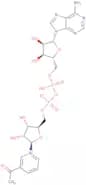
CAS :A non-physiological analog of nicotinamide adenine dinucleotide (NAD+) in biochemical research, particularly as a tool to study the mechanisms of NAD+-dependent enzymes.Formule :C22H28N6O14P2Degré de pureté :Min. 92 Area-%Couleur et forme :White Off-White PowderMasse moléculaire :662.44 g/mol[2'-18O]Guanosine
[2'-18O]Guanosine is a novel antiviral that has shown antiviral activity against herpes simplex virus type 1 and cytomegalovirus. It also has anticancer effects, as it inhibits the growth of lymphoma cells by inhibiting DNA synthesis. [2'-18O]Guanosine is a modified nucleotide with an 18-oxygen atom in the 2' position, which prevents its use as a substrate for phosphodiesterases, thereby increasing its stability in vivo. [2'-18O]Guanosine is synthesized from the corresponding ribonucleotide, guanosine monophosphate (GMP), and can be used as an activator for DNA synthesis and an inhibitor of RNA synthesis.Formule :C10H13N518OO4Degré de pureté :Min. 95%Masse moléculaire :285.24 g/mol2,4-Dithiothymidine
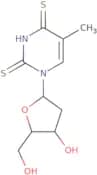
CAS :2,4-Dithiothymidine (DT) is a chemotherapeutic that has been shown to be clinically effective in the treatment of hematopoietic malignancies. It is an oligothymidylate analogue that contains a pyrimidine heterocycle and an ethylthio group. DT is not a nucleoside analog, but it inhibits DNA synthesis by binding to the enzyme thymidylate synthase and preventing the formation of thymine from uracil. DT also binds to single-stranded DNA with high affinity and alters its conformation, which may inhibit transcription and replication. The photophysical properties of this molecule are studied theoretically using quantum mechanics and population analysis theory. The reagent DT can be used to focus attention on other molecules or conformation states of proteins that might have improved biological activity.
Formule :C10H14N2O3S2Degré de pureté :Min. 95%Masse moléculaire :274.36 g/mol3'-b-Azido-2',3'-dideoxy-5'-O-DMT-uridine
3'-b-Azido-2',3'-dideoxy-5'-O-DMT-uridine is a modified nucleoside that is synthesized by the phosphoramidite method. It is a novel antiviral drug with anticancer properties. This active compound has been shown to be an activator of ribonucleotide reductases, which are enzymes that catalyze the conversion of ribonucleotides to deoxyribonucleotides. 3'-b-Azido-2',3'-dideoxy-5'-O-DMT-uridine is not cytotoxic at concentrations up to 40 mM, and it has been shown to inhibit replication of human immunodeficiency virus type 1 (HIV) in tissue culture.Degré de pureté :Min. 95%N2-Isobutyryl-2'-O-methylguanosine
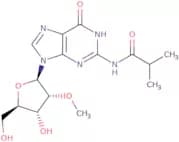
CAS :N2-Isobutyryl-2'-O-methylguanosine (IBOG) is a modified nucleoside that can be used as an activator for DNA synthesis. IBOG is a high purity, high quality chemical with CAS No. 63264-29-9 and has antiviral and anticancer properties.Formule :C15H21N5O6Degré de pureté :Min. 95%Couleur et forme :White To Yellow SolidMasse moléculaire :367.36 g/mol5'-O-Acetyl-2',3'-dideoxy-2',3'-didehydro-5-fluorouridine
CAS :5'-O-Acetyl-2',3'-dideoxy-2',3'-didehydro-5-fluorouridine is a nucleoside analog. It is synthesized by substituting the hydroxyl group of uridine with a fluorine atom and the 2' position of ribose with a 5'-O-acetyl group. This modification prevents the incorporation of this nucleoside into DNA or RNA, making it an effective antiviral and anticancer agent. 5'-O-Acetyl-2',3'-dideoxy-2',3'-didehydro-5-fluorouridine has been shown to be highly active against tumor cells but not normal cells in vitro.Formule :C11H11N2O5Degré de pureté :Min. 95%Masse moléculaire :251.22 g/molN6-Carbamoylthreonyladenosine sodium salt
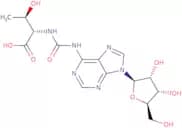
CAS :N6-Carbamoylthreonyladenosine sodium salt is a fatty acid that is found in the bacterial cell wall. It has been shown to be an essential component of the cell wall for Gram-positive and Gram-negative bacteria. N6-Carbamoylthreonyladenosine sodium salt has been used to study the mechanism of protein synthesis in bacteria, especially how enzymes are involved in this process. Chemical biology studies have shown that this molecule can bind to DNA and inhibit bacterial growth. The crystal structure of N6-Carbamoylthreonyladenosine sodium salt has also been determined using x-ray diffraction data. This molecule inhibits the binding of proteins to DNA, which prevents transcription and replication. The reaction mechanism involves hydrogen bonding between the oxygen atoms on N6-Carbamoylthreonyladenosine sodium salt and divalent metal ions such as magnesium or zinc, which are required for protein synthesis.Formule :C15H19N6O8·NaDegré de pureté :Min. 98 Area-%Couleur et forme :White PowderMasse moléculaire :434.34 g/mol


![[2'-18O]Guanosine](/_next/image/?url=https%3A%2Fstatic.cymitquimica.com%2Fproducts%2F3D%2Fthumb-webp%2FNG106386.webp&w=3840&q=75)