Nucléosides
3569 produits trouvés pour "Nucléosides"
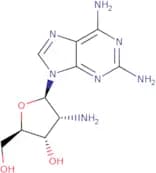
2,6-Diamino-9-(2'-amino-2'-deoxy-b-D-ribofuranosyl)purine
CAS :2,6-Diamino-9-(2'-amino-2'-deoxy-b-D-ribofuranosyl)purine (dAraMP) is a novel nucleoside analogue that was synthesized and characterized. It has been shown to inhibit the growth of cancer cells in vitro. dAraMP is a monophosphate analogue of 2,6-diamino-9-(2'-deoxy-b-D-ribofuranosyl)purine (dAraP). The modified phosphoramidite approach used in its synthesis yielded high purity and yields. This product is also available as a diphosphate analogue of 2,6 diamino 9-(2'-amino 2'-deoxy b D ribofuranosyl) purine (dAMP). The diphosphate form of this product has been shown to be an activator for DNA polymerase.Formule :C10H15N7O3Degré de pureté :Min. 95%Couleur et forme :White To Off-White SolidMasse moléculaire :281.28 g/mol2-Hydroxyaminoadenosine
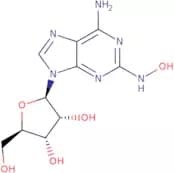
CAS :2-Hydroxyaminoadenosine (2-HAA) is a novel nucleoside that is used as an activator of ribonucleotide reductase. It has been shown to be effective against cancer cells in vitro and in vivo. 2-HAA also inhibits the synthesis of viral DNA, which may be due to its ability to inhibit the ribonuclease activity of the virus. 2-HAA has also been shown to have antiviral activity against herpes simplex virus type 1 (HSV-1).
Formule :C10H14N6O5Degré de pureté :Min. 95%Masse moléculaire :298.26 g/mol7-Benzyl-4-chloro-5,6,7,8-tetrahydropyrido[3,4-d]pyrimidine
CAS :7-Benzyl-4-chloro-5,6,7,8-tetrahydropyrido[3,4-d]pyrimidine is a nucleoside analog that is used as an antiviral and anticancer drug. It has also been shown to have antimalarial activity. 7-Benzyl-4-chloro-5,6,7,8-tetrahydropyrido[3,4-d]pyrimidine inhibits the replication of HIV by blocking the viral reverse transcriptase enzyme. This drug is a phosphoramidite monophosphate with a purity of 99%.
Formule :C14H14ClN3Degré de pureté :Min. 95%Masse moléculaire :259.73 g/mol3'-Deoxy-L-thymidine
CAS :3'-Deoxy-L-thymidine is a nucleoside analog that inhibits HIV replication by interfering with the synthesis of viral DNA. The drug binds to the enzyme thymidine phosphorylase, which converts thymidine into deoxyuridine monophosphate, and prevents conversion of deoxyuridine to deoxythymidine monophosphate. This leads to inhibition of both DNA synthesis and the production of RNA. 3'-Deoxy-L-thymidine has dose-limiting toxicity at high doses and is not active against other viruses such as herpes simplex virus or cytomegalovirus. It is metabolized in the liver by enzymes such as 5-fluorocytosine, which converts it into its active form, 5-fluorouracil.
Formule :C10H14N2O4Degré de pureté :Min. 95%Masse moléculaire :226.23 g/molLinoleoyl coenzyme A
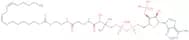
CAS :Linoleoyl coenzyme A (LCA) is a fatty acid that is a component of the cell membrane. LCA is synthesized from linoleic acid and coenzyme A in the mitochondria. In humans, LCA is an important component of the mitochondrial protein. The production of this enzyme can be enhanced by dietary supplementation with linoleic acid. Linoleoyl coenzyme A has been used as a model system to study energy metabolism in mitochondria. It has been shown to be involved in carthamus tinctorius, human mitochondrial, rat liver microsomes, and dietary models. LCAs have also been used as analytical methods for measuring the amount of fatty acids within cells or tissues.
Formule :C39H66N7O17P3SDegré de pureté :Min. 95%Masse moléculaire :1,029.97 g/mol3'-O-Methyl-5'-guanylic acid
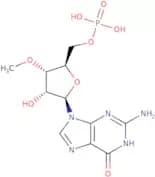
CAS :3'-O-Methyl-5'-guanylic acid is a novel antiviral, synthetic deoxyribonucleoside which is activated by phosphoramidites to produce 3'-O-methyl-5'-guanylic acid phosphoramidite. It has high purity and quality and can be used as a nucleoside activator for DNA synthesis. 3'-O-Methyl-5'-guanylic acid has been shown to be an anticancer agent that inhibits the growth of cancer cells in vitro by inhibiting DNA synthesis and cell division. This drug also has a potential use as an antiviral agent.
Formule :C11H16N5O8PDegré de pureté :Min. 95%Masse moléculaire :377.25 g/mol5-Aminoallyl 2'-deoxycytidine-5'-triphosphate lithium, 100mM aqueous solution
5-Aminoallyl 2'-deoxycytidine-5'-triphosphate lithium salt - 100mM aqueous solution is a novel modified nucleoside that can be activated to the corresponding phosphoramidite.
Formule :C12H17N4O13P3•Li4Degré de pureté :Min. 95%Couleur et forme :Clear LiquidMasse moléculaire :545.97 g/mol6-Amino-1-methyluracil
CAS :6-Amino-1-methyluracil is a synthetic drug that is used in the treatment of inflammatory diseases, including rheumatoid arthritis and psoriasis. It is also used to treat cancer, such as leukemia and in the treatment of bacterial infections. 6-Amino-1-methyluracil inhibits the synthesis of DNA by inhibiting the enzyme thymidylate synthetase. This inhibition prevents DNA replication and transcription, which leads to cell death. 6-Amino-1-methyluracil binds to cellular proteins through its amino group and hydroxyl group, which are not involved in its chemical reactions. 6-Amino-1-methyluracil has shown great promise as a template molecule for the synthesis of new drugs.
Degré de pureté :Min. 95%2'-Deoxy-N6-phenoxyacetyladenosine
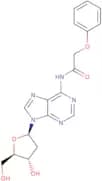
CAS :2'-Deoxy-N6-phenoxyacetyladenosine is a cyclic oligonucleotide analog that has been shown to be efficient in inhibiting the replication of RNA. It binds to the RNA polymerase, preventing transcription and replication of the nucleic acid. 2'-Deoxy-N6-phenoxyacetyladenosine is also an effective inhibitor of DNA synthesis and can inhibit the synthesis of proteins by binding to ribosomes. This drug is structurally similar to deoxyadenosine, which is a component of DNA, and it has been shown to be more potent than other analogs.
Formule :C18H19N5O5Degré de pureté :Min. 97 Area-%Masse moléculaire :385.38 g/mol2'-O-Hexylaminoguanosine
2'-O-Hexylaminoguanosine is a modified nucleoside that has antiviral properties. It is an activator of the human immune system and is used to treat cancer. 2'-O-Hexylaminoguanosine inhibits the synthesis of DNA by phosphoramidite addition to the monophosphate form of guanosine, which prevents RNA synthesis and therefore also protein synthesis. It also has anticancer effects by inhibiting the growth of cells in culture.
Degré de pureté :Min. 95%Cytidine 5'-monophosphate sodium salt
CAS :Cytidine 5'-monophosphate sodium salt is a nucleotide that is found in RNA and DNA. Cytidine 5'-monophosphate sodium salt is an intermediate in the biosynthesis of uridine, choline, and saccharose. It also plays an important role in the immune system as it can be a precursor for immunoglobulins. The reaction rate of cytidine 5'-monophosphate sodium salt with lipase has been shown to be constant at pH 7.5-8.0 and 37°C. This product has been shown to have emulsifying properties by forming micelles with water-immiscible solvents such as hexane or heptane, which may be due to its ability to form hydrogen bonds with other molecules such as saccharose or guanosine. Cytidine 5'-monophosphate sodium salt can also be used as a chromatographic material for separating saccharose from other sugars
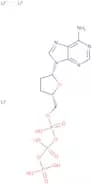
Formule :C9H14N3O8P·xNaDegré de pureté :Min. 95 Area-%Couleur et forme :White Off-White PowderMasse moléculaire :323.2 g/mol2',3'-Dideoxyadenosine-5'-triphosphate lithium salt - 100mM aqueous solution
CAS :2',3'-Dideoxyadenosine-5'-triphosphate lithium salt is a novel antiviral nucleoside that has the potential to be used in the treatment of various viral infections. It is synthesized from 2',3'-dideoxyadenosine monophosphate and lithium salt, and has been shown to have high antiviral activity against DNA viruses such as herpes simplex virus and adenovirus. It also inhibits the replication of RNA viruses such as influenza A virus, vesicular stomatitis virus, and measles virus. 2',3'-Dideoxyadenosine-5'-triphosphate lithium salt is a modified nucleoside that is phosphoramidite activated with a group at the 2' position on the ribose sugar. The phosphate group can be removed by hydrolysis or enzymatic catalysis, which leaves behind an unsaturated sugar moiety. This leads to an increased rate of incorporation into
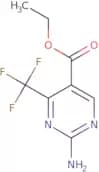
Formule :C10H12N5O11P3·4LiDegré de pureté :Min. 95%Couleur et forme :PowderMasse moléculaire :498.91 g/molEthyl 2-amino-4-(trifluoromethyl)pyrimidine-5-carboxylate
CAS :Ethyl 2-amino-4-(trifluoromethyl)pyrimidine-5-carboxylate is a small molecule that is a potent inhibitor of diacylglycerol acyltransferase. The compound has been shown to be an efficient inhibitor of this enzyme, which is involved in the synthesis of diacylglycerol. Diacylglycerol acyltransferase catalyzes the transfer of an acyl group from an acyl-carrier protein (ACP) to glycerol 3-phosphate, forming lysophosphatidic acid and releasing CoA. The inhibition of this enzyme leads to drastically reduced levels of diacylglycerol, which may have implications for the treatment of metabolic syndrome and diabetes.
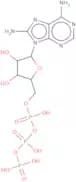
Formule :C8H8F3N3O2Degré de pureté :Min. 95%Masse moléculaire :235.16 g/mol8-Aminoadenosine-5'-triphosphate sodium salt - 10mM aqueous solution
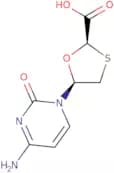
CAS :8-Aminoadenosine-5'-triphosphate sodium salt is a phosphoramidite that is used to synthesize antiviral nucleosides. It is a high quality product that can be used as an activator in the synthesis of ribonucleosides and deoxyribonucleosides. 8-Aminoadenosine-5'-triphosphate sodium salt has been shown to inhibit the growth of cancer cells.Formule :C10H17N6O13P3·xNaDegré de pureté :Min. 95%Masse moléculaire :522.2 g/molrac-Lamivudine acid
CAS :Lamivudine is an antiviral drug that is used as a nucleoside analogue. It is a prodrug that is converted to its active form, which inhibits the viral enzyme reverse transcriptase by interfering with the synthesis of viral DNA. Racemic lamivudine acid (LAM) crystallizes in the form of chains with hydrogen bonds oriented in an impurity plane. The LAM molecule has two substituents, one carboxylate and one oxathiolane group.
Formule :C8H9N3O4SDegré de pureté :Min. 95%Masse moléculaire :243.24 g/mol5-Methyl-2',3'-stannyluridine
5-Methyl-2',3'-stannyluridine is a nucleoside analog that is a potent inhibitor of viral replication and can be used for the treatment of HIV. It has been shown to inhibit the activity of RNA polymerase, thereby preventing transcription and replication. 5-Methyl-2',3'-stannyluridine also inhibits DNA synthesis by inhibiting the activity of DNA polymerase. This drug also acts as an antitumor agent and has been shown to inhibit tumor growth in animal models. The high purity of this drug makes it suitable for use in pharmaceutical applications.
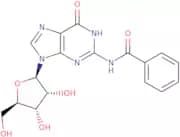
5-Methyl-2',3'-stannyluridine is a modified nucleoside that has been modified with a stannyl group at the 2' position on the sugar moiety and an allyl group at the 3' position on the sugar moiety. The phosphoramidites are synthesized from 5-methyl-2',3'-stannylDegré de pureté :Min. 95%N2-Benzoylguanosine
CAS :N2-Benzoylguanosine is a nucleotide derivative that is formed by the acetylation of guanosine. It has been shown to act as a buffer in alkaline solutions and isomerizes to its n-oxide form when heated. N2-Benzoylguanosine reacts with peroxides such as hydrogen peroxide, glyoxal, and organic peroxides, forming hydroperoxide intermediates that can be converted into other products. The acidic hydrolysis of N2-benzoylguanosine yields the corresponding 6-benzoyladenosines. It has been shown to enhance the activity of uridine in inhibiting bacterial growth, while also acting as an inhibitor of viral RNA synthesis. This compound also reacts with nitrous acid to form an n6-benzoyladenosine derivative that inhibits the formation of RNA chains during transcription.
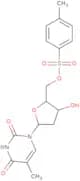
Formule :C17H17N5O6Degré de pureté :Min. 95%Couleur et forme :White to beige solid.Masse moléculaire :387.35 g/mol5'-O-Tosylthymidine
CAS :5'-O-Tosylthymidine is a bifunctional reagent that is used in the synthesis of DNA. It is a nucleophilic, inorganic compound that reacts with the electrophilic acrylonitrile group on 5'-hydroxythymidine to form a stable thiophosphate linkage. The reaction takes place stepwise and is catalyzed by an enzyme called DNA polymerase. This product has been used as an antimetabolite in medicine, mainly for treating leukemia.
Formule :C17H20N2O7SDegré de pureté :Min. 95%Masse moléculaire :396.42 g/mol2',3',5'-Tri-O-acetylinosine
CAS :2′,3′,5′-Tri-O-acetylinosine is a protected form of the nucleoside inosine, with potential for use in the preparation of modified nucleotides and nucleoside analogs.
Formule :C16H18N4O8Degré de pureté :Min. 95%Couleur et forme :White To Off-White SolidMasse moléculaire :394.34 g/mol

![7-Benzyl-4-chloro-5,6,7,8-tetrahydropyrido[3,4-d]pyrimidine](/_next/image/?url=https%3A%2Fstatic.cymitquimica.com%2Fproducts%2F3D%2Fthumb-webp%2FNB57451.webp&w=3840&q=75)