Nucléosides
3569 produits trouvés pour "Nucléosides"
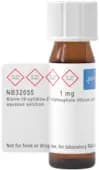
Biotin-11-cytidine-5'-triphosphate lithium salt - 1mM aqueous solution
Biotin-11-cytidine-5'-triphosphate lithium salt - 1mM aqueous solution is a novel nucleotide analogue that is synthesized by the coupling of a deoxyribonucleoside with a diphosphate. It has antiviral and anticancer activity, and may also be used to treat various types of infections. Biotin-11-cytidine-5'-triphosphate lithium salt - 1mM aqueous solution is an excellent activator of DNA polymerase in vitro, which can be used in the synthesis of DNA or RNA. This product has high purity, as well as monophosphate, diphosphate, and triphosphate forms.Formule :C28H46N7O17P3S·xLiDegré de pureté :Min. 95%Masse moléculaire :877.69 g/mol2'-Deoxy-5'-O-DMT-N2-isobutyrylguanosine 3'-Sp-oxazaphospholidine
2'-Deoxy-5'-O-DMT-N2-isobutyrylguanosine 3'-Sp-oxazaphospholidine is a DNA synthesis inhibitor. It is modified with a 2'-deoxy-5'-O-dimethoxytrityl group on the 2' position and an N2,N2-(isobutyryl) guanine moiety on the 5' position. This compound inhibits DNA synthesis by forming a covalent bond to the 3' phosphate of DNA. This product is synthesized in high purity and quality. It can be used for anticancer research or as an activator for phosphoramidites for the synthesis of DNA. CAS No.: 63787-03-6Degré de pureté :Min. 95%3'-epi-idoxuridine
CAS :3'-Epi-idoxuridine is a nucleoside analog that inhibits viral DNA synthesis. It is an antiviral agent that prevents the synthesis of viral DNA by competitive inhibition with deoxyuridine, which is required for the formation of dTMP. 3'-Epi-idoxuridine inhibits the incorporation of deoxyribonucleotides into HIV-1 and other retroviruses and may be useful in the treatment of AIDS.Formule :C9H11IN2O5Degré de pureté :Min. 95%Masse moléculaire :354.1 g/molN4-Benzoyl-5'-O-DMT-2'-O-(2-methoxyethyl)-5-methylcytidine 3'-O succinate TEA salt
N4-Benzoyl-5'-O-DMT-2'-O-(2-methoxyethyl)-5-methylcytidine 3'-O succinate TEA salt is a novel, modified nucleoside analogue that is used as an antiviral agent. It inhibits the synthesis of viral DNA and RNA by competing with natural nucleosides during the process of nucleic acid synthesis. The drug binds to the enzyme ribonucleotide reductase, which is essential for DNA synthesis. N4-Benzoyl-5'-O-DMT-2'-O-(2-methoxyethyl)-5-methylcytidine 3'-O succinate TEA salt has been shown to be effective in treating patients with cancer.Degré de pureté :Min. 95%6-(2-Deoxy-3,5-di-O-toluoyl-b-D-ribofuranosyl)-3,4-dihydro-8H-pyrimido[4,5-c][1,2]oxazin-7-one
CAS :6-(2-Deoxy-3,5-di-O-toluoyl-b-D-ribofuranosyl)-3,4-dihydro-8H-pyrimido[4,5-c][1,2]oxazin-7-one is a nucleoside analog that inhibits the activity of DNA polymerase and RNA polymerase. It has been shown to be active against human leukemia cells and is currently being used in clinical trials for cancer treatment. 6-(2-Deoxy-3,5-diOtoluoyl b D ribofuranosyl)-3,4 dihydro 8H pyrimido[4,5 c] [1,2]oxazin 7 one is a novel nucleoside analog that has been shown to be effective against both DNA and RNA viruses.
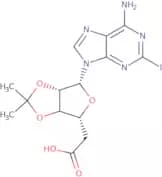
Formule :C27H27N3O7Degré de pureté :Min. 95%Masse moléculaire :505.52 g/mol5'-Carboxy-2-iodo-2',3'-O-isopropylideneadenosine
CAS :5'-Carboxy-2-iodo-2',3'-O-isopropylideneadenosine is an antiviral and anticancer monophosphate nucleoside. It has been shown to be a potent inhibitor of HIV replication in vitro, with IC50 values of 0.5 μM for HIV-1 and 0.8 μM for HIV-2. 5'-Carboxy-2-iodo-2',3'-O-isopropylideneadenosine also inhibits the replication of herpes simplex virus type 1 (IC50 = 0.7 μM) and cytomegalovirus (IC50 = 2.6 μM). 5'-Carboxy-2-iodo-2',3'-O-isopropylideneadenosine was found to be more than 10 times as potent as adenosine in inhibiting DNA synthesis in human tumor cell lines, including leukemia cells, carcinoma cells,Formule :C13H14IN5O5Degré de pureté :Min. 95%Masse moléculaire :447.19 g/mol2'-Ethylfluoro-5-methyluridine
2'-Ethylfluoro-5-methyluridine is a nucleoside analog. It has been modified with an ethyl group at the 2' position of the sugar moiety and a fluoro atom in the 5-position of the uracil base that replaces the methyl group. This modification increases its cellular uptake and antiviral activity. It is being studied as a potential anticancer drug.Degré de pureté :Min. 95%2'/3'-O-(N-Methylanthraniloyl)-adenosine-5'-diphosphate triethylammonium salt
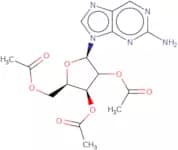
CAS :Supplied as a 10mM solution (150uL).λmax 255 nm, ε 23.3 L mmol-1 cm-1Sold by weight of solidFormule :C18H22N6O11P2Degré de pureté :Min. 95%Masse moléculaire :560.35 g/mol2-Amino-9-(2',3',5'-tri-O-acetyl-b-D-ribofuranosyl)purine
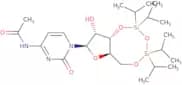
2-Amino-9-(2',3',5'-tri-O-acetyl-b-D-ribofuranosyl)purine is a novel nucleoside with anticancer and antiviral properties. It has been shown to inhibit replication of human immunodeficiency virus and herpes simplex virus type 1 in vitro. The drug also inhibits the growth of tumor cells in vitro. 2-Amino-9-(2',3',5'-tri-O-acetyl-b-D-ribofuranosyl)purine is an analog of adenosine, which is phosphorylated by the enzyme ribonucleoside diphosphate kinase to form 2'-deoxyadenosine monophosphate, a common building block for DNA synthesis.Formule :C16H19N5O7Degré de pureté :Min. 95%Masse moléculaire :393.35 g/molN-Acetyl-3',5'-O-(1,1,3,3-tetraisopropyl-1,3-disiloxanediyl)cytidine
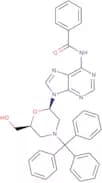
CAS :N-Acetyl-3',5'-O-(1,1,3,3-tetraisopropyl-1,3-disiloxane diyl) cytidine is a novel modified ribonucleoside. It is an activator of DNA and RNA synthesis with anticancer properties. N-Acetyl-3',5'-O-(1,1,3,3-tetraisopropyl-1,3-disiloxane diyl) cytidine has been shown to be effective against influenza A virus and herpes simplex virus type 1. NACCTC has also shown antiviral activity against HIV type 2 in cell culture.Formule :C23H41N3O7Si2Degré de pureté :Min. 95%Masse moléculaire :527.76 g/molN6-Benzoyl-7'-hydroxy-N-trityl morpholino adenine
CAS :N6-Benzoyl-7'-hydroxy-N-trityl morpholino adenine is a novel Ribonucleoside, which is a synthetic nucleoside with antiviral properties. It has been shown to inhibit the growth of cells in culture by inhibiting the synthesis of DNA and RNA. N6-Benzoyl-7'-hydroxy-N-trityl morpholino adenine has shown cytotoxicity against various cancer cells, including human leukemia cells, human lung cancer cells, and human breast cancer cells. The cytotoxic effects are thought to be due to inhibition of DNA synthesis and RNA synthesis.
Formule :C36H32N6O3Degré de pureté :Min. 95%Couleur et forme :White PowderMasse moléculaire :596.68 g/mol3',5'-Diamino-3',5'-dideoxy-3'-Fmoc-thymidine hydrochloride
3',5'-Diamino-3',5'-dideoxy-3'-Fmoc-thymidine hydrochloride is a novel nucleoside that inhibits the synthesis of viral DNA. It has antiviral activity against human herpes virus type 1 (HHV-1) and HIV, and is an anticancer agent. 3',5'-Diamino-3',5'-dideoxy-3'-Fmoc-thymidine hydrochloride is synthesized by reacting a diaminopyrimidine with a 3',5'-dideoxyribonucleoside 5' phosphate in the presence of a coupling reagent such as HATU. This synthetic nucleoside has been shown to inhibit the replication of viruses, including human herpes virus type 1 (HHV-1), HIV, and Hepatitis C virus.Degré de pureté :Min. 95%Aracytidylyl-(5′→5′)-cytidine
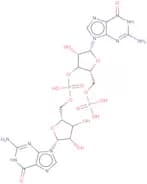
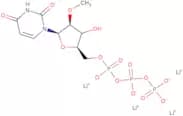
CAS :Please enquire for more information about Aracytidylyl-(5′→5′)-cytidine including the price, delivery time and more detailed product information at the technical inquiry form on this pageFormule :C18H25N6O12PDegré de pureté :Min. 95%Masse moléculaire :548.4 g/mol2'-O-Methyluridine-5'-triphosphate lithium salt - 100mM aqueous solution
CAS :2'-O-Methyluridine-5'-triphosphate lithium salt is a modified ribonucleoside which is used as an activator for nucleic acid synthesis. It has antiviral properties and can be used to inhibit the replication of DNA and RNA viruses. 2'-O-Methyluridine-5'-triphosphate lithium salt inhibits the viral polymerase, preventing the transcription of viral genetic material. This product is also considered novel because it is not found in nature and has not been previously described in the literature.Formule :C10H17N3O15P3·xLiDegré de pureté :Min. 95%Masse moléculaire :512.17 g/mol7-Chloro-5-methyl-[1,2,4]triazolo[1,5-a]pyrimidine
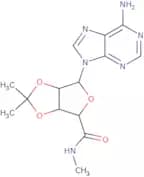
CAS :7-Chloro-5-methyl-[1,2,4]triazolo[1,5-a]pyrimidine is a palladium catalyst that catalyzes the cross-coupling reaction of aryl bromides and organoboronic acids with good efficiency. This method is an efficient and general procedure for the synthesis of various substituted pyrimidines. The cross-coupling reaction can be achieved in high yields without the need for purification of intermediates.Formule :C6H5ClN4Degré de pureté :Min. 95%Masse moléculaire :168.58 g/mol2',3'-O-Isopropylidene-adenosine-5-N-methylcarbamide
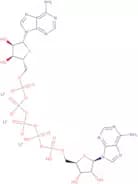
CAS :2',3'-O-Isopropylidene-adenosine-5-N-methylcarbamide is an activator that has anticancer and antiviral properties. It is a synthetic nucleoside, which is a modified form of the natural nucleosides adenosine and cytidine. 2',3'-O-Isopropylidene-adenosine-5-N-methylcarbamide inhibits the replication of DNA by binding to the deoxyribonucleoside triphosphate (dNTP) in DNA synthesis. The drug also inhibits viral RNA transcription by blocking the action of diphosphate reductase, an enzyme required for the conversion of ribonucleosides to ribonucleotides. 2',3'-O-Isopropylidene-adenosine-5-N-methylcarbamide has shown antiproliferative effects on human cancer cells in vitro and may be effective against leukemia and lymphFormule :C14H18N6O4Degré de pureté :Min. 95%Masse moléculaire :334.33 g/molP1,P5-Di(adenosine-5')pentaphosphate trilithium
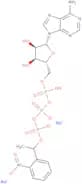
CAS :P1,P5-Di(adenosine-5')pentaphosphate trilithium salt is a diphosphate nucleoside that has antiviral and anticancer activities. It also inhibits DNA synthesis by competitively inhibiting the incorporation of dATP into DNA. This product is an activator of phosphoramidite chemistry. P1,P5-Di(adenosine-5')pentaphosphate trilithium salt is a novel monophosphate nucleoside with modified phosphorus linkages in the sugar backbone and a high purity of > 98%.Formule :C20H29N10O22P5•Li3Degré de pureté :Min. 95%Couleur et forme :PowderMasse moléculaire :937.19 g/molP3-(1-(2-Nitrophenyl)ethyl) adenosine 5'-triphosphate disodium salt
CAS :P3-(1-(2-Nitrophenyl)ethyl) adenosine 5'-triphosphate disodium salt (P3-ANP-Na2) is an anticancer drug that belongs to the group of nucleosides. It is a phosphoramidate prodrug that is converted to adenosine 5'-triphosphate (ATP) by intracellular esterases. This prodrug has been shown to inhibit the growth of various types of cancer cells in vitro and in vivo, including leukemia and breast cancer cells. P3-ANP-Na2 binds to DNA by intercalation, inhibiting DNA synthesis and transcription. It also inhibits protein synthesis by inhibiting ribonucleotide reductase and deoxyribonucleotide reductase, which are enzymes responsible for synthesizing DNA precursors from RNA precursors.
Formule :C18H21N6Na2O15P3Degré de pureté :Min. 95%Couleur et forme :PowderMasse moléculaire :700.29 g/mol2'-Cyano-2'-deoxy-1-(b-D-arabinofuranosyl)cytosine
CAS :2'-Cyano-2'-deoxy-1-(b-D-arabinofuranosyl)cytosine is an analog of the natural substrate for DNA cytosine methyltransferase, 5-methylcytosine. 2'-Cyano-2'-deoxy-1-(b-D-arabinofuranosyl)cytosine inhibits the enzyme activity of DNA methyltransferase and blocks cell proliferation. It has been shown to be a potent antitumor agent in experimental models and may serve as a potential biomarker for cancer treatment. The drug is an oral prodrug that is activated by deamination in the liver and kidneys to release the active form, 5'-Azacytidine monophosphate (5'AZA). This metabolite then inhibits DNA methylation by binding to DNA cytosine methyltransferase, resulting in a loss of function of this enzyme.Formule :C10H12N4O4Degré de pureté :Min. 95%Masse moléculaire :252.23 g/mol5'-Deoxy-5-fluoro-N-[(3-methylbutoxy)carbonyl]cytidine
CAS :5'-Deoxy-5-fluoro-N-[(3-methylbutoxy)carbonyl]cytidine is a novel nucleoside phosphoramidite. It is synthesized by the reaction of 5'-deoxy-5-fluoro cytidine with 3-methylbutanol in the presence of an activator (e.g., tetrazole). The methyl group on the 3′ position of cytidine has been shown to improve antiviral activity, as well as DNA and RNA synthesis. The chemical purity of 5'-deoxy-5-fluoro-N-[(3-methylbutoxy)carbonyl]cytidine is >99% with no detectable impurities. This product is a white powder that is soluble in water and organic solvents.Formule :C15H22FN3O6Degré de pureté :Min. 95%Masse moléculaire :359.35 g/mol3'-Azido-N4-benzoyl-2',3'-dideoxy5'-O-DMT-cytidine
3'-Azido-N4-benzoyl-2',3'-dideoxy5'-O-DMT-cytidine is a novel nucleoside analog that has antiviral activity against herpes simplex virus type 1. It is a modified nucleoside phosphoramidite with an azido group at the 3' position and a benzoyl group at the 2' position of cytidine. This product can be used for the synthesis of oligonucleotides with high purity and high quality. This product has CAS number 271462-87-6.Degré de pureté :Min. 95%Cytidine 2′,5′-diphosphate
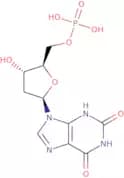
CAS :Please enquire for more information about Cytidine 2′,5′-diphosphate including the price, delivery time and more detailed product information at the technical inquiry form on this pageFormule :C9H15N3O11P2Degré de pureté :Min. 95%Masse moléculaire :403.18 g/mol2'-Deoxyxanthosine 5'-monophosphate
CAS :2'-Deoxyxanthosine 5'-monophosphate is a nucleoside which is an activator of the DNA polymerase. It has antiviral activity and is used in the synthesis of oligonucleotides. 2'-Deoxyxanthosine 5'-monophosphate is also used as a phosphoramidite in the chemical synthesis of DNA, and can be modified with fluorine or other atoms to form synthetic analogues.Degré de pureté :Min. 95%Biotin-16-uridine-5'-triphosphate, lithium salt - 1 mM aqueous solution
CAS :Biotin-16-uridine-5'-triphosphate, lithium salt - 1 mM aqueous solution is a synthetic nucleotide that contains the natural nucleoside uridine and the modified nucleoside 5-biotin. It is an activator of DNA polymerase. Biotin-16-uridine-5'-triphosphate, lithium salt - 1 mM aqueous solution has antiviral properties as it inhibits HIV reverse transcriptase and human cytomegalovirus (HCMV) DNA polymerase. It also inhibits human telomerase activity by preventing telomeric DNA synthesis. The high purity of this product allows for its use in many different research applications.Formule :C32H52N7O19P3S·xLiDegré de pureté :Min. 95%Masse moléculaire :963.78 g/mol3'-Azido-3'-deoxy-5-fluorocytidine
CAS :3'-Azido-3'-deoxy-5-fluorocytidine is an activator with novel antiviral and anticancer properties. It is a high quality, modified nucleoside that can be used to synthesize deoxyribonucleosides and ribonucleosides. 3'-Azido-3'-deoxy-5-fluorocytidine has been shown to inhibit the growth of cancer cells in vitro and in vivo.
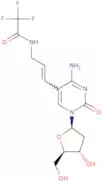
Degré de pureté :Min. 95%TFA-aa-dC
CAS :TFA-aa-dC is a novel anti-cancer drug that has been shown to have both antiviral and anticancer activities. It is a modified phosphoramidite of 2'-deoxyadenosine 5'-triphosphate with a 3'-amino group (TFA-aa-dC) and an acetyl group at the 2' position. TFA-aa-dC blocks viral replication by inhibiting the activity of viral DNA polymerase, which is required for DNA synthesis. The compound also inhibits cell growth by blocking RNA synthesis and protein production, leading to cell death. TFA-aa-dC has shown efficacy in preclinical studies against cervical cancer and leukemia cells.
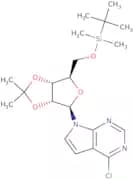
Formule :C14H17F3N4O5Degré de pureté :Min. 95%Masse moléculaire :378.3 g/mol6-Chloro-7-deaza-9-(5'-O-tert-butyldimethylsilyl-2',3'-O-isopropylidene-b-D-ribofuranosyl)purine
CAS :6-Chloro-7-deaza-9-(5'-O-tert-butyldimethylsilyl-2',3'-O-isopropylidene-b-D-ribofuranosyl)purine is a modified nucleoside that is used as an antiviral agent. It acts by inhibiting viral DNA polymerase to prevent the synthesis of viral DNA, which prevents virus replication and the spread of infection. 6CDAZP has been shown to be effective against Ebola and influenza viruses.Formule :C20H30ClN3O4SiDegré de pureté :Min. 95%Couleur et forme :Colourless to pale yellow oil.Masse moléculaire :440.02 g/molN4-Acetyl-5'-O-DMT-cytidine 3'-succinyl CPG 1000 Å (RNA)
N4-Acetyl-5'-O-DMT-cytidine 3'-succinyl CPG 1000 Å (RNA) is a novel, high quality, high purity, synthetic nucleoside analogue. It has antiviral and anticancer properties.Degré de pureté :Min. 95%N4-Acetyl-2'-deoxy-2'-fluoro-2'C-methylcytidine
N4-Acetyl-2'-deoxy-2'-fluoro-2'C-methylcytidine is a novel nucleoside analogue that is currently being studied as an anti-cancer agent. It inhibits the growth of cancer cells by inhibiting the synthesis of DNA, RNA and proteins in these cells. N4-Acetyl-2'-deoxy-2'-fluoro-2'C-methylcytidine has been shown to be active against Hepatitis C virus and HIV, but not against influenza virus. This drug also has antiviral activity and can be used for the treatment of herpes simplex viruses type 1 and 2.Degré de pureté :Min. 95%3'-O-Azidomethyl 2'-deoxycytidine 5'-O-triphosphate sodium salt
3'-O-Azidomethyl 2'-deoxycytidine 5'-O-triphosphate sodium salt is a modified nucleoside that inhibits the synthesis of DNA. It has been shown to be an effective antiviral agent and can be used to treat cancer. 3'-O-Azidomethyl 2'-deoxycytidine 5'-O-triphosphate sodium salt is synthesized by reacting cytidine monophosphate with sodium azide in the presence of a triphosphorylating reagent. 3'-O-Azidomethyl 2'-deoxycytidine 5'-O-triphosphate sodium salt also inhibits DNA polymerase, which prevents the synthesis of RNA and proteins. The phosphoramidites are commercially available, high quality, and have a purity greater than 99%. This product is not currently approved by the FDA for use in humans or animals.Formule :C10H17N6O13P3·xNaDegré de pureté :Min. 95%Masse moléculaire :522.2 g/mol2’,3’-Bis-O-tert-butyldimethylsilyl-2-thiouridine
CAS :2’,3’-Bis-O-tert-butyldimethylsilyl-2-thiouridine is a modified nucleoside composed of 2-thiouracil (2-thiopyrimidine), a modified uracil where the oxygen at the 2-position is replaced by sulfur. Possible applications as its use as an intermediate in the chemical synthesis of RNA oligonucleotides.Formule :C21H40N2O5SSi2Degré de pureté :Min. 95%Couleur et forme :PowderMasse moléculaire :488.79 g/mol6-Methylthioinosine-5’-triphosphate sodium salt - 10 mM aqueous solution
CAS :6-Methylthioinosine-5’-triphosphate sodium salt - 10 mM aqueous solution is a synthetic, modified ribonucleoside that is an activator of the antiviral response. It has been shown to inhibit the replication of both DNA and RNA viruses in vitro. 6-Methylthioinosine-5’-triphosphate sodium salt - 10 mM aqueous solution is also used as a precursor in the synthesis of phosphoramidites. The CAS number for this product is 51464-82-5.Formule :C11H17N4O13P3SDegré de pureté :Min. 95%Masse moléculaire :538.26 g/molBiotinyl coenzyme A
Biotinyl coenzyme A is a novel, synthetic nucleotide that has activity against cancer cells. It is an analogue of biotin-diphosphate with a ribonucleoside moiety attached to the diphosphate. Biotinyl coenzyme A is phosphoramidite monophosphate, which can be synthesized by modifying the 5'-terminus of the anticancer drug gemcitabine.Formule :C43H82N13O19P3S2Degré de pureté :Min. 95%Masse moléculaire :1,242.24 g/mol5'-O-DMT-guanosine-(dmf) 3'-succinyl CPG 500 Å (RNA)
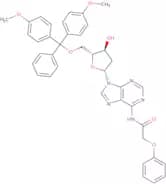
5'-O-DMT-guanosine-(dmf) 3'-succinyl CPG 500 Å (RNA) is a synthetic, modified nucleoside with the chemical name 5-O-dimethoxytrityl-guanine. It is a high purity and quality nucleoside that is synthesized from the corresponding ribonucleoside or deoxyribonucleoside by phosphoramidite chemistry. This compound has been shown to have anticancer and antiviral activity. The chemical formula for this compound is C14H12N4O8PS2, molecular weight of 692.5 g/mol, and CAS number 25608-06-0.Degré de pureté :Min. 95%2’-Deoxy-3’-O-DMT-5'-O-phenoxyacetyladenosine
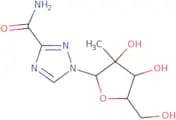
CAS :2' -Deoxy-3' -O-DMT-5'-O-phenoxyacetyladenosine is an activator of the DNA and RNA polymerases, which are enzymes that synthesize DNA and RNA. It can be used in the synthesis of modified DNA or RNA, as well as to investigate the anticancer activity of nucleosides. This compound has been shown to have antiviral effects in vitro by inhibiting viral protein synthesis. 2' -Deoxy-3' -O-DMT-5'-O-phenoxyacetyladenosine is a novel compound with high purity and high quality. CAS No.: 115388-94-8Formule :C39H37N5O7Degré de pureté :Min. 95%Masse moléculaire :687.74 g/mol1-(2-C-Methyl-b-D-ribofuranosyl)-1H-1,2,4-triazole-3-carboxamide
CAS :1-(2-C-Methyl-b-D-ribofuranosyl)-1H-1,2,4-triazole-3-carboxamide is a modified nucleoside that is used as an antiviral and anticancer agent. It is a diphosphate derivative of 1-(2'-deoxyribofuranosyl)-1H-1,2,4-triazole. The compound has been shown to have antiviral activity against herpes simplex virus (HSV) type I and HSV type II in vitro. It also inhibits the growth of human tumor cells in culture by interfering with DNA synthesis. The compound has been reported to be active against leukemia cells in vivo but not against normal cells. It has a high level of toxicity at high doses.
Degré de pureté :Min. 95%Biotin-16-cytidine-5'-triphosphate lithium salt - 1 mM aqueous solution
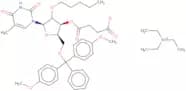
Biotin-16-cytidine-5'-triphosphate lithium salt - 1 mM aqueous solution is a novel nucleoside that can be used for the treatment of cancer. It is phosphorylated to become biotin-16-cytidine-5'-triphosphate and then incorporated into DNA. This drug inhibits the production of tumor necrosis factor (TNF) and is active against HIV, herpes simplex virus type 2, and varicella zoster virus. Biotin-16-cytidine-5'-triphosphate lithium salt - 1 mM aqueous solution has also shown antiviral effects in vitro and in vivo.Formule :C32H52N8O18P3SDegré de pureté :Min. 95%Masse moléculaire :961.79 g/mol5'-O-DMT-5-methyl-2'-O-pentyluridine 3'-O succinate triethylammonium salt
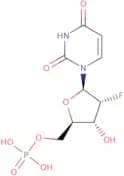
5'-O-DMT-5-methyl-2'-O-pentyluridine 3'-O succinate triethylammonium salt is a monophosphate nucleoside. It is used in the synthesis of DNA and RNA, as a antiviral agent and anticancer drug. 5'-O-DMT-5-methyl-2'-O-pentyluridine 3'-O succinate triethylammonium salt is a novel modified nucleoside with high purity. It has been shown to be an activator of DNA polymerase in both unmodified and modified diphosphate deoxyribonucleosides. This product is CAS No. 91411-30-1.Formule :C40H45N2O11·C6H16NDegré de pureté :Min. 95%Masse moléculaire :832.01 g/mol2'-Deoxy-2'-fluorouridine-5'-monophosphate
CAS :2'-Deoxy-2'-fluorouridine-5'-monophosphate is a novel anticancer drug that inhibits the proliferation of cancer cells. It is a phosphoramidite monophosphate nucleoside analog and is used in the synthesis of DNA. This product can be used as an antiviral agent against herpes simplex virus and influenza A by inhibiting viral DNA polymerase, as well as being used to treat HIV infection by inhibiting reverse transcriptase. 2'-Deoxy-2'-fluorouridine-5'-monophosphate can also be used to inhibit tumor growth by inhibiting the synthesis of deoxyribonucleosides and nucleotides, thereby preventing DNA replication.Formule :C9H12FN2O8PDegré de pureté :Min. 95%Masse moléculaire :326.17 g/mol2'-Deoxyguanosine-5'-O-(1-thiotriphosphate) lithium salt - 100mM aqueous solution
CAS :2'-Deoxyguanosine-5'-O-(1-thiotriphosphate) lithium salt is a nucleotide analog that has been shown to inhibit the synthesis of fatty acids and proteins, as well as cause depression in mice. It also has antiviral activity against the type strain of HIV-1 (HXB2). The drug inhibits protein synthesis by preventing the incorporation of amino acids into a growing polypeptide chain. This inhibition can be reversed by adding vitamin D3 or fatty acids. 2'-Deoxyguanosine-5'-O-(1-thiotriphosphate) lithium salt has been shown to have anti-cancer properties due to its ability to induce apoptosis, which is programmed cell death. This drug also has immune functions, such as an increase in natural killer cells and cytokines, as well as improving energy efficiency in the optical system.
Formule :C10H16N5O12P3S·xLiDegré de pureté :Min. 95%Masse moléculaire :523.25 g/molGuanylyl-3'-5'-adenosine triethylammonium salt
CAS :Guanylyl-3'-5'-adenosine triethylammonium salt (GAT) is a prodrug that is hydrolyzed in vivo to adenosine 3',5'-cyclic monophosphate (cAMP). GAT has been shown to have anti-inflammatory properties, which may be due to its ability to inhibit prostaglandin synthesis. GAT has also been used as a diagnostic tool for inflammatory bowel disease and infectious diseases of the bowel. It can be used as an adjuvant therapy for treating bowel disease, although it does not affect the course of the disease.Formule :C20H25N10O11P·xC6H15NDegré de pureté :Min. 95%Couleur et forme :PowderMasse moléculaire :612.45 g/mol9-(2'-O-Acetyl-b-D-arabinofuranosyl)-N2-isobutyrylguanine
9-(2'-O-Acetyl-b-D-arabinofuranosyl)-N2-isobutyrylguanine is a synthetic nucleoside that is activated by phosphorylation. It has been shown to be effective against cancer and viruses, and it has been proven to have a novel mechanism of action. 9-(2'-O-Acetyl-b-D-arabinofuranosyl)-N2-isobutyrylguanine is an analog of the natural product guanosine, which is found in RNA and DNA. 9-(2'-O-Acetyl-b-D-arabinofuranosyl)-N2-isobutyrylguanine can inhibit viral replication by inhibiting the synthesis of viral ribonucleic acid (RNA) and therefore inhibiting protein synthesis.Degré de pureté :Min. 95%2-Isobutyrylamino-9-(2'-O-tert-butyldimethylsilyl-5'-O-DMT-b-D-ribofuranosyl)purine 3'-CE phosphoramidite
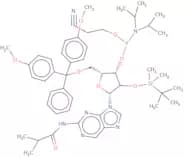
CAS :2-Isobutyrylamino-9-(2'-O-tert-butyldimethylsilyl-5'-O-DMT-b-D-ribofuranosyl)purine 3'-CE phosphoramidite is a modified nucleoside that is used to synthesize DNA. It has antiviral and anticancer properties, which are due to its ability to inhibit viral DNA polymerases and tumor cell proliferation. 2-Isobutyrylamino-9-(2'-O-tert-butyldimethylsilyl-5'-O-DMT-b-D -ribofuranosyl)purine 3'-CE phosphoramidite is also able to interfere with the synthesis of cellular DNA because it can be incorporated into the growing strand at any position. This novel nucleoside can be used in both monophosphate and diphosphate forms. 2 IsobutyFormule :C50H68N7O8PSiDegré de pureté :Min. 95%Masse moléculaire :954.2 g/mol6-Chloro-9-(2',3'-O-isopropylidene-b-D-ribofuranosyl)purine
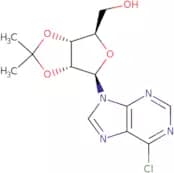
CAS :6-Chloro-9-(2',3'-O-isopropylidene-b-D-ribofuranosyl)purine is a nucleoside that is modified by adding an isopropylidene group (i.e., a C=C bond). It is used in the synthesis of oligonucleotides and phosphoramidites. 6-Chloro-9-(2',3'-O-isopropylidene-b-D-ribofuranosyl)purine has been shown to be an activator of the DNA polymerase, which increases its rate of incorporation of deoxyribonucleotide triphosphates into DNA chains. This nucleoside also has antiviral properties and can be used as an anticancer drug, specifically for hematological malignancies such as leukemia. 6-Chloro-9-(2',3'-O-isopropylideneFormule :C13H15ClN4O4Degré de pureté :Min. 95%Couleur et forme :PowderMasse moléculaire :326.74 g/mol2'-Deoxy-5'-O-DMT-guanosine-(DMF)-succinyl CPG 1000 Å
2'-Deoxy-5'-O-DMT-guanosine-(DMF)-succinyl CPG 1000 Å is a phosphoramidite monophosphate with antiviral and anticancer properties. It is synthesized by the reaction of deoxyribonucleosides and activated 2'-deoxy-5'-O-dimethoxytrityl guanosine. This product can be used as an activator for RNA synthesis, in DNA sequencing, and in the synthesis of oligonucleotides. It has also been shown to have antitumor activity against human hepatocellular carcinoma cells.Degré de pureté :Min. 95%3'-Azido-N6-benzoyl-5'-O-MMT-2',3'-dideoxyadenosine
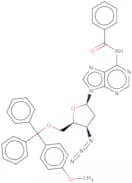
3'-Azido-N6-benzoyl-5'-O-MMT-2',3'-dideoxyadenosine is a novel nucleoside analog that is an activator of ribonucleosides and deoxyribonucleosides. It has been shown to inhibit the growth of cancer cells and to be active against herpes simplex virus. 3'-Azido-N6-benzoyl-5'-O-MMT-2',3'-dideoxyadenosine is synthesized with high purity and quality by our skilled chemists.Formule :C37H32N8O4Degré de pureté :Min. 95%Masse moléculaire :652.72 g/molCytidine-5'-triphosphoric acid disodium salt
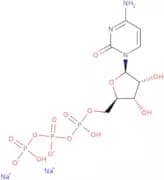
CAS :Cytidine-5'-triphosphoric acid disodium salt is an unassigned compound that is a potent inhibitor of protein synthesis. It has been shown to have a specific growth rate of 0.0003, which is significantly lower than the growth rate for other tested compounds. Cytidine-5'-triphosphoric acid disodium salt also inhibits the growth of Klebsiella aerogenes, Escherichia coli, and Enterococcus faecalis at concentrations as low as 1 ppm. The compound has been found to be hydraulically resistant and can be used in polyolefin formulations with high resistance to organic solvents. Cytidine-5'-triphosphoric acid disodium salt is also used as a supplement in the production of proteins such as enzymes, antibodies, hormones, and cytokines because it blocks the formation of proteins by interfering with ribosomes and preventing them from binding to mRNA transcripts.Formule :C9H14N3Na2O14P3Degré de pureté :Min. 95%Masse moléculaire :527.12 g/mol5'-Dimethoxytrityl-1-methyl-pseudoUridine, 2'-O-TBDMS-3'-[(2-cyanoethyl)-(N,N-diisopropyl)]-phosphoramidite
CAS :5'-Dimethoxytrityl-1-methyl-pseudoUridine, 2'-O-TBDMS-3'-[(2-cyanoethyl)-(N,N-diisopropyl)]-phosphoramidite is a nucleoside phosphoramidite that is used in the synthesis of oligonucleotides. It is a novel and high quality chemical compound that has been used in the synthesis of DNA and RNA with anticancer activity. 5'-Dimethoxytrityl-1-methyl-pseudoUridine, 2'-O-[TBDMS]3'[(2-cyanoethyl)-(N,N-diisopropyl)]phosphoramidite (DMTPMP) is an oligonucleotide analog that has shown to help prevent viral replication.Formule :C46H63N4O9PSiDegré de pureté :Min. 94 Area-%Couleur et forme :PowderMasse moléculaire :875.07 g/mol5'-Phosphoguanylyl-(3'->5')-guanosine sodium
CAS :pGpG, linear diguanylate, is the first phosphodiesterase-catalyzed hydrolysis product of cylic di-GMP (c-diGMP). c-diGMP has been identified as a novel second messenger in bacteria that triggers various physiological changes such as virulence gene expression or cell differentiationFormule :C20H26N10O15P2·xNaDegré de pureté :Min. 95 Area-%Couleur et forme :PowderMasse moléculaire :708.43 g/molUridylyl-3'-5'-adenosine ammonium salt
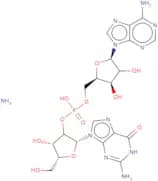
Uridylyl-3'-5'-adenosine ammonium salt is a novel antiviral agent that is used to treat hepatitis B. It is an analogue of nucleoside monophosphate, which is activated by adenylyltransferase, and inhibits viral DNA synthesis. Uridylyl-3'-5'-adenosine ammonium salt has been shown to inhibit the growth of cancer cells in vitro and in vivo. This drug also has anticancer activity against various types of cancer cell lines.Formule :C19H27N8O12PDegré de pureté :Min. 95%Masse moléculaire :590.44 g/mol



![6-(2-Deoxy-3,5-di-O-toluoyl-b-D-ribofuranosyl)-3,4-dihydro-8H-pyrimido[4,5-c][1,2]oxazin-7-one](/_next/image/?url=https%3A%2Fstatic.cymitquimica.com%2Fproducts%2F3D%2Fthumb-webp%2FND145588.webp&w=3840&q=75)




![7-Chloro-5-methyl-[1,2,4]triazolo[1,5-a]pyrimidine](/_next/image/?url=https%3A%2Fstatic.cymitquimica.com%2Fproducts%2F3D%2Fthumb-webp%2FNC44309.webp&w=3840&q=75)

![5'-Deoxy-5-fluoro-N-[(3-methylbutoxy)carbonyl]cytidine](/_next/image/?url=https%3A%2Fstatic.cymitquimica.com%2Fproducts%2F3D%2Fthumb-webp%2FND16527.webp&w=3840&q=75)













![5'-Dimethoxytrityl-1-methyl-pseudoUridine, 2'-O-TBDMS-3'-[(2-cyanoethyl)-(N,N-diisopropyl)]-phosph…](/_next/image/?url=https%3A%2Fstatic.cymitquimica.com%2Fproducts%2F3D%2Fthumb-webp%2FPD180455.webp&w=3840&q=75)