Nucléosides
3569 produits trouvés pour "Nucléosides"
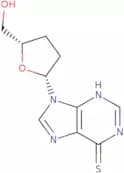
2',3'-Dideoxy-6-thio-inosine
CAS :2',3'-Dideoxy-6-thio-inosine is a nucleoside analog that is used in vitro for the investigation of viral replication. 2',3'-Dideoxy-6-thio-inosine is a potent inhibitor of human immunodeficiency virus type 1 (HIV-1) infection, and has been shown to inhibit the synthesis of viral dna. The in vitro activity of this drug against HIV has been shown to be greater than 200 times more potent than zidovudine or didanosine. 2',3'-Dideoxy-6-thio-inosine also inhibits the growth of some cell lines, including those derived from infected T cells, indicating that it may have cytocidal effects.
Formule :C10H12N4O2SDegré de pureté :Min. 95%Masse moléculaire :252.29 g/mol2'-O-Methylcytidine
CAS :Cis-2'-O-methylcytidine is a modified nucleoside that has shown antiviral and anticancer activity. It is a monophosphate analog of cytidine with high antiviral activity against HIV, HSV-1, HSV-2, EBV, and CMV. Cis-2'-O-methylcytidine also inhibits tumor growth in mice by inhibiting the synthesis of DNA. Cis-2'-O-methylcytidine has been synthesized from ribonucleosides and deoxyribonucleosides to provide high purity and quality.
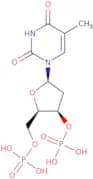
Formule :C10H15N3O5Masse moléculaire :257.24 g/molThymidine-3',5'-diphosphate sodium salt
CAS :Thymidine-3',5'-diphosphate sodium salt is a nucleoside that is used in the synthesis of oligonucleotides. It is an antiviral and anticancer agent. Thymidine-3',5'-diphosphate sodium salt has been shown to inhibit DNA synthesis, leading to cell death. It also has been shown to be effective against Hepatitis B virus and HIV-1.
Formule :C10H16N2O11P2·xNaDegré de pureté :Min. 98 Area-%Couleur et forme :White PowderMasse moléculaire :402.19 g/mol6-Methylpurine-2'-deoxyriboside
CAS :6-Methylpurine-2'-deoxyriboside (6MPdR) is a nucleoside analog that inhibits viral polymerase activity. It is used in the treatment of bowel diseases, such as inflammatory bowel disease and hepatitis C. 6MPdR can be used to treat cancer by inhibiting cellular proliferation and inducing apoptosis. This drug has been shown to inhibit leishmania growth in cell culture. 6MPdR can be administered orally or intravenously, and is pegylated for greater stability in the blood stream.
Formule :C11H14N4O3Degré de pureté :Min. 95%Couleur et forme :PowderMasse moléculaire :250.25 g/mol3’-Azido-3’-deoxy-2-thiouridine
CAS :3’-Azido-3’-deoxy-2-thiouridine is an antiviral agent that is used to synthesize phosphoramidites for the preparation of modified oligonucleotides. 3’-Azido-3’-deoxy-2-thiouridine has been shown to inhibit cancer growth and induce apoptosis in cancer cells, suggesting that it may have anticancer properties. It is also a novel deoxyribonucleoside that can be used as a building block for the synthesis of ribonucleosides. 3’-Azido-3’-deoxy-2-thiouridine is a high quality product with high purity and excellent activator properties. This product has CAS No. 2305416–00–4 and can be used in pharmaceuticals, biotechnology, and other chemical applications.
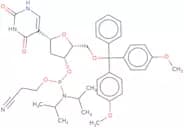
Formule :C9H11N5O4SDegré de pureté :Min. 95%Masse moléculaire :285.28 g/mol2'-Deoxy-5'-O-DMT-pseudouridine 3'-CE phosphoramidite
CAS :2'-Deoxy-5'-O-DMT-pseudouridine 3'-CE phosphoramidite is a nucleoside that is used in the synthesis of DNA. It is an antiviral and anticancer agent that has been shown to have anti-inflammatory properties. 2'-Deoxy-5'-O-DMT-pseudouridine 3'-CE phosphoramidite inhibits viral replication by inhibiting the synthesis of viral RNA, which prevents the production of proteins necessary for viral reproduction. The modified monophosphate form of this nucleoside is also a potent inhibitor of cancer cells in vitro and in vivo.
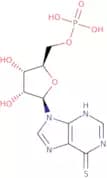
Formule :C39H47N4O8PDegré de pureté :Min. 95%Couleur et forme :PowderMasse moléculaire :730.81 g/mol6-Thioinosine 5'-monophosphate
CAS :6-Thioinosine 5'-monophosphate (6TIMP) is a hydrogen bond donor that possesses inhibitory properties against protein synthesis. It has been shown to have an anti-inflammatory effect and can be used for the treatment of inflammatory bowel disease. 6TIMP is also able to inhibit the bcr-abl kinase, which is implicated in the development of renal cell cancer. 6TIMP can be administered intravenously or orally and penetrates tissues well. The rate at which it enters cells is dependent on the transport rate, which is determined by its acidity. 6TIMP has been shown to cause DNA damage, leading to apoptosis and cell death in carcinoma cell lines. The mechanism of action appears to involve inhibition of cellular protein synthesis, acid formation, and DNA damage.
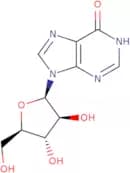
Formule :C10H13N4O7PSDegré de pureté :Min. 95%Couleur et forme :PowderMasse moléculaire :364.27 g/mol9-(b-D-Arabinofuranosyl)hypoxanthine
CAS :9-(b-D-Arabinofuranosyl)hypoxanthine is a glycosylated analogue of the incretin hormone glucagon-like peptide-1 (GLP-1). It has been shown to inhibit Streptococcus pyogenes and other bacteria. 9-(b-D-Arabinofuranosyl)hypoxanthine has also been shown to have inhibitory properties against zirconium oxide, pulmonary vasodilation, squamous cell carcinoma, and rate constant. This drug has not been studied in clinical trials for antiviral prophylaxis or arabinoside. The only known side effects are drug interactions with cyclin D2 and nitrate reductase.
Formule :C10H12N4O5Degré de pureté :Min. 98 Area-%Couleur et forme :White PowderMasse moléculaire :268.23 g/mol2',3',5'-Tri-O-acetyl-6-azauridine
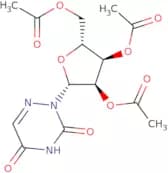
CAS :2',3',5'-Tri-O-acetyl-6-azauridine is a nucleoside analog for research purposes. The replacement of a carbon atom with a nitrogen atom on the uracil base affects how the molecule interacts with cellular processes. It has the potential to interfere with normal metabolic processes within cells, particularly those related to RNA synthesis. Due to its ability to disrupt cell growth, it could be studied for any potential antiviral or antitumor properties.
Formule :C14H17N3O9Degré de pureté :Min. 95%Couleur et forme :PowderMasse moléculaire :371.3 g/mol1-Methylxanthosine
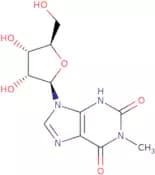
CAS :Produit contrôlé1-Methylxanthosine is a caffeine derivative that was first isolated from xanthosine in 1887. It is an acidic compound and has been shown to have antiinflammatory effects, which may be due to its inhibition of prostaglandin synthesis. 1-Methylxanthosine has also been shown to have anticarcinogenic properties, possibly through the inhibition of the enzyme nitrous oxide synthase.
Formule :C11H14N4O6Degré de pureté :Min. 95%Masse moléculaire :298.25 g/molDecitabine
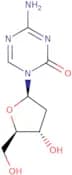
CAS :A synthetic cytosine analogue that incorporates into DNA and prevents DNA methylation via DNA (cytosine-5)-methyltransferase 1 (DNMT1) inhibition. Demonstrated potent anti-leukaemic effects attributed to cell cycle arrest and induction of apoptosis. Has anti-growth effects on solid tumor cell lines.
Formule :C8H12N4O4Degré de pureté :Min. 98 Area-%Couleur et forme :White PowderMasse moléculaire :228.21 g/mol2'-Deoxy-5'-O-DMT-2'-fluorouridine 3'-CE phosphoramidite
CAS :2'-Deoxy-5'-O-DMT-2'-fluorouridine 3'-CE phosphoramidite is a nucleotide that is used in the synthesis of DNA. It is an organic compound consisting of a molecule with a phosphate group at one end and a ribose sugar at the other. 2'-Deoxy-5'-O-DMT-2'-fluorouridine 3'-CE phosphoramidite is synthesized on a solid support by reacting nucleophilic reagents with the ribonucleoside. This drug has antineoplastic effects, inhibiting cancer cell growth by interfering with the production of ribonucleic acid (RNA) and protein synthesis. Hydrolysis of this drug releases fluorouracil, which inhibits thymidylate synthase, preventing the conversion of dUMP to dTMP, and thus blocking DNA synthesis.
Formule :C39H46FN4O8PDegré de pureté :Min. 98 Area-%Couleur et forme :PowderMasse moléculaire :748.78 g/mol5-Aminouridine
CAS :5-Aminouridine is an analog of uridine that is used in the synthesis of RNA. It inhibits the synthesis of RNA by viruses, and it may also inhibit the synthesis of RNA by cells, including muscle cells. 5-Aminouridine has been shown to inhibit protein synthesis in muscle cells incubated with orotic acid. The drug may also interact with other drugs metabolized by UDP-glucose pyrophosphorylase, such as carbamazepine and phenytoin. This interaction may lead to decreased serum levels of these drugs following treatment with 5-aminouridine.
Formule :C9H13N3O6Degré de pureté :Min. 90 Area-%Couleur et forme :PowderMasse moléculaire :259.22 g/mol5-(3-Hydroxypropyn-1-yl)uridine
5-(3-Hydroxypropyn-1-yl)uridine is a modified nucleoside that can be used as an antiviral or anticancer drug. It is an activator of the enzyme ribonucleotide reductase, which converts ribonucleotides to deoxyribonucleotides. 5-(3-Hydroxypropyn-1-yl)uridine has been shown to inhibit the growth of various cancer cells in vitro and in vivo. This drug has also been shown to have antiviral activity against herpes simplex virus type 1 (HSV-1).
Degré de pureté :Min. 95%N1,N2,N2-Trimethyl-psi-isocytidine
N1,N2,N2-Trimethylpsi-isocytidine is a novel nucleoside analog that has antiviral, anticancer, and immunosuppressive activities. It is an activator of diphosphate kinase and inhibits the formation of deoxyribonucleotides in DNA synthesis. N1,N2,N2-Trimethylpsi-isocytidine is a modified form of cytidine that contains three methyl groups. This agent has been shown to be active against human leukemic cells and can be used for the treatment of cancer and HIV infections.
Degré de pureté :Min. 95%3'-Deoxy-3'-fluoro-5'-O-toluoylcytidine
CAS :3'-Deoxy-3'-fluoro-5'-O-toluoylcytidine is a monophosphate nucleoside of cytidine. It is a phosphoramidite building block for the synthesis of DNA, an antiviral and anticancer agent. 3'-Deoxy-3'-fluoro-5'-O-toluoylcytidine has been shown to inhibit the replication of HIV and herpes simplex virus (HSV) in cell cultures and to induce apoptosis in cancer cells by inhibiting protein synthesis and inducing oxidative stress. This nucleoside is synthesized from deoxythymidine 5' phosphate using phosphorus pentoxide as oxidizing agent, followed by a reaction with toluene. The novel 3'-deoxy-3'-fluoro-5'-O-toluoylcytidine can be used as an activator for other modified nucleotides in DNA synthesis or as scaffold for the
Degré de pureté :Min. 95%Nelarabine
CAS :Nelarabine is a drug that prevents the growth of cells by inhibiting the bcr-abl kinase, which is an intracellular target. This drug has been shown to be effective against pediatric patients with t-cell acute lymphoblastic leukemia and adults with chronic myeloid leukemia. Nelarabine has minimal toxicity in humans and is not toxic to healthy cells. It has been shown to have anti-inflammatory properties and may be used as a biomarker for autoimmune diseases. Nelarabine also inhibits angiogenesis, which may be due to its effects on nuclear DNA.
Formule :C11H15N5O5Degré de pureté :Min. 95%Couleur et forme :White PowderMasse moléculaire :297.27 g/mol2’-Amino-2’-deoxy-β-D-arabinouridine
CAS :2’-Amino-2’-deoxy-β-D-arabinouridine is a modified nucleoside based on uridine, in which the 2'-hydroxyl group of the sugar has been replaced with an amino group, and the sugar itself is arabinose (a stereoisomer of ribose). This compound is of possible interest in nucleic acid chemistry and antisense or RNA-interference research.
Formule :C9H13N3O5Degré de pureté :Min. 95%Couleur et forme :solid.Masse moléculaire :243.22 g/mol5-Chloro-2'-deoxyuridine
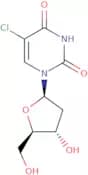
CAS :5-Chloro-2'-deoxyuridine is a nucleoside analog that inhibits DNA synthesis by inhibiting the enzyme thymidylate synthetase. It has been used for the treatment of bladder cancer and may also be beneficial in treating other cancers such as colon cancer. 5-Chloro-2'-deoxyuridine is taken up from the intestine by cells, where it is converted to thymidine monophosphate and then to thymidine diphosphate, which inhibits DNA synthesis by interfering with cell division. The mechanism of action is similar to that of cytosine arabinoside, but it does not require activation by intracellular enzymes. 5-Chloro-2'-deoxyuridine can cause cell lysis and can inhibit protease activity during cell culture, which makes it a useful tool for purifying proteins or peptides. The drug has been shown to be an analog of cytosine arabinos
Formule :C9H11ClN2O5Degré de pureté :Min. 98 Area-%Couleur et forme :White PowderMasse moléculaire :262.65 g/molInosine 5'-monophosphate disodium salt hydrate
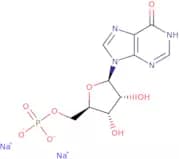
CAS :Inosine 5'-monophosphate disodium salt hydrate is a nucleotide that is synthesized from adenosine triphosphate in the energy metabolism of cells. It is used as an activator of signal pathways and as a potent inducer of metabolic enzymes. Inosine 5'-monophosphate disodium salt hydrate has been shown to induce bowel disease in mice with experimental colitis, suggesting its utility for treating inflammatory bowel disease. Inosine 5'-monophosphate disodium salt hydrate binds to the ATP-binding site of GTPase, stimulating the hydrolysis of ATP to ADP and phosphate. This reaction causes a conformational change in the enzyme's active site that increases the affinity for GTP by about 10-fold. The binding site is composed of two alpha helices sandwiching a central beta sheet and the catalytic residues are located at both ends of this beta sheet. Structural analysis has revealed that this drug interacts with
Formule :C10H11N4O8PNa2·xH2ODegré de pureté :Min. 99.0 Area-%Couleur et forme :White PowderMasse moléculaire :392.17 g/mol2'-Deoxy-N2-isobutyryl-5'-O-levulinoyladenosine
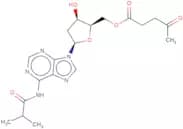
2'-Deoxy-N2-isobutyryl-5'-O-levulinoyladenosine is a modified nucleoside that has been shown to have anticancer and antiviral properties. It is synthesized as a phosphoramidite, and the synthesis of this compound has been patented internationally. This novel nucleoside is an activator for both DNA and RNA synthesis. The compound also has high purity, high quality, and is readily available to order from the supplier.
Formule :C19H25N5O6Degré de pureté :Min. 95%Masse moléculaire :419.44 g/molN-Pyrrolo-2'-deoxycytidine
CAS :N-Pyrrolo-2'-deoxycytidine is a nucleoside analog that is used in the laboratory as a template for DNA synthesis. It has been shown to be an effective inhibitor of human pathogens. N-Pyrrolo-2'-deoxycytidine binds to DNA and prevents replication by interfering with the binding of the enzyme polymerase to the template strand, which leads to denaturation of the complementary strand and blocking of DNA elongation. This drug has been shown to bind specifically to sequences that are unpaired in duplexes, such as single-stranded telomeres. N-Pyrrolo-2'-deoxycytidine can also be used as a fluorescence probe for detecting dsDNA duplexes.
Formule :C12H15N3O4Degré de pureté :Min. 98 Area-%Couleur et forme :PowderMasse moléculaire :265.27 g/mol3’-Deoxy-5-methoxyuridine
CAS :3’-Deoxy-5-methoxyuridine is a modified nucleoside that has antiviral and anticancer properties. It is an activator of DNA synthesis, which is the first step in the process of DNA replication. It also inhibits DNA gyrase and topoisomerase II, enzymes that maintain the integrity of bacterial DNA. 3’-Deoxy-5-methoxyuridine phosphoramidites are used in anticancer drugs.
Formule :C10H12N2O6Degré de pureté :Min. 95%Masse moléculaire :258.23 g/mol(2R,3R,4S,5R)-2-(4-Aminothieno[3,4-d]pyrimidin-7-yl)-5-(hydroxymethyl)tetrahydrofuran-3,4-diol
CAS :(2R,3R,4S,5R)-2-(4-Aminothieno[3,4-d]pyrimidin-7-yl)-5-(hydroxymethyl)tetrahydrofuran-3,4-diol is a nucleoside analog for research purposesFormule :C11H13N3O4SDegré de pureté :Min. 95%Couleur et forme :PowderMasse moléculaire :283.3 g/mol1,3-Dimethylpseudouridine
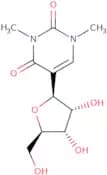
CAS :1,3-Dimethylpseudouridine is a methylated derivative of pseudouridine, which is a naturally occurring modified nucleoside found in RNA. This compounds can be used in research applications
Formule :C11H16N2O6Degré de pureté :Min. 95%Couleur et forme :PowderMasse moléculaire :272.25 g/mol4’-C-Methyl-2-thiouridine
CAS :4’-C-Methyl-2-thiouridine is an activator that has anticancer properties. It is a modified nucleoside with antiviral and antifungal activities, which has been shown to inhibit the growth of human tumor cells in vitro. 4’-C-methyl-2-thiouridine is able to inhibit viral replication in vitro and has been shown to be active against herpes simplex virus type 1 (HSV1) and herpes simplex virus type 2 (HSV2). Interestingly, this compound was found to have no effect on the intracellular levels of thymidine kinase or on cellular DNA synthesis.
Formule :C10H14N2O5SDegré de pureté :Min. 95%Masse moléculaire :274.29 g/mol5'-O-Trityluridine
CAS :5'-O-Trityluridine is a nucleoside analogue that has been prepared as an oriented, oxidized, hydrogenated, xylene derivative of uridine. It is composed of ribofuranoside and uridine. The orientation is controlled by the use of trityl groups on the 5' and 3' hydroxyl groups. The alkali metal salt isomers are analysed using HPLC and GC. This compound interacts with phosphotriesters and cyclic phosphodiesters.
Formule :C28H26N2O6Degré de pureté :Min. 95%Couleur et forme :White Off-White PowderMasse moléculaire :486.52 g/molFmoc morpholino adenosine monomer
Fmoc-morpholino adenosine monomer is a synthetic nucleoside that is used in the synthesis of oligonucleotides for use as antiviral and anticancer agents. Fmoc-morpholino adenosine monomer has been synthesized by modifying the deoxyribonucleosides, which are then phosphoramidite derivatives of ribonucleosides. This novel chemical compound has shown high activity against DNA-dependent RNA polymerase, suggesting that it may be an effective antiviral agent.
Formule :C34H32ClN7O7PDegré de pureté :Min. 95%Couleur et forme :PowderMasse moléculaire :717.09 g/mol1-(3'-Deoxy-3'-fluoro-b-D-xylofuranosyl)cytosine
1-(3'-Deoxy-3'-fluoro-b-D-xylofuranosyl)cytosine is a novel nucleoside that has been synthesized and characterized as a phosphoramidite monophosphate. It is a high purity, synthetic, DNA nucleoside that has shown antiviral and anticancer activities in vitro. 1-(3'-Deoxy-3'-fluoro-b-D-xylofuranosyl)cytosine is an activator of DNA polymerase δ and can be used as a modified nucleotide in nucleic acid synthesis. This compound has the CAS number 4384802-52-5.
Degré de pureté :Min. 95%2'-Deoxycytidine-5'-monophosphate
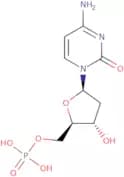
CAS :2'-Deoxycytidine-5'-monophosphate (dCMP) is a nucleotide that is synthesized by the enzyme cytidine monophosphate synthetase. It has been shown to inhibit the activity of many enzymes, including those involved in DNA synthesis and repair. The incorporation of dCMP into DNA can be used as a probe for studying various biological processes, such as radiation damage and cellular physiology. In addition, it has been shown that dCMP inhibits the growth of human osteosarcoma cells. This drug is also used in combination preparations with other drugs, such as with 5-fluorouracil and doxorubicin, to treat cancer tumors.Formule :C9H14N3O7PDegré de pureté :Min. 99 Area-%Couleur et forme :White PowderMasse moléculaire :307.2 g/mol6-(3,3-Dimethylallylamino)-9-(b-D-ribofuranosyl)purine
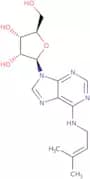
CAS :6-(3,3-Dimethylallylamino)-9-(b-D-ribofuranosyl)purine is an energy metabolism agent that mimics cytokinin, a plant hormone. It has been shown to affect the angiogenic process and induce apoptosis in HL60 cells through the pro-apoptotic protein Bax. 6-(3,3-Dimethylallylamino)-9-(b-D-ribofuranosyl)purine has also been used as a model system to study the structure of dna, which is important for understanding how it replicates. 6-(3,3-Dimethylallylamino)-9-(b-D-ribofuranosyl)purine is structurally similar to adenosine and binds to the A3 receptor with high affinity. This drug is active as an analogue of adenosine and may be useful for treating diseases such as heart disease or diabetes.Formule :C15H21N5O4Degré de pureté :Min. 98 Area-%Couleur et forme :White PowderMasse moléculaire :335.37 g/mol7-Deazaadenosine- 2', 3'- dideoxy- 7[3- (trifluoroacetyl) amino] - 1- propyn- yl
CAS :7-Deazaadenosine is a synthetic nucleoside that is used as an antiviral and antitumor agent. It has been shown to inhibit the growth of cancer cells in vitro and in vivo. 7-Deazaadenosine also has antiviral activity, inhibiting viral DNA synthesis by interfering with the enzyme DNA polymerase. 7-Deazaadenosine has been shown to be more potent than other deoxyribonucleosides against various HIV strains, including HIV-1 group M and HIV-1 group O. This drug was originally developed for use as a chemotherapeutic agent but has since been used as a research reagent for studying the mechanism of action of various drugs on DNA.
Formule :C16H16F3N5O3Degré de pureté :Min. 95%Couleur et forme :PowderMasse moléculaire :383.33 g/mol9-(3'-O-Methyl-b-D-xylofuranosyl)adenine
9-(3'-O-methyl-β-D-xylofuranosyl)adenine is a synthetic nucleoside that is an activator of viral DNA polymerase. 9-(3'-O-methyl-β-D-xylofuranosyl)adenine is a novel nucleoside that has been shown to be active against both DNA and RNA viruses. This compound also has anticancer activity. 9-(3'-O-methyl-β-D-xylofuranosyl)adenine is the phosphorylated form of adenine and has high purity and quality. The CAS number for this product is 53110-86-2.
Degré de pureté :Min. 95%Deoxyribonucleic acid, sodium salt, ex salmon testes
CAS :Deoxyribonucleic acid, sodium salt, ex salmon testes is a natural product that is produced by the electrochemical biosensor. It is used to study the interaction of DNA with carbanion and modified DNA. This product can be immobilized on a substrate to obtain a specific location for analysis. Deoxyribonucleic acid, sodium salt, ex salmon testes has been shown to be effective in catalyzing transfer reactions in aldehydes and nitroaldol reactions.
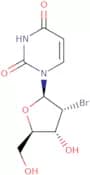
2'-Bromo-2'-deoxyuridine
CAS :2'-Bromo-2'-deoxyuridine is a synthetic nucleoside analog of deoxyuridine, in which the 2'-hydroxyl group of the ribose sugar is replaced with a bromine atom (Br) at the 2' position. This modification allows it to be incorporated into DNA during DNA synthesis, where it can replace the normal thymidine. This molecule can potentially be used in molecular biology and cell biology as a thymidine analog to study DNA replication, cell proliferation, and DNA repair.
Formule :C9H11BrN2O5Degré de pureté :Min. 95%Couleur et forme :PowderMasse moléculaire :307.1 g/mol3'-Azido-3'-deoxy-L-uridine
3'-Azido-3'-deoxy-L-uridine is a nucleoside that is a modified form of uridine with an azide group. It has antiviral, anticancer, and novel properties. 3'-Azido-3'-deoxy-L-uridine is synthesized from the corresponding ribonucleosides and diphosphates in high purity and quality. This compound can be used as an antiviral agent in the treatment of AIDS and herpes. It also has anticancer activity, which may be due to its ability to inhibit DNA synthesis or to bind to DNA and induce oxidative stress. 3'-Azido-3'-deoxy-L-uridine is synthesized by the enzymatic conversion of uridines with a monophosphate group at the 3' position into nucleosides with an azide group at the 3' position.
Formule :C9H11N5O5Degré de pureté :Min. 95%Masse moléculaire :269.21 g/molN6-Propargyladenosine-5'-triphosphate sodium salt
N6-Propargyladenosine-5'-triphosphate sodium salt is a phosphoramidite that is useful in the synthesis of oligodeoxyribonucleotides and DNA. This novel nucleotide has been shown to be an activator for mammalian cells and to inhibit tumor growth in mice. N6-Propargyladenosine-5'-triphosphate sodium salt is synthesized by reacting propargylamine with ATP, which produces a novel nucleotide with anti-cancer properties.
Formule :C13H18N5O13P3Degré de pureté :Min. 95%Masse moléculaire :545.23 g/molUDP- β- L- Arabinofuranose
CAS :UDP-β-L-Arabinofuranose is a research tool used in cell biology and pharmacology. It is an activator of ligand binding to receptor, and it binds with high affinity to the ion channels that regulate the flow of ions across the cell membrane. This compound is a ligand for the protein receptor and can be used as an inhibitor for peptide synthesis. UDP-β-L-Arabinofuranose is a high purity product with CAS No. 331001-44-6 and has been shown to inhibit protein interactions in life science experiments.
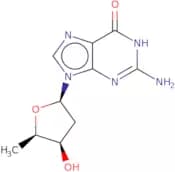
Formule :C14H22N2O16P2Degré de pureté :Min. 95%Masse moléculaire :536.28 g/mol2',5'-Dideoxyguanosine
CAS :2',5'-Dideoxyguanosine is a modified nucleoside analog of guanosine, one of the four natural nucleosides found in RNA and DNA. This synthetic molecule has hydroxyl groups removed from the 2' and 5' positions of the sugar component, which alters its ability to participate in nucleic acid synthesis.
Formule :C10H13N5O3Degré de pureté :Min. 97 Area-%Couleur et forme :White PowderMasse moléculaire :251.25 g/mol3’,5’-Di-O-Benzoyl-2'-deoxy-2',2'-difluoro-5-methyluridine
CAS :A gemcitabine analogue
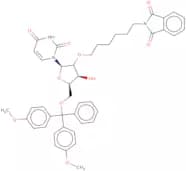
Formule :C24H20F2N2O7Degré de pureté :Min. 95%Couleur et forme :PowderMasse moléculaire :486.42 g/mol5'-O-DMT-2'-O-hexylphthalimidouridine
5'-O-DMT-2'-O-hexylphthalimidouridine is a novel nucleoside analog with anticancer activity. It is a modified nucleoside that has been synthesized and purified in high purity. 5'-O-DMT-2'-O-hexylphthalimidouridine is an activator of DNA and RNA synthesis and has antiviral properties. It also inhibits the production of tumor necrosis factor alpha (TNFα) by human synovial cells. This compound binds to the RNA polymerase II enzyme, which prevents transcription of genetic material from DNA templates into messenger RNA. This leads to inhibition of protein synthesis and cell death by apoptosis.
Formule :C44H45N3O10Degré de pureté :Min. 95%Masse moléculaire :775.86 g/molGuanosine hydrate
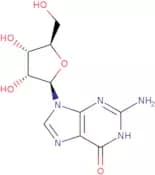
CAS :Blocks glutamatergic activity; neuroprotective
Formule :C10H13N5O5·xH2ODegré de pureté :Min. 98 Area-%Couleur et forme :PowderMasse moléculaire :283.24 g/molMorpholino T monomer
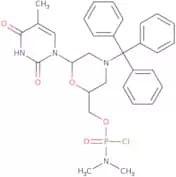
CAS :Morpholino T is a modified nucleoside amidite used to prepare morpholino oligomers
Formule :C31H34ClN4O5PDegré de pureté :Min. 98 Area-%Couleur et forme :White PowderMasse moléculaire :609.05 g/molN6-Benzoyl-8-hydroxy-2'-O-methyladenosine
N6-Benzoyl-8-hydroxy-2'-O-methyladenosine is a nucleoside analogue that inhibits the replication of RNA and DNA. It is a monophosphate, which can be converted to a diphosphate through phosphorylation. N6-Benzoyl-8-hydroxy-2'-O-methyladenosine has been shown to inhibit cancer cells and may have potential for use in antiviral therapy. This compound was synthesized from 2,4,5,6 tetrahydrobenzyl alcohol and 2'-deoxyadenosine. The CAS number for this compound is 79430-89-1.
Degré de pureté :Min. 95%N3-Methyl-5-methyluridine
CAS :N3-Methyl-5-methyluridine is a monophosphate of deoxyribonucleosides, which is a novel and modified nucleotide. It can be used as an antiviral agent and as a reagent in DNA synthesis. N3-Methyl-5-methyluridine is also an activator of ribonucleic acid (RNA) synthesis and has anticancer activity. It can be used for the production of phosphoramidites and DNA synthesis, as well as for the treatment of cancer.
Degré de pureté :Min. 95%L-Guanosine
CAS :L-Guanosine is an enantiomer of adenosine. It has been shown to be effective in the treatment of autoimmune diseases and viruses, such as HIV. L-Guanosine is activated by phosphorylation, which leads to its binding with DNA and inhibition of viral replication. L-Guanosine is also a potent inhibitor of mammalian cell proliferation. It binds to the enzyme adenosyltransferase, thereby inhibiting the production of nucleotides, which are necessary for DNA synthesis. This inhibition causes cell death due to lack of DNA synthesis and protein production.
Formule :C10H13N5O5Degré de pureté :Min. 95%Couleur et forme :White PowderMasse moléculaire :283.24 g/molRef: 3D-NG05944
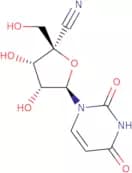
Produit arrêté4’-Cyanouridine
CAS :4’-Cyanouridine is a nucleoside that is used in the synthesis of DNA and RNA. It is often used as a precursor in the production of phosphoramidites and nucleosides, which are important for DNA synthesis. 4’-Cyanouridine can be used to inhibit viral replication by blocking the activity of reverse transcriptase, an enzyme required for the synthesis of viral DNA. 4’-Cyanouridine can also be used to treat cancer cells by preventing the growth of cells. This compound has been shown to activate RNA polymerase II, which is required for protein synthesis and cell division. The high purity and novel nature of this product make it ideal for use in research laboratories or other specialized settings where high quality products are required.
Degré de pureté :Min. 95%2'-Deoxy-L-adenosine
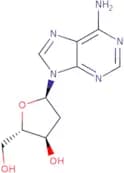
CAS :2'-Deoxy-L-adenosine is an adenosine analogue that has been shown to inhibit the growth of tumor cells in mice. The mechanism of this inhibition is not well understood, but it is thought that 2'-deoxy-L-adenosine inhibits the adenosine A3 receptor and blocks the activation of toll-like receptors. This drug also has been shown to have anti-inflammatory properties, which may be due to its ability to inhibit prostaglandin synthesis. It has been used as a model system for studying cellular responses to DNA damage caused by ultraviolet radiation. 2'-Deoxy-L-adenosine also has been shown to have a cytotoxic effect on human HL60 cells, which is mediated by nuclear DNA fragmentation.
Formule :C10H13N5O3Degré de pureté :Min. 98 Area-%Couleur et forme :Off-White PowderMasse moléculaire :251.25 g/molN4-Benzyl-2'-deoxy-5'-O-MMT-cytidine 3'-CE phosphoramidite
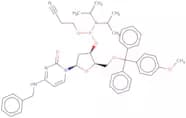
N4-Benzyl-2'-deoxy-5'-O-MMT-cytidine 3'-CE phosphoramidite is a monophosphate nucleoside that is used as an activator of anticancer agents, such as cytosine arabinoside. It has been modified to include an N4-benzyl group and a 2'-deoxy-5'-O-methyl moiety at the 5' position. The novel modifications have been shown to improve the efficacy of anticancer drugs against leukemia cells. In addition, it has been shown that this compound is more potent than other phosphoramidites in inhibiting the synthesis of viral RNA and DNA.
Formule :C45H52N5O6PDegré de pureté :Min. 95%Masse moléculaire :789.92 g/mol













![(2R,3R,4S,5R)-2-(4-Aminothieno[3,4-d]pyrimidin-7-yl)-5-(hydroxymethyl)tetrahydrofuran-3,4-diol](/_next/image/?url=https%3A%2Fstatic.cymitquimica.com%2Fproducts%2F3D%2Fthumb-webp%2FFA165910.webp&w=3840&q=75)




![7-Deazaadenosine- 2', 3'- dideoxy- 7[3- (trifluoroacetyl) amino] - 1- propyn- yl](/_next/image/?url=https%3A%2Fstatic.cymitquimica.com%2Fproducts%2F3D%2Fthumb-webp%2FND156888.webp&w=3840&q=75)