Solvants non polaires
179 produits trouvés pour "Solvants non polaires".
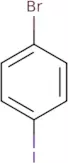
1-Bromo-4-iodobenzene
CAS :1-Bromo-4-iodobenzene is an aryl halide that can be synthesized by the cross coupling of ethyl formate and hydrochloric acid. This compound is useful in analytical applications, such as chromatographic methods, due to its high solubility in organic solvents. It is also used in synthetic procedures for the preparation of other aryl halides. 1-Bromo-4-iodobenzene has been used to synthesize calcium carbonate via the Suzuki coupling reaction with sodium salts, which are nucleophiles. The carbonyl group on this molecule reacts with the nucleophile, forming an alkyl group and a metal salt. Transfer reactions involving these salts can produce other products with different functional groups.
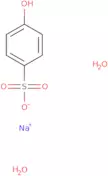
Formule :C6H4BrIDegré de pureté :Min. 95%Couleur et forme :PowderMasse moléculaire :282.9 g/molSodium 4-hydroxybenzenesulfonate dihydrate
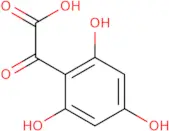
CAS :Sodium 4-hydroxybenzenesulfonate dihydrate is a hydrogenated compound with reactive properties. It is used in the production of optical materials and is used to produce hydrogen peroxide, which is a strong oxidizing agent. Sodium 4-hydroxybenzenesulfonate dihydrate has been shown to react with calcium ions to form calcium sulfinates. The luminescence property of this compound can be enhanced by mixing it with other compounds such as x-ray diffraction study, functional groups, or hydrogen peroxide. The reaction time for the formation of sodium 4-hydroxybenzenesulfonate dihydrate can be shortened by adding anions such as sulfamic acid.Formule :C6H5NaO4S·2H2ODegré de pureté :Min. 95%Couleur et forme :White To Off-White SolidMasse moléculaire :232.19 g/mol2-Oxo-2-(2,4,6-trihydroxyphenyl)acetic acid
CAS :2-Oxo-2-(2,4,6-trihydroxyphenyl)acetic acid is a useful synthetic building block/scaffold.Formule :C8H6O6Degré de pureté :Min. 95%Masse moléculaire :198.13 g/mol3,5-Dihydroxy-4-acetyltoluene
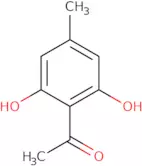
CAS :3,5-Dihydroxy-4-acetyltoluene is a versatile building block that is used in the production of various pharmaceutical and agrochemical intermediates. It can be used as a reagent for organic synthesis and as a speciality chemical. 3,5-Dihydroxy-4-acetyltoluene has been shown to have high quality and utility. This compound can also be used as a reaction component or scaffold.
Formule :C9H10O3Degré de pureté :Min. 95%Couleur et forme :PowderMasse moléculaire :166.17 g/mol4-Diazobenzenesulfonic acid - moistened with water (H2O~50%)
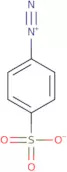
CAS :4-Diazobenzenesulfonic acid is a reagent used for the determination of phenols, amines and, bilirubin. It also has extensive usage as a protein-modifying reagent. This is because it reacts with a wide variety of functional groups in proteins including: tyrosine, histidine, amino, and thiol residues. It is known to react with proteins located on the exterior of erythrocytes; additionally, it has been used to study chloroplast and mitochondrial membranes.Formule :C6H4N2O3SDegré de pureté :Min. 95%Couleur et forme :PowderMasse moléculaire :184.17 g/mol1-Nitro-2,4,6-trimethoxybenzene
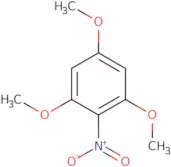
CAS :1-Nitro-2,4,6-trimethoxybenzene is a chemical compound that belongs to the nitro group. It has been found to be an electron donor in bacterial cells, and has been shown to be effective against the growth of bacteria by catalytic reduction. This reaction is highly specific for nitro compounds and does not occur with other classes of compounds. Mass spectrometric analysis of the reaction solution revealed that significant amounts of hydrogen gas were generated during this process. The use of aminoguanidine as a reducing agent resulted in a decrease in the production of hydrogen gas. 1-Nitro-2,4,6-trimethoxybenzene also has been shown to inhibit cytochrome p450 enzymes in rats and humans.Formule :C9H11NO5Degré de pureté :Min. 95%Couleur et forme :PowderMasse moléculaire :213.19 g/mol1,4-Diacetylbenzene
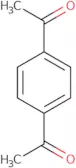
CAS :1,4-Diacetylbenzene (1,4-DAB) is a tetradentate ligand that binds to metal ions. It has been used to model the active site of acetylcholinesterase, as well as for supramolecular chemistry. 1,4-DAB has been shown to have anticholinesterase activity and is used in crosslinkers. 1,4-DAB forms hydrogen bonds with the nitrogen atom of the carbonyl group and also stabilizes molecules through its dipole interactions. The kinetic properties of 1,4-DAB have been studied by modelling studies and by Nuclear Magnetic Resonance spectroscopy. Metformin hydrochloride (MET) is a biguanide antihyperglycemic agent that inhibits glucose production in the liver and promotes insulin sensitivity in peripheral tissues.Formule :C10H10O2Degré de pureté :Min. 99.0 Area-%Couleur et forme :White PowderMasse moléculaire :162.19 g/mol1,4-Diiodobenzene
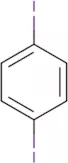
CAS :1,4-Diiodobenzene is an anti-retroviral drug that is used in the treatment of HIV infection. It has a molecular weight of 208.2 and a melting point of -68°C. 1,4-Diiodobenzene binds to intracellular targets, such as reverse transcriptase, proteases and integrase in HIV-1. This drug also has immunomodulatory effects on T cells and B cells. 1,4-Diiodobenzene has been shown to be effective against bacterial vaginosis and may have beneficial effects on body mass index and fatty acid metabolism.
Formule :C6H4I2Degré de pureté :Min. 98 Area-%Couleur et forme :White PowderMasse moléculaire :329.9 g/mol4-Octylbenzenesulfonic acid sodium salt
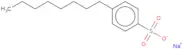
CAS :4-Octylbenzenesulfonic acid sodium salt is a versatile building block that is used in the synthesis of pharmaceuticals, agrochemicals, and specialty chemicals. The compound is soluble in water and can be used as an intermediate in organic synthesis. 4-Octylbenzenesulfonic acid sodium salt has been used as a reagent for research purposes and as a starting material for the synthesis of other compounds. It is also used as a building block for complex molecules. CAS No. 6149-03-7Formule :C14H21NaO3SDegré de pureté :Min. 97 Area-%Couleur et forme :PowderMasse moléculaire :292.37 g/molRef: 3D-FO34368
Produit arrêté(2-Bromoethyl)benzene
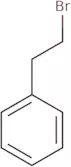
CAS :2-Bromoethylbenzene is a nucleophilic substitutive agent that can be used in organic synthesis. It reacts with an electron-rich compound to form a covalent bond and release bromine. 2-Bromoethylbenzene has been shown to have therapeutic effects on autoimmune diseases such as arthritis and lupus erythematosus. It also has the ability to inhibit protease activity, which may be due to its hydroxy derivative. The reaction mechanism of 2-bromoethylbenzene is not fully understood, but it is known that halides can increase the rate of the substitution reaction. This chemical also has pharmaceutical applications, including as a precursor in amphetamine synthesis and as a reagent in kinetic studies of enzymes.Formule :C8H9BrDegré de pureté :Min. 95%Couleur et forme :Colorless Clear LiquidMasse moléculaire :185.06 g/mol4-Nitrobenzeneethanol
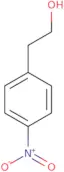
CAS :4-Nitrobenzeneethanol is a primary amine that is synthesized from the amino acid L-glutamic acid and the alcohol 4-nitrobenzyl alcohol. It is activated by reaction with sodium hydroxide solution, which releases hydrogen ions. The conjugates of this compound are isomers. 4-Nitrobenzeneethanol can be used to synthesize compounds that have different functional groups, such as monoclonal antibodies for the treatment of parasitic diseases.Formule :C8H9NO3Degré de pureté :Min. 95%Couleur et forme :PowderMasse moléculaire :167.16 g/molMethyl benzenesulfinate
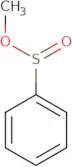
CAS :Methyl benzenesulfinate (MS) is a selenium compound that inhibits the replication of DNA and RNA. MS has been shown to be effective against cancer, HIV infection, and cachexia. It has also been used as an immunosuppressant in patients with autoimmune diseases or nervous system diseases. MS binds to the phosphate group of the nucleotide thymidine monophosphate, preventing formation of ATP and leading to cell death by inhibiting protein synthesis. This drug may cause symptoms such as nausea, vomiting, headache, dizziness, and skin rash. Methyl benzenesulfinate has also been shown to inhibit kinases in women with breast cancer.br>br> Methyl benzenesulfinate belongs to the class of inhibitors that target β-unsaturated ketones. It is used for treatment of various cancers like leukemia because it inhibits polymerase activity and prevents replication in cells. Methyl benzenesulfinate is a structural formula made upFormule :C7H8O2SDegré de pureté :Min. 98%Couleur et forme :Clear LiquidMasse moléculaire :156.2 g/mol1,4-Diisopropenylbenzene
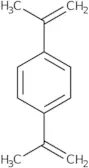
CAS :1,4-Diisopropenylbenzene is a hydrocarbon solvent that is used as a reagent in organic synthesis. It is reactive and can react with an inorganic acid such as hydrochloric acid to form an ester. The reaction time of 1,4-diisopropenylbenzene with an alkali metal hydroxide such as magnesium hydroxide is about one hour at room temperature. The product of this reaction is the magnesium salt of the corresponding carboxylic acid. 1,4-Diisopropenylbenzene has been shown to be toxic to mouse melanoma cells and has been used for cationic polymerization reactions. It has also been shown to be reactive with vinylene and other monomers, forming gels that are useful in making rubber products.
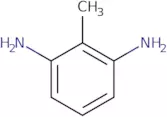
Formule :C12H14Degré de pureté :Min. 95%Couleur et forme :PowderMasse moléculaire :158.24 g/mol2,6-Diaminotoluene
CAS :2,6-Diaminotoluene (2,6-TDA), also known as o-tolidine, is a colorless to yellowish crystalline solid that is soluble in organic solvents. This compound has been shown to be genotoxic and carcinogenic in laboratory animals. 2,6-TDA binds to the receptor molecule of DNA and inhibits the repair of DNA strand breaks, leading to mutations and cancerous cells. 2,6-TDA has been shown to have toxic effects on fetal bovine kidney cells at low doses. The toxicity studies showed that 2,6-TDA inhibits cell growth and induces apoptosis in a dose dependent manner. This study also shows that 2,6-TDA inhibits protein synthesis by binding to ribosomes in the cytoplasm.Formule :C7H10N2Degré de pureté :Min. 95%Couleur et forme :PowderMasse moléculaire :122.17 g/mol2-Methoxybenzene-1,4-diamine sulfate
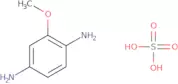
CAS :2-Methoxybenzene-1,4-diamine sulfate (2MBDS) is a chemical that inhibits the synthesis of quinolines and dyes. 2MBDS is used as a control in animal experiments to maintain the level of sulfate in the blood. It is injected into animals and then measured using assays to measure the concentration of sulfate in the blood. 2MBDS has been shown to cause genetic damage and death in animals, as well as brittleness of muscle cells. The effects of 2MBDS on DNA replication and cell division have been studied by observing its effect on meiosis in mice. This chemical also simplifies chromosome structure and reduces chromosome number during meiosis, which may lead to chromosomal aberrations.
Formule :C7H10N2O·H2O4SDegré de pureté :Min. 95%Couleur et forme :Off-White PowderMasse moléculaire :236.25 g/molDiethyltoluenediamine (2,4 and 2,6 diamine regioisomers)
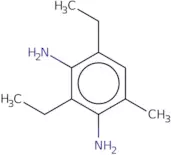
CAS :Chain extender for elastomeric polyurethane; curing agent for epoxy resinFormule :C11H18N2Degré de pureté :Min. 95%Couleur et forme :Clear LiquidMasse moléculaire :178.27 g/molRef: 3D-FD35142
Produit arrêté