Alpha-bloquants
656 produits trouvés pour "Alpha-bloquants"
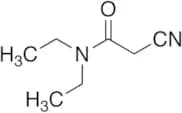
N,N-Diethylcyanoacetamide
CAS :Produit contrôléApplications N,N-Diethylcyanoacetamide (cas# 26391-06-0) is a compound useful in organic synthesis.
Formule :C7H12N2OCouleur et forme :NeatMasse moléculaire :140.18Semicarbazide Hydrochloride
CAS :Produit contrôléStability Hygroscopic
Applications Semicarbazide Hydrochloride is a metabolite of Nitrofuran (N493840), a minor antimicrobial used in veterinary medicine affecting semicarbazide-sensitive amine oxidase (SSAO) activity (1). Semicarbazide may be found in from nitrofuran residues in honey extracts (2) as well as milk from dairy cows (3). Drinking water contaminant candidate list 3 (CCL 3) compound as per United States Environmental Protection Agency (EPA), environmental, and food contaminants.Environmental contaminants; Food contaminants; Heat processing contaminants.
Not a dangerous good if item is equal to or less than 1g/ml and there is less than 100g/ml in the package
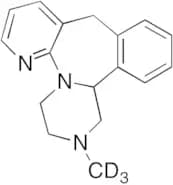
References 1. Elliott J. et al.: J Pharm Pharmacol. 1989 Jan;41(1):37-41. 2. Tribalat L. et al.: Anal Bioanal Chem. 2006 Dec;386(7-8):2161-8. 3. Chu, P. et al.: J. Agric. Food Chem. 2007 Feb:55(6);2129-2135Formule :CH5N3O·ClHCouleur et forme :NeatMasse moléculaire :111.53Mirtazapine-d3
CAS :Produit contrôléApplications An α2-Adrenergic blocker; analogue of Mianserin. Antidepressant.
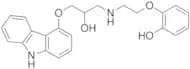
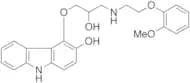
References De Boer, T., et al.: Neuropharmacology, 27, 399 (1988), Smith, W.T., et al.: Psychopharmacol. Bull., 26, 191 (1990)Formule :C172H3H16N3Couleur et forme :White To BeigeMasse moléculaire :268.37O-Desmethyl Carvedilol
CAS :Produit contrôléApplications A metabolite of Carvedilol (C184625), a nonselective β-adrenergic blocker with α1-blocking activity.
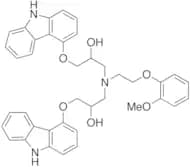
References Sponer, G., et al.: J. Cardiovasc. Pharmacol., 9, 317 (1987), Fujimaki, M., et al.: Xenobiotica, 20, 1025 (1990), Ruffolo, R., et al.: Eur. J. Clin. Pharmacol., 38, S82 (1990), Clohs, L., et al.: J. Pharm. Biomed. Anal., 31, 407 (2003),Formule :C23H24N2O4Couleur et forme :NeatMasse moléculaire :392.45Carvedilol Bis-carbazole
CAS :Produit contrôléImpurity Carvedilol EP Impurity B; Carvedilol Impurity B; Carvedilol USP B
Applications Carvedilol Bis-carbazole (Carvedilol EP Impurity B; Carvedilol Impurity B; Carvedilol USP B) is an impurity from the process of Carvedilol (C184625).Formule :C39H39N3O6Couleur et forme :Off-White To Light BeigeMasse moléculaire :645.74Silodosin
CAS :Applications Silodosin is an α1a-adrenoceptor antagonist. It is used in treatment of benign prostatic hypertrophy.
References (1) Shibata, K., et al.: Mol. Pharmacol., 48, 250 (1995) (2) Murata, S., et al.: J. Urol., 164, 578 (2000)Formule :C25H32F3N3O4Couleur et forme :NeatMasse moléculaire :495.53Carvedilol-d5
CAS :Produit contrôléApplications Carvedilol-d5 is the labelled analog of Carvedilol, a nonselective β-adrenergic blocker with α1-blocking activity. Carvedilol is an antihypertensive used in the treatment of congestive heart failure.
Not a dangerous good if item is equal to or less than 1g/ml and there is less than 100g/ml in the package
References Hirohashi, M., et al.: Arzneim.-Forsch., 40, 735 (1990), Packer, M., et al.: N. Engl. J. Med., 334, 1349 (1996),Formule :C24H21D5N2O4Couleur et forme :NeatMasse moléculaire :411.512-(2-Methoxyphenoxy)ethylamine Hydrochloride
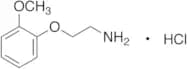
CAS :Impurity Carvedilol EP Impurity E; Carvedilol Impurity E; Carvedilol USP E
Applications 2-(2-Methoxyphenoxy)ethylamine Hydrochloride (Carvedilol EP Impurity E; Carvedilol Impurity E; Carvedilol USP E) is an impurity of Carvedilol synthesis.
References Smith, L., et al.: J. Med. Chem., 20, 1653 (1977),Formule :C9H13NO2·ClHCouleur et forme :NeatMasse moléculaire :203.673-Hydroxy Carvedilol
CAS :Produit contrôléApplications A vascularly inactive metabolite of Carvedilol (C184625). A novel antihypertensive agent, is a potent antioxidant.
Not a dangerous good if item is equal to or less than 1g/ml and there is less than 100g/ml in the package
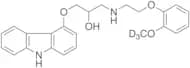
References Sponer, G., et al.: J. Cardiovasc. Pharmacol., 9, 317 (1987), Rapola, J., et al.: Lancet, 349, 1715 (1997), Gao, F., et al.: Eur. J. Pharmacol., 406, 109 (2000),Formule :C24H26N2O5Couleur et forme :NeatMasse moléculaire :422.47Carvedilol-d3
CAS :Produit contrôléFormule :C242H3H23N2O4Couleur et forme :Off WhiteMasse moléculaire :409.49Carvedilol
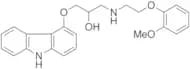
CAS :Produit contrôléApplications Carvedilol is a nonselective β-adrenergic blocker with α1-blocking activity. Carvedilol is an antihypertensive used in the treatment of congestive heart failure.
Not a dangerous good if item is equal to or less than 1g/ml and there is less than 100g/ml in the package
References Hirohashi, M., et al.: Arzneim.-Forsch., 40, 735 (1990); Packer, M., et al.: N. Engl. J. Med., 334, 1349 (1996);Formule :C24H26N2O4Couleur et forme :WhiteMasse moléculaire :406.474-Amino-2-chloro-6,7-dimethoxyquinazoline
CAS :4-Amino-2-chloro-6,7-dimethoxyquinazoline (4ACDMQ) is a synthetic compound that has been used as a chemical intermediate. The chemical structure of 4ACDMQ is similar to that of the natural amino acid tryptophan. It is synthesized by reacting phosphorus pentachloride with 2,6,7-trimethoxyquinazoline in the presence of hydroxide solution and hexamethylphosphoramide. 4ACDMQ has been shown to be an inhibitor of ubiquitin proteasome system and has been used in functional studies on this system. The reaction yield for 4ACDMQ can be increased by using sodium hydroxide solution or n-dimethyl formamide as a solvent. Functional assays have shown binding properties for 4ACDMQ to proteins such as ubiquitin and proteasome subunits.Formule :C10H10ClN3O2Degré de pureté :Min. 95%Couleur et forme :PowderMasse moléculaire :239.66 g/mol4-(4-Amino-6,7-dimethoxy-2-quinazolinyl)-1-piperazinecarboxaldehyde
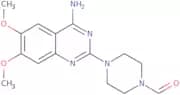
CAS :4-(4-Amino-6,7-dimethoxy-2-quinazolinyl)-1-piperazinecarboxaldehyde is a synthetic chemical compound that has not been approved by the FDA. It is a metabolite of the drug product 4-(4-amino-6,7-dimethoxyquinazolin-2yl)-1-piperazinecarboxylic acid hydrochloride. The CAS number for this chemical is 102714-74-9. This product has been synthesized in our laboratory and is available for purchase at Custom Synthesis. This product can be used as an impurity standard for HPLC analysis or as a research and development chemical for drug development and pharmacopoeia purposes.Formule :C15H19N5O3Degré de pureté :Min. 95%Masse moléculaire :317.34 g/mol2-Chloro-3-cyanopyridine
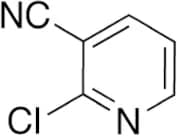
CAS :Produit contrôléApplications 2-Chloro-3-cyanopyridine (cas# 6602-54-6) is a compound useful in organic synthesis.
Formule :C6H3ClN2Couleur et forme :NeatMasse moléculaire :138.55(AlphaR)-4-Methoxy-Alpha-methyl-N-[(1R)-1-phenylethyl]benzeneethanamine Hydrochloride
CAS :Produit contrôléApplications (αR)-4-Methoxy-α-methyl-N-[(1R)-1-phenylethyl]benzeneethanamine is used in the symthesis of Formoterol (F693400).
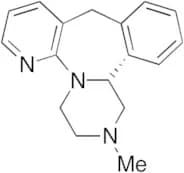
References Hett, R., et al.: Tetrahedron Lett., 38, 1125 (1997),Formule :C18H23NO·HClCouleur et forme :NeatMasse moléculaire :305.84S-Mirtazapine
CAS :Produit contrôléApplications S-Mirtazapine is an enantiomer of Mirtazapine (M365000); an antidepressant. R-Mirtazapine showed antinociceptive effects in acute thermal nociception, whereas S-Mirtazapine showed pronociceptive effects.
References Muth-Selbach, Uta., et al.: Brain Res. Bull., 79(1), 63-68 (2009); Smith, Donald F., et al.: Psychopharmacology, 200(2), 273-279 (2008); Freynhagen, Rainer., et al.: Brain Res. Bull., 69(2), 168-173 (2006)Formule :C17H19N3Couleur et forme :NeatMasse moléculaire :265.353,4-Dichloro Trazodone Dihydrochloride
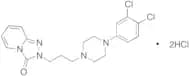
CAS :Produit contrôléApplications 3,4-Dichloro Trazodone is the dichlorinated analogue and impurity of the antidepressant agent Trazodone (T718500).
References Pai, N.R. et al.: J. Chem. Pharmac. Res., 2, 458 (2010); Pai, N. et al.: Int. J. Pharmac. Sci. Rev. Res., 4, 180 (2010);Formule :C19H21Cl2N5O•2HCiCouleur et forme :NeatMasse moléculaire :406.3123646Carvedilol Bisalkylpyrocatechol Impurity
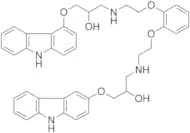
CAS :Produit contrôléApplications A new known impurity of Carvedilol (C184625), published in Carvedilol USP monograph.
Formule :C40H42N4O6Couleur et forme :NeatMasse moléculaire :674.78Trazodone 1,4-Di-N-Oxide
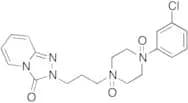
CAS :Produit contrôléStability Hygroscopic
Applications A possible metabolite of Trazodone-HCl (T718500).Formule :C19H22ClN5O3Couleur et forme :NeatMasse moléculaire :403.86







![(AlphaR)-4-Methoxy-Alpha-methyl-N-[(1R)-1-phenylethyl]benzeneethanamine Hydrochloride](/_next/image/?url=https%3A%2Fstatic.cymitquimica.com%2Fproducts%2FTR%2Fthumb-webp%2FM264590.webp&w=3840&q=75)