Enzymes dans les Protéines Recombinantes
Les enzymes accélèrent les réactions chimiques, agissant comme des catalyseurs biologiques, agissant sur des substrats et les transformant en différentes molécules appelées produits. Ces protéines sont indispensables dans les processus biochimiques et les applications industrielles, facilitant les réactions dans des conditions douces avec une grande spécificité et efficacité. Chez CymitQuimica, nous proposons une large sélection d'enzymes de haute qualité pour soutenir vos applications de recherche, industrielles et cliniques.
3315 produits trouvés pour "Enzymes dans les Protéines Recombinantes"
Trier par
Degré de pureté (%)
0
100
|
0
|
50
|
90
|
95
|
100
Ribonuclease H from escherichia coli
CAS :<p>Ribonuclease H from Escherichia Coli is the enzyme that breaks down RNA strand in RNA-DNA duplexes. It acts by cleaving the phosphodiester bonds of RNA and produces 3' hydroxyl and a 5' phosphate groups at the cleavage site. A common use of Ribonuclease H is to remove RNA template after reverse transcription reaction.</p>Adenosine deaminase, type X, buffered aqueous glycerol solution
CAS :<p>Adenosine deaminase catalyzes deamination of adenosine, converting it to inosine. It happens by the substituting of the amino group by a keto group. One Unit of the enzyme converts one micromole of adenosine to inosine per minute at 25°C, pH 7.4. Adenosine deaminase is also known by names of adenosine aminohydrolase, and ADA, EC 3.5.4.4.</p>Masse moléculaire :1,000 g/molEUCODIS® Lipase 012, screening grade, recombinant, from microbial sources - EL012
<p>Lipase 12 recombinantly expressed in E. coli comes in a spray-dried formulation. It has its pH optimum at 6-7.5 and temp. optimum at >60°C. Lipases belong to the family of esterases and naturally act on triglycerides at lipid-water interfaces catalyzing hydrolytic reactions, esterifications and transesterification reactions in industrial and food applications. Lipase 12 was shown to hydrolyze p-Nitrophenyl esters of butyrate (60 % activity compared to octanoate), octanoate (100 %), laurate (51 %), palmitate (30 %), stearate (14 %), arachidate (0.2 %) and behenate (0.2 %).</p>Creatinine deiminase
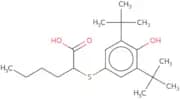
CAS :<p>Creatinine deiminase (EC 3.5.4.21) in an enzyme that catalyzes the following reaction: Creatinine + H2O → N-Methylhydantoin + NH3 One unit of creatinine deiminase will hydrolyze 1.0 µmole of creatinine to N-methylhydantoin and ammonia per minute at pH 7.5 and 37°C.</p>Formule :C20H32O3SLipase 003
CAS :<p>Lipases belong to the family of esterases and naturally act on triglycerides at lipid-water interfaces. Lipases/esterases can be used as versatile tools in hydrolytic reactions, esterifications and transesterification reactions in industrial and food applications.</p>DNA polymerase
CAS :<p>DNA polymerase is an essential enzymatic protein, derived from various organisms including bacteria, archaea, and eukaryotes, which plays a pivotal role in the replication and repair of DNA. This enzyme functions by adding nucleotides to the growing DNA strand in a template-dependent manner, ensuring the accurate duplication of the genetic material. It operates through a polymerization mechanism, where nucleotides are selected and incorporated complementary to the template strand, facilitating the elongation of the new DNA strand in the 5' to 3' direction.</p>Phosphoenolpyruvate carboxylase
CAS :<p>Phosphoenolpyruvate carboxylase is an enzyme, often found naturally in the cytosol of plant cells, which is derived primarily from various plant species. It plays a crucial role in the photosynthetic process, particularly in C4 and CAM plants. By catalyzing the irreversible carboxylation of phosphoenolpyruvate (PEP) to oxaloacetate, this enzyme facilitates the fixation of carbon dioxide, a vital step in the conversion of carbon dioxide into organic compounds during photosynthesis.</p>Degré de pureté :Min. 95%Lipase 008
CAS :<p>Lipases belong to the family of esterases and naturally act on triglycerides at lipid-water interfaces. Lipases/esterases can be used as versatile tools in hydrolytic reactions, esterifications and transesterification reactions in industrial and food applications.</p>Lipase 001
CAS :<p>Lipases belong to the family of esterases and naturally act on triglycerides at lipid-water interfaces. Lipases/esterases can be used as versatile tools in hydrolytic reactions, esterifications and transesterification reactions in industrial and food applications.</p>CS2 hydrolase from Acidianus sp., aqueous solution with glycerol
<p>CS2 hydrolase (Carbon disulfide hydrolase; E.C. 3.13.1.5) is an enzyme that catalyzes the following reaction: CS2 + 2 H2O → CO2 + 2 H2S thus converting carbon disulfide into hydrogen sulfide and carbon dioxide.</p>Formule :C1101H1721N305O320S6Masse moléculaire :43,345.4 g/molβ-Glucosidase from almonds
CAS :<p>β-Glucosidase (β-D-glucosidase, systematic name β-D-glucoside glucohydrolase; EC 3.2.1.21) is an enzyme that catalyzes the release the terminal glucose monomers from cellulose and the other oligo- and poly saccharides with β-1,4-linked glucosyl residues. One Unit of β-Glucosidase will release 1.0 µmole of p-nitrophenol from the chromogenic substrate mimic p-nitrophenyl β-glucoside per minute under optimum conditions.</p>Couleur et forme :Powder3-Oxo-5β-steroid Δ4-dehydrogenase
CAS :<p>3-Oxo-5β-steroid Δ4-dehydrogenase is an enzyme crucial in the metabolic pathway of steroid hormones, facilitating the conversion of androgens and estrogens. It is predominantly found in the liver, but also in other tissues where steroid biosynthesis occurs. This enzyme catalyzes the dehydrogenation at the Δ4 position of 3-oxo-5β-steroids, playing a significant role in the modulation and regulation of steroid hormone levels within cells.</p>CHS1 Protein, S. cerevisiae, Recombinant (His)
<p>Polymerizes chitin, a structural polymer of the cell wall and septum, by transferring the sugar moiety of UDP-GlcNAc to the non-reducing end of the growing</p>Couleur et forme :Lyophilized PowderMasse moléculaire :26.6 kDa (predicted)NCEH1 Protein, Human, Recombinant (His & Myc)
Expression system: E. coli<br>Length: 26-408, Partial<br>Activity: Not TestedCouleur et forme :Lyophilized PowderMasse moléculaire :50.7 kDa (Predicted)AOX1 Protein, Human, Recombinant (His)
<p>AOX1 Protein, Human, Recombinant (His) is expressed in E. coli.</p>Couleur et forme :Lyophilized PowderMasse moléculaire :24.6 kDa (predicted)PTGES3 Protein, Human, Recombinant (E. coli, His)
<p>PTGES3 Protein, Human, Recombinant (E. coli, His) is expressed in E. coli.</p>Couleur et forme :Lyophilized PowderMasse moléculaire :24.2 kDa (predicted)ADAMDEC1 Protein, Mouse, Recombinant (His)
<p>May play an important role in the control of the immune response and during pregnancy.</p>Degré de pureté :90% - 90%Couleur et forme :Lyophilized PowderMasse moléculaire :34.9 kDa (predicted)ALDH1A1 Protein, Mouse, Recombinant (E. coli, His)
<p>Expression system: E. coli<br>Length: 2-501, Full Length of Mature Protein<br>Activity: Not Tested</p>Couleur et forme :Lyophilized PowderMasse moléculaire :58.4 kDa (Predicted)PELI1 Protein, Human, Recombinant (E. coli, His)
<p>Expression system: E. coli<br>Length: 1-418, Full Length<br>Activity: Not Tested</p>Couleur et forme :Lyophilized PowderMasse moléculaire :50.4 kDa (Predicted)GPX1 Protein, Human, Recombinant (U49S, His)
Expression system: E. coli<br>Length: 1-203 (mutation), Full Length<br>Activity: Not TestedCouleur et forme :Lyophilized PowderMasse moléculaire :26.1 kDa (Predicted)