Enzymes dans les Protéines Recombinantes
3319 produits trouvés pour "Enzymes dans les Protéines Recombinantes"
Lipase, powder, food-grade, broad spectrum
CAS :Lipase, powder, food-grade, broad spectrum is an enzyme product, which is derived from microbial sources such as fungi and bacteria through a fermentation process. This enzyme operates by catalyzing the hydrolysis of fats into free fatty acids and glycerol, facilitating the breakdown of complex lipid molecules.
EUCODIS® Lipase 030, screening grade, recombinant, from microbial sources - EL030
Lipase 30 recombinantly expressed in E. coli comes in a spray-dried formulation. It has its pH optimum at 5.5-8 and temp. optimum at >55°C. Lipases belong to the family of esterases and naturally act on triglycerides at lipid-water interfaces catalyzing hydrolytic reactions, esterifications and transesterification reactions in industrial and food applications. Lipase 30 was shown to hydrolyze p-Nitrophenyl esters of butyrate (100 % activity), octanoate (72 %), laurate (38 %), palmitate (7 %) and stearate (2 %).
Proteinase K, high-quality, freeze-dried, recombinant
CAS :A proteolytic enzyme; degrades protein contaminants in nucleic acid preparations
Phospholipase D 040, concentrated (100 U/mg), spray-dried, recombinant, of prokaryotic origin
CAS :Phospholipase D 040, concentrated (100 U/mg), spray-dried, recombinant, of prokaryotic origin, is an enzyme preparation designed for advanced biochemical applications. This enzyme is derived from a prokaryotic source through recombinant DNA technology, allowing for high purity and activity. Phospholipase D functions by catalyzing the hydrolysis of phospholipids to produce phosphatidic acid and free head groups, which is a crucial reaction in both lipid signaling and membrane dynamics.
Degré de pureté :Min. 95%ApStar Taq DNA Polymerase, 1250 units
ApStar Taq DNA Polymerase is a thermostable DNA polymerase, originally derived from the thermophilic bacterium Thermus aquaticus. It operates by synthesizing new strands of DNA through the extension of primers in the 5' to 3' direction, utilizing a DNA template. This enzyme is specifically engineered to withstand high temperatures, making it ideal for the denaturation phases of PCR.
Immobilized lipase
CAS :Immobilized lipase is an advanced enzymatic product, which is derived from lipases, enzymes primarily sourced from microbial, plant, or animal origins. This product operates through a catalytic mechanism where the lipase is attached to a solid support, enhancing its stability and reusability in various reactions. This immobilization allows the enzyme to maintain activity over a wide range of conditions, including different pH levels and temperatures.
EUCODIS® Lipase 014, screening grade, recombinant, from microbial sources - EL014
Lipase 14 recombinantly expressed in E. coli comes in a spray-dried formulation. It has its pH optimum at 6-8 and temp. optimum at 30-40°C. Lipases belong to the family of esterases and naturally act on triglycerides at lipid-water interfaces catalyzing hydrolytic reactions, esterifications and transesterification reactions in industrial and food applications. Lipase 14 was shown to hydrolyze p-Nitrophenyl esters of butyrate (74 % activity compared to octanoate), octanoate (100 %), laurate (8 %), palmitate (5 %), stearate (4 %), arachidate (1 %) and behenate (0.6 %).
Ribokinase, liquid
CAS :Please enquire for more information about Ribokinase, liquid including the price, delivery time and more detailed product information at the technical inquiry form on this page
Cholesterol dehydrogenase from nocardia sp.
CAS :Cholesterol dehydrogenase (EC 1.1.1.840) is NADP+-dependant oxidoreductase, that catalyses the following reaction:cholesterol + NADP+ + H2O → cholest-4-en-3-one + NADPH + H+This is achieved by oxidizing alcohol hydroxy-group into ketone. One unit of cholesterol dehydrogenase will produce 1.0 μmole of cholest-4-en-3-one per minute at pH 8.5 and 25 °C.
Degré de pureté :Min. 95%LacBuster™-S 50 (β-lactamase)
CAS :LacBuster™-S 50 is a beta-lactamase formulation, which is an enzyme of microbial origin with the ability to hydrolyze beta-lactam antibiotics. This enzymatic product is derived from specific bacterial species known for their resistance mechanisms, providing a robust capability to deactivate compounds such as penicillins and cephalosporins. Its mode of action involves the cleavage of the beta-lactam ring, a crucial structural component of these antibiotics, effectively neutralizing their antibacterial properties.
Phospholipase D 040
CAS :Phospholipases D belong to the family of esterases and act on phosphatidylcholine in the plasma membrane to release phosphatidic acid (PA) and choline. Phospholipases D can be used as versatile tools in hydrolysis and transphosphatidylation reactions for industrial, chemical and food applications.
LacBuster™-S 2000 (β-lactamase)
CAS :LacBuster™-S 2000 is an enzyme preparation, specifically a beta-lactamase, which is derived from bacterial sources known for their capacity to degrade beta-lactam antibiotics. Through hydrolytic cleavage of the beta-lactam ring, this enzyme neutralizes the efficacy of beta-lactam antibiotics, thereby rendering them inactive.
Endopeptidase, liquid, food grade, broad spectrum
CAS :Endopeptidase, liquid, food grade, broad spectrum is an enzymatic product used in the food industry. It is derived from microbial sources, specifically engineered strains capable of producing high yields of proteolytic enzymes. This endopeptidase functions by hydrolyzing peptide bonds within proteins, targeting internal sites to break down long protein chains into smaller peptides and amino acids.
ALPK1 Protein, Human, Recombinant (His & Myc)
ALPK1 Protein, Human, Recombinant (His & Myc) is expressed in Baculovirus.
Couleur et forme :Lyophilized PowderMasse moléculaire :29.9 kDa (predicted)Ref: TM-TMPH-00922
Produit arrêtéGlucosyltransferase Kit
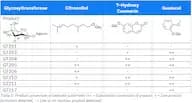
CAS :The kit contains 8 different Glucosyltransferases (GTases), which are enzymes that transfer glucose to another organic molecule (aglycon), establishing glycosidic linkage. UDP-glucose dependent GTases are part of the enzyme family of glucosyltransferases, they are versatile tools in glucosylation reactions. Different GTases have different substrate specificities, as shown on Table 1. The kit is especially designed for screening and finding the most well-suited GTase for your specific process. All GTases in the kit are also available individually for bulk purchase.
Peroxidase Kit, 2 peroxidases with different substrate specificities
Peroxidases can be utilized as enzymes catalyzing e.g. aromatic ring hydroxylation, epoxidation, halogenation, N- or S-oxidation, ether cleavage and alcohol/aldehyde oxidation reactions. The Peroxidase Kit contains 2 recombinant peroxidases of bacterial and fungal origin with a temperature optimum in the 20-40 °C range and pH optimum between pH 5 and 8.Degré de pureté :Min. 95%EUCODIS® Nitrilhydratase 21, recombinant enzyme - ENH021
Nitrile hydratase 21 recombinantly expressed in E. coli comes in a freeze-dried formulation. Nitrile hydratases can be utilized to convert nitriles into their corresponding amides, e.g. to produce acrylamide from acrylonitrile. Additional applications include the removal of nitriles from industrial wastewater. Our nitrile hydratases have been tested for hydrolysis of the following substrates:cyclohexanecarbonitrile, cinnamonitrile, benzonitrile, methacrylonitrile, pivalonitrile.
Urease from Canavalia ensiformis
CAS :Urease from Canavalia ensiformis (Jack bean urease, EC 3.5.1.5) is an enzyme that catalyses the following reaction: (NH2)2CO + H2O → CO2 + 2 NH3 One unit of urease will yield 1.0 µmole of NH3 from urea per min at pH 7.0 and 25 °C.
Masse moléculaire :480 g/molEUCODIS® Nitrilhydratase 22, recombinant enzyme - ENH022
Nitrile hydratase 22 recombinantly expressed in E. coli comes in a freeze-dried formulation. Nitrile hydratases can be utilized to convert nitriles into their corresponding amides, e.g. to produce acrylamide from acrylonitrile. Additional applications include the removal of nitriles from industrial wastewater. Our nitrile hydratases have been tested for hydrolysis of the following substrates:cyclohexanecarbonitrile, cinnamonitrile, benzonitrile, methacrylonitrile, pivalonitrile.
Degré de pureté :Min. 95%D-Ribulose 1,5-diphosphate carboxylase from spinach
CAS :D-Ribulose 1,5-diphosphate carboxylase, commonly known as RuBisCO, is an essential enzyme that catalyzes the first major step of carbon fixation, a process by which inorganic carbon from the atmosphere is converted into organic molecules. This enzyme is derived from spinach, a common model organism used in plant biology research due to its accessibility and well-characterized photosynthetic pathways.
Degré de pureté :Min. 95%