Enzymes dans les Protéines Recombinantes
3319 produits trouvés pour "Enzymes dans les Protéines Recombinantes"
Tyrosinase, from mushroom
CAS :Degré de pureté :≥ 1000U/mgCouleur et forme :Freeze-dried materialMasse moléculaire :-Tris(benzyltriazolylmethyl)amine
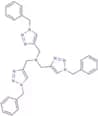
CAS :Tris(benzyltriazolylmethyl)amine (TBTA) is a tertiary amine. It complexes with, and stabilizes, copper(I) to accelerate azide-alkyne cycloadditions.Formule :C30H30N10Degré de pureté :99.58% - 99.82%Couleur et forme :SolidMasse moléculaire :530.63L-Asparaginase
CAS :Formule :C1377H2208N382O442S17Degré de pureté :≥ 100U/mgCouleur et forme :White to almost white powderMasse moléculaire :31731.9ENPP3 Protein, Canine, Recombinant (His)
Ectonucleotide pyrophosphatase-phosphodiesterase 3 (ENPP3), a protein detected in the human uterus, has been found to play an important role in the developmentCouleur et forme :Lyophilized PowderMasse moléculaire :96.19 kDa (predicted). Due to glycosylation, the protein migrates to 110-130 kDa based on Tris-Bis PAGE result.PfLDH Protein, P. falciparum, Recombinant (His)
Plasmodium falciparum lactate dehydrogenase (PfLDH) is a key enzyme for energy generation of malarial parasites and is considered to be a potential antimalarialDegré de pureté :96.1%Couleur et forme :Lyophilized PowderMasse moléculaire :34.9 kDa (predicted)Urokinase/uPA Protein, Rat, Recombinant (His)
Urokinase/uPA Protein, Rat, Recombinant (His) is expressed in HEK293 mammalian cells with His tag.Degré de pureté :> 95 % as determined by SDS-PAGE - > 95 % as determined by SDS-PAGECouleur et forme :Lyophilized PowderMasse moléculaire :47.3 kDa (predicted)HER3/ERBB3 Protein, Human, Recombinant (His)
HER3/ERBB3 Protein, Human, Recombinant (His) is expressed in HEK293 mammalian cells with His tag.Degré de pureté :SDS-PAGE: 98.5%; SEC-HPLC: 97.6%Couleur et forme :Lyophilized PowderMasse moléculaire :70.2 kDa (predicted); 100-110 kDa (reducing condition, due to glycosylation)CDK2 Protein, Human, Recombinant (His)
CDK2 is a member of the Ser/Thr protein kinase family.Couleur et forme :Lyophilized PowderMasse moléculaire :35 kDa (predicted); 33 kDa (reducing conditions)Ref: TM-TMPY-04542
5µg95,00€10µg153,00€20µg245,00€50µg486,00€100µg837,00€200µg1.468,00€500µg3.037,00€COX-2 Protein, Human, Recombinant (His)
PTGS2, also known as COX-2, is s component of Prostaglandin-endoperoxide synthase (PTGS).Degré de pureté :92.1% - > 90 % as determined by SDS-PAGECouleur et forme :Lyophilized PowderMasse moléculaire :68.5 kDa (predicted); 66 kDa (reducing conditions)Ref: TM-TMPY-01736
5µg162,00€10µg250,00€20µg400,00€50µg743,00€100µg1.190,00€200µg1.848,00€500µg3.518,00€TPSAB1 protein, Cynomolgus, Recombinant (His)
TPSAB1, namely tryptase alpha/beta-1, is a serine protease with trypsinlike activity.Couleur et forme :Lyophilized PowderMasse moléculaire :28.57kDa (predicted). The protein migrates to 30-33kDa based on Tris-Bis PAGE result.Necrostatin-1
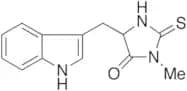
CAS :Produit contrôléApplications Necroptosis is a regulated caspase-independent cell death mechanism that results in morphological features resembling necrosis. Necrostatin-1 is an inhibitor of RIP1 kinase that prevents the death of TNF-α-treated FADD-deficient Jurkat cells. Necrostatin-1 has been used to investigate the pathological importance of necroptosis in ischemic brain injury and myocardial infarction.
References Foresti, R., et al: J. Biol. Chem., 272, 18411 (1997); Cardenas, A., et al.: J. Neurochem., 74, 2041 (2000); Degterev, et al.: Nat. Chem. Biol., 1, 112 (2005); Hitomi, J., et al.: Cell, 135, 1311 (2008);Formule :C13H13N3OSCouleur et forme :NeatMasse moléculaire :259.33NMCA (β-Lactamase)
CAS :NMCA (β-Lactamase) is an enzyme that hydrolyzes β-lactam antibiotics, a type of product crucial for studies in antibiotic resistance mechanisms. This enzyme is derived from bacterial sources, specifically those strains known for their role in beta-lactam drug resistance. The mode of action of β-Lactamase involves the enzymatic breakdown of the β-lactam ring found in penicillins and cephalosporins, thereby neutralizing the antibiotic's efficacy. This catalytic process is an essential focus for researchers studying bacterial defense mechanisms and the development of resistant strains.