Autres
6322 produits trouvés pour "Autres"
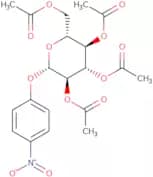
4-Nitrophenyl 2,3,4,6-tetra-O-acetyl-b-D-glucopyranoside
CAS :4-Nitrophenyl 2,3,4,6-tetra-O-acetyl-β-D-glucopyranoside is a versatile chromogenic substrate designed for the detection and quantification of various glycosidase enzymes. This substrate is widely used in enzyme assays, producing a yellow color upon cleavage by target enzymes. The 4-Nitrophenol released in this reaction can be easily monitored spectrophotometrically, allowing for rapid and accurate enzyme analysis. This high-quality substrate provides a convenient and reliable tool for researchers in biochemistry, enzymology, and related fields.
Formule :C20H23NO12Degré de pureté :Min. 95 Area-%Couleur et forme :PowderMasse moléculaire :469.4 g/mol2-Nitrophenyl 2-acetamido-3,4,6-tri-O-acetyl-2-deoxy-b-D-glucopyranoside
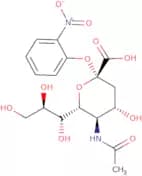
CAS :2-Nitrophenyl 2-acetamido-3,4,6-tri-O-acetyl-2-deoxy-b-D-glucopyranoside is a chromogenic substrate used to detect and measure the activity of glycosidase enzymes. Glycosidases are enzymes that hydrolyze glycosidic bonds in carbohydrates, and are produced by many organisms. The substrate is cleaved by glycosidase to release a chromophore, which can be quantified via spectrophotometry analysis. 2-Nitrophenyl 2-acetamido-3,4,6-tri-O-acetyl-2-deoxy-b-D-glucopyranoside is widely used in various applications, including enzyme kinetics studies, inhibitor screening, and the detection of NAGase activity in biological samples, such as serum, urine, and cell lysates. It is also used for the identification and characterization of glycosidases in microorganisms and the study of glycosylation-related processes in cells and tissues.Degré de pureté :Min. 95%Masse moléculaire :468.41 g/mol2-O-(2-Nitrophenyl)-a-D-N-acetylneuraminic acid
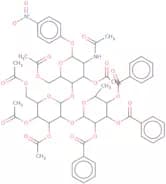
CAS :2-O-(2-Nitrophenyl)-a-D-N-acetylneuraminic acid is a chromogenic substrate specifically designed for the detection and quantification of sialidase (neuraminidase) enzyme activity. Neuraminidases are enzymes that cleave sialic acid residues from glycoconjugates, and are produced by many microorganisms, including influenza viruses. Upon cleavage by sialidase, this substrate releases a yellow-colored 2-nitrophenol product, which can be easily monitored spectrophotometrically. This substrate is widely used in various applications, including enzyme kinetics studies, inhibitor screening, and the detection of bacterial and viral neuraminidases in clinical and environmental samples.Degré de pureté :Min. 95%Couleur et forme :SolidMasse moléculaire :430.36 g/mol4-Nitrophenyl 2-acetamido-3,6-di-O-acetyl-4-O-[2-O-(2,3,4-tri-O-benzoyl-a-L-fucopyranosyl)-3,4,6-tri-O-acetyl-b-D-galactopyranosyl]- 2-deoxy-b-D-glucopyranoside
This chemical is a ligand that can bind to the enzyme luciferase. In a bioluminescence reaction, this chemical reacts with oxygen and ATP to produce light. This product has been tested for purity and quality and is suitable for use in culture media, environmental testing, or diagnostics. It has also been shown to be an excellent fluorescent substrate for fluorogenic or chromogenic substrates in enzyme substrate assays.Degré de pureté :Min. 95%Masse moléculaire :1,173.08 g/mol2-Nitrophenyl laurate
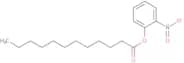
CAS :2-Nitrophenyl laurate is a fatty acid that is not able to be degraded and has a high affinity for magnetic particles. It can be used in the immobilization of bacteria, such as Stenotrophomonas maltophilia, which are resistant to many antibiotics. 2-Nitrophenyl laurate also inhibits the enzyme lipolytic enzymes, which are responsible for the degradation of phospholipids in the cell membrane. This inhibition may lead to an increase in bacterial susceptibility to antibiotics. 2-Nitrophenyl laurate is a synthetic substrate that can be used to study the regulation of lipolytic enzymes by regulatory proteins.
Degré de pureté :Min. 95%Couleur et forme :Pale yellow to yellow solid.Masse moléculaire :321.41 g/mol2-Nitrophenyl 2,3,4,6-tetra-O-acetyl-b-D-galactopyranoside
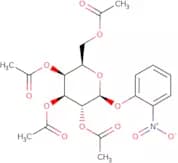
CAS :2-Nitrophenyl 2,3,4,6-tetra-O-acetyl-b-D-galactopyranoside is a fluorescent substrate for β-galactosidase. It is used in food testing, environmental testing and diagnostics. This substrate is also used to detect the presence of β-galactosidase activity in cells and tissues. 2NPTABG provides a fluorescence signal that can be detected with an ultraviolet light or a luminometer. The luminescence intensity decreases when it reacts with β-galactosidase enzyme. This product has a CAS number of 3053-17-6 and is available at high purity levels.Degré de pureté :Min. 95%Masse moléculaire :469.4 g/mol4-Nitrophenyl 6-O-DMT-a-D-mannopyranoside
4-nitrophenyl 6-O-DMT-a-D-mannopyranoside is a fluorescent substrate for the enzyme beta-glucosidase. It reacts with an acyl group at the C2 position of the glycoside moiety, producing an aldehyde group at the C1 position and a hydroxymethylene group at the C4 position. This reaction is catalyzed by beta-glucosidase, which cleaves the glycosidic linkage in sucrose and other disaccharides. The product can be detected using luminescence methods, such as chemiluminescence or bioluminescence.
4-nitrophenyl 6-O-DMT-a-D-mannopyranoside is used to detect β glucosidase activity in bacteria. This substrate has been shown to be sensitive and specific for β glucosidase activity when combined with fluorescence detection technologyDegré de pureté :Min. 95%Masse moléculaire :603.62 g/mol4-Nitrophenyl b-D-cellohexaoside
CAS :4-Nitrophenyl b-D-cellohexaoside is a substrate for many enzymes and can be used to detect the presence of these enzymes in biological samples. It can also be used to detect the presence of bacteria, fungi, parasites, and viruses. 4-Nitrophenyl b-D-cellohexaoside is an excellent substrate for enzyme reactions that produce a chromogenic or fluorogenic product. This product is often conjugated with other compounds such as antibodies or antigens to form an immunoassay. 4-Nitrophenyl b-D-cellohexaoside is made from a high purity chemical by a process called nitration with sodium nitrate and sulfuric acid.
Degré de pureté :Min. 95%Masse moléculaire :1,111.95 g/mol5-Bromo-3-indoxyl-β-D-galactopyranoside-6-sulfate sodium salt
CAS :5-Bromo-3-indoxyl-beta-D-galactopyranoside (5BIG) is a fluorogenic substrate that has been shown to be an effective enzyme substrate. It is used in the chemiluminescence, bioluminescence, and fluorescence detection of enzymes. 5BIG is also a chromogenic substrate for nucleic acid staining and can be used in food testing as well as diagnostics. 5BIG is highly pure and high quality with a CAS number of 1301706-59-1.
Formule :C14H15BrNNaO9SDegré de pureté :Min. 98 Area-%Masse moléculaire :476.24 g/mol2-Nitrophenyl 2-acetamido-2-deoxy-b-D-galactopyranoside
CAS :2-Nitrophenyl 2-acetamido-2-deoxy-b-D-galactopyranoside is a carboxymethyl derivative of the natural substrate of β-galactosidase, which is used as a substrate for the production of recombinant proteins in the corynebacterium glutamicum. The enzyme β-galactosidase hydrolyzes this substrate to produce an acid molecule and a sugar molecule. This product can be used in biotechnological processes for the production of recombinant proteins or other bioactive molecules. It can also be used in the isolation of nucleic acid from bacteria or fungi, or to study bacterial membrane transport systems. 2NPGAG can be expressed as a recombinant protein with expression vectors such as pET21a and pET24a. It has been shown that this product inhibits transport through membranes by binding to cellulose, which may be useful for studies on cellulose biosynthesis
Degré de pureté :Min. 95%Masse moléculaire :342.3 g/mol4-Nitrophenyl 6-O-DMT-2,3,4-tri-O-levulinoyl-a-D-mannopyranoside
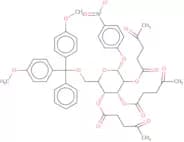
4-Nitrophenyl 6-O-DMT-2,3,4-tri-O-levulinoyl-a-D-mannopyranoside is a fluorogenic substrate that can be used for the detection of DMT (dihydroxyacetone) in food products. It has been shown to be an excellent alternative to the more commonly used 4,5′,6,7,8,-Tetrabromoindoxyl 3′,5′,6′,-tetraacetic acid (TBA). This product is also used as a chromogenic substrate for the determination of phenols in environmental testing and as a ligand conjugate for immunohistochemistry staining. The purity of this product is guaranteed and it has been tested extensively.
Degré de pureté :Min. 95%Masse moléculaire :897.92 g/mol3-Indolyl 2-acetamido-2-deoxy-b-D-galactopyranoside
3-Indolyl 2-acetamido-2-deoxy-b-D-galactopyranoside is a fluorogenic substrate that reacts with the enzyme β-galactosidase to produce a blue product. This product can be used to diagnose the presence of β-galactosidase in culture media, as well as in food and environmental testing. 3IAG is also a chromogenic substrate that can be used for detection of β-galactosidase activity.
Degré de pureté :Min. 95%Masse moléculaire :336.34 g/mol4-Nitrophenyl 4,6-benzylidene-3-O-(2,3,4,6-tetra-O-[4-methoxybenzyl]-a-D-glucopyranosyl)-a-D-glucopyranoside
4-Nitrophenyl 4,6-benzylidene-3-O-(2,3,4,6-tetra-O-[4-methoxybenzyl]-a-D-glucopyranosyl)-a-D-glucopyranoside is a chemiluminescent substrate used for the detection of various enzymes. This substrate is commonly used in enzyme assays to measure the activity of β-galactosidase, α-amylase, and β-lactamase. The product can be used in diagnostic applications such as food testing and bacterial identification.Degré de pureté :Min. 95%Masse moléculaire :1,088.02 g/mol2-Chloro-4-nitrophenyl β-D-xylopyranoside
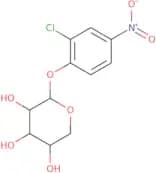
CAS :2-Chloro-4-nitrophenyl β-D-xylopyranoside is a fluorogenic substrate that can be used for the detection of β-glucuronidase activity in food testing, environmental testing, and diagnostics. It has been shown to be an effective substrate for detecting β-glucuronidase activity with a high degree of sensitivity and specificity. 2CNPX can also be used as a chromogenic substrate for the detection of β-glucuronidase activity in food testing and environmental testing. The conjugate form of this substrate is useful for immunochemical assays, such as enzyme linked immunosorbent assay (ELISA) or radioimmunoassay (RIA). This product is also used as a ligand in fluorescence resonance energy transfer (FRET) assays.
2CNPX can be used to detect β-glucuronidase activity by chemiluminescenceFormule :C11H12ClNO7Degré de pureté :Min. 95%Masse moléculaire :305.67 g/molAldol® 467 N-acetyl-beta-D-glucosaminide, Biosynth Patent: EP 2427431 and US 8940909
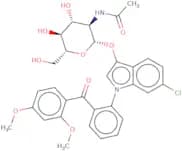
CAS :Aldol® 467 N-acetyl-beta-D-glucosaminide is a chromogenic and fluorogenic enzyme substrate used for detection of beta-N-acetyl-glucosaminidase activity. The colorless enzyme substrate is cleaved in the presence of beta-N-acetyl-glucosaminidase yielding development of a yellow product. In addition, green fluorescence is generated when a suitable matrix or Aldol® 355 fluorescence enhancer is present. Aldol® 467 N-acetyl-beta-D-glucosaminide amide can be used in enzymatic assays or in live bacterial cultures. Aldol® 467 N-acetyl-beta-D-glucosaminide is suitable for use in liquid and solid media, under aerobic as well as anaerobic conditions.
Formule :C31H31ClN2O9Degré de pureté :Min. 95%Couleur et forme :PowderMasse moléculaire :611.04 g/mol4-Nitrophenyl D-maltopentaoside
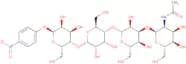
CAS :Chromogenic substrate targeting amylase and maltase
Formule :C36H55NO28Degré de pureté :Min. 95%Masse moléculaire :949.81 g/mol4-Nitrophenyl b-globo-N-tetraoside
CAS :4-Nitrophenyl beta-galactoside (pNP-Gal) is a chromogenic substrate commonly used in enzymatic assays to detect and quantify the presence of beta-galactosidase. It is hydrolyzed by the enzyme to release 4-nitrophenol, which produces a yellow color that can be measured spectrophotometrically. Similarly, 4-Nitrophenyl beta-glucoside (pNP-Glc) can be used to assay beta-glucosidase activity. 4-Nitrophenyl beta-globotrioside (pNP-Glo) is a similar compound that has been designed as a substrate for glycosidases that cleave terminal beta-galactosyl-(1->3)-N-acetylgalactosamine residues. In these assays, the release of 4-nitrophenol can be measured to determine the activity of the enzyme under study. The use of chromogenic substrates like pNP-Glo allows for the rapid and reliable detection of glycosidase activity in a variety of biological samples.
Degré de pureté :Min. 95%Couleur et forme :PowderMasse moléculaire :828.72 g/mol4-Nitrophenyl a-D-maltotetraoside
CAS :4-Nitrophenyl alpha-D-maltotetraoside is a chromogenic substrate used for the detection of alpha-glucosidase and alpha-amylase activity. The four glucose units in the molecule are hydrolyzed by the enzyme, releasing 4-nitrophenol and allowing for easy colorimetric measurement of enzymatic activity
Degré de pureté :Min. 95%Masse moléculaire :787.67 g/mol1-Naphthyl-α-D-mannopyranoside
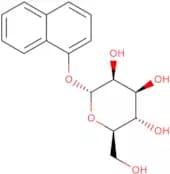
CAS :1-Naphthyl-alpha-D-mannopyranoside is a chromogenic substrate. It is used in diagnostics and as a reagent for enzymatic analysis of alpha-mannosidase activity in culture media, food testing, and environmental testing.
Formule :C16H18O6Degré de pureté :Min. 95%Couleur et forme :PowderMasse moléculaire :306.31 g/molNaphthol AS-CL phosphate
CAS :Modified naphtol AS substrate used in histochemical and cytochemical staining
Degré de pureté :Min. 95%Masse moléculaire :407.74 g/mol4-Nitrophenyl-myo-inositol-1-yl phosphate
CAS :4-Nitrophenyl-myo-inositol-1-yl phosphate is a highly specific chromogenic substrate used for the detection, quantification, and characterization of phosphoinositide phosphatases. When cleaved by the target enzyme, it generates a highly absorbing 4-nitrophenyl moiety, producing a yellow color that can be measured spectrophotometrically. This versatile substrate is valuable in examining phosphoinositide phosphatase activity, enzyme kinetics, substrate specificity, and inhibition studies in various cellular processes, including signal transduction, lipid metabolism, and membrane trafficking.
Degré de pureté :Min. 95%Masse moléculaire :381.23 g/mol2-O-(4-Nitrophenyl)-a-D-N-glycolylneuraminic acid
CAS :2-O-(4-Nitrophenyl)-a-D-N-glycolylneuraminic acid is commonly used to measure the activity of sialidase enzymes, specifically those that cleave glycoconjugates containing 2-O-(4-nitrophenyl)-alpha-D-N-glycolylneuraminic acid. The resulting product can be detected by measuring the absorbance at a specific wavelength using a spectrophotometer. This substrate offers a high degree of specificity for glycolylneuraminic acid-containing substrates and is useful for both research and diagnostic purposes.Degré de pureté :Min. 95%Couleur et forme :PowderMasse moléculaire :446.36 g/mol





![4-Nitrophenyl 4,6-benzylidene-3-O-(2,3,4,6-tetra-O-[4-methoxybenzyl]-a-D-glucopyranosyl)-a-D-gluco…](/_next/image/?url=https%3A%2Fstatic.cymitquimica.com%2Fproducts%2F3D%2Fthumb-webp%2FEN04840.webp&w=3840&q=75)