Autres
6322 produits trouvés pour "Autres"
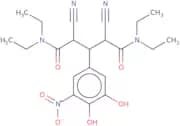
2,4-Dicyano-3-(3,4-dihydroxy-5-nitrophenyl)-N1,N1,N5,N5-tetraethylpentanediamide
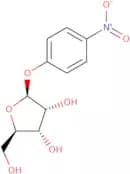
2,4-Dicyano-3-(3,4-dihydroxy-5-nitrophenyl)-N1,N1,N5,N5-tetraethylpentanediamide is a white crystalline solid that is used as an analytical reference standard in HPLC. It is used for the determination of purity and impurities in pharmaceuticals and drug products. This compound can be custom synthesized or obtained from natural sources. It can be found in the USP Drug Impurity Standards and the European Pharmacopoeia.Formule :C21H27N5O6Degré de pureté :Min. 95%Masse moléculaire :445.47 g/mol4-Nitrophenyl b-D-ribofuranoside
CAS :4-Nitrophenyl β-D-ribofuranoside is a synthetic chromogenic molecule designed to profile phosphorolytic enzyme activity, specifically ribonucleoside-hydrolyzing enzymes. Upon hydrolysis by these enzymes, it releases a 4-nitrophenolic compound, which can be monitored spectrophotometrically at 405-410 nm as a quantitative indicator of enzyme activity. This substrate is suitable for studying ribonucleoside-hydrolyzing enzymes, such as ribo- and deoxyribonucleases, in various biological systems and, in turn, could help advance our understanding of nucleic acid metabolism, gene function, and regulatory processes.Formule :C11H13NO7Degré de pureté :Min. 97 Area-%Couleur et forme :White PowderMasse moléculaire :271.22 g/molAldol® 518 choline phosphate, Biosynth Patent: EP 2427431 and US 8940909
Aldol® 518 choline phosphate is a fluorogenic substrate that is used in the detection of enzyme activity. It has been shown to be an effective substrate for enzymes such as beta-galactosidase and phosphatases, and can be used in the detection of bacterial growth. Aldol® 518 choline phosphate is also a chromogenic substrate for the detection of alkaline phosphatase. It has been shown to have high purity and bioluminescence properties, making it useful for detecting bacteria in culture media or environmental testing. The conjugate of Aldol® 518 choline phosphate with various ligands can be used to detect specific proteins or antibodies.Formule :C28H31ClN3O5PDegré de pureté :Min. 95 Area-%Masse moléculaire :556 g/mol5-Bromo-3-indoxyl-beta-D-galactopyranoside
CAS :Chromogenic substrate for beta-D-galactosidase yielding a lapis colored precipitate. 5-Bromo-3-indoxyl-beta-D-galactopyranoside can be used in conjunction with isopropyl-beta-D-thiogalactopyranoside as an alternative to 5-bromo-4-chloro-3-indolyl-beta-D-galactopyranoside (X-gal), producing a darker blue color for detection of beta-galactosidase activity in bacterial colonies in a colorimetric assay to detect recombinants (white) from non-recombinants (blue). 5-Bromo-3-indoxyl-beta-D-galactopyranoside is also used in histochemistry to demonstrate beta-galactosidase activity in tissues.Formule :C14H16BrNO6Degré de pureté :Min. 99.0 Area-%Masse moléculaire :374.20 g/mol5-Bromo-4-chloro-3-indoxyl-1-acetate
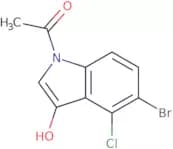
CAS :5-Bromo-4-chloro-3-indoxyl-1-acetate is a chromogenic substrate used to detect the specific enzymatic activity of esterase. After cleavage, 5-bromo-4-chloro-indoxyl is released, resulting in a blue to blue-green color change in bacterial colonies or media. 5-Bromo-4-chloro-3-indoxyl-1-acetate is used in bacterial esterase activity assays (e.g. Pseudomonas spp.).
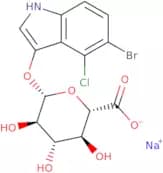
Degré de pureté :Min. 95%Couleur et forme :PowderMasse moléculaire :288.52 g/mol5-Bromo-4-chloro-3-indolyl b-D-glucuronide sodium salt
CAS :Chromogenic substrate for beta-glucuronidase
Formule :C14H12BrClNNaO7Degré de pureté :Min. 98 Area-%Couleur et forme :White Off-White PowderMasse moléculaire :444.59 g/mol6-Chloro-3-indoxyl phosphate, p-toluidine salt
CAS :A substrate for visualising alkaline phosphatase activity. Produces a red colored insoluble end product that is detected visually, when used together with nitroblue tetrazolium. The substrate system is versatile and functions in a variety of applications, including Northern, Southern, and Western blotting, in situ hybridization, ELISAs and immunohistochemistry. DMF soluble.Formule :C15H16ClN2O4PDegré de pureté :Min. 98.0 Area-%Masse moléculaire :354.73 g/mol5-Bromo-4-chloro-3-indoxyl-β-D-xylopyranoside
CAS :5-Bromo-4-chloro-3-indoxyl-beta-D-xylopyranoside is a fluorogenic substrate that can be used to measure the activity of bacterial esterases. The enzyme cleaves the xylose moiety from 5-bromo-4-chloro-3-indoxyl, yielding indoxyl as an intermediate product. This reaction can be catalyzed by esterases found in bacteria, which hydrolyze esters containing a single hydroxyl group at one end and a carboxylic acid or alcohol at the other end. Indoxyl is fluorescent and can be detected using a fluorimeter. 5BX is also chromogenic, so it can be used as an enzyme substrate for detecting beta galactosidase activity in bacteria such as Mycobacterium smegmatis or Escherichia coli. 5BX is also used to detect chemiluminesFormule :C13H13BrClNO5Masse moléculaire :378.61 g/molRef: 3D-B-7750
-Unit-ggÀ demander1gÀ demander5gÀ demander10gÀ demander500mgÀ demander2500mgÀ demander5-Bromo-4-chloro-3-indoxyl-N-acetyl-beta-D-glucosaminide
CAS :Chromogenic substrate for N-acetyl-β-D-glucosaminidase yielding a blue precipitate. Contained in certain mycological culture media. Used in histochemistry.
Formule :C16H18BrClN2O6Degré de pureté :Min. 99.5 Area-%Masse moléculaire :449.69 g/mol6-Bromo-2-naphthyl-2-acetamido-2-deoxy-β-D-glucopyranoside
CAS :6-Bromo-2-naphthyl 2-acetamido-2-deoxy-beta-D-glucopyranoside is a chromogenic substrate used for the detection of chitinase activity. Upon hydrolysis by chitinase, it releases a yellow-brown color, which is easily detected by spectrophotometry. This substrate has been used to study chitinases in various organisms, including bacteria, fungi, and insects. It can also be used to quantitate chitinase activity in various biological samples.Formule :C18H20BrNO6Masse moléculaire :426.26 g/molOstazin brilliant red H-3B galactomannan
Ostazin Brilliant Red H-3B Galactomannan is a chemiluminescent substrate used for the detection of β-1,4-galactomannans. It reacts with the glucose residues on the mannan backbone to produce a red fluorescent product. This product can be detected by spectrophotometry at an excitation wavelength of 395 nm and emission wavelength of 510 nm. The Ostazin Brilliant Red H-3B Galactomannan substrate is useful in detecting Staphylococcus aureus, Streptococcus pyogenes, Streptococcus pneumoniae, Group A streptococci, Group B streptococci, Group D streptococci, Group G streptococci, and Group C streptococci.
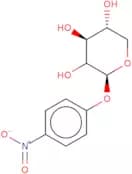
Degré de pureté :Min. 95%4-Nitrophenyl b-D-arabinopyranoside
CAS :Chromogenic substrate targeting beta-L-arabinofuranosidaseDegré de pureté :Min. 95%Masse moléculaire :271.22 g/mol2-Naphthyl-beta-D-galactopyranoside
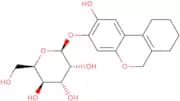
CAS :2-Naphthyl-β-D-galactopyranoside is a substrate for β-galactosidase. 2-Naphthol is released upon hydrolyzation. By simultaneous coupling with a suitable staining reagent, such as hexazonium p-rosaniline, the corresponding reddish-brown azo-dye is formed. Naphthols can also be detected by fluorescence analysis.Formule :C16H18O6Degré de pureté :Min. 99 Area-%Masse moléculaire :306.32 g/mol3,4-Cyclohexenoesculetin beta-D-galactopyranoside
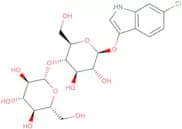
CAS :Chromogenic substrate for beta-galactosidaseFormule :C19H22O9Degré de pureté :Min. 95 Area-%Couleur et forme :PowderMasse moléculaire :394.37 g/mol6-Chloro-3-indolyl β-D-cellobioside
CAS :6-Chloro-3-indolyl b-D-cellobioside is a chromogenic substrate that produces a salmon-pink color after enzymatic cleavage. It is used for detecting the activity of beta-D-cellobiosidase in enzyme assays.
Degré de pureté :Min. 95%Couleur et forme :White To Off-White SolidMasse moléculaire :491.87 g/mol2-Naphthyl-Beta-D-Glucuronide Sodium Salt
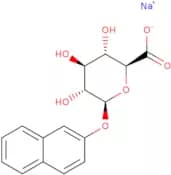
CAS :2-Naphthyl-beta-D-glucuronide sodium salt is an enzyme substrate to detect beta-glucuronidase. The enzyme cleaves the glycosidic bond in 2-naphthyl-beta-D-glucuronide to release 2-naphtol and glucuronic acid. Beta-glucuronidase activity assays are important in many fields such as cancer research, as the enzyme is expressed in some tumors and its activity can be targeted for cancer therapy. The enzyme has also an important role in drug metabolism as it recognizes and binds to drug glucuronide conjugate (as 2-naphthyl-beta-D-glucuronide) facilitating its hydrolysis to release the active part. 2-Naphthyl-beta-D-glucuronide sodium salt has a higher solubility as it is in its salt form.Formule :C16H15NaO7Degré de pureté :Min. 95%Couleur et forme :PowderMasse moléculaire :342.28 g/mol5-Bromo-4-chloro-1-methyl-3-indolyl-α-D-glucopyranoside
CAS :5-Bromo-4-chloro-1-methyl-3-indolyl-α-D-glucopyranoside is a fluorescent substrate used for the detection of α-glucuronidase.Formule :C15H17BrClNO6Degré de pureté :Min. 99.0 Area-%Masse moléculaire :422.66 g/mol5-Bromo-4-chloro-3-indoxyl-alpha-D-N-acetylneuraminic acid, sodium salt
CAS :Chromogenic substrate for neuraminidase yielding a blue precipitate upon cleavage.Formule :C19H21BrClN2NaO9Degré de pureté :Min. 98.0 Area-%Masse moléculaire :559.74 g/mol5-Bromo-4-chloro-3-indolyl a-D-mannopyranoside
CAS :5-Bromo-4-chloro-3-indolyl a-D-mannopyranoside is a chromogenic substrate used to detect the specific enzymatic activity of alpha-mannosidase. After cleavage, 5-bromo-4-chloro-indoxyl is released, resulting in a blue to blue-green color change in bacterial colonies or media. 5-Bromo-4-chloro-3-indolyl a-D-mannopyranoside is used in alpha-mannosidosis diagnosis and other lysosomal storage disorder.Formule :C14H15BrClNO6Degré de pureté :Min. 95 Area-%Couleur et forme :PowderMasse moléculaire :408.63 g/molAldol® 470 butyrate, Biosynth Patent: EP 2427431 and US 8940909
CAS :Produit contrôléAldol® 470 butyrate, a chromogenic substrate manufactured by Cymit Quimica and used for enzymatic assays that produces a yellow-orange color upon enzymatic cleavage.Formule :C27H25NO5Degré de pureté :Min. 95%Couleur et forme :PowderMasse moléculaire :443.5 g/mol