


Autres
6300 produits trouvés pour "Autres"
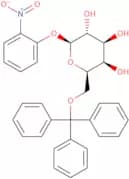
2-Nitrophenyl 6-O-trityl-b-D-galactopyranoside
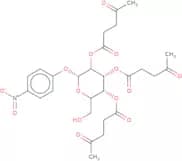
CAS :2-Nitrophenyl 6-O-trityl-b-D-galactopyranoside is a chromogenic enzyme substrate used in assays to detect galactosidase activity. It is a derivative of galactose that can be hydrolyzed by galactosidase to release the yellow-colored 2-nitrophenyl group, which can be detected spectrophotometrically. The trityl group helps to stabilize the molecule and prevent undesired hydrolysis during storage. This substrate is commonly used in the study of carbohydrate metabolism and in the detection of galactosidase activity in microorganisms.Degré de pureté :Min. 95%Masse moléculaire :543.56 g/mol4-Nitrophenyl 2,3,4-tri-O-levulinoyl-a-D-mannopyranoside
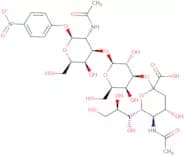
4-Nitrophenyl 2,3,4-tri-O-levulinoyl-a-D-mannopyranoside is a fluorogenic substrate that contains a reactive group of 2,3,4-tri-O-levulinoyl. This compound can be used to measure the activity of enzymes such as beta-glucosidase and alpha-galactosidase. 4NP2OMP is an excellent ligand for metal ions and has been shown to bind to copper in the presence of ATP. 4NP2OMP can also be used as a diagnostic agent for measuring the activity of bacterial beta-glucosidase and alpha galactosidase.Degré de pureté :Min. 95%Masse moléculaire :595.55 g/mol4-Nitrophenyl (N-acetyl-a-neuraminosyl)-(2,3)-O-b-D-galactopyranosyl-(1,3)-2-acetamido-2-deoxy-b-D-galactopyranoside
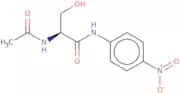
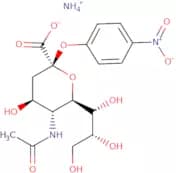
CAS :4-Nitrophenyl (N-acetyl-a-neuraminosyl)-(2,3)-O-b-D-galactopyranosyl-(1,3)-2-acetamido-2-deoxy-b-D-galactopyranoside is a fluorogenic substrate that is used in the detection of enzyme activity. It reacts with a specific enzyme to produce light. This product has been shown to be useful for detecting β -galactosidase, β -glucuronidase, α -mannosidase, and lactose permeases. The product is also used in the diagnosis of urinary tract infections and other diseases. This product is not intended for use in humans or animals.Degré de pureté :Min. 95%Masse moléculaire :795.7 g/molN-Acetyl-L-serine p-nitroanilide
N-Acetyl-L-serine p-nitroanilide is a fluorescent probe used for the detection of glucose in urine. It has a high purity and is suitable for use as a substrate for many enzymes, including alkaline phosphatase, β-galactosidase, and peroxidase. N-Acetyl-L-serine p-nitroanilide has been shown to be an excellent indicator of bacterial growth in culture media.
Formule :C11H12N2O6Degré de pureté :Min. 95%Couleur et forme :White powder.Masse moléculaire :268.22 g/mol4-Nitrophenyl 2-acetamido-2-deoxy-6-O-trityl-b-D-glucopyranoside
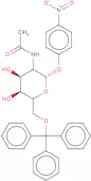
4-Nitrophenyl 2-acetamido-2-deoxy-6-O-trityl-b-D-glucopyranoside offers unmatched versatility as a chromogenic pNP substrate for detecting b-D-glucopyranosidase activity. The substrate is specifically designed to produce a yellow 4-nitrophenol product upon enzyme hydrolysis, which can be measured using absorbance spectroscopy. The unique tritylated glucopyranoside group ensures improved compound stability and selectivity while providing ease of handling. This versatile substrate is ideal for a broad range of biochemical, research, and diagnostic applications.Degré de pureté :Min. 95%Masse moléculaire :584.62 g/molAldol® 515 β-D-xylopyranoside, Biosynth Patent: EP 2427431 and US 8940909
CAS :Aldol® 515 beta-D-xylopyranoside is a chromogenic substrate that is used in food testing. It is an alternative to the more common glucose and sucrose, which are not suitable for some types of assays. Aldol® 515 beta-D-xylopyranoside is also used in diagnostics as a ligand for fluorescent antibody staining and chemiluminescence assays. It has been shown to increase the sensitivity of these tests by up to 10 times. The substrate has been tested extensively and is safe for use with a wide range of bacteria including E. coli, S. typhimurium, M. tuberculosis, and C. albicans at concentrations up to 100 mM without any inhibitory effects on growth or viability.
END>.Formule :C28H34N2O6Degré de pureté :Min. 95.0 Area-%Masse moléculaire :494.59 g/mol4-Nitrophenyl 4,6-O-benzylidene-a-D-mannopyranoside
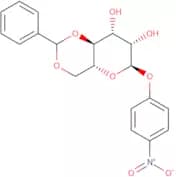
CAS :4-Nitrophenyl 4,6-O-benzylidene-a-D-mannopyranoside is a chromogenic substrate for alpha-mannosidase and beta-glucosidase. It is used as a diagnostic tool for identifying the presence of these enzymes in certain bacteria. This product is also used in food testing, environmental testing, and bioluminescence.Degré de pureté :Min. 95%Masse moléculaire :389.36 g/mol4-Nitrophenyl 2,3,4,6-tetra-O-acetyl-a-D-glucopyranoside
CAS :4-Nitrophenyl 2,3,4,6-tetra-O-acetyl-a-D-glucopyranoside is a useful substrate for enzymatic assays. This high-sensitivity chromogenic pNP substrate offers enhanced selectivity and increased detection ability, allowing for a broad range of applications in the field of glycosidase research. Featuring rapid colorimetric readouts with easily detectable endpoint determination, this substrate delivers clear and accurate results every time.
Degré de pureté :Min. 95%Masse moléculaire :469.4 g/mol4-Methyl-2-nitrophenyl b-D-galactopyranoside
4-Methyl-2-nitrophenyl b-D-galactopyranoside is a fluorogenic substrate for β-galactosidase. It has a high purity and is of high quality. 4-Methyl-2-nitrophenyl b-D-galactopyranoside is used as an enzyme substrate in diagnostics, as a chromogenic substrate in staining, and as a conjugate in chemiluminescence. It can be used for the detection of β-galactosidase in culture media and for the detection of β-galactosidase in environmental testing. This chemical also has bioluminescent properties that make it useful for food testing.Degré de pureté :Min. 95%Masse moléculaire :315.28 g/mol4-Nitrophenyl O-(N-acetyl-a-neuraminosyl)-(2-3)-b-D-galactopyranosyl-(1-4)-2-acetamido-2-deoxy-b-D-glucopyranoside
CAS :4-Nitrophenyl O-(N-acetyl-a-neuraminosyl)-(2-3)-b-D-galactopyranosyl-(1-4)-2-acetamido-2-deoxybDglucopyranoside is a fluorescent compound that has been used as a substrate in enzyme assays. It has been shown to be an effective ligand for the enzyme beta galactosidase, which hydrolyzes the substrate to produce 4nitrophenol and o-(Nacetyl)a-neuraminic acid. This product is CAS No. 501427-92-5 and can be used as a high purity, high quality reagent for conjugation.Degré de pureté :Min. 95%Masse moléculaire :795.7 g/mol4-Nitrophenyl b-D-galactopyranosiduronic acid
CAS :4-Nitrophenyl b-D-galactopyranosiduronic acid is a chemiluminescent substrate for the detection of β-galactosidase. It is used for the determination of α-galactosidase activity in urine, feces, and blood. This product can be used as a chromogenic substrate for the detection of β-galactosidase in tissue culture medium. 4-Nitrophenyl b-D-galactopyranosiduronic acid is also a fluorogenic substrate which can be conjugated to an enzyme such as horseradish peroxidase or alkaline phosphatase.Degré de pureté :Min. 95%Masse moléculaire :315.23 g/mol4-Nitrophenyl 2-azido-2-deoxy-a-D-galactopyranoside
CAS :4-Nitrophenyl 2-azido-2-deoxy-a-D-galactopyranoside is a superior chromogenic substrate for the precise determination of alpha-D-galactosidase enzyme activity. This substrate features a unique 2-azido moiety providing enhanced sensitivity and specificity in biochemical assays. Upon enzymatic cleavage, it releases the highly fluorescent compound 4-nitrophenol, which simplifies quantification and tracking of enzyme activity in applications such as drug discovery, genetic studies, and enzyme inhibition assays.Degré de pureté :Min. 95%Couleur et forme :White PowderMasse moléculaire :326.26 g/mol2-Chloro-4-nitrophenyl b-D-cellobioside
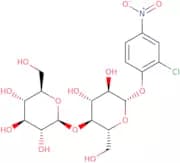
CAS :2-Chloro-4-nitrophenyl b-D-cellobioside (CNPG) is a chromogenic enzyme substrate that is commonly used to detect and measure the activity of β-glucosidases. CNPG is cleaved by the enzyme into the chromogenic product, which can be detected spectrophotometrically. β-glucosidases are important enzymes in the breakdown of cellulose, and CNPG is a widely used substrate for the detection and quantification of these enzymes in various research studies.Degré de pureté :Min. 95%Couleur et forme :PowderMasse moléculaire :497.83 g/mol2-Nitrophenyl 2-acetamido-3,4,6-tri-O-acetyl-2-deoxy-a-D-glucopyranoside
CAS :2-Nitrophenyl 2-acetamido-3,4,6-tri-O-acetyl-2-deoxy-a-D-glucopyranoside is a chromogenic substrate commonly used in enzyme assays for the detection and quantification of enzyme activity. It is a colorless substrate that is enzymatically converted into a yellowish product, the intensity of which is directly proportional to the enzyme activity present in the sample.Degré de pureté :Min. 95%Masse moléculaire :468.41 g/mol4-Nitrophenyl b-lacto-N-neotetraoside
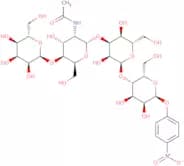
CAS :4-Nitrophenyl b-lacto-N-neotetraoside is a potent antibiotic that inhibits bacterial growth by binding to the beta subunit of DNA gyrase. This drug has been shown to be effective against methicillin resistant Staphylococcus aureus (MRSA) and Clostridium perfringens, although is not active against acid-fast bacteria such as Mycobacterium tuberculosis or Mycobacterium avium complex. Gatifloxacin has shown anti-inflammatory properties, which may be due to its inhibition of prostaglandin synthesis.Degré de pureté :Min. 95%Masse moléculaire :828.72 g/mol2-Chloro-4-nitrophenyl 2,3,4,6-tetra-O-acetyl-a-D-glucopyranoside
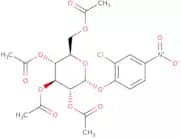
CAS :2-Chloro-4-nitrophenyl 2,3,4,6-tetra-O-acetyl-a-D-glucopyranoside is a chromogenic substrate used to characterize enzymes in biochemical assays. The substrate is cleaved by enzymes, such as esterases and glycosidases, releasing the chromogenic group, which can be detected by its yellow color.Degré de pureté :Min. 95%Masse moléculaire :503.84 g/mol4-Nitrophenyl 4,6-benzylidene-2-O-(2,3,4,6-tetra-O-[4-methoxybenzyl]-a-D-glucopyranosyl)-a-D-glucopyranoside
4-Nitrophenyl 4,6-benzylidene-2-O-(2,3,4,6-tetra-O-[4-methoxybenzyl]-a-D-glucopyranosyl)-a-D-glucopyranoside is a fluorogenic substrate that is used in diagnostic assays to measure the activity of enzymes such as β–galactosidase and β–glucuronidase. It is also an enzyme substrate for culture media and chemiluminescence. This product has a CAS number of 57316-92-8.Degré de pureté :Min. 95%Masse moléculaire :1,088.02 g/mol6-Chloro-1H-indol-3-yl b-D-glucuronide
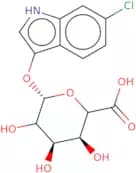
CAS :6-Chloro-1H-indol-3-yl b-D-glucuronide is a chemiluminescence substrate that can be used in immunoassays and other biochemical analyses. 6CIG is a highly purified, high quality product with a CAS No. 138182-19-1. This product has been tested for bacterial contamination and found to be free of detectable levels of mycoplasma, yeast, mold, or other microbial agents. It has also been tested for its ability to support the growth of various types of cells and found to be suitable for cell culture media. This chemical has been shown to produce an intense blue chemiluminescent reaction when reacted with horseradish peroxidase enzyme and hydrogen peroxide.Degré de pureté :Min. 95%Masse moléculaire :343.72 g/molHexoprenaline
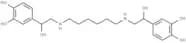
CAS :Hexoprenaline is a stimulant of adrenergic beta 2 receptors used as a bronchodilator, antiasthmatic agent, and tocolytic agent.Formule :C22H32N2O6Couleur et forme :SolidMasse moléculaire :420.52,4-Dinitrophenyl)-L-lysine hydrochloride monohydrate
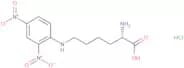
CAS :2,4-Dinitrophenyl)-L-lysine hydrochloride monohydrate is a lysine derivative that has been modified with a 2,4-dinitrophenyl group. It could be used as an enzyme substrate to monitor enzymes that recognize and modify lysine residues, such as lysine methyltransferases and demethylases, lysine acylases and lysine oxidases.
Degré de pureté :Min. 95%Couleur et forme :PowderMasse moléculaire :348.74 g/mol2-Chloro-4-nitrophenyl 2-acetamido-2-deoxy-β-D-glucopyranoside
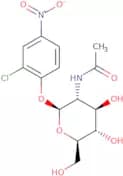
CAS :2-Chloro-4-nitrophenyl 2-acetamido-2-deoxy-β-D-glucopyranoside is a chromogenic substrate used for beta-N-acetylglucosaminidase assays. Upon enzymatic hydrolysis, 2-chloro-4-nitrophenol is released, which has a yellowish color. It is used in diagnostic applications such as lysosomal storage disorder diagnosis (for example, Tay-Sachs disease) and glycosidase inhibition studies.Formule :C14H17ClN2O8Degré de pureté :Min. 98 Area-%Couleur et forme :White PowderMasse moléculaire :376.75 g/mol4-Aminoantipyrine
CAS :4-Aminoantipyrine has been used as an analgesic and anti-inflammatory agent. It can also target peroxidase enzymes to produce a red colorFormule :C11H13N3OCouleur et forme :Off-White To Yellow SolidMasse moléculaire :203.24 g/molClemastine
CAS :Clemastine (Meclastin) is an antagonist of the H1 receptor and exhibits anti-inflammatory effects.Formule :C21H26ClNODegré de pureté :99.21%Couleur et forme :SolidMasse moléculaire :343.894-Nitrophenyl b-D-cellopentaoside
CAS :Substrates for endoglucanase and beta-cellobiohydrolase activity in the study of digestive system in Zygentoma as an insect model for high cellulase activityFormule :C36H55NO28Degré de pureté :Min. 95%Couleur et forme :PowderMasse moléculaire :949.81 g/mol1-Bromo-3,5-dimethyladamantane
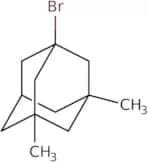
CAS :Intermediate in the synthesis of memantineFormule :C12H19BrDegré de pureté :Min. 95%Masse moléculaire :243.18 g/molBenzaldehyde
CAS :Produit contrôléBenzaldehydeFormule :C7H6OCouleur et forme :Colorless LiquidMasse moléculaire :106.041864-Nitrophenyl 2-azido-2-deoxy-b-D-galactopyranoside
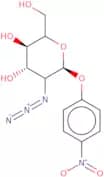
4-Nitrophenyl 2-azido-2-deoxy-beta-D-galactopyranoside is a chromogenic substrate for beta-galactosidase. Upon hydrolysis, para-nitrophenol is released yielding a yellowish colour. 4-Nitrophenyl 2-azido-2-deoxy-beta-D-galactopyranoside is used in different applications such as the Bacterial enzyme assays (e.g., E. coli detection)Degré de pureté :Min. 95%Couleur et forme :White To Off-White SolidMasse moléculaire :326.26 g/mol4-Nitrophenyl 2-acetamido-2-deoxy-4-O-(β-D-galactopyranosyl)-α-D-glucopyranoside
CAS :4-Nitrophenyl 2-acetamido-2-deoxy-4-O-(β-D-galactopyranosyl)-α-D-glucopyranoside is a high-quality chromogenic pNP enzyme substrate specifically designed to enable effective and accurate detection of enzyme activity. By utilizing this advanced substrate, researchers and professionals can perform a range of applications, including activity assays, enzyme inhibition studies, and substrate specificity profiling. This substrate's unique properties result in exceptional sensitivity and throughput, ensuring effective results for a wide variety of enzyme assays.Formule :C20H28N2O13Degré de pureté :Min. 90%Couleur et forme :White PowderMasse moléculaire :504.44 g/molNaphthol AS-OL acetate
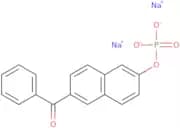
CAS :Modified naphtol AS substrate used in histochemical and cytochemical stainingDegré de pureté :Min. 95%Masse moléculaire :335.35 g/mol6-Benzoyl-2-naphthylphosphate disodium salt
CAS :6-Benzoyl-2-naphthylphosphate disodium salt is a chromogenic substrate used to detect and quantify alkaline phosphatase activity. After enzymatic hydrolysis, 6-benzoyl-2-naphthol is released, which can be detect or even further react with other reagents (e.g. Fast Red) to increase the intensity of the colorimetric signal. It is used in common applications such as ELISA, immunohistochemistry and Western Blotting.
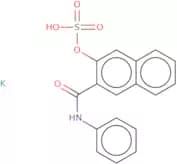
Degré de pureté :Min. 95%Masse moléculaire :374.24 g/molNaphthol AS sulphate potassium
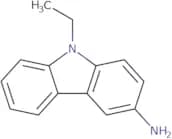
CAS :Modified naphtol AS substrate used in histochemical and cytochemical stainingFormule :C17H13NO5S•KDegré de pureté :Min. 95%Couleur et forme :PowderMasse moléculaire :382.45 g/mol3-Amino-9-ethylcarbazole
CAS :3-Amino-9-ethylcarbazole is a peroxidase substrate suitable for use in immunoblotting and immunohistochemical staining procedures. This substrate produces an insoluble end product that is red in color and can be observed visually.
Formule :C14H14N2Degré de pureté :Min. 95%Couleur et forme :Beige PowderMasse moléculaire :210.27 g/molRemazol brilliant blue R D-xylan
Remazol Brilliant Blue R D-xylan is a chromogenic substrate used for the detection and quantification of xylanase enzyme activity. This substrate consists of a xylan polymer backbone covalently linked to the Remazol Brilliant Blue R dye. Upon cleavage by xylanase enzymes, the dye is released, producing a vibrant blue color that can be easily measured spectrophotometrically. This substrate is widely used in various applications, including the study of xylanase-producing microorganisms, optimization of enzyme production, and evaluation of enzyme kinetics.
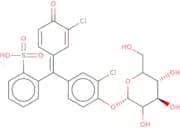
Degré de pureté :Min. 95%Couleur et forme :PowderChlorophenol red b-D-galactopyranoside
CAS :Used in biological studies as a chromogenic substrate for β-galactosidase; red color.Chlorophenol red indicates changes of pH in the range of 4.8 to 6.7 by turning the solution from yellow (at pH 4.8) to violet (at pH 6.7). Converted as signalogenic moiety of an enzyme substrate, chlorophenol red beta-D-galactopyranoside has a good proven sensitivity in the detection of beta-galactosidase activity in transfected mammalian cells, when compared to ONPG (o-nitrophenyl-beta-D-galactopyranoside) (Eustice, 1991)
Formule :C25H22Cl2O10SDegré de pureté :Min. 95%Couleur et forme :Orange Red PowderMasse moléculaire :585.41 g/molFulvestrant (R enantiomer)
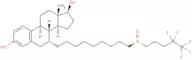
CAS :Fulvestrant R enantiomer is the less active R enantiomer of Fulvestrant. Fulvestrant is a potent estrogen receptor antagonist with an IC50 of 9.4 nM.Formule :C32H47F5O3SDegré de pureté :98%Couleur et forme :SolidMasse moléculaire :606.77Fulvestrant (S enantiomer)
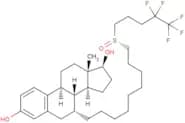
CAS :Fulvestrant S enantiomer is the less active S enantiomer of Fulvestrant. Fulvestrant is a potent estrogen receptor antagonist with an IC50 of 9.4 nM.Formule :C32H47F5O3SDegré de pureté :98%Couleur et forme :SolidMasse moléculaire :606.772-Nitrobenzyl 2-deoxy-2-fluoro-L-fucopyranoside
The photorelease of 2-deoxy-2-fluoro-L-fucose from 2-nitrobenzyl-2-deoxy-2-fluoro-L-fucopyranoside was performed under a 365 nm LED illumination. It has been shown in plant cells this liberated 2-deoxy-2-fluoro-L-fucose can be converted by the endogenous metabolic machinery into the corresponding nucleotide-sugar, which then efficiently inhibits Golgi-localized fucosyltransferases.Formule :C13H16FNO6Degré de pureté :Min. 95%Couleur et forme :PowderMasse moléculaire :301.27 g/molMethyl 4-nitrophenyl hexylphosphonate
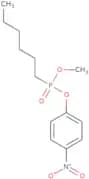
CAS :Methyl 4-nitrophenyl hexylphosphonate is a phosphonate inhibitor of the enzyme serine esterase. It has been shown to be more potent than other irreversible inhibitors such as ethyl 4-nitrophenyl hexylphosphonate and methyl 4-nitrophenoxybutyl phosphate. This compound is an immobilized form of the methyl 4-nitrophenyl hexylphosphonate that is immobilized on an inert surface, such as silica gel, via a covalent bonding process. The immobilization of the molecule ensures that it will not leach from the surface and is stable over time. The molecular weight of this substance is 411.5 Daltons and its molecular formula is C8H15NO4P. This substance has a diameter of 0.8 nm and can be found in crystalline form with a melting point of 143 degrees Celsius at atmospheric pressure. Methyl 4-nitrophenyl
Formule :C13H20NO5PDegré de pureté :Min. 95%Masse moléculaire :301.27 g/mol4-Nitrophenyl 2-acetamido-3,6-di-O-(2-acetamido-2-deoxy-b-D-glucopyranosyl)-2-deoxy-a-D-galactopyranoside
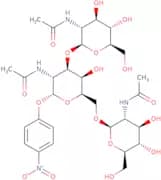
CAS :4-Nitrophenyl 2-acetamido-3,6-di-O-(2-acetamido-2-deoxy-b-D-glucopyranosyl)-2-deoxy-a-D-galactopyranoside is a fluorogenic substrate that is used in enzyme assays to detect the presence of an enzyme. The substrate reacts with the enzyme to produce a fluorescent product. 4NPAAG can be used for diagnostics, culture media, food testing and environmental testing.Formule :C30H44N4O18Degré de pureté :Min. 95%Masse moléculaire :748.69 g/mol4-Nitrophenyl a-L-galactopyranoside
Chromogenic substrate targeting alpha-D-galactosidaseDegré de pureté :Min. 95%Masse moléculaire :301.25 g/molCloprostenol
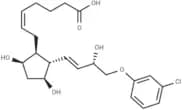
CAS :Cloprostenol is a synthetic prostaglandin and PGF2α analogue used in animals to terminate pregnancy and induce corpus luteum dissolution.Formule :C22H29ClO6Degré de pureté :99.81%Couleur et forme :Clear Colorless To Light Yellowish LiquidMasse moléculaire :424.92[Ser(Ac)]4-Leuprolide (5-Oxo-L-prolyl-L-histidyl-L-tryptophyl-N-acetyl-L-seryl-L-tyrosyl-D-leucyl-L-leucyl-L-arginyl-N-ethyl-L-prolinamide)
CAS :Lactams, nesoiFormule :C61H86N16O13Couleur et forme :Off-White PowderMasse moléculaire :1250.65603[D-His]-Leuprolide (5-Oxo-L-prolyl-D-histidyl-L-tryptophyl-L-seryl-L-tyrosyl-D-leucyl-L-leucyl-L-arginyl-N-ethyl-L-prolinamide)
CAS :Lactams, nesoiFormule :C59H84N16O12Couleur et forme :Off-White PowderMasse moléculaire :1208.64546[D-Ser]-Leuprolide (5-Oxo-L-prolyl-L-histidyl-L-tryptophyl-D-seryl-L-tyrosyl-D-leucyl-L-leucyl-L-arginyl-N-ethyl-L-prolinamide)
CAS :Lactams, nesoiFormule :C59H84N16O12Couleur et forme :Off-White PowderMasse moléculaire :1208.64546[L-Leu]6-Leuprolide (5-Oxo-L-prolyl-L-histidyl-L-tryptophyl-L-seryl-L-tyrosyl-L-leucyl-L-leucyl-L-arginyl-N-ethyl-L-prolinamide)
CAS :Lactams, nesoiFormule :C59H84N16O12Couleur et forme :Off-White PowderMasse moléculaire :1208.64546[Pro(Ac)]1-Leuprolide (5-Oxo-N-acetyl-L-prolyl-L-histidyl-L-tryptophyl-L-seryl-L-tyrosyl-D-leucyl-L-leucyl-L-arginyl-N-ethyl-L-prolinamide)
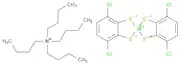
CAS :Lactams, nesoiFormule :C61H86N16O13Couleur et forme :Off-White PowderMasse moléculaire :1250.65603Tetrabutylammonium bis(3,6-dichloro-1,2-benzenedithiolato)nickelate
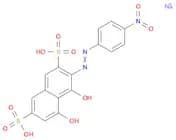
CAS :Formule :C28H40Cl4NNiS4Degré de pureté :98%Masse moléculaire :719.3893CHROMOTROPE 2B
CAS :Formule :C16H9N3Na2O10S2Degré de pureté :85%Couleur et forme :SolidMasse moléculaire :513.3663Benz[b]indeno[1,2-d]pyran-3,4,6a,9,10(6H)-pentol, 7,11b-dihydro-,(6aS,11bR)-
CAS :Formule :C16H14O6Degré de pureté :97%Couleur et forme :SolidMasse moléculaire :302.27876Ref: IN-DA00I98R
Produit arrêté3-Des[2-(Dimethylamino)ethyl]-3-[1-methyl-1-(Methylamino)ethyl]-Almotriptan
Formule :C17H25N3O2SMasse moléculaire :335.47




![4-Nitrophenyl 4,6-benzylidene-2-O-(2,3,4,6-tetra-O-[4-methoxybenzyl]-a-D-glucopyranosyl)-a-D-gluco…](/_next/image/?url=https%3A%2Fstatic.cymitquimica.com%2Fproducts%2F3D%2Fthumb-webp%2FEN04828.webp&w=3840&q=75)











![Benz[b]indeno[1,2-d]pyran-3,4,6a,9,10(6H)-pentol, 7,11b-dihydro-,(6aS,11bR)-](/_next/image/?url=https%3A%2Fstatic.cymitquimica.com%2Fproducts%2FIN%2Fthumb-webp%2FDA00I98R.webp&w=3840&q=75)
![3-Des[2-(Dimethylamino)ethyl]-3-[1-methyl-1-(Methylamino)ethyl]-Almotriptan](/_next/image/?url=https%3A%2Fstatic.cymitquimica.com%2Fproducts%2F4Z%2Fthumb-webp%2FA-056.webp&w=3840&q=75)
