Autres
6323 produits trouvés pour "Autres"
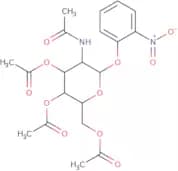
2-Nitrophenyl 2-acetamido-3,4,6-tri-O-acetyl-2-deoxy-b-D-galactopyranoside
CAS :2-Nitrophenyl 2-acetamido-3,4,6-tri-O-acetyl-2-deoxy-b-D-galactopyranoside is a chemiluminescent substrate for the detection of beta galactosidase. It is a white to light yellow powder with a molecular weight of 564.87 and an assay of ≥ 98% by HPLC. This product has been shown to be stable when stored at 4°C for up to three months.Degré de pureté :Min. 95%Masse moléculaire :468.41 g/mol5-Bromo-3-indoxyl-β-D-galactopyranoside-6-sulfate sodium salt
CAS :5-Bromo-3-indoxyl-beta-D-galactopyranoside (5BIG) is a fluorogenic substrate that has been shown to be an effective enzyme substrate. It is used in the chemiluminescence, bioluminescence, and fluorescence detection of enzymes. 5BIG is also a chromogenic substrate for nucleic acid staining and can be used in food testing as well as diagnostics. 5BIG is highly pure and high quality with a CAS number of 1301706-59-1.
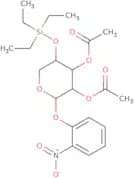
Formule :C14H15BrNNaO9SDegré de pureté :Min. 98 Area-%Masse moléculaire :476.24 g/mol2-Nitrophenyl 2,3-di-O-acetyl-4-O-triethylsilyl-b-D-xylopyranoside
CAS :2-Nitrophenyl 2,3-di-O-acetyl-4-O-triethylsilyl-b-D-xylopyranoside is a chromogenic substrate for enzmatic assays to measure xylosidase activity. It is a derivative of xylose that can be hydrolyzed by xylosidase to release the yellow-colored 2-nitrophenyl group, which can be detected spectrophotometrically. By modifying the xylose molecule with acetyl and triethylsilyl groups, the enzyme substrate becomes more stable and resistant to degradation. This substrate is commonly used in the study of plant biomass degradation and in the detection of xylosidase activity in microorganisms.
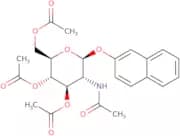
Degré de pureté :Min. 95%Masse moléculaire :469.56 g/mol2-Naphthyl 2-acetamido-3,4,6-tri-O-acetyl-2-deoxy-b-D-glucopyranoside
CAS :2-Naphthyl 2-acetamido-3,4,6-tri-O-acetyl-2-deoxy-b-D-glucopyranoside is a fluorogenic substrate that is used in food testing as well as environmental testing. It has been shown to be a ligand for the enzyme beta-galactosidase. This product is also a chemiluminescent and bioluminescent substrate that can be used in diagnostics and culture media.Degré de pureté :Min. 95%Masse moléculaire :473.47 g/mol2-Nitrophenyl 2-acetamido-2-deoxy-b-D-galactopyranoside
CAS :2-Nitrophenyl 2-acetamido-2-deoxy-b-D-galactopyranoside is a carboxymethyl derivative of the natural substrate of β-galactosidase, which is used as a substrate for the production of recombinant proteins in the corynebacterium glutamicum. The enzyme β-galactosidase hydrolyzes this substrate to produce an acid molecule and a sugar molecule. This product can be used in biotechnological processes for the production of recombinant proteins or other bioactive molecules. It can also be used in the isolation of nucleic acid from bacteria or fungi, or to study bacterial membrane transport systems. 2NPGAG can be expressed as a recombinant protein with expression vectors such as pET21a and pET24a. It has been shown that this product inhibits transport through membranes by binding to cellulose, which may be useful for studies on cellulose biosynthesis
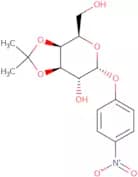
Degré de pureté :Min. 95%Masse moléculaire :342.3 g/mol4-Nitrophenyl 3,4-O-isopropylidene-a-D-galactopyranoside
CAS :4-Nitrophenyl 3,4-O-isopropylidene-a-D-galactopyranoside is a chemiluminescent substrate for detecting beta-galactosidase activity in bacteria. This product is a high purity, high quality compound that can be used as a culture media and environmental testing agent. It has been shown to be effective in diagnostics, chromogenic substrate, and enzyme substrate reactions. 4NPPG has been shown to be a fluorogenic substrate for beta-galactosidase assay and can be used as food testing agent with conjugate.
Degré de pureté :Min. 95%Masse moléculaire :341.31 g/molAldol® 455 beta-D-glucopyranoside - Biosynth Patent: EP 2427431 and US 8940909
Aldol® 455 is a substrate for the enzyme beta-galactosidase. It is used in food testing, staining, and environmental testing. Aldol® 455 has been shown to be a good substrate for fluorogenic and chromogenic substrates. It can be conjugated with an antibody or other ligand for use in immunoassays. Aldol® 455 is of high purity and high quality, making it suitable for use in diagnostics and as an enzyme substrate. This product can also be used as a culture media additive.
Degré de pureté :Min. 95%4-Nitrophenyl b-D-thiomannopyranoside
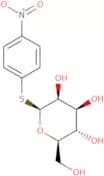
CAS :4-Nitrophenyl b-D-thiomannopyranoside acts as a substrate for β-mannosidase and thioglycoligase. Upon enzymatic cleavage, these substrates release 4-nitrophenol, a yellow chromophore that can be detected spectrophotometrically at 405 nm, facilitating quantitative measurements of enzymatic activity. Consequently, these substrates are widely used in biochemical research, clinical diagnostics, and drug discovery for evaluating the function of specific enzymes in various biological processes.
Degré de pureté :Min. 95%Masse moléculaire :317.32 g/mol4-Nitrophenyl 4-O-(2,3,4,6-tetra-O-acetyl-b-D-galactopyranosyl)-2,3,6-tri-O-acetyl-b-D-thioglucopyranoside
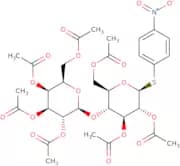
CAS :4-Nitrophenyl 4-O-(2,3,4,6-tetra-O-acetyl-b-D-galactopyranosyl)-2,3,6-tri-O-acetyl-b-D-thioglucopyranoside is a superior chromogenic substrate for the detection of enzymes. Specifically designed for optimal performance, it provides exquisite sensitivity and definitive results in enzyme assays. Its exceptional properties make it a top choice among researchers and professionals in biochemistry, enabling accurate analysis and quantification of enzymatic activities.Degré de pureté :Min. 95%Masse moléculaire :773.71 g/mol3-Indolyl b-D-glucuronide sodium salt
CAS :3-Indolyl b-D-glucuronide sodium salt is a specialized enzyme substrate that features an indole moiety linked to a glucuronide group. This compound is commonly used in various biochemical assays to study the activity of glucuronidase enzymes, which play a crucial role in the metabolism and detoxification of xenobiotics and endogenous compounds. The sodium salt form of this substrate ensures enhanced solubility and stability in aqueous solutions, making it a valuable tool for researchers investigating the function and regulation of glucuronidase enzymes in biological systems. 3-Indolyl b-D-glucuronide sodium salt is also used for the detection of E. coli.Degré de pureté :Min. 95%Couleur et forme :Off-White SolidMasse moléculaire :331.25 g/mol4-Nitrophenyl 6-O-DMT-a-D-mannopyranoside
4-nitrophenyl 6-O-DMT-a-D-mannopyranoside is a fluorescent substrate for the enzyme beta-glucosidase. It reacts with an acyl group at the C2 position of the glycoside moiety, producing an aldehyde group at the C1 position and a hydroxymethylene group at the C4 position. This reaction is catalyzed by beta-glucosidase, which cleaves the glycosidic linkage in sucrose and other disaccharides. The product can be detected using luminescence methods, such as chemiluminescence or bioluminescence.
4-nitrophenyl 6-O-DMT-a-D-mannopyranoside is used to detect β glucosidase activity in bacteria. This substrate has been shown to be sensitive and specific for β glucosidase activity when combined with fluorescence detection technologyDegré de pureté :Min. 95%Masse moléculaire :603.62 g/mol2-Naphthyl 2-acetamido-2-deoxy-β-D-glucopyranoside
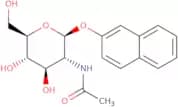
CAS :2-Naphthyl 2-acetamido-2-deoxy-b-D-glucopyranoside is a chromogenic substrate used for staining and diagnostic purposes. It is a ligand that has been shown to bind to certain enzymes and can be used for the detection of those enzymes. This product is also a chemiluminescence substrate, which can be used in bioluminescent reactions. This product has been shown to have high purity and quality, as well as being a conjugate.Formule :C18H21NO6Degré de pureté :Min. 95%Masse moléculaire :347.36 g/mol4-Nitrophenyl 2-acetamido-2-deoxy-4-O-[2-O-(a-L-fucopyranosyl)-b-D-galactopyranosyl]-b-D-glucopyranoside
CAS :The 4-Nitrophenyl 2-acetamido-2-deoxy-4-O-[2-O-(a-L-fucopyranosyl)-b-D-galactopyranosyl]-b-D-glucopyranoside is a specialized pNP enzyme substrate designed to study fucosyl-galactose-dependent enzymes. This chromogenic substrate is valuable for researchers investigating glycosyltransferase activity, structure-function relationships of glycan-binding proteins, and regulation of cellular signaling pathways involving fucose modifications. Its high specificity and sensitivity ensure accurate measurements in diverse experimental setups, and its chromogenic detection system facilitates rapid and reliable analysis.Degré de pureté :Min. 95%Masse moléculaire :650.58 g/mol4-Nitrophenyl b-D-cellohexaoside
CAS :4-Nitrophenyl b-D-cellohexaoside is a substrate for many enzymes and can be used to detect the presence of these enzymes in biological samples. It can also be used to detect the presence of bacteria, fungi, parasites, and viruses. 4-Nitrophenyl b-D-cellohexaoside is an excellent substrate for enzyme reactions that produce a chromogenic or fluorogenic product. This product is often conjugated with other compounds such as antibodies or antigens to form an immunoassay. 4-Nitrophenyl b-D-cellohexaoside is made from a high purity chemical by a process called nitration with sodium nitrate and sulfuric acid.
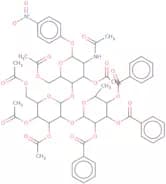
Degré de pureté :Min. 95%Masse moléculaire :1,111.95 g/mol4-Nitrophenyl 2-acetamido-3,6-di-O-acetyl-4-O-[2-O-(2,3,4-tri-O-benzoyl-a-L-fucopyranosyl)-3,4,6-tri-O-acetyl-b-D-galactopyranosyl]- 2-deoxy-b-D-glucopyranoside
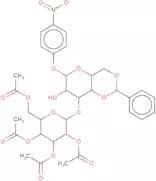
This chemical is a ligand that can bind to the enzyme luciferase. In a bioluminescence reaction, this chemical reacts with oxygen and ATP to produce light. This product has been tested for purity and quality and is suitable for use in culture media, environmental testing, or diagnostics. It has also been shown to be an excellent fluorescent substrate for fluorogenic or chromogenic substrates in enzyme substrate assays.Degré de pureté :Min. 95%Masse moléculaire :1,173.08 g/mol4-Nitrophenyl 4,6-O-benzylidene-3-O-(2,3,4,6-tetra-O-acetyl-b-D-glucopyranosyl)-b-D-glucopyranoside
4-Nitrophenyl 4,6-O-benzylidene-3-O-(2,3,4,6-tetra-O-acetyl-b-D-glucopyranosyl)-b-D-glucopyranoside is a high purity fluorescent reagent that can be used as a substrate for many enzymes. It is also used in environmental testing and to detect the presence of nitrophenols in food. This product has CAS number 545414.
Degré de pureté :Min. 95%Masse moléculaire :719.64 g/mol4-Nitrophenyl 2-O-(a-D-glucopyranosyl)-a-D-glucopyranoside
CAS :4-Nitrophenyl 2-O-(α-D-glucopyranosyl)-α-D-glucopyranoside is a specialized chromogenic pNP substrate featuring dual glucose-linked moieties, designed for accurate detection and quantification of specific glycosidase enzymes. Upon cleavage by target enzymes, this substrate releases 4-Nitrophenol, which can be easily monitored spectrophotometrically as a yellow color change. This advanced substrate offers enhanced specificity and sensitivity in enzyme assays, facilitating cutting-edge research in biochemistry, enzymology, and other related fields.
Degré de pureté :Min. 95%Masse moléculaire :463.39 g/molNaphthol AS-CL phosphate
CAS :Modified naphtol AS substrate used in histochemical and cytochemical staining
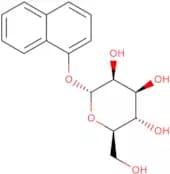
Degré de pureté :Min. 95%Masse moléculaire :407.74 g/mol1-Naphthyl-α-D-mannopyranoside
CAS :1-Naphthyl-alpha-D-mannopyranoside is a chromogenic substrate. It is used in diagnostics and as a reagent for enzymatic analysis of alpha-mannosidase activity in culture media, food testing, and environmental testing.
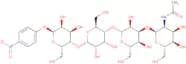
Formule :C16H18O6Degré de pureté :Min. 95%Couleur et forme :PowderMasse moléculaire :306.31 g/mol4-Nitrophenyl b-globo-N-tetraoside
CAS :4-Nitrophenyl beta-galactoside (pNP-Gal) is a chromogenic substrate commonly used in enzymatic assays to detect and quantify the presence of beta-galactosidase. It is hydrolyzed by the enzyme to release 4-nitrophenol, which produces a yellow color that can be measured spectrophotometrically. Similarly, 4-Nitrophenyl beta-glucoside (pNP-Glc) can be used to assay beta-glucosidase activity. 4-Nitrophenyl beta-globotrioside (pNP-Glo) is a similar compound that has been designed as a substrate for glycosidases that cleave terminal beta-galactosyl-(1->3)-N-acetylgalactosamine residues. In these assays, the release of 4-nitrophenol can be measured to determine the activity of the enzyme under study. The use of chromogenic substrates like pNP-Glo allows for the rapid and reliable detection of glycosidase activity in a variety of biological samples.
Degré de pureté :Min. 95%Couleur et forme :PowderMasse moléculaire :828.72 g/mol4-Nitrophenyl a-D-maltotetraoside
CAS :4-Nitrophenyl alpha-D-maltotetraoside is a chromogenic substrate used for the detection of alpha-glucosidase and alpha-amylase activity. The four glucose units in the molecule are hydrolyzed by the enzyme, releasing 4-nitrophenol and allowing for easy colorimetric measurement of enzymatic activity
Degré de pureté :Min. 95%Masse moléculaire :787.67 g/mol4-Nitrophenyl-myo-inositol-1-yl phosphate
CAS :4-Nitrophenyl-myo-inositol-1-yl phosphate is a highly specific chromogenic substrate used for the detection, quantification, and characterization of phosphoinositide phosphatases. When cleaved by the target enzyme, it generates a highly absorbing 4-nitrophenyl moiety, producing a yellow color that can be measured spectrophotometrically. This versatile substrate is valuable in examining phosphoinositide phosphatase activity, enzyme kinetics, substrate specificity, and inhibition studies in various cellular processes, including signal transduction, lipid metabolism, and membrane trafficking.
Degré de pureté :Min. 95%Masse moléculaire :381.23 g/mol2-O-(4-Nitrophenyl)-a-D-N-glycolylneuraminic acid
CAS :2-O-(4-Nitrophenyl)-a-D-N-glycolylneuraminic acid is commonly used to measure the activity of sialidase enzymes, specifically those that cleave glycoconjugates containing 2-O-(4-nitrophenyl)-alpha-D-N-glycolylneuraminic acid. The resulting product can be detected by measuring the absorbance at a specific wavelength using a spectrophotometer. This substrate offers a high degree of specificity for glycolylneuraminic acid-containing substrates and is useful for both research and diagnostic purposes.Degré de pureté :Min. 95%Couleur et forme :PowderMasse moléculaire :446.36 g/mol






![4-Nitrophenyl 2-acetamido-2-deoxy-4-O-[2-O-(a-L-fucopyranosyl)-b-D-galactopyranosyl]-b-D-glucopyra…](/_next/image/?url=https%3A%2Fstatic.cymitquimica.com%2Fproducts%2F3D%2Fthumb-webp%2FEN04931.webp&w=3840&q=75)