Autres
6322 produits trouvés pour "Autres"
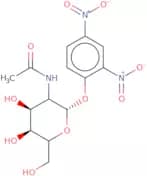
2,4-Dinitrophenyl 2-acetamido-2-deoxy-b-D-glucopyranoside
2,4-Dinitrophenyl 2-acetamido-2-deoxy-b-D-glucopyranoside is a fluorogenic substrate for use in diagnostic testing. It reacts with the enzyme β -galactosidase to produce a blue color. This product is used as an indicator of β -galactosidase activity in bacterial cultures or as an indicator of the presence of this enzyme in food or other materials. It can be used to detect and measure the level of β -galactosidase in a sample. The reaction can be monitored by measuring light emission at 450 nm. 2,4-Dinitrophenyl 2 acetamido 2 deoxy b D glucopyranoside has a CAS number of 47868-87-0 and is available in high purity (>97%).Degré de pureté :Min. 95%Masse moléculaire :387.31 g/mol4-Nitrophenyl 2,3-di-O-(2,3,4,6-tetra-O-acetyl-b-D-glucopyranosyl)-b-D-glucopyranoside
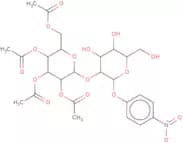
4-Nitrophenyl 2,3-di-O-(2,3,4,6-tetra-O-acetyl-b-D-glucopyranosyl)-b-D-glucopyranoside is a fluorogenic substrate that is used in biochemistry as an enzyme substrate. It is a colorless solid that has high purity and high quality. This product is a ligand that binds to the enzyme beta glucosidase. The conjugate of this product with beta glucosidase can be used in diagnostics for the detection of glucose levels in culture media or food testing. This product also has chromogenic and chemiluminescent properties that are used in environmental testing and staining. CAS No.: 54323-05-8
Degré de pureté :Min. 95%Masse moléculaire :961.82 g/molJalapeno green-Gal
Jalapeno green-Gal (Jalapeno green-beta-D-galactopyranoside) is a chromogenic indicator for beta-galactosidase activity. The colorless product is cleaved by lactose-utilizing bacteria in liquid media or on agar plates and yields a Jalapeno green colored precipitate. Jalapeno green-Gal can also be used as detecting agent for beta-galactosidase activity in reporter gene assays or for identification of positive transformants on agar plates when using the α-complementation approach.
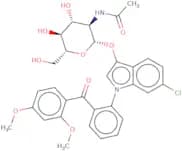
Masse moléculaire :472.1 g/molAldol® 467 N-acetyl-beta-D-glucosaminide, Biosynth Patent: EP 2427431 and US 8940909
CAS :Aldol® 467 N-acetyl-beta-D-glucosaminide is a chromogenic and fluorogenic enzyme substrate used for detection of beta-N-acetyl-glucosaminidase activity. The colorless enzyme substrate is cleaved in the presence of beta-N-acetyl-glucosaminidase yielding development of a yellow product. In addition, green fluorescence is generated when a suitable matrix or Aldol® 355 fluorescence enhancer is present. Aldol® 467 N-acetyl-beta-D-glucosaminide amide can be used in enzymatic assays or in live bacterial cultures. Aldol® 467 N-acetyl-beta-D-glucosaminide is suitable for use in liquid and solid media, under aerobic as well as anaerobic conditions.
Formule :C31H31ClN2O9Degré de pureté :Min. 95%Couleur et forme :PowderMasse moléculaire :611.04 g/mol4-Nitrophenyl b-D-cellohexaoside
CAS :4-Nitrophenyl b-D-cellohexaoside is a substrate for many enzymes and can be used to detect the presence of these enzymes in biological samples. It can also be used to detect the presence of bacteria, fungi, parasites, and viruses. 4-Nitrophenyl b-D-cellohexaoside is an excellent substrate for enzyme reactions that produce a chromogenic or fluorogenic product. This product is often conjugated with other compounds such as antibodies or antigens to form an immunoassay. 4-Nitrophenyl b-D-cellohexaoside is made from a high purity chemical by a process called nitration with sodium nitrate and sulfuric acid.
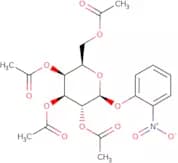
Degré de pureté :Min. 95%Masse moléculaire :1,111.95 g/mol2-Nitrophenyl 2,3,4,6-tetra-O-acetyl-b-D-galactopyranoside
CAS :2-Nitrophenyl 2,3,4,6-tetra-O-acetyl-b-D-galactopyranoside is a fluorescent substrate for β-galactosidase. It is used in food testing, environmental testing and diagnostics. This substrate is also used to detect the presence of β-galactosidase activity in cells and tissues. 2NPTABG provides a fluorescence signal that can be detected with an ultraviolet light or a luminometer. The luminescence intensity decreases when it reacts with β-galactosidase enzyme. This product has a CAS number of 3053-17-6 and is available at high purity levels.Degré de pureté :Min. 95%Masse moléculaire :469.4 g/mol4-Nitrophenyl 6-O-DMT-a-D-mannopyranoside
4-nitrophenyl 6-O-DMT-a-D-mannopyranoside is a fluorescent substrate for the enzyme beta-glucosidase. It reacts with an acyl group at the C2 position of the glycoside moiety, producing an aldehyde group at the C1 position and a hydroxymethylene group at the C4 position. This reaction is catalyzed by beta-glucosidase, which cleaves the glycosidic linkage in sucrose and other disaccharides. The product can be detected using luminescence methods, such as chemiluminescence or bioluminescence.
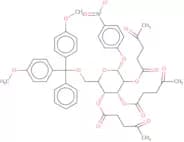
4-nitrophenyl 6-O-DMT-a-D-mannopyranoside is used to detect β glucosidase activity in bacteria. This substrate has been shown to be sensitive and specific for β glucosidase activity when combined with fluorescence detection technologyDegré de pureté :Min. 95%Masse moléculaire :603.62 g/mol4-Nitrophenyl 6-O-DMT-2,3,4-tri-O-levulinoyl-a-D-mannopyranoside
4-Nitrophenyl 6-O-DMT-2,3,4-tri-O-levulinoyl-a-D-mannopyranoside is a fluorogenic substrate that can be used for the detection of DMT (dihydroxyacetone) in food products. It has been shown to be an excellent alternative to the more commonly used 4,5′,6,7,8,-Tetrabromoindoxyl 3′,5′,6′,-tetraacetic acid (TBA). This product is also used as a chromogenic substrate for the determination of phenols in environmental testing and as a ligand conjugate for immunohistochemistry staining. The purity of this product is guaranteed and it has been tested extensively.
Degré de pureté :Min. 95%Masse moléculaire :897.92 g/mol4-Chloro-3-indoxyl-1,3-diacetate
CAS :4-Chloro-3-indoxyl-1,3-diacetate is a chromogenic substrate used in the identification of bile acids. It reacts with 4-chlorophenol to form a red dye. This compound is also used as a ligand for metal ions.
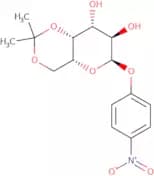
Formule :C12H10ClNO3Masse moléculaire :251.67 g/mol4-Nitrophenyl 4,6-O-isopropylidene-a-D-galactopyranoside
CAS :4-Nitrophenyl 4,6-O-isopropylidene-a-D-galactopyranoside is a fluorogenic substrate that can be used to measure the activity of beta-galactosidase. This product is high purity, high quality and has a CAS number of 29781-31-5. It is an enzyme substrate with chromogenic and diagnostic properties that are used for conjugation to other molecules, as well as for culture media, chemiluminescence and food testing. 4NP4IPG is also used in bioluminescence assays to detect the presence of beta-galactosidase.
Degré de pureté :Min. 95%Masse moléculaire :341.31 g/molMethyl 4-nitrophenyl hexyl phosphonate
CAS :Methyl 4-nitrophenyl hexyl phosphonate is a lipase suicide inhibitor that is a chromogenic substrate for lipases which upon enzymatic action, binds irreversibly to the lipase and inactivates it. The substrate can be used for the determination of active sites in lipases.
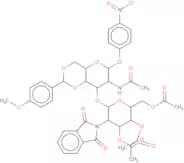
Degré de pureté :Min. 95%Masse moléculaire :301.284-Nitrophenyl 2-acetamido-3-O-(3,4,6-tri-O-acetyl-2-deoxy-2-phthalimido-b-D-glucopyranosyl)-2-deoxy-4,6-O-4-methoxybenzylidene-a-D-g alactopyranoside
4-Nitrophenyl 2-acetamido-3-O-(3,4,6-tri-O-acetyl-2-deoxy-2-phthalimido-b-D-glucopyranosyl)-2-deoxy--4,6--O--4--methoxybenzylidene--a--D--galactopyranoside is a chemiluminescent substrate for the enzyme beta galactosidase. It reacts with this enzyme to form 4 nitrophenol and acetamide. 4 Nitrophenyl 2 acetamido 3 O (3,4,6 tri O acetyl 2 deoxy 2 phthalimido b D glucopyranosyl) 2 deoxy 4 6 O 4 methoxybenzylidene a D galactopyranoside is used as a chromogenic substrate in diagnostics and as an environmental testing agent. It can be used as an imaging
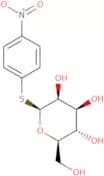
Degré de pureté :Min. 95%Masse moléculaire :877.8 g/mol4-Nitrophenyl b-D-thiomannopyranoside
CAS :4-Nitrophenyl b-D-thiomannopyranoside acts as a substrate for β-mannosidase and thioglycoligase. Upon enzymatic cleavage, these substrates release 4-nitrophenol, a yellow chromophore that can be detected spectrophotometrically at 405 nm, facilitating quantitative measurements of enzymatic activity. Consequently, these substrates are widely used in biochemical research, clinical diagnostics, and drug discovery for evaluating the function of specific enzymes in various biological processes.
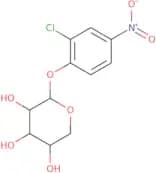
Degré de pureté :Min. 95%Masse moléculaire :317.32 g/mol2-Chloro-4-nitrophenyl β-D-xylopyranoside
CAS :2-Chloro-4-nitrophenyl β-D-xylopyranoside is a fluorogenic substrate that can be used for the detection of β-glucuronidase activity in food testing, environmental testing, and diagnostics. It has been shown to be an effective substrate for detecting β-glucuronidase activity with a high degree of sensitivity and specificity. 2CNPX can also be used as a chromogenic substrate for the detection of β-glucuronidase activity in food testing and environmental testing. The conjugate form of this substrate is useful for immunochemical assays, such as enzyme linked immunosorbent assay (ELISA) or radioimmunoassay (RIA). This product is also used as a ligand in fluorescence resonance energy transfer (FRET) assays.
2CNPX can be used to detect β-glucuronidase activity by chemiluminescenceFormule :C11H12ClNO7Degré de pureté :Min. 95%Masse moléculaire :305.67 g/mol4-Nitrophenyl 2-O-(2,3,4,6-tetra-O-acetyl-a-D-mannopyranosyl)-a-D-mannopyranoside
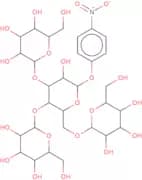
4-Nitrophenyl 2-O-(2,3,4,6-tetra-O-acetyl-a-D-mannopyranosyl)-a-D-mannopyranoside is a fluorogenic substrate that is used as a diagnostic tool and can be used to detect the presence of β--glucosidase in the gut. It is also used as a conjugate with enzymes such as peroxidase or alkaline phosphatase for use in enzyme catalyzed reactions. The product has been shown to be active against a variety of bacteria, including Staphylococcus aureus and Escherichia coli. This product has been shown to produce chemiluminescence when incubated with horseradish peroxidase and hydrogen peroxide. This product is light sensitive and should be stored at room temperature away from direct sunlight.
Degré de pureté :Min. 95%Masse moléculaire :631.54 g/mol4-Nitrophenyl 3,4,6-tri-O-(a-D-mannopyranosyl)-b-D-mannopyranoside
CAS :This compound inhibits the enzyme protein kinase. It has been shown to inhibit the activity of a number of protein kinases including those that are involved in cell proliferation, differentiation and apoptosis. This drug is also known to be a potent inhibitor of human c-Jun N-terminal kinase (JNK) and other types of kinases such as cyclin-dependent protein kinases. The inhibition of these enzymes results in the prevention of tumorigenesis, inflammation and immunological responses.Degré de pureté :Min. 95%Masse moléculaire :787.67 g/molNaphthol AS-CL phosphate
CAS :Modified naphtol AS substrate used in histochemical and cytochemical staining
Degré de pureté :Min. 95%Masse moléculaire :407.74 g/mol4-Nitrophenyl a-D-maltotetraoside
CAS :4-Nitrophenyl alpha-D-maltotetraoside is a chromogenic substrate used for the detection of alpha-glucosidase and alpha-amylase activity. The four glucose units in the molecule are hydrolyzed by the enzyme, releasing 4-nitrophenol and allowing for easy colorimetric measurement of enzymatic activity
Degré de pureté :Min. 95%Masse moléculaire :787.67 g/mol4-Nitrophenyl b-globo-N-tetraoside
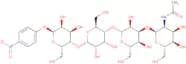
CAS :4-Nitrophenyl beta-galactoside (pNP-Gal) is a chromogenic substrate commonly used in enzymatic assays to detect and quantify the presence of beta-galactosidase. It is hydrolyzed by the enzyme to release 4-nitrophenol, which produces a yellow color that can be measured spectrophotometrically. Similarly, 4-Nitrophenyl beta-glucoside (pNP-Glc) can be used to assay beta-glucosidase activity. 4-Nitrophenyl beta-globotrioside (pNP-Glo) is a similar compound that has been designed as a substrate for glycosidases that cleave terminal beta-galactosyl-(1->3)-N-acetylgalactosamine residues. In these assays, the release of 4-nitrophenol can be measured to determine the activity of the enzyme under study. The use of chromogenic substrates like pNP-Glo allows for the rapid and reliable detection of glycosidase activity in a variety of biological samples.
Degré de pureté :Min. 95%Couleur et forme :PowderMasse moléculaire :828.72 g/mol1-Naphthyl-α-D-mannopyranoside
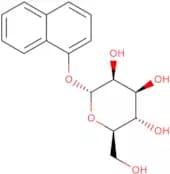
CAS :1-Naphthyl-alpha-D-mannopyranoside is a chromogenic substrate. It is used in diagnostics and as a reagent for enzymatic analysis of alpha-mannosidase activity in culture media, food testing, and environmental testing.
Formule :C16H18O6Degré de pureté :Min. 95%Couleur et forme :PowderMasse moléculaire :306.31 g/mol4-Nitrophenyl-myo-inositol-1-yl phosphate
CAS :4-Nitrophenyl-myo-inositol-1-yl phosphate is a highly specific chromogenic substrate used for the detection, quantification, and characterization of phosphoinositide phosphatases. When cleaved by the target enzyme, it generates a highly absorbing 4-nitrophenyl moiety, producing a yellow color that can be measured spectrophotometrically. This versatile substrate is valuable in examining phosphoinositide phosphatase activity, enzyme kinetics, substrate specificity, and inhibition studies in various cellular processes, including signal transduction, lipid metabolism, and membrane trafficking.
Degré de pureté :Min. 95%Masse moléculaire :381.23 g/mol2-O-(4-Nitrophenyl)-a-D-N-glycolylneuraminic acid
CAS :2-O-(4-Nitrophenyl)-a-D-N-glycolylneuraminic acid is commonly used to measure the activity of sialidase enzymes, specifically those that cleave glycoconjugates containing 2-O-(4-nitrophenyl)-alpha-D-N-glycolylneuraminic acid. The resulting product can be detected by measuring the absorbance at a specific wavelength using a spectrophotometer. This substrate offers a high degree of specificity for glycolylneuraminic acid-containing substrates and is useful for both research and diagnostic purposes.Degré de pureté :Min. 95%Couleur et forme :PowderMasse moléculaire :446.36 g/mol