Autres
6295 produits trouvés pour "Autres"
3-Indoxyl myo-inositol-1-phosphate, ammonium salt
Please enquire for more information about 3-Indoxyl myo-inositol-1-phosphate, ammonium salt including the price, delivery time and more detailed product information at the technical inquiry form on this pageFormule :C14H21N2O9PMasse moléculaire :392.30 g/mol4-Nitrophenyl 2-acetamido-4-O-(2-acetamido-2-deoxy-b-D-glucopyranosyl)-2-deoxy-a-D-galactopyranoside
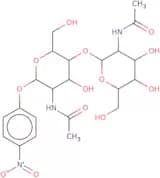
4-Nitrophenyl 2-acetamido-4-O-(2-acetamido-2-deoxy-b-D-glucopyranosyl)-2-deoxy-a-D-galactopyranoside is an enzyme substrate that is used in the detection of phenylalanine, tyrosine, and tryptophan. It is also used for environmental testing, bioluminescence, culture media, chemiluminescence, fluorogenic substrate, food testing, diagnostics and other applications.Degré de pureté :Min. 95%Couleur et forme :Off-White PowderMasse moléculaire :545.49 g/molAldol® 535 myo-inositol-1-phosphate, ammonium salt, Biosynth Patent: EP 2427431 and US 8940909
CAS :Aldol® 535 myo-inositol-1-phosphate, ammonium salt is a chromogenic substrate for the enzyme, phosphoglucomutase. This product is used for the detection of phosphoglucomutase by its ability to react with this enzyme and produce a blue or green color. Aldol® 535 myo-inositol-1-phosphate, ammonium salt is also used as a ligand in fluorescence resonance energy transfer (FRET) experiments. It has an EC number of CAS No. 2484872-80-0 and a molecular weight of 345.05 g/mol.Formule :C29H32BrClN3O10PDegré de pureté :Min. 95.0 Area-%Masse moléculaire :728.91 g/mol4-Nitrophenyl 6-O-(a-D-glucopyranosyl)-b-D-glucopyranoside
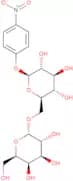
CAS :4-Nitrophenyl 6-O-(alpha-D-glucopyranosyl)-beta-D-glucopyranoside is a chromogenic substrate for beta-glucosidase. Upon hydrolysis, para-nitrophenol is released yielding a yellowish colour. 4-Nitrophenyl 6-O-(alpha-D-glucopyranosyl)-beta-D-glucopyranoside is used in different applications such as the Cellulose metabolism research, biofuel productionDegré de pureté :Min. 95%Couleur et forme :PowderMasse moléculaire :463.39 g/molAldol® 515 4-acetoxybutyrate solution, 0.75 M in DMSO, Biosynth Patent: EP 2427431 and US 8940909
CAS :Produit contrôléAldol® 515 4-acetoxybutyrate solution, 0.75 M in DMSO, is a chromogenic substrate that can be used to measure the activity of aldolase. It is a liquid at room temperature and has a pH of 7.2. The Aldol® 515 4-acetoxybutyrate solution, 0.75 M in DMSO, is soluble in water and organic solvents such as DMSO and ethanol. This product does not contain any preservatives or additives and is suitable for use with humans and animals. Aldol® 515 4-acetoxybutyrate solution, 0.75 M in DMSO, is manufactured by Cymit Quimica under patents EP 2427431 and US 8940909.br>br> Aldolase catalyzes the conversion of dihydroxyacetone phosphate (DHAP) to glyceraldehyde 3-phosphateFormule :C29H28N2O5Degré de pureté :Min. 95 Area-%Masse moléculaire :484.54 g/mol3-Indoxyl choline phosphate
CAS :Please enquire for more information about 3-Indoxyl choline phosphate including the price, delivery time and more detailed product information at the technical inquiry form on this pageFormule :C13H19N2O4PDegré de pureté :Min. 99 Area-%Masse moléculaire :298.28 g/molRef: 3D-I-5696
1gÀ demander5gÀ demander10gÀ demander500mgÀ demander2500mgÀ demander-Unit-ggÀ demander4-Chloro-3-Indoxyl-1,3-diacetate
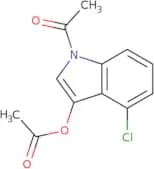
CAS :4-Chloro-3-indoxyl-1,3-diacetate is a fluorogenic or chromogenic substrate used in food testing. It is also an enzyme substrate that can be used to detect the presence of bioluminescence. 4-Chloro-3-indoxyl-1,3-diacetate has been shown to have high purity and high quality for use in diagnostic kits. 4-Chloro-3-indoxyl-1,3-diacetate is a ligand that is conjugated with other molecules to form complexes for use in fluorescence and chemiluminescence experiments.Degré de pureté :Min. 95%Masse moléculaire :251.67 g/molAldol® 518 myo-inositol-1-phosphate - Biosynth Patent: EP 2427431 and US 8940909
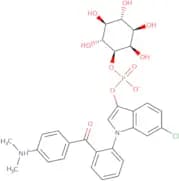
CAS :Aldol® 518 myo-inositol-1-phosphate is a chromogenic and fluorogenic enzyme substrate used for detection of phosphatidyl-inositol specific phospholipase C activity (PI-PLC, EC 4.6.1.13). The colorless enzyme substrate is cleaved by PI-PLC or PI-PLC-positive microorganisms grown in liquid or solid media, yielding an intense red coloration. In combination with Aldol® 355 fluorescence enhancer, red fluorescence can also obtained. Aldol® 518 myo-inositol-1-phosphate is suitable for use in liquid and solid media, under aerobic as well as anaerobic conditions.Formule :C29H33ClN3O10PDegré de pureté :Min. 95 Area-%Couleur et forme :PowderMasse moléculaire :650.02 g/mol4-Nitrophenyl 2-O-(β-D-glucopyranosyl)-β-D-glucopyranoside
CAS :4-Nitrophenyl 2-O-(beta-D-glucopyranosyl)-beta-D-glucopyranoside is a chromogenic substrate for beta-glucosidase. Upon hydrolysis, para-nitrophenol is released yielding a yellowish colour. 4-Nitrophenyl 2-O-(beta-D-glucopyranosyl)-beta-D-glucopyranoside is used in different applications such as the Cellulose degradation studies, biofuel researchFormule :C18H25NO13Degré de pureté :Min. 95%Couleur et forme :White solid.Masse moléculaire :463.39 g/mol5-Bromo-4-chloro-3-indolyl β-D-xylopyranoside
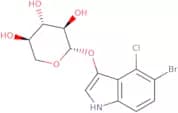
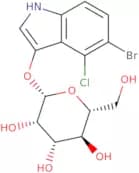
CAS :5-Bromo-4-chloro-3-indolyl b-D-xylopyranoside is an enzyme substrate. This chromogenic substrate is used for beta-D-xylosidase enzyme. In culture media, 5-Bromo-4-chloro-3-indolyl b-D-xylopyranoside is utilised for identification of bacteria such as Klebsiella and Enterobacter.
Formule :C13H13BrClNO5Degré de pureté :Min. 95%Couleur et forme :PowderMasse moléculaire :378.6 g/mol6-Chloro-3-indoxyl-beta-D-glucopyranoside
CAS :Chromogenic substrate for β-D-glucosidase. Yields a red precipitate upon cleavage.Formule :C14H18ClNO7Degré de pureté :Min. 98 Area-%Masse moléculaire :347.75 g/mol1-Naphthyl β-D-glucopyranoside
CAS :1-Naphthyl β-D-glucopyranoside can be used as a chromogenic substrate for beta-glucosidases. It can also be used as a fluorogenic substrate to study carbohydrate metabolism and in screening enzyme inhitibitors in pharmacologic research.
Formule :C16H18O6Degré de pureté :Min. 95%Couleur et forme :White Off-White PowderMasse moléculaire :306.31 g/mol6-Bromo-2-naphthyl-alpha-D-galactopyranoside
CAS :6-Bromo-2-naphthyl-alpha-D-galactopyranoside is a bioluminescent substrate for the enzyme luciferase that has been shown to be useful in detection of phenazines, antibiotics and other compounds in environmental testing. 6-Bromo-2-naphthyl-alpha-D-galactopyranoside can also be used for measurements of total microbial counts and for the measurement of the activity of enzymes such as beta galactosidase. It is also a ligand for the peroxidase enzyme, which makes it useful in staining techniques. 6BARG can be used as a fluorogenic substrate or as an indicator in chromogenic substrates. It is an important reagent for chemiluminescence and can also be used to measure the concentration of various substances.Formule :C16H17BrO6Degré de pureté :Min. 98 Area-%Masse moléculaire :385.22 g/mol4-Nitrophenyl 2-acetamido-2-deoxy-a-D-glucopyranoside
CAS :4-Nitrophenyl 2-acetamido-2-deoxy-a-D-glucopyranoside is a chromogenic pNP substrate specifically designed for the analysis of N-acetylglucosaminidase activity. Upon enzyme action, the substrate releases 4-nitrophenol, a yellow compound that can be detected by spectrophotometric methods, providing a reliable and sensitive means of quantifying enzyme activity. This versatile substrate is widely used in biochemical studies, disease diagnostics, and the enzyme production industry.Formule :C14H18N2O8Couleur et forme :White Off-White PowderMasse moléculaire :342.3 g/mol4-Nitrocatechol sulfate dipotassium salt
CAS :Chromogenic sulfatase substrateFormule :C6H3NO7SK2Degré de pureté :Min. 98 Area-%Couleur et forme :PowderMasse moléculaire :311.35 g/mol2-Nitrophenyl 2-acetamido-2-deoxy-a-D-glucopyranoside
CAS :2-Nitrophenyl 2-acetamido-2-deoxy-alpha-D-glucopyranoside is a chromogenic substrate used to assay the activity of enzymes that cleave N-acetyl-alpha-D-glucosaminide, such as chitinases and lysozymes. Upon cleavage by the enzyme of interest, the substrate releases a yellow-colored 2-nitrophenol that can be measured spectrophotometrically. This substrate is widely used in the food industry to monitor the activity of lysozyme in cheese, as well as in biomedical research for studying cellular and molecular mechanisms involved in conditions such as inflammation and cancer.Degré de pureté :Min. 95%Couleur et forme :PowderMasse moléculaire :342.3 g/mol6-Bromo-2-naphthyl β-D-galactopyranoside
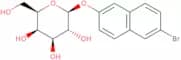
CAS :6-Bromo-2-naphthyl β-D-galactopyranoside is a chromogenic substrate commonly used for the detection of the enzymatic activity of β-galactosidase. It can produce a yellow precipitate upon hydrolysis by β-galactosidase, indicating the presence of the enzyme. It is often used in molecular biology applications to detect gene expression or to monitor cloning efficiency.Formule :C16H17BrO6Degré de pureté :Min. 98 Area-%Couleur et forme :PowderMasse moléculaire :385.21 g/molAldol® 484 beta-D-glucopyranoside, Biosynth Patent: EP 2427431 and US 8940909
CAS :Aldol® 484 beta-D-glucopyranoside is a chromogenic and fluorogenic enzyme substrate used for detection of beta-glucosidase activity. The colorless enzyme substrate is cleaved by bacteria producing beta-glucosidase in liquid or solid media, yielding intense red color and green fluorescent signal. Aldol® 484 beta-D-glucopyranoside can be used under aerobic and anaerobic conditions.Formule :C26H24ClFN2O7Degré de pureté :Min. 95%Couleur et forme :PowderMasse moléculaire :530.93 g/molAldol® 515 caprylate solution, 0.50 M in DMSO, Biosynth Patent: EP 2427431 and US 8940909
CAS :Aldol® 515 caprylate is a chromogenic and fluorogenic enzyme substrate used for detection of lipase activity. The colorless enzyme substrate is cleaved by C8 esterases, yielding development of red coloration. In addition, red fluorescence is generated when Aldol® 355 fluorescence enhancer or a suitable matrix is present. Aldol® 515 caprylate can be used in enzyme assays and live bacterial cultures. Aldol® 515 caprylate is suitable for use in liquid and solid media, under aerobic as well as anaerobic conditions.Formule :C31H34N2O3Degré de pureté :Of Solute (Hplc) Min. 90.0 Area-%Masse moléculaire :482.62 g/mol4-Nitrophenyl-beta-D-xylopyranoside
CAS :Chromogenic β-xylosidase substrate yielding a yellow solution upon cleavage.Formule :C11H13NO7Degré de pureté :Min. 99 Area-%Masse moléculaire :271.23 g/mol5-Bromo-4-chloro-3-indoxyl-α-D-fucopyranoside
CAS :5-Bromo-4-chloro-3-indoxyl-alpha-D-fucopyranoside is a photosynthetic agent that belongs to the class of fucopyranosides. It is a non-proteinogenic amino acid that has been shown to be encoded in chloroplasts and mitochondria in photosynthetic organisms. 5B4C3IF has also been found to be involved in the synthesis of polynucleotides and polypeptides, as well as the regulation of biomass.Formule :C14H15BrClNO5Masse moléculaire :392.64 g/molRef: 3D-B-7134
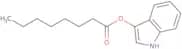
1gÀ demander5gÀ demander250mgÀ demander500mgÀ demander2500mgÀ demander-Unit-ggÀ demander3-Indoxyl caprylate
CAS :3-Indoxyl caprylate is an enzyme substrate used in a variety of diagnostic applications, including the detection of various bacterial and viral infections. It is used as a substrate for beta-galactosidase, which can be detected by bioluminescence or chromogenic substrates. 3-Indoxyl caprylate also serves as a ligand for receptor binding and has been shown to bind to CD4 receptors on human T cells. 3-Indoxyl caprylate is also used as an enzyme substrate in the detection of DNA polymerases, RNA polymerases, and ATPases. This product is available with a high purity that ranges from 98% to 99%. 3-Indoxyl caprylate is soluble in water, alcohols, acetone, acetic acid, and chloroform.Formule :C16H21NO2Masse moléculaire :259.35 g/molRef: 3D-I-5690
1gÀ demander5gÀ demander10gÀ demander500mgÀ demander2500mgÀ demander-Unit-ggÀ demander5-Bromo-4-chloro-3-indoxyl phosphate, disodium salt sesquihydrate
CAS :Water soluble, chromogenic substrate for visualizing alkaline phosphatase activity. Produces a blueinsoluble end product that is detected visually when used together with nitroblue tetrazolium. The substrate system is versatile and functions in a variety of applications, including Northern, Southern, and Western blotting, in situhybridization, ELISAs and immunohistochemistry.Formule :C8H4BrClNNa2O4P·5(H2O)Degré de pureté :Min. 98.0 Area-%Masse moléculaire :397.45 g/molAldol® 518 beta-D-glucopyranoside, Biosynth Patent: EP 2427431 and US 8940909
CAS :Aldol® 518 beta-D-glucopyranoside is a chromogenic and fluorogenic enzyme substrate used for detection of beta-glucosidase activity. The colorless enzyme substrate is cleaved by beta-glucosidase-producing bacteria in liquid or solid media, yielding intense red color and red fluorescence. Aldol® 518 beta-D-glucopyranoside can be used under aerobic and anaerobic conditions.Formule :C29H29ClN2O7Degré de pureté :Min. 95.0 Area-%Masse moléculaire :553 g/mol4-Nitrophenyl-beta-D-lactopyranoside
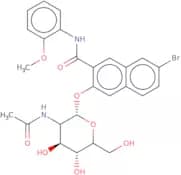
CAS :Chromogenic substrate for cellobiohydrolase and endoglucanase.Formule :C18H25NO13Degré de pureté :Min. 99.0 Area-%Masse moléculaire :463.40 g/molNaphthol AS-BI N-acetyl-b-D-galactosaminide
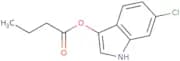
CAS :Modified naphtol AS substrate used in histochemical and cytochemical stainingFormule :C26H27BrN2O8Degré de pureté :Min. 95%Couleur et forme :PowderMasse moléculaire :575.41 g/mol6-Chloro-3-indoxyl butyrate
CAS :6-Chloro-3-indoxyl butyrate is a chemiluminescent substrate that is used in diagnostics and research. It has been shown to be an excellent ligand for the detection of DNA and protein. 6-Chloro-3-indoxyl butyrate can also be used as a chromogenic substrate for the detection of alkaline phosphatase, acid phosphatase, or beta-galactosidase. This product is also used in food testing, enzyme substrates, and fluorogenic substrates.Formule :C12H12ClNO2Degré de pureté :Min. 99.0 Area-%Masse moléculaire :237.69 g/mol5-Bromo-6-chloro-3-indoxyl phosphate, disodium salt trihydrate
CAS :Water soluble substrate for visualizing alkaline phosphatase activity. Produces a magenta colored insoluble end product that is detected visually, when used together with nitroblue tetrazolium. The substrate system is versatile and functions in a variety of applications, including Northern, Southern, and Western blotting, in situ hybridization, ELISAs and immunohistochemistry.Formule :C8H10BrClNNa2O7PDegré de pureté :Min. 99.0 Area-%Masse moléculaire :424.49 g/molbeta-Epoxyabiraterone acetate
CAS :Beta-Epoxyabiraterone acetate is a synthetic and natural metabolite of abiraterone that is used as an API impurity in the synthesis of abiraterone acetate. The drug product is a niche compound with CAS No. 52464-96-6. The Metabolite is an impurity found in the synthesis of beta-epoxyabiraterone acetate. Drug development research and development, analytical methods, and pharmacopoeia are all involved in the production of this compound.Formule :C26H33NO3Degré de pureté :Min. 90 Area-%Couleur et forme :White Off-White PowderMasse moléculaire :407.55 g/mol4-Nitrophenyl phosphate disodium hexahydrate
CAS :4-Nitrophenyl phosphate disodium salt hexahydrate is a substrate of the hydrolase alkaline phosphatase. The products of the enzymatic reaction are 4-nitrophenol and phosphate.Formule :C6H16NNa2O12PCouleur et forme :PowderMasse moléculaire :371.15 g/mol6-Chloro-3-indoxyl nonanoate
CAS :Chromogenic substrate for esterase with C9 activity yielding a salmon colored precipitate upon cleavage.
Formule :C17H22ClNO2Degré de pureté :Min. 98 Area-%Masse moléculaire :307.82 g/mol6-Bromo-2-naphthyl b-D-glucuronide
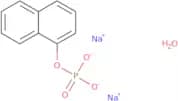
CAS :6-Bromo-2-naphthyl beta-D-glucuronide is a substrate for beta-glucuronidase, an enzyme involved in detoxification and bacterial metabolism. Upon enzymatic hydrolysis, it releases 6-bromo-2-naphthol, which forms a detectable dye when reacted with diazonium salts. This compound is widely used in microbiology to detecting E. coli in water testing and histochemical staining. 6-Bromo-2-naphthyl beta-D-glucuronide is also been used in cancer research studies. It has been found that some tumors are related to a high activity of beta-glucuronidase, responsible to reactivate the carcinogens and promote tumor progression, developing a drug resistance to chemotherapy.Formule :C16H15BrO7Degré de pureté :Min 97%Couleur et forme :White Off-White PowderMasse moléculaire :399.2 g/mola-Naphthyl phosphate disodium salt hydrate
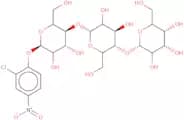
CAS :a-Naphthyl phosphate disodium salt hydrate is a highly water-soluble chromogenic substrate used to determine phosphatase activity in research and analytical applications, particularly for staining and differentiating acid and alkaline phosphatases.Degré de pureté :Min. 95%Couleur et forme :White PowderMasse moléculaire :268.11 g/mol2-Chloro-4-nitrophenyl 4-O-b-D-galactopyranosylmaltoside
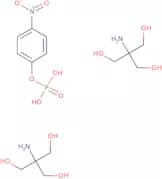
CAS :2-Chloro-4-nitrophenyl 4-O-b-D-galactopyranosylmaltoside, also known as Gal-G2-CNP, is a high quality, water soluble, chromogenic substrate that is used as an enzyme substrate and can be used in bioluminescence and chemiluminescence assays. This product is designed for use in diagnostics, culture media, food testing, environmental testing, and other research applications. 2-Chloro-4-nitrophenyl 4-O-b-D-galactopyranosylmaltoside has been tested in chromogenic assays with alpha-amylases.Formule :C24H34ClNO18Degré de pureté :(Hplc) Min. 90%Couleur et forme :PowderMasse moléculaire :659.98 g/mol4-Nitrophenyl phosphate bis(tris) salt
CAS :Substrate for alkaline phosphataseFormule :C6H6NO6P•(C4H11NO3)2Degré de pureté :(%) Min. 99%Couleur et forme :PowderMasse moléculaire :461.36 g/mol4-Nitrophenyl-beta-D-galactopyranoside
CAS :Chromogenic β-galactosidase substrate yielding a yellow solution upon cleavage. Can be used for the detection of coliforms due to their β-galactosidase activity.Formule :C12H15NO8Degré de pureté :Min. 98.0 Area-%Masse moléculaire :301.26 g/molNaphthol AS-E acetate
CAS :Modified naphtol AS substrate used in histochemical and cytochemical staining
Formule :C19H14ClNO3Degré de pureté :Min. 95%Masse moléculaire :339.77 g/mol5-Bromo-4-chloro-3-indoxyl phosphate, dilithium salt hydrate
5-Bromo-4-chloro-3-indoxyl phosphate, dilithium salt hydrate is a chromogenic substrate used to detect the specific enzymatic activity of alkaline phosphatase. After cleavage, 5-bromo-4-chloro-indoxyl is released, resulting in a blue to blue-green color change in bacterial colonies or media. 5-Bromo-4-chloro-3-indoxyl phosphate, dilithium salt hydrate is used in ELISA and molecular biology assays such as lacZ reporter systems.
Formule :C8H4BrClLi2NO4P(anhydrousbasis)Degré de pureté :Min. 98 Area-%Couleur et forme :PowderMasse moléculaire :338.34 g/mol2-Chloro-4-nitrophenyl b-D-maltoside
2-Chloro-4-nitrophenyl b-D-maltoside is a fluorescent substrate used in diagnostic kits. It is used to detect the presence of beta-glucuronidase enzymes, which are found in many bacteria and fungi. 2-Chloro-4-nitrophenyl b-D-maltoside has been shown to be a superior substrate for beta-glucuronidase as it can be used at lower concentrations and is more stable than other substrates. The enzyme hydrolyzes the 2,4 nitrophenyl ester bond and releases the fluorogenic product 4-(2'-hydroxyethyl)benzene diazonium chloride (HED). This product emits light under ultraviolet light, making it ideal for use in Bioluminescence Assays.Degré de pureté :Min. 95%Aldol® 484 α-D-glucopyranoside, Biosynth Patent: EP 2427431 and US 8940909
CAS :Aldol® 484 alpha-D-glucopyranoside is a chromogenic and fluorogenic enzyme substrate for ?-glucosidase activity (EC 3.2.1.20, ?-1,4-glucosidase, also known as maltase). The colorless enzyme substrate is cleaved by bacteria producing this enzyme in liquid or solid media, yielding orange color. Green fluorescence is also generated if a suitable matrix is present such as: cellulose acetate filters, polypropylene tubes or microplates and polyethylene vials. Aldol® 484 alpha-D-glucopyranoside can be used under aerobic and anaerobic conditions.
Formule :C26H24ClFN2O7Degré de pureté :Min. 95.0 Area-%Masse moléculaire :530.93 g/mol5-Bromo-4-chloro-3-indoxyl myristate
CAS :5-Bromo-4-chloro-3-indoxyl myristate is a chemiluminescent substrate that can be used in the detection of peroxide. It reacts with hydrogen peroxide to emit light, which can be detected using a luminometer. 5-Bromo-4-chloro-3-indoxyl myristate is also used for the detection of bacteria, such as Staphylococcus aureus and Escherichia coli, by staining. The compound is also used for diagnostic tests to identify diseases such as tuberculosis. 5-Bromo-4-chloro-3 indoxyl myristate is soluble in organic solvents and water, not toxic, and has a high purity level.Formule :C22H31BrClNO2Degré de pureté :Min. 98 Area-%Masse moléculaire :456.86 g/mol5-Bromo-6-chloro-3-indoxyl-beta-D-glucuronic acid, cyclohexylammonium salt
CAS :Chromogenic substrate for β-D-glucuronidase (GUS) yielding a magenta precipitate. It is used fordetection of GUS+ bacterial colonies as analternative to 5-bromo-4-chloro-3-indoxyl-β-D-glucuronide (X-GlcA).
Formule :C20H26BrClN2O7Degré de pureté :Min. 99 Area-%Masse moléculaire :521.80 g/mol5-Bromo-4-chloro-3-indolyl myristate
CAS :5-Bromo-4-chloro-3-indolyl myristate is a chromogenic substrate used to detect the specific enzymatic activity of lipase or esterase. After cleavage, 5-bromo-4-chloro-indoxyl is released, resulting in a blue to blue-green color change in bacterial colonies or media. 5-Bromo-4-chloro-3-indolyl myristate is used in screening assays for pancreatic lipase deficiency and lipid metabolism studies.Formule :C22H31BrClNO2Degré de pureté :Min. 95%Couleur et forme :PowderMasse moléculaire :456.84 g/molAldol® 495 inositol-phosphate, ammonium salt, Biosynth Patent: EP 2427431 and US 8940909
CAS :Aldol® 495 inositol-phosphate is a chromogenic and fluorogenic enzyme substrate used for detection of phosphatidylinositol specific phospholipase C activity (PI-PLC, EC 4.6.1.13). The colorless enzyme substrate is cleaved by PI-PLC or PI-PLC-positive microorganisms in liquid or solid media, yielding orange color. In addition, green fluorescence is generated when a suitable matrix is present, e.g. PE-Pellets or cellulose acetate filter. Aldol® 495 inositol-phosphate is suitable for use in liquid and solid media, under aerobic as well as anaerobic conditions.Formule :C26H29ClN3O10PDegré de pureté :Min. 95.0 Area-%Masse moléculaire :609.95 g/mol6-Chloro-3-indoxyl-beta-D-galactopyranoside
CAS :6-Chloro-3-indoxyl-beta-D-galactopyranoside is a chromogenic substrate for beta-galactosidase that yields a salmon or rose-coloured precipitate and hence is also known as Salmon-Gal. It can be used in conjunction with isopropyl-beta-D-thiogalactopyranoside (IPTG) as an alternative to the chromogenic substrate 5-bromo-4-chloro-3-indolyl beta-D-galactopyranoside (X-Gal) for detection of beta-galactosidase activity in bacterial colonies in colorimetric assays. Where beta-galactosidase expressed from a reporter gene in molecular biology experiments, recombinant colonies on growth plates are salmon-coloured while non-recombinants appear as white. Use of nitroblue tetrazolium salt (NBT) with Salmon-Gal may provide faster results, yielding a clear, purple precipitate, than for Salmon-Gal alone. In conjunction with 5-bromo-4-chloro-3-indolyl-beta-D-glucoside (X-Glc), Salmon-Gal is useful for simultaneous detection of GUS and Lac activities in the same medium.Formule :C14H16ClNO6Degré de pureté :Min. 98.0 Area-%Masse moléculaire :329.74 g/mol4-Nitrophenyl N,N',N''-triacetyl-b-D-chitotriose
CAS :Substrate for determining hydrolytic activity of chitinaseDegré de pureté :Min. 95%Couleur et forme :White PowderMasse moléculaire :748.69 g/mol5-Bromo-3-indoxyl nonanoate
CAS :Chromogenic substrate for esterase with C9 activity yielding a lapis colored precipitate upon cleavage.Formule :C17H22BrNO2Degré de pureté :Min. 99 Area-%Masse moléculaire :352.28 g/mol5-Bromo-4-chloro-3-indolyl b-D-mannopyranoside
CAS :5-Bromo-4-Chloro-3-Indolyl b-D-Mannopyranoside, also known as X-Man, is an enzyme substrate commonly used for detecting mannosidase enzymes. Upon hydrolysis by the enzyme, it produces a blue-green colored compound that can be detected visually or measured spectrophotometrically. This substrate is useful in characterizing the activity of mannosidases involved in glycoprotein processing and quality control.Formule :C14H15BrClNO6Couleur et forme :White Off-White PowderMasse moléculaire :408.63 g/molNaphthol AS-MX acetate
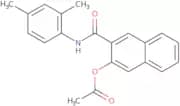
CAS :Modified naphtol AS substrate used in histochemical and cytochemical staining
Formule :C21H19NO3Degré de pureté :Min. 80%Couleur et forme :White Off-White PowderMasse moléculaire :333.38 g/mol5-Bromo-4-chloro-3-indoxyl sulfate, potassium salt
CAS :Chromogenic substrate for aryl-sulfatase. Yields a blue precipitate upon cleavage.Formule :C8H4BrClKNO4SDegré de pureté :Min. 98.0 Area-%Masse moléculaire :364.65 g/mol