Autres
6295 produits trouvés pour "Autres"
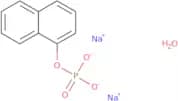
a-Naphthyl phosphate disodium salt hydrate
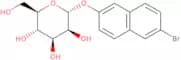
CAS :a-Naphthyl phosphate disodium salt hydrate is a highly water-soluble chromogenic substrate used to determine phosphatase activity in research and analytical applications, particularly for staining and differentiating acid and alkaline phosphatases.Degré de pureté :Min. 95%Couleur et forme :White PowderMasse moléculaire :268.11 g/mol6-Bromo-2-naphthyl α-D-mannopyranoside
CAS :Chromogenic substrate to visualize the activity of alpha-D-mannopyranoside; red color producedFormule :C16H17BrO6Degré de pureté :Min. 95%Couleur et forme :PowderMasse moléculaire :385.21 g/molAldol® 518 choline phosphate, Biosynth Patent: EP 2427431 and US 8940909
Aldol® 518 choline phosphate is a fluorogenic substrate that is used in the detection of enzyme activity. It has been shown to be an effective substrate for enzymes such as beta-galactosidase and phosphatases, and can be used in the detection of bacterial growth. Aldol® 518 choline phosphate is also a chromogenic substrate for the detection of alkaline phosphatase. It has been shown to have high purity and bioluminescence properties, making it useful for detecting bacteria in culture media or environmental testing. The conjugate of Aldol® 518 choline phosphate with various ligands can be used to detect specific proteins or antibodies.Formule :C28H31ClN3O5PDegré de pureté :Min. 95 Area-%Masse moléculaire :556 g/mol6-Chloro-3-indoxyl-3-acetate
CAS :Chromogenic substrate for carboxylesterase yielding a salmon colored precipitate upon cleavage. Mainly used in histochemistry.Formule :C10H8ClNO2Masse moléculaire :209.63 g/molRef: 3D-C-4758
1gÀ demander5gÀ demander250mgÀ demander500mgÀ demander2500mgÀ demander-Unit-ggÀ demanderAldol® 515 beta-D-xylopyranoside, Biosynth Patent: EP 2427431 and US 8940909
CAS :Aldol® 515 beta-D-xylopyranoside is a chemiluminescent ligand that can be used for the detection of beta-xylosidase activity to yield a red color.
Formule :C28H34N2O6Degré de pureté :Min. 95%Couleur et forme :PowderMasse moléculaire :494.59 g/molNaphthol AS-BI N-acetyl-beta-D-glucosaminide
CAS :Naphthol AS-BI N-acetyl-beta-D-glucosaminide is a fluorogenic substrate for the pararosaniline-glyoxalase (PG) reaction. This substrate is used to study enzymatic activity in two human isoenzymes of PG, PG I and PG II. The conversion of this substrate by PG I or PG II results in a color change from yellow to red. Naphthol AS-BI N-acetyl-beta-D-glucosaminide may be used as an experimental tool to measure the activity of these enzymes and to study the effect of inhibitors on their activity. It can also be used as a marker for studying enzyme transfer between cells.Formule :C26H27BrN2O8Degré de pureté :Min. 97.0 Area-%Masse moléculaire :575.42 g/molAldol® 495 beta-D-glucuronic acid, Biosynth Patent: EP 2427431 and US 8940909
CAS :Aldol® 495 beta-D-glucuronic acid is a chromogenic and fluorogenic enzyme substrate used for detection of beta-glucuronidase activity. The living cells of Escherichia coli can be reliably detected in growth media containing Aldol® 495 beta-D-glucuronic acid, as beta-glucuronidase occurs almost exclusively in E. coli. Aldol® 495 beta-D-glucuronic acid can also be in GUS reporter assays. Aldol® 495 beta-D-glucuronic acid can be used in liquid culture and solid media, and is suitable for use under aerobic and anaerobic conditions. Upon exposure to active beta-glucuronidase, Aldol® 495 beta-D-glucuronic acid develops orange colour and green fluorescence.Formule :C26H23ClN2O8Degré de pureté :Min. 95.0 Area-%Masse moléculaire :526.93 g/mol2-Nitrophenyl b-L-fucopyranoside
CAS :2-Nitrophenyl beta-L-fucopyranoside is a chromogenic substrate used to detect the enzymatic activity of beta-L-fucosidase. After cleavage, the nitrophenyl moiety is released exhibiting a light yellowish color. 2-Nitrophenyl beta-L-fucopyranoside is used in bacterial fucose metabolism studies to identify and quantify the enzymatic activity in, for example, Bacteroides spp..Degré de pureté :Min. 98 Area-%Couleur et forme :PowderMasse moléculaire :285.25 g/molAldol® 515 L-alanine amide, hydrochloride, Biosynth Patent: EP 2427431 and US 8940909
CAS :Aldol® 515 L-alanine amide is a chromogenic and fluorogenic enzyme substrate used for detection of L-alanine aminopeptidase activity. The colorless enzyme substrate is cleaved by L-alanine aminopeptidase produced by microorganisms, grown in liquid or solid media yielding red color. In addition, red fluorescence is generated when a fluorescence enhancer or a suitable matrix is present. Aldol® 515 L-alanine amide can be used under aerobic and anaerobic conditions.
Formule :C26H27ClN4O2Degré de pureté :Min. 95.0 Area-%Masse moléculaire :462.97 g/mol5-Bromo-4-chloro-3-indoxyl oleate
CAS :5-Bromo-4-chloro-3-indoxyl oleate is a chromogenic substrate used to detect the specific enzymatic activity of lipase. After cleavage, 5-bromo-4-chloro-indoxyl is released, resulting in a blue to blue-green color change in bacterial colonies or media. 5-Bromo-4-chloro-3-indoxyl oleate is used in lipid metabolism disorder screening.Formule :C26H37BrClNO2Degré de pureté :Min. 95%Couleur et forme :PowderMasse moléculaire :510.93 g/mol5-Bromo-4-chloro-3-indoxyl thymidine-3'-phosphate, cyclohexylammonium salt
CAS :5-Bromo-4-chloro-3-indoxyl thymidine (BCIT) is a chromogenic substrate that reacts with the enzyme β-galactosidase, which cleaves the BCIT to form a bromochloroindoxyl (BCI) and an indoxyl phosphate. The BCI is then detected by chemiluminescence or fluorescence. This product is used in food testing, diagnostics, environmental testing, and staining. It has been shown to be a good substrate for β-galactosidase from different sources such as calf thymus, bacteria, fungi, and plants.Formule :C24H31BrClN4O8PDegré de pureté :Min. 98 Area-%Masse moléculaire :649.87 g/molRef: 3D-B-7680
1gÀ demander50mgÀ demander100mgÀ demander250mgÀ demander500mgÀ demander-Unit-mgmgÀ demander2-Chloro-4-nitrophenyl b-D-maltoheptaoside
CAS :2-Chloro-4-nitrophenyl b-D-maltoheptaoside is a fluorescent compound that is used in medical research for the visualization of muscle glycogen. It is also used to study the binding of molecules to proteins, as well as to measure enzyme activity. The compound has been shown to be insensitive to changes in pH and temperature, so it can be used at different pH levels and temperatures without affecting its function. 2-Chloro-4-nitrophenyl b-D-maltoheptaoside can be detected by titration calorimetry due to its high molecular weight. The molecule's affinity for carbohydrates also allows it to be used in optimization studies of carbohydrate molecules.Degré de pureté :Min. 95%Masse moléculaire :1,308.54 g/mol4-Nitrophenyl phosphate mono(2-amino-2-ethyl-1,3-propanediol) salt monohydrate
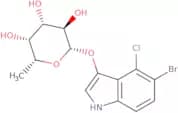
CAS :4-Nitrophenyl phosphate mono(2-amino-2-ethyl-1,3-propanediol) salt monohydrate is a chromogenic substrate that can be used to detect the presence of alkaline phosphatase. It is also used in food testing and diagnostics. 4NPPMD is a substrate for the enzyme alkaline phosphatase, which has been shown to play a role in the inflammatory response. The production of 4NPPMD by bacteria in the environment can be detected with chemiluminescence or bioluminescence. This product has been shown to react with both horseradish peroxidase and alkaline phosphatase, as well as other enzymes that are involved in metabolic pathways. This substrate also has high purity and fluorescence properties.Formule :C11H21N2O9PDegré de pureté :Min. 95 Area-%Masse moléculaire :356.26 g/mol5-Bromo-4-chloro-3-indoxyl-beta-D-fucopyranoside
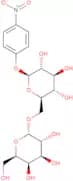
CAS :Chromogenic substrate for β-D-fucosidase yielding a blue precipitate.Formule :C14H15BrClNO5Degré de pureté :Min. 99.0 Area-%Masse moléculaire :392.64 g/mol4-Nitrophenyl 6-O-(a-D-glucopyranosyl)-b-D-glucopyranoside
CAS :4-Nitrophenyl 6-O-(alpha-D-glucopyranosyl)-beta-D-glucopyranoside is a chromogenic substrate for beta-glucosidase. Upon hydrolysis, para-nitrophenol is released yielding a yellowish colour. 4-Nitrophenyl 6-O-(alpha-D-glucopyranosyl)-beta-D-glucopyranoside is used in different applications such as the Cellulose metabolism research, biofuel productionDegré de pureté :Min. 95%Couleur et forme :PowderMasse moléculaire :463.39 g/mol4-Nitrophenyl-alpha-L-arabinofuranoside
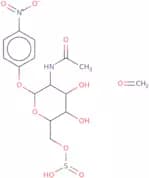
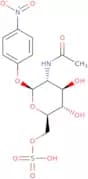
CAS :Chromogenic substrate for α-L-arabinofuranosidase yielding a yellow solution upon cleavage.Formule :C11H13NO7Degré de pureté :Min. 99.0 Area-%Masse moléculaire :271.22 g/mol4-Nitrophenyl 2-acetamido-2-deoxy-b-D-glucopyranoside-6-sulfate
4-Nitrophenyl 2-acetamido-2-deoxy-b-D-glucopyranoside is a chemiluminescent substrate that can be used in the detection of various enzymes. This product has been tested for sterility and purity, and it has passed all tests. It is also free of any detectable levels of heavy metals or other contaminants. 4NP2AG6S is a high quality bioluminescent substrate with CAS No. 71498-92-5. It is a fluorescent compound that reacts with an enzyme to produce light. The reaction can be detected by measuring the emitted light intensity at 680 nm (max).Degré de pureté :Min. 95%4-Nitrophenyl N,N'-diacetyl-b-D-chitobioside
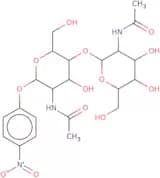
CAS :4-Nitrophenyl N,N'-diacetyl-beta-D-chitobioside is a chromogenic substrate for chitinase. Upon hydrolysis, para-nitrophenol is released yielding a yellowish colour. 4-Nitrophenyl N,N'-diacetyl-beta-D-chitobioside is used in different applications such as the Fungal infection detection, chitin degradation assaysDegré de pureté :Min. 95%Couleur et forme :PowderMasse moléculaire :545.49 g/mol4-Nitrocatechol sulfate dipotassium salt
CAS :Chromogenic sulfatase substrateFormule :C6H3NO7SK2Degré de pureté :Min. 98 Area-%Couleur et forme :PowderMasse moléculaire :311.35 g/molAldol® 458 nonanoate, Biosynth Patent: EP 2427431 and US 8940909
CAS :Produit contrôléAldol 458 nonanoate is a fluorogenic substrate that can be used in the detection of enzyme activity particularly C8/C9-esterases, lipases activity producing a yellow/green-orange color. Aldol 458 nonanoate reacts with enzymes, such as oxidoreductases and hydrolases, to produce light. This product is a conjugate of aldol 458 nonanoate and an enzyme substrate for the detection of these enzymes. It has been shown to be useful in food testing, staining, fluorogenic substrate, environmental testing, chromogenic substrate, conjugate, high purity, enzyme substrate for diagnostics and ligand.
Formule :C25H29NO4Degré de pureté :Min. 95%Masse moléculaire :407.5 g/mol4-(Hydroxymethyl)phenyl-β-D-glucopyranoside tetraacetate
CAS :4-(Hydroxymethyl)phenyl-beta-D-glucopyranoside tetraacetate is a drug that has been shown to have antidiabetic effects in diabetic patients. It has been shown to inhibit tyrosinase activity and increase the production of gamma-aminobutyric acid (GABA) in brain cells. This compound also has a protective effect against glutamate toxicity, and is being studied as a potential treatment for epilepsy. 4-(Hydroxymethyl)phenyl-beta-D-glucopyranoside tetraacetate inhibits the production of tyrosinase, which is an enzyme responsible for the conversion of tyrosine to melanin. This process can be inhibited by inhibiting tyrosinase activity with 4-(hydroxymethyl)phenyl-beta-D-glucopyranoside tetraacetate.Formule :C21H26O11Masse moléculaire :454.43 g/molAldol® 470 nonanoate, Biosynth Patent: EP 2427431 and US 8940909
CAS :Produit contrôléAldol® 470 nonanoate is a chromogenic substrate with a molecular weight of 496.5 g/mol. Aldol® 470 nonanoate has been used to detect the presence of L-amino acids using a fluorogenic assay. This substrate can be used as a ligand in an enzyme-linked immunosorbent assay (ELISA) to measure the concentration of L-amino acids in food and drink samples, as well as in diagnostics for detecting fluoroquinolone resistance in bacteria. Aldol® 470 nonanoate is also used in the detection of bioluminescence and chemiluminescence reactions. CAS No.: 2484872-50-4
Formule :C32H35NO5Degré de pureté :Min. 95.0 Area-%Masse moléculaire :513.62 g/molN-Acetyl-glycine p-nitroanilide
CAS :Substrate for hydrolasesFormule :C10H10N2O5Degré de pureté :Min. 95%Couleur et forme :Yellow powder.Masse moléculaire :238.2 g/mol5-Bromo-4-chloro-3-indolyl-D-thymidine-3'-phosphate cyclohexylammonium salt
CAS :5-Bromo-4-chloro-3-indolyl-D-thymidine-3'-phosphate cyclohexylammonium salt is a chromogenic substrate used to detect the specific enzymatic activity of alkaline phosphatase. After cleavage, 5-bromo-4-chloro-indoxyl is released, resulting in a blue to blue-green color change in bacterial colonies or media. 5-Bromo-4-chloro-3-indolyl-D-thymidine-3'-phosphate cyclohexylammonium salt is used in immunohistochemistry (IHC) and Western blot detection, immunoassays used to detect proteins.Formule :C18H17BrClN3O8P·C6H14NDegré de pureté :Min. 95%Couleur et forme :White PowderMasse moléculaire :649.86 g/mol4-Nitrophenyl O-(N-acetyl-a-neuraminosyl)-(2,3)-O-b-D-galactopyranosyl-(1,3)-2-acetamido-2-deoxy-a-D-galactopyran oxide
CAS :4-Nitrophenyl O-(N-acetyl-a-neuraminosyl)-(2,3)-O-b-D-galactopyranosyl-(1,3)-2-acetamido-2-deoxy-a-D-galactopyran oxide is a fluorogenic substrate that is used in the detection of glycosidases. It has been shown to be an excellent ligand for the enzyme beta galactosidase, which cleaves the glycan substrate 4NPOBGPA into 4NP and O-(N acetyl) neuraminic acid. 4NPOBGPA can be used as a chromogenic substrate for detecting beta galactosidase activity and can also be conjugated to other fluorescent molecules. This product is high purity and high quality.Degré de pureté :Min. 95%Masse moléculaire :795.7 g/mol6-Chloro-3-indoxyl-beta-D-glucuronic acid, cyclohexylammonium salt
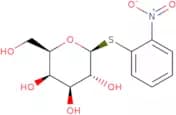
CAS :6-Chloro-3-indoxyl-beta-D-glucuronic acid (cyclohexylammonium salt) is a chromogenic substrate for beta-glucuronidase yielding a salmon colored precipitate upon cleavage.Formule :C20H27ClN2O7Degré de pureté :Min. 98.0 Area-%Masse moléculaire :442.90 g/mol2-Nitrophenyl-β-D-thiogalactopyranoside
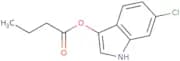
CAS :2-Nitrophenyl-beta-D-thiogalactopyranoside is a chromogenic substrate used to detect the presence of galactosidase enzymes in various biological and biochemical assays. It consists of a nitrophenyl group attached to a galactose sugar molecule through a thioglycosidic bond. When acted upon by enzymes such as galactosidases, it releases the colored nitrophenyl group, which can be detected using spectrophotometry. This substrate is commonly used in assays for the detection of LacZ activity in bacterial cultures, as lacZ encodes for β-galactosidase.Formule :C12H15NO7SDegré de pureté :Min. 98 Area-%Couleur et forme :Yellow PowderMasse moléculaire :317.32 g/mol6-Chloro-3-indoxyl butyrate
CAS :6-Chloro-3-indoxyl butyrate is a chemiluminescent substrate that is used in diagnostics and research. It has been shown to be an excellent ligand for the detection of DNA and protein. 6-Chloro-3-indoxyl butyrate can also be used as a chromogenic substrate for the detection of alkaline phosphatase, acid phosphatase, or beta-galactosidase. This product is also used in food testing, enzyme substrates, and fluorogenic substrates.Formule :C12H12ClNO2Degré de pureté :Min. 99.0 Area-%Masse moléculaire :237.69 g/molbeta-Epoxyabiraterone acetate
CAS :Beta-Epoxyabiraterone acetate is a synthetic and natural metabolite of abiraterone that is used as an API impurity in the synthesis of abiraterone acetate. The drug product is a niche compound with CAS No. 52464-96-6. The Metabolite is an impurity found in the synthesis of beta-epoxyabiraterone acetate. Drug development research and development, analytical methods, and pharmacopoeia are all involved in the production of this compound.Formule :C26H33NO3Degré de pureté :Min. 90 Area-%Couleur et forme :White Off-White PowderMasse moléculaire :407.55 g/mol5-Bromo-4-chloro-3-indoxyl myristate
CAS :5-Bromo-4-chloro-3-indoxyl myristate is a chemiluminescent substrate that can be used in the detection of peroxide. It reacts with hydrogen peroxide to emit light, which can be detected using a luminometer. 5-Bromo-4-chloro-3-indoxyl myristate is also used for the detection of bacteria, such as Staphylococcus aureus and Escherichia coli, by staining. The compound is also used for diagnostic tests to identify diseases such as tuberculosis. 5-Bromo-4-chloro-3 indoxyl myristate is soluble in organic solvents and water, not toxic, and has a high purity level.Formule :C22H31BrClNO2Degré de pureté :Min. 98 Area-%Masse moléculaire :456.86 g/molAldol® 458 beta-D-galactopyranoside, Biosynth Patent: EP 2427431 and US 8940909
CAS :Aldol® 458 beta-D-galactopyranoside is a chromogenic and fluorogenic enzyme substrate used for detection of beta-galactosidase activity. The colorless enzyme substrate is cleaved by lactose utilizing bacteria grown in liquid or solid media, yielding yellow coloration and green fluorescence. Aldol® 458 beta-D-galactopyranoside can also be used in beta-galactosidase gene reporter assays or immunoassay applications (ELISA). Aldol® 458 beta-D-galactopyranoside can be used under aerobic and anaerobic conditions.Formule :C22H23NO8Degré de pureté :Min. 95 Area-%Couleur et forme :PowderMasse moléculaire :429.42 g/molAldol® 470 choline phosphate, Biosynth Patent: EP 2427431 and US 8940909
CAS :Aldol® 470 choline phosphate is a chromogenic and fluorogenic enzyme substrate used for detection of phosphatidyl-choline specific phospholipase C (PC-PLC, EC 3.1.4.3) activity. The colorless product is cleaved by PC-PLC positive microorganisms in liquid or solid media, yielding a yellow color and green fluorescence. Aldol® 470 choline phosphate therefore, enables the detection and identification of PC-PLC positive pathogenic bacteria, such as, Clostridium perfringens, Pseudomonas aeruginosa, Helicobacter pylori, Legionella pneumophila, Bacillus cereus, Bacillus anthracis, Listeria monocytogenes, and others. Aldol® 470 choline phosphate can be used under aerobic and anaerobic conditions.Formule :C28H31N2O7PDegré de pureté :Min. 95%Couleur et forme :PowderMasse moléculaire :538.53 g/mol4-Nitrophenyl 2-acetamido-2-deoxy-b-D-glucopyranoside-6-sulfate sodium salt
CAS :4-Nitrophenyl 2-acetamido-2-deoxy-beta-D-glucopyranoside-6-sulfate sodium salt is a chromogenic substrate for N-acetylglucosamine-6-sulfatase. Upon hydrolysis, para-nitrophenol is released yielding a yellowish colour. 4-Nitrophenyl 2-acetamido-2-deoxy-beta-D-glucopyranoside-6-sulfate sodium salt is used in different applications such as the Mucopolysaccharidosis IIID (Sanfilippo D) diagnosis
Formule :C14H17N2O11S·NaDegré de pureté :Min. 95 Area-%Couleur et forme :PowderMasse moléculaire :444.35 g/mol4-Nitrophenyl-beta-D-lactopyranoside
CAS :Chromogenic substrate for cellobiohydrolase and endoglucanase.Formule :C18H25NO13Degré de pureté :Min. 99.0 Area-%Masse moléculaire :463.40 g/mol6-Bromo-2-naphthyl-b-D-xylopyranoside
CAS :6-Bromo-2-naphthyl-b-D-xylopyranoside (BNX) is a chromogenic enzyme substrate used primarily to detect xylosidase activity. It is cleaved by the enzyme, resulting in the release of a colored product that can be measured spectrophotometrically. BNX is widely used as a substrate in research studies for the detection and quantification of various glycoside hydrolases, and it is particularly useful for studying cellulases and xylanases.Degré de pureté :Min. 95%Couleur et forme :PowderMasse moléculaire :355.18 g/mol4-Nitrophenyl b-D-xylotrioside
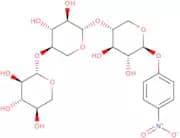
CAS :Chromogenic substrate targeting beta-D-xylosidase. A xylanase substrate.Formule :C21H29NO15Degré de pureté :Min. 98 Area-%Couleur et forme :PowderMasse moléculaire :535.45 g/mol5-Bromo-4-chloro-3-indoxyl-beta-D-glucopyranoside
CAS :Chromogenic substrate for beta-D-glucosidase, yielding a blue precipitate and contained in a chromogenic culture media for the detection of Enterococci, Streptococci, Klebsiella species, Enterobacter species and Listeria species. It is an indolyl carbohydrate that is the beta-D-glucoside of 3-hydroxy-1H-indole, in which the indole moiety is substituted at positions 4 and 5 by chlorine and bromine, respectively. It is used to test for the presence of the enzyme, beta-glucosidase, which cleaves the glycosidic bond to give 5-bromo-4-chloro-3-hydroxy-1H-indole; this immediately dimerises to give an intensely blue product.
Formule :C14H15BrClNO6Degré de pureté :Min. 98.0 Area-%Masse moléculaire :408.64 g/mol6-Chloro-3-indoxyl nonanoate
CAS :Chromogenic substrate for esterase with C9 activity yielding a salmon colored precipitate upon cleavage.
Formule :C17H22ClNO2Degré de pureté :Min. 98 Area-%Masse moléculaire :307.82 g/mol6-Chloro-3-indoxyl-β-D-glucuronic acid methyl ester, Biosynth Patent: EP 2718458 and US 9127303
6-Chloro-3-indoxyl-beta-D-glucuronic acid methyl ester is a chemiluminescent substrate that is used to measure the activity of enzymes in the beta-galactosidase family. This product is a white crystalline solid that dissolves in water and ethanol. 6-Chloro-3-indoxyl-beta-D-glucuronic acid methyl ester has been shown to be stable for at least two years when stored at -20°C. It can be used for diagnostic purposes, such as the detection of bacterial infections, or as an enzyme substrate in biochemistry studies.Degré de pureté :Min. 95%5-Nitro-3-indoxyl-β-D-galactopyranoside
Please enquire for more information about 5-Nitro-3-indoxyl-β-D-galactopyranoside including the price, delivery time and more detailed product information at the technical inquiry form on this pageFormule :C14H16N2O8Degré de pureté :Min. 95%Masse moléculaire :340.29 g/mol2-Nitrophenyl α-D-glucopyranoside
CAS :2-Nitrophenyl a-D-glucopyranoside is a chromogenic substrate commonly used to assay the activity of glucosidases. Upon cleavage of the glycosidic bond by glucosidases, the released 2-nitrophenyl group yields a yellow color detectable by spectrophotometry. This substrate has high sensitivity and is widely used in a variety of applications, including drug discovery and enzyme kinetics studies.
Formule :C12H15NO8Degré de pureté :Min. 95%Couleur et forme :White to off-white solid.Masse moléculaire :301.25 g/mol6-Bromo-2-naphthyl b-D-glucuronide
CAS :6-Bromo-2-naphthyl beta-D-glucuronide is a substrate for beta-glucuronidase, an enzyme involved in detoxification and bacterial metabolism. Upon enzymatic hydrolysis, it releases 6-bromo-2-naphthol, which forms a detectable dye when reacted with diazonium salts. This compound is widely used in microbiology to detecting E. coli in water testing and histochemical staining. 6-Bromo-2-naphthyl beta-D-glucuronide is also been used in cancer research studies. It has been found that some tumors are related to a high activity of beta-glucuronidase, responsible to reactivate the carcinogens and promote tumor progression, developing a drug resistance to chemotherapy.Formule :C16H15BrO7Degré de pureté :Min 97%Couleur et forme :White Off-White PowderMasse moléculaire :399.2 g/mol4-Nitrophenyl 2-acetamido-2-deoxy-a-D-glucopyranoside
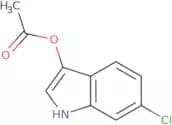
CAS :4-Nitrophenyl 2-acetamido-2-deoxy-a-D-glucopyranoside is a chromogenic pNP substrate specifically designed for the analysis of N-acetylglucosaminidase activity. Upon enzyme action, the substrate releases 4-nitrophenol, a yellow compound that can be detected by spectrophotometric methods, providing a reliable and sensitive means of quantifying enzyme activity. This versatile substrate is widely used in biochemical studies, disease diagnostics, and the enzyme production industry.Formule :C14H18N2O8Couleur et forme :White Off-White PowderMasse moléculaire :342.3 g/mol6-Chloro-3-indoxyl-3-acetate
CAS :6-Chloro-3-indoxyl-3-acetate is a chromogenic substrate for carboxylesterase yielding a salmon colored precipitate upon cleavage. Mainly used in histochemistry.Degré de pureté :Min. 95%Couleur et forme :White PowderMasse moléculaire :209.63 g/mol4-Nitrophenyl 2-acetamido-4-O-(2-acetamido-2-deoxy-b-D-glucopyranosyl)-2-deoxy-a-D-galactopyranoside
4-Nitrophenyl 2-acetamido-4-O-(2-acetamido-2-deoxy-b-D-glucopyranosyl)-2-deoxy-a-D-galactopyranoside is an enzyme substrate that is used in the detection of phenylalanine, tyrosine, and tryptophan. It is also used for environmental testing, bioluminescence, culture media, chemiluminescence, fluorogenic substrate, food testing, diagnostics and other applications.Degré de pureté :Min. 95%Couleur et forme :Off-White PowderMasse moléculaire :545.49 g/mol4-Nitrophenyl-β-D-maltopyranoside
CAS :Chromogenic beta-maltosidase substrateFormule :C18H25NO13Degré de pureté :Min. 95%Couleur et forme :White PowderMasse moléculaire :463.39 g/mol3,4-Cyclohexenoesculetine phosphate disodium
Chromogenic substrate for phosphataseDegré de pureté :Min. 95%5-Bromo-4-chloro-3-indoxyl butyrate
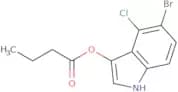
CAS :5-Bromo-4-chloro-3-indoxyl butyrate is a colorimetric substrate used to detect and quantify esterase activity. Upon hydrolysis by esterases, it yields a blue-green dye, allowing the detection and quantification of enzyme activity. It is commonly used in assays for the screening of esterase-producing microorganisms and in research aimed at understanding the role of esterases in various cellular processes.
Formule :C12H11BrClNO2Degré de pureté :Min. 95%Couleur et forme :PowderMasse moléculaire :316.58 g/mol5-Bromo-3-indoxyl phosphate, disodium salt
CAS :5-Bromo-3-indoxyl phosphate, disodium salt is an enzyme substrate that is used for environmental testing, bioluminescence, culture media, chemiluminescence, fluorogenic substrate and food testing. It is also used as a ligand for diagnostic purposes. 5-Bromo-3-indoxyl phosphate, disodium salt has CAS number 16036-59-2 and it is soluble in water. This product has high quality and purity with a conjugate of 5% phenol red. 5-Bromo-3-indoxyl phosphate, disodium salt reacts with the enzyme horseradish peroxidase to produce a red color. This product can be used to detect hydrogen peroxide in the presence of an oxidizing agent such as hydrogen peroxide or potassium permanganate. The reaction produces a blue color when the solution is viewed in daylight or under ultraviolet light.Formule :C8H5BrNNa2O4PDegré de pureté :98.0 To 100.0 Area-%Masse moléculaire :335.99 g/mol2-Nitrophenyl-beta-D-galactopyranoside
CAS :Chromogenic β-galactosidase substrate yielding a yellow solution upon cleavage. Can be used for the detection of coliforms due to their beta-galactosidase activity.Formule :C12H15NO8Degré de pureté :Min. 99.0 Area-%Masse moléculaire :301.26 g/mol