Autres
6297 produits trouvés pour "Autres"
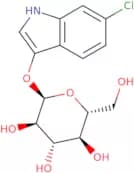
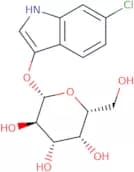
6-Chloro-3-indoxyl-alpha-D-glucopyranoside
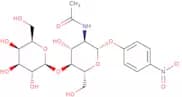
CAS :Chromogenic substrate for α-glucosidase yielding a salmon-colored precipitate.Formule :C14H16ClNO6Degré de pureté :Min. 98 Area-%Masse moléculaire :329.74 g/mol4-Nitrophenyl 2-acetamido-2-deoxy-4-O-(β-D-galactopyranosyl)-β-D-glucopyranoside
CAS :4-Nitrophenyl 2-acetamido-2-deoxy-4-O-(b-D-galactopyranosyl)-b-D-glucopyranoside is an efficient chromogenic pNP enzyme substrate ideal for monitoring enzyme activity and understanding carbohydrate metabolism. This galacto-glucoside compound is designed specifically for use with glycosidases such as hexosaminidases and delivers unparalleled performance in your enzymatic assays.Formule :C20H28N2O13Degré de pureté :Min. 95%Couleur et forme :White PowderMasse moléculaire :504.44 g/mol5-Bromo-4-chloro-3-indoxyl-N-acetyl-beta-D-glucosaminide
CAS :Chromogenic substrate for N-acetyl-β-D-glucosaminidase yielding a blue precipitate. Contained in certain mycological culture media. Used in histochemistry.
Formule :C16H18BrClN2O6Degré de pureté :Min. 99.5 Area-%Masse moléculaire :449.69 g/molAldol® 458 phosphate, disodium salt, Biosynth Patent: EP 2427431 and US 8940909
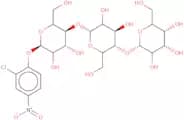
CAS :Aldol® 458 phosphate is a chromogenic and fluorogenic enzyme substrate used for detection of phosphatase activity. The colorless enzyme substrate is cleaved by phosphatases secreted by bacteria grown in liquid media, yielding yellow color and green fluorescence. Aldol® 458 phosphate can also be used in assays involving phosphatase-coupled antibodies in immunoassay applications (ELISA). Aldol® 458 phosphate can be used under aerobic and anaerobic conditions.Formule :C16H12NNa2O6PDegré de pureté :Min. 95%Couleur et forme :PowderMasse moléculaire :391.22 g/mol2-Chloro-4-nitrophenyl 4-O-b-D-galactopyranosylmaltoside
CAS :2-Chloro-4-nitrophenyl 4-O-b-D-galactopyranosylmaltoside, also known as Gal-G2-CNP, is a high quality, water soluble, chromogenic substrate that is used as an enzyme substrate and can be used in bioluminescence and chemiluminescence assays. This product is designed for use in diagnostics, culture media, food testing, environmental testing, and other research applications. 2-Chloro-4-nitrophenyl 4-O-b-D-galactopyranosylmaltoside has been tested in chromogenic assays with alpha-amylases.Formule :C24H34ClNO18Degré de pureté :(Hplc) Min. 90%Couleur et forme :PowderMasse moléculaire :659.98 g/molAldol® 484 beta-D-glucopyranoside, Biosynth Patent: EP 2427431 and US 8940909
CAS :Aldol® 484 beta-D-glucopyranoside is a chromogenic and fluorogenic enzyme substrate used for detection of beta-glucosidase activity. The colorless enzyme substrate is cleaved by bacteria producing beta-glucosidase in liquid or solid media, yielding intense red color and green fluorescent signal. Aldol® 484 beta-D-glucopyranoside can be used under aerobic and anaerobic conditions.Formule :C26H24ClFN2O7Degré de pureté :Min. 95%Couleur et forme :PowderMasse moléculaire :530.93 g/mol6-Chloro-3-indoxyl-β-D-cellobioside
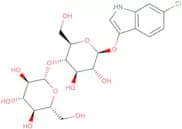
CAS :Chromogenic substrate for β-D-Cellobiosidase yielding a salmon-colored precipitate.Formule :C20H26ClNO11Degré de pureté :Min. 99.0 Area-%Masse moléculaire :491.88 g/molRef: 3D-C-4830
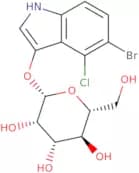
10mgÀ demander25mgÀ demander50mgÀ demander100mgÀ demander250mgÀ demander-Unit-ggÀ demander5-Bromo-4-chloro-3-indoxyl-β-D-xylopyranoside
CAS :5-Bromo-4-chloro-3-indoxyl-beta-D-xylopyranoside is a fluorogenic substrate that can be used to measure the activity of bacterial esterases. The enzyme cleaves the xylose moiety from 5-bromo-4-chloro-3-indoxyl, yielding indoxyl as an intermediate product. This reaction can be catalyzed by esterases found in bacteria, which hydrolyze esters containing a single hydroxyl group at one end and a carboxylic acid or alcohol at the other end. Indoxyl is fluorescent and can be detected using a fluorimeter. 5BX is also chromogenic, so it can be used as an enzyme substrate for detecting beta galactosidase activity in bacteria such as Mycobacterium smegmatis or Escherichia coli. 5BX is also used to detect chemiluminesFormule :C13H13BrClNO5Masse moléculaire :378.61 g/molRef: 3D-B-7750
1gÀ demander5gÀ demander10gÀ demander500mgÀ demander2500mgÀ demander-Unit-ggÀ demanderAldol® 470 acetate, Biosynth Patent: EP 2427431 and US 8940909
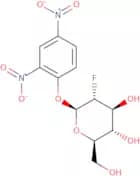
CAS :Produit contrôléAldol 470 acetate is a chromogenic substrate for carboxylesterases yielding a yellow precipitate. Furthermore it shows some fluorescence(excitation at 320 nm to 490 nm). In contrast to classical indoxylsubstrates, Aldol substrates work not only under aerobic but also under anaerobic conditions.Formule :C25H21NO5Degré de pureté :Min. 95.0 Area-%Masse moléculaire :415.44 g/mol2,4-Dinitrophenyl 2-deoxy-2-fluoro-b-D-glucopyranoside
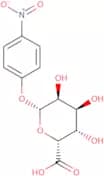
CAS :2,4-Dinitrophenyl 2-deoxy-2-fluoro-β-D-glucopyranoside, sometimes referred as 2F-DNPG, is an enzyme substrate for measuring beta-glucosidase activity. It is a mechanism-based inactivator of glycosidases, including beta-glucocerebrosidase (Gcase), a lysosomal enzyme encoded by the GBA1 gene responsible for breaking down glucosylceramide into ceramide and glucose. The use of 2,4-dinitrophenyl 2-deoxy-2-fluoro-β-D-glucopyranoside as an enzyme substrate permits the study of the catalytic mechanism and reaction intermediate of these enzymes.Formule :C12H13FN2O9Degré de pureté :Min. 98 Area-%Couleur et forme :PowderMasse moléculaire :348.24 g/mol4-Nitrophenyl α-D-glucuronide
CAS :4-Nitrophenyl alpha-D-glucuronide is a chromogenic substrate widely used for detecting and quantifying the activity of alpha glucuronidase enzyme. Upon cleavage by the enzyme, it releases the yellow-colored 4-nitrophenol, whose absorbance can be monitored spectrophotometrically. This substrate is routinely employed in biochemistry and molecular biology applications, such as enzyme assays, enzyme kinetics studies, and characterization of recombinant enzymes. As a non-toxic and easy-to-use reagent, 4-Nitrophenyl alpha-D-glucuronide provides a convenient and sensitive method for studying alpha-glucuronidase activity in various biological samples, including cell extracts, tissue homogenates, and purified enzyme preparations.
Formule :C12H13NO9Degré de pureté :Min. 97 Area-%Couleur et forme :Off-White PowderMasse moléculaire :315.23 g/mol3,4-Cyclohexenoesculetine phosphate disodium
Chromogenic substrate for phosphataseDegré de pureté :Min. 95%5-Bromo-3-indolyl-a-D-galactopyranoside
5-Bromo-3-indolyl-a-D-galactopyranoside (5BIG) is a bioluminescent substrate that is used in various applications, including environmental testing, diagnostics, and the detection of bacterial activity. 5BIG is a ligand for luciferase enzymes and is used as a chromogenic substrate. It also has the ability to be conjugated with other molecules for use in enzyme substrates or fluorescence assays. 5BIG has been shown to be an effective fluorogenic substrate for enzymes such as alkaline phosphatase and beta-glucuronidase.Degré de pureté :Min. 95%Aldol® 470 beta-D-galactopyranoside, Biosynth Patent: EP 2427431 and US 8940909
CAS :Aldol® 470 beta-D-galactopyranoside is a chromogenic and fluorogenic enzyme substrate used for detection of beta-galactosidase activity. The colorless enzyme substrate is cleaved by lactose-utilizing bacteria grown in liquid or solid media, yielding yellow coloration and green fluorescence. Aldol® 470 beta-D-galactopyranoside can also be used in beta-galactosidase gene reporter assays or immunoassay applications (ELISA). Aldol® 470 beta-D-galactopyranoside can be used under aerobic and anaerobic conditions.Formule :C29H29NO9Degré de pureté :Min. 95 Area-%Couleur et forme :PowderMasse moléculaire :535.54 g/mol4-Nitrophenyl-beta-D-mannopyranoside
CAS :Chromogenic β-mannosidase substrate yielding a yellow solution upon cleavage.Formule :C12H15NO8Degré de pureté :Min. 98.0 Area-%Masse moléculaire :301.26 g/molAldol® 470 butyrate, Biosynth Patent: EP 2427431 and US 8940909
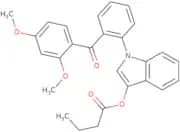
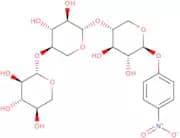
CAS :Produit contrôléAldol 470 butyrate is a chromogenic substrate for the enzyme aldolase. It can be used in diagnostics, food testing and culture media. Aldol 470 butyrate has been shown to be useful in detecting the presence of a number of different substances, including alcohols, organic acids, ketones, amines and amino acids. Aldol 470 butyrate is also an excellent ligand for determination of protein-ligand interactions. The conjugation of this product with other molecules provides an excellent tool for chemiluminescence assays. This product is also used as a fluorogenic substrate in environmental testing.Formule :C27H25NO5Degré de pureté :Min. 95.0 Area-%Masse moléculaire :443.5 g/mol4-Nitrophenyl b-D-xylotrioside
CAS :Chromogenic substrate targeting beta-D-xylosidase. A xylanase substrate.Formule :C21H29NO15Degré de pureté :Min. 98 Area-%Couleur et forme :PowderMasse moléculaire :535.45 g/mol5-Bromo-6-chloro-3-indolyl-2-acetamido-2-deoxy-a-D-glucopyranoside
5-Bromo-6-chloro-3-indolyl-2-acetamido-2-deoxy-a-D-glucopyranoside is a chemiluminescent substrate that is used as an indicator in diagnostic tests. This compound reacts with an oxidizing agent, such as hydrogen peroxide, to generate light. It is also used as a chromogenic substrate for the detection of bioluminescence and it can be applied in culture media or food testing. 5Bromo-6Chloro-3Indolyl2Acetamido2DeoxyA1DGlucopyranoside has a CAS number, which means that it meets the standards set by the Chemical Abstracts Service. It also has a high purity and quality, making it suitable for use in laboratories.Degré de pureté :Min. 95%4-Nitrophenyl-beta-D-glucopyranoside
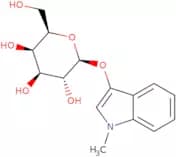
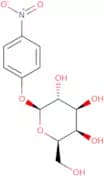
CAS :Chromogenic β-glucosidase substrate yielding a yellow solution upon cleavage.Formule :C12H15NO8Degré de pureté :Min. 99.0 Area-%Masse moléculaire :301.25 g/molN-Methylindoxyl-beta-D-galactopyranoside monohydrate
CAS :N-Methylindoxyl-beta-D-galactopyranoside monohydrate (MG) is a chromogenic probe that interacts with galactose residues found on glycoproteins, which are found on cell surfaces, leading to activation of cells. MG also binds specifically to the surface of lung cells and can inhibit the development of certain types of infections..Formule :C15H21NO7Degré de pureté :Min. 98 Area-%Couleur et forme :PowderMasse moléculaire :327.33 g/mol5-Bromo-4-chloro-3-indolyl b-D-mannopyranoside
CAS :5-Bromo-4-Chloro-3-Indolyl b-D-Mannopyranoside, also known as X-Man, is an enzyme substrate commonly used for detecting mannosidase enzymes. Upon hydrolysis by the enzyme, it produces a blue-green colored compound that can be detected visually or measured spectrophotometrically. This substrate is useful in characterizing the activity of mannosidases involved in glycoprotein processing and quality control.Formule :C14H15BrClNO6Couleur et forme :White Off-White PowderMasse moléculaire :408.63 g/mol2-Naphthyl caprylate
CAS :2-Naphthyl caprylate is a substrate that is employed in an assays for carboxylesterase and lipase and when hydrolyzed, produces 2-naphthol, a compound that can also be identified via fluorescence analysis. By combining it with a diazonium salt, the formation of the corresponding azo dye occurs. In particular, this substrate is used to detect the extracellular lipase of Pseudomonas fluorescens B52.Formule :C18H22O2Degré de pureté :Min. 95%Couleur et forme :White PowderMasse moléculaire :270.37 g/molAldol® 515 4-acetoxybutyrate solution, 0.75 M in DMSO, Biosynth Patent: EP 2427431 and US 8940909
CAS :Produit contrôléAldol® 515 4-acetoxybutyrate solution, 0.75 M in DMSO, is a chromogenic substrate that can be used to measure the activity of aldolase. It is a liquid at room temperature and has a pH of 7.2. The Aldol® 515 4-acetoxybutyrate solution, 0.75 M in DMSO, is soluble in water and organic solvents such as DMSO and ethanol. This product does not contain any preservatives or additives and is suitable for use with humans and animals. Aldol® 515 4-acetoxybutyrate solution, 0.75 M in DMSO, is manufactured by Cymit Quimica under patents EP 2427431 and US 8940909.br>br> Aldolase catalyzes the conversion of dihydroxyacetone phosphate (DHAP) to glyceraldehyde 3-phosphateFormule :C29H28N2O5Degré de pureté :Min. 95 Area-%Masse moléculaire :484.54 g/mol4-Nitrophenyl-beta-D-galactopyranoside
CAS :Chromogenic β-galactosidase substrate yielding a yellow solution upon cleavage. Can be used for the detection of coliforms due to their β-galactosidase activity.Formule :C12H15NO8Degré de pureté :Min. 98.0 Area-%Masse moléculaire :301.26 g/mol5-Bromo-6-chloro-3-indoxyl phosphate, disodium salt monohydrate
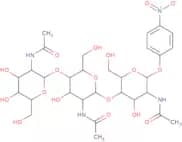
CAS :5-Bromo-6-chloro-3-indoxyl phosphate, disodium salt monohydrate is a substrate used to visualize phosphatase activity via showing magenta colored end product when used with Nitroblue Tetrazolium.Formule :C8H6BrClNNa2O5PDegré de pureté :Min. 99.0 Area-%Masse moléculaire :388.45 g/mol4-Nitrophenyl N,N',N''-triacetyl-b-D-chitotriose
CAS :Substrate for determining hydrolytic activity of chitinaseDegré de pureté :Min. 95%Couleur et forme :White PowderMasse moléculaire :748.69 g/mol5-Bromo-4-chloro-3-indoxyl phosphate p-toluidine, micronized
CAS :A substrate for alkaline phosphatase yielding a blue insoluble product upon cleavage. Colour can be further enhanced when used together with Nitroblue tetrazolium. The substrate system is versatile and has functions in a variety of applications, including Northern, Southern, and Western blotting, in situ hybridization, ELISAs, microarray and immunohistochemistry. The micronized structure enhances solubility.Formule :C8H6BrClNO4P•C7H9NDegré de pureté :Min. 95%Couleur et forme :PowderMasse moléculaire :433.63 g/mol4-Nitrophenyl-alpha-D-mannopyranoside
CAS :Chromogenic α-mannosidase substrate yielding a absorbent solution upon cleavage. Also used for studies of the crystal structure of the complexes of concanavalin A and binding studies with concanavalin A.Formule :C12H15NO8Degré de pureté :Min. 99 Area-%Masse moléculaire :301.26 g/mol5-Cyano-3-indoxyl-β-D-galactopyranoside
For detection of beta-galactosidase activity. The colors of the chromogen can be adjusted by incorporating different functional groups, e.g. cyano or nitro group, which yields purple or black green colonies with beta-galactosidase positive strain.Formule :C15H16N2O6Masse moléculaire :320.3 g/mol4-Nitrophenyl myristate
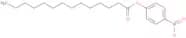
CAS :4-Nitrophenyl myristate (NphOMy) is a chromogenic enzyme substrate used as a diagnosis tool for detection of β-lactamase hydrolysis activities. In the presence of certain drugs, 4-nitrophenyl myristate HSA-Tyr411-catalyzed hydrolysis seems to be inhibited.Formule :C20H31NO4Degré de pureté :Min. 95 Area-%Couleur et forme :White PowderMasse moléculaire :349.46 g/mol6-Chloro-3-indoxyl-beta-D-galactopyranoside, plant origin
CAS :6-Chloro-3-indoxyl-beta-D-galactopyranoside is a chromogenic substrate for beta-galactosidase that yields a salmon or rose-coloured precipitate and hence is also known as Salmon-Gal. It can be used in conjunction with isopropyl-beta-D-thiogalactopyranoside (IPTG) as an alternative to the chromogenic substrate 5-bromo-4-chloro-3-indolyl beta-D-galactopyranoside (X-Gal) for detection of beta-galactosidase activity in bacterial colonies in colorimetric assays. Where beta-galactosidase expressed from a reporter gene in molecular biology experiments, recombinant colonies on growth plates are salmon-coloured while non-recombinants appear as white. Use of nitroblue tetrazolium salt (NBT) with Salmon-Gal may provide faster results, yielding a clear, purple precipitate, than for Salmon-Gal alone. In conjunction with 5-bromo-4-chloro-3-indolyl-beta-D-glucoside (X-Glc), Salmon-Gal is useful for simultaneous detection of GUS and Lac activities in the same medium.Formule :C14H16ClNO6Degré de pureté :Min. 98.0 Area-%Masse moléculaire :329.74 g/mol4-Nitrophenyl-beta-D-xylopyranoside
CAS :Chromogenic β-xylosidase substrate yielding a yellow solution upon cleavage.Formule :C11H13NO7Degré de pureté :Min. 99 Area-%Masse moléculaire :271.23 g/mol6-Chloro-3-indoxyl-beta-D-galactopyranoside
CAS :6-Chloro-3-indoxyl-beta-D-galactopyranoside is a chromogenic substrate for beta-galactosidase that yields a salmon or rose-coloured precipitate and hence is also known as Salmon-Gal. It can be used in conjunction with isopropyl-beta-D-thiogalactopyranoside (IPTG) as an alternative to the chromogenic substrate 5-bromo-4-chloro-3-indolyl beta-D-galactopyranoside (X-Gal) for detection of beta-galactosidase activity in bacterial colonies in colorimetric assays. Where beta-galactosidase expressed from a reporter gene in molecular biology experiments, recombinant colonies on growth plates are salmon-coloured while non-recombinants appear as white. Use of nitroblue tetrazolium salt (NBT) with Salmon-Gal may provide faster results, yielding a clear, purple precipitate, than for Salmon-Gal alone. In conjunction with 5-bromo-4-chloro-3-indolyl-beta-D-glucoside (X-Glc), Salmon-Gal is useful for simultaneous detection of GUS and Lac activities in the same medium.Formule :C14H16ClNO6Degré de pureté :Min. 98.0 Area-%Masse moléculaire :329.74 g/mol4-Nitrophenyl 2-acetamido-6-O-(2-acetamido-2-deoxy-b-D-glucopyranosyl)-3-O-(b-D-galactopyranosyl)-2-deoxy-a-D-galactopyranoside
CAS :4-Nitrophenyl 2-acetamido-6-O-(2-acetamido-2-deoxy-b-D-glucopyranosyl)-3-O-(b-D-galactopyranosyl)-2-deoxy-a-D-galactopyranoside is a specific chromogenic substrate designed for the highly sensitive and accurate detection of glycosidase enzyme activity. Glycosidases are responsible for the cleavage of glycosidic bonds between saccharide units in various carbohydrates. The hydrolysis of this substrate by glycosidase enzymes produces 4-nitrophenol, a yellow-colored compound that can be easily monitored through spectrophotometric measurements due to its strong absorbance at 405 nm. This chromogenic substrate is widely used in the analysis of glycosidase activity in various biological samples, including bacterial, fungal, and plant tissues, as well as in environmental samples and biotechnological applications.Formule :C28H41N3O18Degré de pureté :Min. 95 Area-%Couleur et forme :White PowderMasse moléculaire :707.63 g/molAldol® 455 alpha-D-glucopyranoside - Biosynth Patent: EP 2427431 and US 8940909
Aldol® 455 alpha-D-glucopyranoside is a high quality, environmentally tested, staining, and ligand for bioluminescent assays. It has been shown to be a chromogenic substrate for diagnostics and a fluorogenic substrate for enzymes such as alpha-glucosidase, producing a yellow/green-orange color. Aldol® 455 alpha-D-glucopyranoside is also used in culture media and food testing.
Formule :C27H24ClNO7Degré de pureté :Min. 95 Area-%Couleur et forme :PowderMasse moléculaire :509.93 g/mol5-Bromo-4-chloro-1H-indol-3-yl-β-D-cellotetraoside
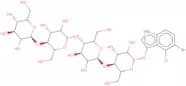
5-Bromo-4-chloro-1H-indol-3-yl-b-D-cellotetraoside is a chromogenic substrate used to detect the specific enzymatic activity of cellulase. After cleavage, 5-bromo-4-chloro-indoxyl is released, resulting in a blue to blue-green color change in bacterial colonies or media. 5-Bromo-4-chloro-1H-indol-3-yl-b-D-cellotetraoside is used in bacterial cellulase detection and biomass conversion research.Formule :C32H45BrClNO21Degré de pureté :Min. 95%Couleur et forme :PowderMasse moléculaire :895.05 g/mol1-Naphthyl β-D-galactopyranoside
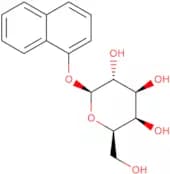
CAS :1-Naphthyl b-D-galactopyranoside is a chromogenic substrate used to detect the presence of beta-galactosidase enzymes. The enzyme cleaves the substrate to produce a colored product that can be quantified and visualized. This substrate is commonly used in applications such as the detection of lacZ gene expression in bacterial colonies or in histochemical staining of tissues to identify beta-galactosidase activity.Formule :C16H18O6Degré de pureté :Min. 95%Couleur et forme :PowderMasse moléculaire :306.32 g/molAldol® 458 nonanoate solution, 0.75 M in DMSO, Biosynth Patent: EP 2427431 and US 8940909
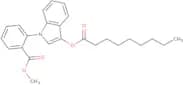
CAS :Produit contrôléAldol 458 nonanoate solution (0.75 M) is a substrate for enzymes and ligands, which is used in various applications such as food testing, staining, fluorogenic substrate, environmental testing, chromogenic substrate and conjugate. Aldol 458 nonanoate solution (0.75 M) has high purity and is highly stable at pH 2-12. This product can be used as a chemiluminescence or bioluminescence substrate. The CAS number for this product is 2484873-15-4.Formule :C25H29NO4Degré de pureté :Min. 95%Couleur et forme :Clear LiquidMasse moléculaire :407.51 g/molAldol® 515 beta-D-xylopyranoside, Biosynth Patent: EP 2427431 and US 8940909
CAS :Aldol® 515 beta-D-xylopyranoside is a chemiluminescent ligand that can be used for the detection of beta-xylosidase activity to yield a red color.
Formule :C28H34N2O6Degré de pureté :Min. 95%Couleur et forme :PowderMasse moléculaire :494.59 g/molLipase substrate
CAS :Synthetic chromogenic substrate for detection of lipase enzyme activity that produces a red coloured product, Suitable for use in serum of plasma matrices. This lipase substrate is commonly used in veterinary diagnostics for monitoring and detecting canine pancreatitis,Formule :C45H69NO8Masse moléculaire :752.03 g/molAldol® 458 acetate, Biosynth Patent: EP 2427431 and US 8940909
CAS :Produit contrôléAldol 458 acetate is a synthetic chemical that is used in the food industry as an enzyme substrate and in diagnostic tests to measure the level of enzymes. Aldol 458 acetate is a ligand that binds to proteins, such as horseradish peroxidase and alkaline phosphatase, which are commonly used for detection of antibodies or other proteins. This product can be used as a culture medium additive for bacteria, fungi, and yeast. It can also be used for diagnostics and chemiluminescence reactions. Aldol 458 acetate has high purity and quality.Formule :C18H15NO4Degré de pureté :Min. 95.0 Area-%Masse moléculaire :309.32 g/mol5-Bromo-6-chloro-3-indolyl sulfate potassium salt
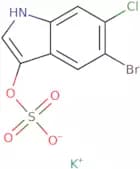
CAS :5-Bromo-6-chloro-3-indolyl sulfate potassium salt is a fluorogenic substrate that can be used for food testing. It is a conjugate of 5-bromo-6-chloroindolylsulfate and potassium, which is dissolved in buffer solution. This product can also be used as a chromogenic substrate in environmental testing, an enzyme substrate in diagnostics, and a ligand for bioluminescence. It has high purity and quality, and can be used for chemiluminescence or bioluminescence. The CAS number for this product is 6581-24-4.Formule :C8H4BrClNO4S·KDegré de pureté :Min. 95%Couleur et forme :PowderMasse moléculaire :364.64 g/mol5-Bromo-6-chloro-3-indoxyl phosphate, disodium salt trihydrate
CAS :Water soluble substrate for visualizing alkaline phosphatase activity. Produces a magenta colored insoluble end product that is detected visually, when used together with nitroblue tetrazolium. The substrate system is versatile and functions in a variety of applications, including Northern, Southern, and Western blotting, in situ hybridization, ELISAs and immunohistochemistry.Formule :C8H10BrClNNa2O7PDegré de pureté :Min. 99.0 Area-%Masse moléculaire :424.49 g/mol6-Chloro-3-indolyl β-D-cellobioside
CAS :6-Chloro-3-indolyl b-D-cellobioside is a chromogenic substrate that produces a salmon-pink color after enzymatic cleavage. It is used for detecting the activity of beta-D-cellobiosidase in enzyme assays.
Degré de pureté :Min. 95%Couleur et forme :White To Off-White SolidMasse moléculaire :491.87 g/mol5-Bromo-4-chloro-3-indoxyl butyrate
CAS :Chromogenic substrate for carboxylesterase yielding a blue precipitate upon cleavage. It has been proposed for the rapid detection of Branhamella catarrhalis in a strip test because unlike most other members of the family Neisseriaceae, Branhamella catarrhalis produces a butyrateesterase.Formule :C12H11BrClNO2Degré de pureté :Min. 98.0 Area-%Masse moléculaire :316.59 g/mol4-Nitrophenyl 2-acetamido-2-deoxy-a-D-galactopyranoside
CAS :4-Nitrophenyl 2-acetamido-2-deoxy-alpha-D-galactopyranoside is a chromogenic substrate for alpha-N-acetylgalactosaminidase. Upon hydrolysis, para-nitrophenol is released yielding a yellowish colour. 4-Nitrophenyl 2-acetamido-2-deoxy-alpha-D-galactopyranoside is used in different applications such as the diagnosis of Schindler-Kanzaki disease and other lysosomal storage disorders.Formule :C14H18N2O8Degré de pureté :Min. 98%Couleur et forme :White PowderMasse moléculaire :342.3 g/mol6-Bromo-2-naphthyl b-D-glucuronide
CAS :6-Bromo-2-naphthyl beta-D-glucuronide is a substrate for beta-glucuronidase, an enzyme involved in detoxification and bacterial metabolism. Upon enzymatic hydrolysis, it releases 6-bromo-2-naphthol, which forms a detectable dye when reacted with diazonium salts. This compound is widely used in microbiology to detecting E. coli in water testing and histochemical staining. 6-Bromo-2-naphthyl beta-D-glucuronide is also been used in cancer research studies. It has been found that some tumors are related to a high activity of beta-glucuronidase, responsible to reactivate the carcinogens and promote tumor progression, developing a drug resistance to chemotherapy.Formule :C16H15BrO7Degré de pureté :Min 97%Couleur et forme :White Off-White PowderMasse moléculaire :399.2 g/mol4-Nitrophenyl 2-acetamido-3-O-[2-O-a-L-fucopyranosyl-b-D-galactopyranosyl)-2-deoxy-b-D-galactopyranoside
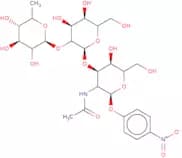
CAS :4-Nitrophenyl 2-acetamido-3-O-[2-O-a-L-fucopyranosyl-b-D-galactopyranosyl)-2-deoxyb-D-galactopyranoside is a water soluble, fluorescent probe that can be used for detecting the presence of β-(1→4) -linked galactosaminoglycans. The dye is a substrate for enzymes such as α--mannosidase, β--glucuronidase and β--galactosidase. The dye is also an excellent ligand for lectins such as concanavalin A and wheat germ agglutinin. This product is a diagnostic reagent that has been shown to have high purity and quality. It has CAS No. 93496-53-8 and can be used in food testing, bioluminescence, environmental testing, or high purity applications.
Formule :C26H38N2O17Degré de pureté :Min. 95%Masse moléculaire :650.58 g/mol5-Bromo-6-chloro-3-indolyl α-D-glucopyranoside
CAS :5-Bromo-6-chloro-3-indolyl α-D-glucopyranoside is a chromogenic substrate that yields a magenta-colored product after cleavage. The chromophore 5-bromo-6-chloro-indoxyl is released, generating the observable color. It is used in Pompe disease diagnostics, a glycogen storage disorder, that measures the deffiency of alpha-glucosidase (GAA) that could lead to the accumulation of glycogen in lysosomes.
Formule :C14H15BrClNO6Degré de pureté :Min. 95%Couleur et forme :PowderMasse moléculaire :408.63 g/mol2-Chloro-4-nitrophenyl b-D-galactopyranoside
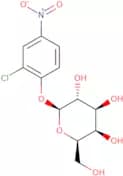
CAS :2-Chloro-4-nitrophenyl-beta-D-galactopyranoside is a chromogenic substrate used to test enzyme activities. It is commonly used in molecular biology research for the detection and measurement of beta-galactosidase activity.Formule :C12H14ClNO8Degré de pureté :Min. 95%Couleur et forme :White PowderMasse moléculaire :335.69 g/mol