Autres
6300 produits trouvés pour "Autres"
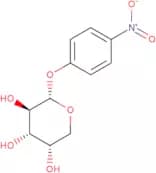
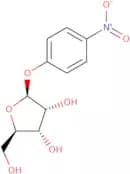
4-Nitrophenyl a-L-arabinopyranoside
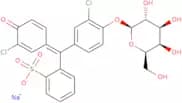
CAS :Substrate for a-L-arabinopyranosidaseFormule :C11H13NO7Degré de pureté :Min. 98 Area-%Couleur et forme :White PowderMasse moléculaire :271.22 g/molChlorophenol red-b-D-galactopyranoside sodium salt
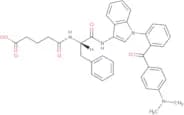
CAS :Chlorophenol red-b-D-galactopyranoside sodium salt is the salt from of CPRG (chlorophenol red-b-D-galactopyranoside), that has a higher solubility. It is a chromogenic substrate for beta-galactosidases that, after enzymatic cleavage, releases chlorophenol red, a dark red compound quantified by absorbance at 570 nm.Formule :C25H21Cl2O10SNaDegré de pureté :Min. 96 Area-%Couleur et forme :PowderMasse moléculaire :607.4 g/molAldol® 515 N-glutaryl-L-phenylalanine amide potassium salt, Biosynth Patent: EP 2427431 and US 8940909
CAS :Aldol® 515 N-glutaryl-L-phenylalanine amide is a chromogenic and fluorogenic enzyme substrate used for detection of L-glutamate-phenylalanine (GluPhe)-specific peptidase activity. The colorless enzyme substrate is cleaved the GluPhe-specific peptidase, yielding development of orange-red coloration. In addition, red fluorescence is generated when Aldol® 355 fluorescence enhancer or a suitable matrix is present. Aldol® 515 N-glutaryl-L-phenylalanine amide can be used in enzyme assays and live bacterial cultures. Aldol® 515 N-glutaryl-L-phenylalanine amide is suitable for use in liquid and solid media, under aerobic as well as anaerobic conditions.
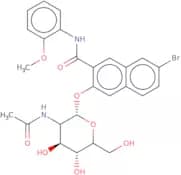
Formule :C37H35KN4O5Degré de pureté :Min. 95%Couleur et forme :PowderMasse moléculaire :654.8 g/molNaphthol AS-BI N-acetyl-b-D-galactosaminide
CAS :Modified naphtol AS substrate used in histochemical and cytochemical stainingFormule :C26H27BrN2O8Degré de pureté :Min. 95%Couleur et forme :PowderMasse moléculaire :575.41 g/mol4-Nitrophenyl-N-acetyl-α-D-glucosaminide
CAS :4-Nitrophenyl-N-acetyl-α-D-glucosaminide is a chromogenic substrate for N-acetyl-β-D-glucosaminidase yielding a yellow solution upon cleavage.Formule :C14H18N2O8Masse moléculaire :342.31 g/molRef: 3D-N-4030
1gÀ demander100mgÀ demander250mgÀ demander500mgÀ demander2500mgÀ demander-Unit-ggÀ demander5-Bromo-6-chloro-3-indoxyl-beta-D-glucuronic acid, cyclohexylammonium salt
CAS :Chromogenic substrate for β-D-glucuronidase (GUS) yielding a magenta precipitate. It is used fordetection of GUS+ bacterial colonies as analternative to 5-bromo-4-chloro-3-indoxyl-β-D-glucuronide (X-GlcA).
Formule :C20H26BrClN2O7Degré de pureté :Min. 99 Area-%Masse moléculaire :521.80 g/molAldol® 515 L-alanine amide, hydrochloride, Biosynth Patent: EP 2427431 and US 8940909
CAS :Aldol® 515 L-alanine amide is a chromogenic and fluorogenic enzyme substrate used for detection of L-alanine aminopeptidase activity. The colorless enzyme substrate is cleaved by L-alanine aminopeptidase produced by microorganisms, grown in liquid or solid media yielding red color. In addition, red fluorescence is generated when a fluorescence enhancer or a suitable matrix is present. Aldol® 515 L-alanine amide can be used under aerobic and anaerobic conditions.
Formule :C26H27ClN4O2Degré de pureté :Min. 95.0 Area-%Masse moléculaire :462.97 g/mol4-Nitrophenyl b-D-ribofuranoside
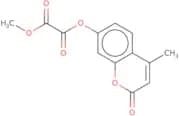
CAS :4-Nitrophenyl β-D-ribofuranoside is a synthetic chromogenic molecule designed to profile phosphorolytic enzyme activity, specifically ribonucleoside-hydrolyzing enzymes. Upon hydrolysis by these enzymes, it releases a 4-nitrophenolic compound, which can be monitored spectrophotometrically at 405-410 nm as a quantitative indicator of enzyme activity. This substrate is suitable for studying ribonucleoside-hydrolyzing enzymes, such as ribo- and deoxyribonucleases, in various biological systems and, in turn, could help advance our understanding of nucleic acid metabolism, gene function, and regulatory processes.Formule :C11H13NO7Degré de pureté :Min. 97 Area-%Couleur et forme :White PowderMasse moléculaire :271.22 g/mol1-Methyl 2-(4-methyl-2-oxo-2H-1-benzopyran-7-yl)ethanedioate
CAS :Inorganic phosphate targeted colorimetric probe
Formule :C13H10O6Degré de pureté :Min. 95%Masse moléculaire :822.35 g/mol5-Bromo-6-chloro-3-indoxyl phosphate, disodium salt monohydrate
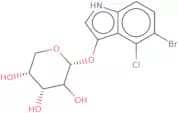
CAS :5-Bromo-6-chloro-3-indoxyl phosphate, disodium salt monohydrate is a substrate used to visualize phosphatase activity via showing magenta colored end product when used with Nitroblue Tetrazolium.Formule :C8H6BrClNNa2O5PDegré de pureté :Min. 99.0 Area-%Masse moléculaire :388.45 g/mol5-Bromo-4-chloro-3-indolyl a-D-xylopyranoside
CAS :5-Bromo-4-chloro-3-indolyl a-D-xylopyranoside is a chromogenic substrate used to detect the specific enzymatic activity of alpha-xylosidase. After cleavage, 5-bromo-4-chloro-indoxyl is released, resulting in a blue to blue-green color change in bacterial colonies or media. 5-Bromo-4-chloro-3-indolyl a-D-xylopyranoside is used in bacterial xylan metabolism studies and plant cell wall degradation assays.Formule :C13H13BrClNO5Degré de pureté :Min. 95%Couleur et forme :White to off-white solid.Masse moléculaire :378.61 g/molAldol® 495 beta-D-galactopyranoside, Biosynth Patent: EP 2427431 and US 8940909
CAS :Aldol® 495 beta-D-galactopyranoside is a chromogenic and fluorogenic enzyme substrate used for detection of beta-galactosidase activity. The colorless enzyme substrate is cleaved by lactose-utilizing bacteria in liquid or solid media, yielding orange color as well as green fluorescence if a fluorescence enhancer or a suitable matrix are present. Aldol® 495 beta-D-galactopyranoside can also be used in beta-gal reporter gene assays or for identification of beta-gal positive transformants on agar plates. Aldol® 495 beta-D-galactopyranoside can be used under aerobic and anaerobic conditions.Formule :C26H25ClN2O7Degré de pureté :Min. 95.0 Area-%Masse moléculaire :512.94 g/mol6-Bromo-2-naphthyl-2-acetamido-2-deoxy-β-D-glucopyranoside
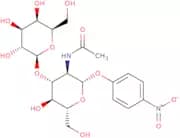
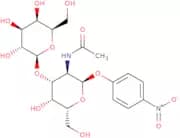
CAS :6-Bromo-2-naphthyl 2-acetamido-2-deoxy-beta-D-glucopyranoside is a chromogenic substrate used for the detection of chitinase activity. Upon hydrolysis by chitinase, it releases a yellow-brown color, which is easily detected by spectrophotometry. This substrate has been used to study chitinases in various organisms, including bacteria, fungi, and insects. It can also be used to quantitate chitinase activity in various biological samples.Formule :C18H20BrNO6Masse moléculaire :426.26 g/mol4-Nitrophenyl 2-acetamido-2-deoxy-3-O-(b-D-galactopyranosyl)-b-D-glucopyranoside
CAS :Chromogenic substrate for fucosyltransferasesFormule :C20H28N2O13Degré de pureté :Min. 98 Area-%Couleur et forme :White PowderMasse moléculaire :504.44 g/molAldol® 484 alpha-D-glucopyranoside, Biosynth Patent: EP 2427431 and US 8940909
CAS :Aldol® 484 alpha-D-glucopyranoside is a chromogenic and fluorogenic enzyme substrate for alpha-glucosidase activity (EC 3.2.1.20, alpha-1,4-glucosidase, also known as maltase). The colorless enzyme substrate is cleaved by bacteria producing this enzyme in liquid or solid media, yielding orange color. Green fluorescence is also generated if a suitable matrix is present such as: cellulose acetate filters, polypropylene tubes or microplates and polyethylene vials. Aldol® 484 alpha-D-glucopyranoside can be used under aerobic and anaerobic conditions.
Formule :C26H24ClFN2O7Degré de pureté :Min. 95%Couleur et forme :PowderMasse moléculaire :530.93 g/mol5-Bromo-4-chloro-3-indoxyl oleate
CAS :5-Bromo-4-chloro-3-indoxyl oleate is a chromogenic substrate used to detect the specific enzymatic activity of lipase. After cleavage, 5-bromo-4-chloro-indoxyl is released, resulting in a blue to blue-green color change in bacterial colonies or media. 5-Bromo-4-chloro-3-indoxyl oleate is used in lipid metabolism disorder screening.Formule :C26H37BrClNO2Degré de pureté :Min. 95%Couleur et forme :PowderMasse moléculaire :510.93 g/mol2-Naphthyl-alpha-D-glucopyranoside
CAS :2-Naphthyl-α-D-glucopyranoside is a substrate for α-glucosidase. 2-Naphthol is released upon hydrolyzation. By simultaneous coupling with a suitable staining reagent, such as hexazonium p-rosaniline, the corresponding reddish-brown azo-dye is formed. Naphthols can also be detected by fluorescence analysis.Formule :C16H18O6Degré de pureté :Min. 98.0 Area-%Masse moléculaire :306.32 g/mol5-Bromo-4-chloro-3-indoxyl-α-D-mannopyranoside
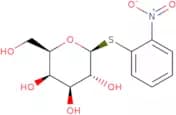
CAS :Chromogenic substrate specific for α-D-mannosidase. Yields a blue precipitate upon cleavage. Identification of Listeria species.Formule :C14H15BrClNO6Degré de pureté :Min. 99 Area-%Masse moléculaire :408.64 g/mol2-Nitrophenyl-β-D-thiogalactopyranoside
CAS :2-Nitrophenyl-beta-D-thiogalactopyranoside is a chromogenic substrate used to detect the presence of galactosidase enzymes in various biological and biochemical assays. It consists of a nitrophenyl group attached to a galactose sugar molecule through a thioglycosidic bond. When acted upon by enzymes such as galactosidases, it releases the colored nitrophenyl group, which can be detected using spectrophotometry. This substrate is commonly used in assays for the detection of LacZ activity in bacterial cultures, as lacZ encodes for β-galactosidase.Formule :C12H15NO7SDegré de pureté :Min. 98 Area-%Couleur et forme :Yellow PowderMasse moléculaire :317.32 g/mol5-Bromo-4-chloro-3-indoxyl-beta-D-glucuronic acid, sodium salt trihydrate
CAS :Chromogenic substrate for beta-glucuronidase (GUS) yielding blue precipitate upon cleavage. Used for identification of beta-glucuronidase. X-beta-D-glucuronide has been reported as chromogenic substrate in a number of chromogenic E. coli/ coliform culture media. About 95% of common E. coli possess beta-D-glucuronidase activity. Such chromogenic culture media are used for detection and enumeration of E. coli in food samples such as meat, dairy products and shellfish and have clinical applications in the assessment of urinary infections. It has gained international acceptance as highly accurate test for the presence of E. coli in drinking water samples. It is also used for the detection of the expression of GUS (E. coli beta-glucuronidase) gene fusion marker constructs in plants. The sodium salt has advantages over the cyclohexylammonium salt as being non-electrostatic and possessing a naturally-occurring cation.Formule :C14H18BrClNNaO10Degré de pureté :Min. 99.0 Area-%Masse moléculaire :498.65 g/mol5-Bromo-4-chloro-3-indoxyl-α-D-N-acetylneuraminic acid, cyclohexylammonium salt
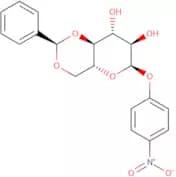
5-Bromo-4-chloro-3-indoxyl-alpha-D-N-acetylneuraminic acid, cyclohexylammonium salt is a Fluorogenic substrate used for the detection of an enzyme that converts sialic acid to fluorescein. This product has a high quality and purity with a CAS number. It is used in Culture media as a conjugate, Enzyme substrate, Food testing, High purity, Diagnostics, ligand, Chromogenic substrate, Environmental testing. The product has been tested and found to be safe for use with animals and humans.Formule :C25H35BrClN3O9Degré de pureté :Min. 99.5 Area-%Masse moléculaire :636.92 g/mol4-Nitrophenyl 4,6-benzylidene-α-D-glucopyranoside
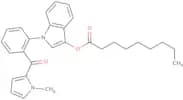
CAS :4-Nitrophenyl 4,6-benzylidene-alpha-D-glucopyranoside is a chromogenic substrate for alpha-glucosidase. Upon hydrolysis, para-nitrophenol is released yielding a yellowish colour. 4-Nitrophenyl 4,6-benzylidene-alpha-D-glucopyranoside is used in different applications such as the Pompe disease diagnosis, glycogen metabolism researchFormule :C19H19NO8Degré de pureté :Min. 95%Couleur et forme :PowderMasse moléculaire :389.36 g/molAldol® 495 nonanoate, Biosynth Patent: EP 2427431 and US 8940909
CAS :Produit contrôléAldol 495 nonanoate is a bioluminescent substrate that can be used to measure the activity of Aldolase, which is an enzyme that catalyzes the conversion of glyceraldehyde-3-phosphate and dihydroxyacetone phosphate to D-glyceraldehyde. This substrate is used in various diagnostic assays, including food testing and staining. Aldol 495 nonanoate was developed by Cymit Quimica Pharmaceuticals and has been patented by EP 2427431 and US 8940909.
Formule :C29H31ClN2O3Degré de pureté :Min. 95.0 Area-%Masse moléculaire :491.02 g/mol4-Nitrophenyl-alpha-D-galactopyranoside
CAS :Chromogenic substrate yielding a soluble chromophore for the colorimetric assay of α-D-galactosidase upon cleavage. Used for the detection of hydrolases in tissues and membranes.Formule :C12H15NO8Degré de pureté :Min. 99.0 Area-%Masse moléculaire :301.26 g/molAldol® 470 nonanoate, Biosynth Patent: EP 2427431 and US 8940909
CAS :Produit contrôléAldol® 470 nonanoate is a chromogenic substrate with a molecular weight of 496.5 g/mol. Aldol® 470 nonanoate has been used to detect the presence of L-amino acids using a fluorogenic assay. This substrate can be used as a ligand in an enzyme-linked immunosorbent assay (ELISA) to measure the concentration of L-amino acids in food and drink samples, as well as in diagnostics for detecting fluoroquinolone resistance in bacteria. Aldol® 470 nonanoate is also used in the detection of bioluminescence and chemiluminescence reactions. CAS No.: 2484872-50-4
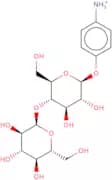
Formule :C32H35NO5Degré de pureté :Min. 95.0 Area-%Masse moléculaire :513.62 g/mol4-Nitrophenyl-β-D-maltopyranoside
CAS :Chromogenic beta-maltosidase substrateFormule :C18H25NO13Degré de pureté :Min. 95%Couleur et forme :White PowderMasse moléculaire :463.39 g/mol4-(Hydroxymethyl)phenyl-α-D-galactopyranoside tetraacetate
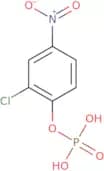
CAS :4-(Hydroxymethyl)phenyl-alpha-D-galactopyranoside tetraacetate is a substrate for enzymes that catalyze the hydroxylation of carbohydrates. It can be used as a substrate for peroxidase and beta-glucosidase, which are important in the production of natural products such as resveratrol, catechins, and lignin. 4-(Hydroxymethyl)phenyl-alpha-D-galactopyranoside tetraacetate is also a chromogenic substrate for chemiluminescence reactions. The product is available as a powder and can be used in diagnostic kits to detect the presence of enzymes or other substances in food or environmental samples.Formule :C21H26O11Masse moléculaire :454.43 g/mol2-Chloro-4-nitrophenyl phosphate
CAS :2-Chloro-4-nitrophenyl phosphate is a chromogenic substrate for phosphatases. Afer cleavage of the substrate, 2-chloro-4-nitrophenol is released, which can be quantified at 405 nm. 2-Chloro-4-nitrophenyl phosphate is used in clinical diagnostics to for prostate cancer, diagnosis of liver and bone diseases.Formule :C6H5ClNO6PDegré de pureté :Min. 95 Area-%Masse moléculaire :253.53 g/mol6-Bromo-2-naphthyl 2-acetamido-2-deoxy-b-D-glucopyranoside
CAS :6-Bromo-2-naphthyl 2-acetamido-2-deoxy-b-D-glucopyranoside is a chromogenic substrate used for the detection of chitinase activity. Upon hydrolysis by chitinase, it releases a yellow-brown color, which is easily detected by spectrophotometry. This substrate has been used to study chitinases in various organisms, including bacteria, fungi, and insects. It can also be used to quantitate chitinase activity in various biological samples.
Formule :C18H20BrNO6Degré de pureté :Min 97%Couleur et forme :White PowderMasse moléculaire :426.26 g/molAldol® 495 nonanoate solution, 0.75 M in DMSO, Biosynth Patent: EP 2427431 and US 8940909
CAS :Produit contrôléAldol® 495 nonanoate is a chromogenic and fluorogenic enzyme substrate used for detection of lipase activity. The colorless enzyme substrate is cleaved by C9 esterases, yielding development of an orange coloration. In addition, green fluorescence is generated when Aldol® 355 fluorescence enhancer or a suitable matrix is present. Aldol® 495 nonanoate can be used in enzyme assays and live bacterial cultures. Aldol® 495 nonanoate is suitable for use in liquid and solid media, under aerobic as well as anaerobic conditions.Formule :C29H31ClN2O3Degré de pureté :Of Solute (Hplc) 95.0 To 100.0 Area-%Masse moléculaire :491.02 g/molAldol® 455 alpha-D-glucopyranoside, Biosynth Patent: EP 2427431 and US 8940909
Aldol® 455 alpha-D-glucopyranoside is a synthetic fluorescent sugar that has been used in the diagnosis of bacterial infections. It has been used as a substrate for the enzyme beta-galactosidase and as a conjugate with anti-bacterial antibodies, which can be used to detect bacteria in urine and blood samples. Aldol® 455 alpha-D-glucopyranoside is also commonly used in the detection of bacteria in food and environmental samples. The product has a high purity level and quality.Formule :C27H24ClNO7Degré de pureté :Min. 95.0 Area-%Masse moléculaire :509.93 g/molAldol® 484 acetate, Biosynth Patent: EP 2427431 and US 8940909
CAS :Produit contrôléAldol® 484 acetate is a chromogenic substrate for carboxylesterases yielding a red precipitate. In contrast to classical indoxyl substrates, Aldol® substrates can be used under aerobic and anaerobic conditions.Formule :C22H16ClFN2O3Degré de pureté :Min. 95%Couleur et forme :PowderMasse moléculaire :410.83 g/mol4-Nitrophenyl 2-acetamido-2-deoxy-3-O-(b-D-galactopyranosyl)-a-D-galactopyranoside
CAS :4-Nitrophenyl 2-acetamido-2-deoxy-3-O-(b-D-galactopyranosyl)-a-D-galactopyranoside is a superior chromogenic pNP enzyme substrate designed to deliver enhanced enzyme detection and outstanding assay performance. This cutting-edge substrate boasts excellent specificity, sensitivity, and stability, making it a powerful tool in the measurement of enzyme activity, substrate profiles, and inhibitor characterization. This premium substrate is perfect for researchers and professionals seeking reliable and efficient results for their enzyme-based investigations.Formule :C20H28N2O13Degré de pureté :Min. 98 Area-%Couleur et forme :White PowderMasse moléculaire :504.44 g/molNaphthol AS-MX acetate
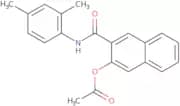
CAS :Modified naphtol AS substrate used in histochemical and cytochemical staining
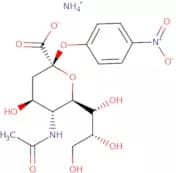
Formule :C21H19NO3Degré de pureté :Min. 80%Couleur et forme :White Off-White PowderMasse moléculaire :333.38 g/mol2-O-(4-Nitrophenyl)-a-D-N-acetylneuraminic acid ammonium salt
CAS :2-O-(4-Nitrophenyl)-a-D-N-acetylneuraminic acid ammonium salt is a chromogenic substrate commonly used in the detection and quantification of sialidase activity. Sialidases are a family of enzymes that hydrolyze sialic acid residues from glycoconjugates. This substrate is used to detect bacterial and viral sialidases, which play an important role in pathogen infectivity. The ammonium salt form of the substrate is preferred for its solubility in water-based assay systems.Degré de pureté :Min. 95%Masse moléculaire :447.39 g/molAldol® 458 beta-D-galactopyranoside, Biosynth Patent: EP 2427431 and US 8940909
CAS :Aldol® 458 beta-D-galactopyranoside is a chromogenic and fluorogenic enzyme substrate used for detection of beta-galactosidase activity. The colorless enzyme substrate is cleaved by lactose utilizing bacteria grown in liquid or solid media, yielding yellow coloration and green fluorescence. Aldol® 458 beta-D-galactopyranoside can also be used in beta-galactosidase gene reporter assays or immunoassay applications (ELISA). Aldol® 458 beta-D-galactopyranoside can be used under aerobic and anaerobic conditions.Formule :C22H23NO8Degré de pureté :Min. 95 Area-%Couleur et forme :PowderMasse moléculaire :429.42 g/molAldol® 470 choline phosphate, Biosynth Patent: EP 2427431 and US 8940909
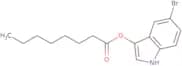
CAS :Aldol® 470 choline phosphate is a chromogenic and fluorogenic enzyme substrate used for detection of phosphatidyl-choline specific phospholipase C (PC-PLC, EC 3.1.4.3) activity. The colorless product is cleaved by PC-PLC positive microorganisms in liquid or solid media, yielding a yellow color and green fluorescence. Aldol® 470 choline phosphate therefore, enables the detection and identification of PC-PLC positive pathogenic bacteria, such as, Clostridium perfringens, Pseudomonas aeruginosa, Helicobacter pylori, Legionella pneumophila, Bacillus cereus, Bacillus anthracis, Listeria monocytogenes, and others. Aldol® 470 choline phosphate can be used under aerobic and anaerobic conditions.Formule :C28H31N2O7PDegré de pureté :Min. 95%Couleur et forme :PowderMasse moléculaire :538.53 g/mol5-Bromo-3-indoxyl caprylate
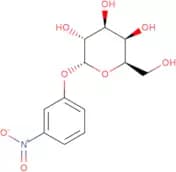
CAS :Also known as Lapis-caprylate; targeting esterase with C8 activity; Blue colorFormule :C16H20BrNO2Degré de pureté :Min. 98 Area-%Couleur et forme :PowderMasse moléculaire :338.24 g/mol3-Nitrophenyl a-D-galactopyranoside
CAS :3-Nitrophenyl alpha-D-galactopyranoside is a chromogenic substrate to measure the activity of the alpha-galactosidase enzymes. Upon hydrolysis by galactosidase, 3NPG releases a yellowish product, 3-nitrophenol, which can be easily measured spectrophotometrically. Some of the applications include enzyme assays, screening for alpha-galactosidase-producing microorganisms, and studying the kinetics and inhibition of alpha-galactosidase enzymes.Degré de pureté :Min. 95%Couleur et forme :PowderMasse moléculaire :301.25 g/mol5-Bromo-4-chloro-3-indoxyl myo-inositol-1-phosphate, ammonium salt
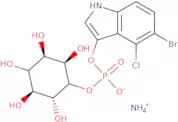
CAS :This product is designed for the sensitive color detection andidentification of various bacteria, such as pathogenic strains of Listeria, Clostridium, Bacillus and Staphylococcus. 5-Bromo-4-chloro-3-indoxyl myo-inositol-1-phosphate (X-phos-inositol; X-IP) is a chromogenic indicator for phosphatidyl-inositol specific phospholipase C(PI-PLC, EC 4.6.1.13). The colorless product is cleaved by PI-PLC positive microorganisms in liquid media or on solid culture media and yields a blue-green color precipitate.Formule :C14H19BrClN2O9PDegré de pureté :Min. 90.0 Area-%Masse moléculaire :505.64 g/mol5-Bromo-6-chloro-3-indoxyl-3-acetate
CAS :Chromogenic substrate for carboxylesterase yielding a magenta precipitate upon cleavage. Mainly used in histochemistry.Formule :C10H7BrClNO2Degré de pureté :Min. 98.0 Area-%Masse moléculaire :288.53 g/molRef: 3D-B-6304
1gÀ demander5gÀ demander10gÀ demander500mgÀ demander2500mgÀ demander-Unit-ggÀ demander4-Nitrophenyl α-L-fucopyranoside
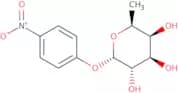
CAS :Chromogenic substrate for alpha-L-fucosidaseFormule :C12H15NO7Degré de pureté :(%) Min. 98.0%Couleur et forme :PowderMasse moléculaire :285.25 g/mol4-Nitrophenyl O-(N-acetyl-a-neuraminosyl)-(2,3)-O-b-D-galactopyranosyl-(1,3)-2-acetamido-2-deoxy-a-D-galactopyran oxide
CAS :4-Nitrophenyl O-(N-acetyl-a-neuraminosyl)-(2,3)-O-b-D-galactopyranosyl-(1,3)-2-acetamido-2-deoxy-a-D-galactopyran oxide is a fluorogenic substrate that is used in the detection of glycosidases. It has been shown to be an excellent ligand for the enzyme beta galactosidase, which cleaves the glycan substrate 4NPOBGPA into 4NP and O-(N acetyl) neuraminic acid. 4NPOBGPA can be used as a chromogenic substrate for detecting beta galactosidase activity and can also be conjugated to other fluorescent molecules. This product is high purity and high quality.Degré de pureté :Min. 95%Masse moléculaire :795.7 g/mol4-Nitrocatechol sulfate dipotassium salt
CAS :Chromogenic sulfatase substrateFormule :C6H3NO7SK2Degré de pureté :Min. 98 Area-%Couleur et forme :PowderMasse moléculaire :311.35 g/mol4-Chloro-1-naphthol
CAS :Substrate for horseradish peroxidase (HRP). HRP catalyzes oxidation of 4-chloro-1-naphthol in the presence of peroxide to the blue insoluble product 4-chloro-1-naphthon. It is used for both blotting and immunohistochemical staining but is less sensitive than other precipitating HRP substrates.Formule :C10H7ClODegré de pureté :Min. 97.0 Area-%Masse moléculaire :178.62 g/molRef: 3D-C-5180
1kgÀ demander100gÀ demander250gÀ demander500gÀ demander2500gÀ demander-Unit-ggÀ demanderAldol® 515 propionate, Biosynth Patent: EP 2427431 and US 8940909
CAS :Aldol® 515 propionate is a chromogenic substrate for many enzymes, including beta-galactosidase, β-glucuronidase, α-galactosidase, β-galactosidase, and acid phosphatase. It can be used as a substrate in the detection of staining and enzyme activity in diagnostic testing. Aldol® 515 propionate has been shown to be an effective ligand for the protein Glu-C.Formule :C26H24N2O3Degré de pureté :Min. 95%Couleur et forme :PowderMasse moléculaire :412.48 g/molAldol® 470 β-D-galactopyranoside, Biosynth Patent: EP 2427431 and US 8940909
CAS :Aldol® 470 beta-D-galactopyranoside is a chromogenic and fluorogenic enzyme substrate used for detection of ?-galactosidase activity. The colorless enzyme substrate is cleaved by lactose-utilizing bacteria grown in liquid or solid media, yielding yellow coloration and green fluorescence. Aldol® 470 beta-D-galactopyranoside can also be used in ?-galactosidase gene reporter assays or immunoassay applications (ELISA). Aldol® 470 beta-D-galactopyranoside can be used under aerobic and anaerobic conditions.
Formule :C29H29NO9Degré de pureté :Min. 95.0 Area-%Masse moléculaire :535.54 g/molAldol® 535 myo-inositol-1-phosphate, ammonium salt, Biosynth Patent: EP 2427431 and US 8940909
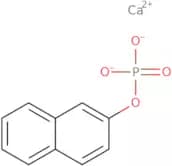
CAS :Aldol® 535 myo-inositol-1-phosphate, ammonium salt is a chromogenic substrate for the enzyme, phosphoglucomutase. This product is used for the detection of phosphoglucomutase by its ability to react with this enzyme and produce a blue or green color. Aldol® 535 myo-inositol-1-phosphate, ammonium salt is also used as a ligand in fluorescence resonance energy transfer (FRET) experiments. It has an EC number of CAS No. 2484872-80-0 and a molecular weight of 345.05 g/mol.Formule :C29H32BrClN3O10PDegré de pureté :Min. 95.0 Area-%Masse moléculaire :728.91 g/molCalcium 2-naphthylphosphate
CAS :Calcium 2-naphthylphosphate, which is the calcim salt of 2-naphthylphosphate, is a chromogenic substrate to measure alkaline phosphatase activity. After enzymatic cleavage, the product yielded (2-naphthol) generates a red-colored complex upon reaction with a diazonium salt like Fast Blue RR or Fast Garnet GBC.
Degré de pureté :(%) Min. 95%Couleur et forme :PowderMasse moléculaire :282.24 g/mol1-Naphthyl β-D-glucuronide
CAS :1-Naphthyl beta-D-glucuronide (NPG) is a chromogenic enzyme substrate used to detect the presence of β-glucuronidase activity. Upon hydrolysis by the enzyme, it produces a yellow product that can be detected by spectrophotometry or visually. It is commonly used in clinical assays to detect the presence of the enzyme in urine samples, as elevated levels can indicate liver or urinary tract diseases. It is also utilized in environmental testing, as some bacteria strains can produce the enzyme as a by-product, making NPG a useful tool for detecting these strains in contaminated water or food sources.Formule :C16H16O7Degré de pureté :Min. 95%Couleur et forme :White PowderMasse moléculaire :320.29 g/mol