Autres
6302 produits trouvés pour "Autres"
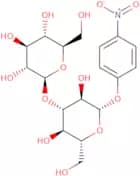
4-Nitrophenyl 6-O-(b-D-galactopyranosyl)-b-D-galactopyranoside
CAS :4-Nitrophenyl 6-O-(b-D-galactopyranosyl)-b-D-galactopyranoside is a fluorescent substrate that is used in diagnostics and culture media. It can be used to detect the presence of aminoglycoside antibiotics, such as gentamicin, by using the fluorogenic or chromogenic reaction. 4NP6BG has been shown to bind to the beta subunit of RNA polymerase and inhibit transcription, which can be useful for testing environmental samples for the presence of aminoglycosides.Degré de pureté :Min. 95%3-Indoxyl caprylate
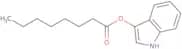
CAS :3-Indoxyl caprylate is an enzyme substrate used in a variety of diagnostic applications, including the detection of various bacterial and viral infections. It is used as a substrate for beta-galactosidase, which can be detected by bioluminescence or chromogenic substrates. 3-Indoxyl caprylate also serves as a ligand for receptor binding and has been shown to bind to CD4 receptors on human T cells. 3-Indoxyl caprylate is also used as an enzyme substrate in the detection of DNA polymerases, RNA polymerases, and ATPases. This product is available with a high purity that ranges from 98% to 99%. 3-Indoxyl caprylate is soluble in water, alcohols, acetone, acetic acid, and chloroform.Formule :C16H21NO2Masse moléculaire :259.35 g/molRef: 3D-I-5690
-Unit-ggÀ demander1gÀ demander5gÀ demander10gÀ demander500mgÀ demander2500mgÀ demander5-Bromo-4-chloro-3-indoxyl phosphate, p-toluidine salt, high grade
CAS :A substrate for visualising alkaline phosphatase activity. It produces a purple insoluble end product that is detected visually, when used together with nitroblue tetrazolium. The substrate system is versatile and has functions in a variety of applications, including Northern, Southern, and Western blotting, in situ hybridization, ELISAs, microarray and immunohistochemistry. DMF soluble.Formule :C15H15BrClN2O4PDegré de pureté :Min. 98.0 Area-%Masse moléculaire :433.63 g/mol4-Nitrophenyl-beta-D-cellobioside
CAS :Chromogenic substrate for β-D-Cellobiosidase yielding a yellow solution upon cleavage.Formule :C18H25NO13Degré de pureté :Min. 98 Area-%Masse moléculaire :463.39 g/molAldol® 470 choline phosphate, Biosynth Patent: EP 2427431 and US 8940909
CAS :Aldol® 470 choline phosphate is a chromogenic and fluorogenic enzyme substrate used for detection of phosphatidyl-choline specific phospholipase C (PC-PLC, EC 3.1.4.3) activity. The colorless product is cleaved by PC-PLC positive microorganisms in liquid or solid media, yielding a yellow color and green fluorescence. Aldol® 470 choline phosphate therefore, enables the detection and identification of PC-PLC positive pathogenic bacteria, such as, Clostridium perfringens, Pseudomonas aeruginosa, Helicobacter pylori, Legionella pneumophila, Bacillus cereus, Bacillus anthracis, Listeria monocytogenes, and others. Aldol® 470 choline phosphate can be used under aerobic and anaerobic conditions.Formule :C28H31N2O7PDegré de pureté :Min. 95%Couleur et forme :PowderMasse moléculaire :538.53 g/mol5-Bromo-4-chloro-3-indoxyl-N-acetyl-beta-D-glucosaminide
CAS :Chromogenic substrate for N-acetyl-β-D-glucosaminidase yielding a blue precipitate. Contained in certain mycological culture media. Used in histochemistry.
Formule :C16H18BrClN2O6Degré de pureté :Min. 99.5 Area-%Masse moléculaire :449.69 g/mol5-Bromo-4-chloro-3-indoxyl-β-D-xylopyranoside
CAS :5-Bromo-4-chloro-3-indoxyl-beta-D-xylopyranoside is a fluorogenic substrate that can be used to measure the activity of bacterial esterases. The enzyme cleaves the xylose moiety from 5-bromo-4-chloro-3-indoxyl, yielding indoxyl as an intermediate product. This reaction can be catalyzed by esterases found in bacteria, which hydrolyze esters containing a single hydroxyl group at one end and a carboxylic acid or alcohol at the other end. Indoxyl is fluorescent and can be detected using a fluorimeter. 5BX is also chromogenic, so it can be used as an enzyme substrate for detecting beta galactosidase activity in bacteria such as Mycobacterium smegmatis or Escherichia coli. 5BX is also used to detect chemiluminesFormule :C13H13BrClNO5Masse moléculaire :378.61 g/molRef: 3D-B-7750
-Unit-ggÀ demander1gÀ demander5gÀ demander10gÀ demander500mgÀ demander2500mgÀ demander4-Nitrophenyl 3-O-(β-D-glucopyranosyl)-β-D-glucopyranoside
CAS :Chromogenic substrate for beta-glucanaseFormule :C18H25NO13Degré de pureté :Min. 95 Area-%Couleur et forme :PowderMasse moléculaire :463.39 g/mol4-Nitrophenylphosphorylcholine
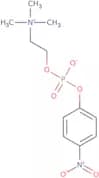
CAS :Chromogenic substrate used to measure phospholipase C (PLC) activity
Formule :C11H17N2O6PDegré de pureté :Min. 95 Area-%Couleur et forme :PowderMasse moléculaire :304.24 g/molAldol® 470 butyrate, Biosynth Patent: EP 2427431 and US 8940909
CAS :Produit contrôléAldol® 470 butyrate, a chromogenic substrate manufactured by Cymit Quimica and used for enzymatic assays that produces a yellow-orange color upon enzymatic cleavage.Formule :C27H25NO5Degré de pureté :Min. 95%Couleur et forme :PowderMasse moléculaire :443.5 g/mol4-Nitrophenyl O-(N-acetyl-a-neuraminosyl)-(2,3)-O-b-D-galactopyranosyl-(1,3)-2-acetamido-2-deoxy-a-D-galactopyran oxide
CAS :4-Nitrophenyl O-(N-acetyl-a-neuraminosyl)-(2,3)-O-b-D-galactopyranosyl-(1,3)-2-acetamido-2-deoxy-a-D-galactopyran oxide is a fluorogenic substrate that is used in the detection of glycosidases. It has been shown to be an excellent ligand for the enzyme beta galactosidase, which cleaves the glycan substrate 4NPOBGPA into 4NP and O-(N acetyl) neuraminic acid. 4NPOBGPA can be used as a chromogenic substrate for detecting beta galactosidase activity and can also be conjugated to other fluorescent molecules. This product is high purity and high quality.Degré de pureté :Min. 95%Masse moléculaire :795.7 g/mol2-Nitrophenyl b-D-xylopyranoside
CAS :Chromogenic substrates targeting beta-xylosidaseDegré de pureté :Min. 95%Couleur et forme :PowderMasse moléculaire :271.22 g/molAldol® 470 nonanoate, Biosynth Patent: EP 2427431 and US 8940909
CAS :Produit contrôléAldol® 470 nonanoate is a chromogenic substrate with a molecular weight of 496.5 g/mol. Aldol® 470 nonanoate has been used to detect the presence of L-amino acids using a fluorogenic assay. This substrate can be used as a ligand in an enzyme-linked immunosorbent assay (ELISA) to measure the concentration of L-amino acids in food and drink samples, as well as in diagnostics for detecting fluoroquinolone resistance in bacteria. Aldol® 470 nonanoate is also used in the detection of bioluminescence and chemiluminescence reactions. CAS No.: 2484872-50-4
Formule :C32H35NO5Degré de pureté :Min. 95.0 Area-%Masse moléculaire :513.62 g/mol5-Bromo-6-chloro-3-indoxyl sulfate, potassium salt
CAS :5-Bromo-6-chloro-3-indoxyl sulfate, potassium salt is a fluorogenic substrate for the enzyme alkaline phosphatase. This compound is used in the detection of alkaline phosphatase activity as well as in many other applications such as diagnostic tests and environmental testing. 5-Bromo-6-chloro-3-indoxyl sulfate, potassium salt is available at high purity and quality.Formule :C8H4BrClKNO4SDegré de pureté :Min. 98 Area-%Masse moléculaire :364.65 g/mol6-Chloro-3-indoxyl-3-acetate
CAS :Chromogenic substrate for carboxylesterase yielding a salmon colored precipitate upon cleavage. Mainly used in histochemistry.Formule :C10H8ClNO2Masse moléculaire :209.63 g/molRef: 3D-C-4758
-Unit-ggÀ demander1gÀ demander5gÀ demander250mgÀ demander500mgÀ demander2500mgÀ demanderAldol® 515 caprylate solution, 0.50 M in DMSO, Biosynth Patent: EP 2427431 and US 8940909
CAS :Aldol® 515 caprylate is a chromogenic and fluorogenic enzyme substrate used for detection of lipase activity. The colorless enzyme substrate is cleaved by C8 esterases, yielding development of red coloration. In addition, red fluorescence is generated when Aldol® 355 fluorescence enhancer or a suitable matrix is present. Aldol® 515 caprylate can be used in enzyme assays and live bacterial cultures. Aldol® 515 caprylate is suitable for use in liquid and solid media, under aerobic as well as anaerobic conditions.Formule :C31H34N2O3Degré de pureté :Min. 95%Couleur et forme :Clear Liquid PowderMasse moléculaire :482.62 g/mol5-Bromo-3-indolyl 2-acetamido-2-deoxy-b-D-glucopyranoside
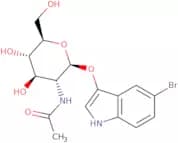
CAS :5-Bromo-3-indolyl 2-acetamido-2-deoxy-b-D-glucopyranoside is a lapis substrate, a chromogenic substrate that yields a deep blue color after cleavage. It is used in lysosomal storage disorder screening such as for Sanfilippo syndrome.Formule :C16H19BrN2O6Degré de pureté :Min. 98 Area-%Couleur et forme :White Off-White PowderMasse moléculaire :415.24 g/molAldol® 458 β-D-galactopyranoside, Biosynth Patent: EP 2427431 and US 8940909
CAS :Aldol® 458 beta-D-galactopyranoside is a chromogenic and fluorogenic enzyme substrate used for detection of ?-galactosidase activity. The colorless enzyme substrate is cleaved by lactose utilizing bacteria grown in liquid or solid media, yielding yellow coloration and green fluorescence. Aldol® 458 beta-D-galactopyranoside can also be used in ?-galactosidase gene reporter assays or immunoassay applications (ELISA). Aldol® 458 beta-D-galactopyranoside can be used under aerobic and anaerobic conditions.Formule :C22H23NO8Degré de pureté :Min. 95.0 Area-%Masse moléculaire :429.42 g/mol5-Iodo-3-indolyl-b-D-galactopyranoside-6-sulfate sodium salt
5-Iodo-3-indolyl-b-D-galactopyranoside-6-sulfate sodium salt is a high purity, water soluble fluorogenic substrate for the detection of beta-galactosidase activity. This product is used in food testing, environmental testing, and diagnostics. 5-Iodo-3-indolyl-b-D-galactopyranoside (5IIAG) is a beta galactosidase substrate that provides a convenient method for determining beta galactosidase activity. This product is also used as an indicator to measure the rate of hydrolysis of ester bonds in other compounds that contain acid functional groups such as glycerides and oils.Degré de pureté :Min. 95%Masse moléculaire :523.24 g/molAldol® 584 β-D-glucuronic acid, triethylammonium salt, Biosynth Patent: EP 2427431 and US 8940909
CAS :Aldol® 584 is a fluorogenic substrate that can be used for enzymatic and chemical assays. It is an important component of the Cymit Quimica Aldol Reagent Kit and other diagnostic kits. Aldol® 584 is used in immunoassays, such as ELISA, to measure the activity of serine proteases, including cathepsin D, elastase, and leukocyte elastase. This product has a CAS number of 2484873-11-0.Formule :C37H46ClN3O10Degré de pureté :Min. 95.0 Area-%Masse moléculaire :728.20 g/mol2-Fluoro-4-nitrophenyl b-D-galactopyranoside
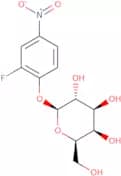
CAS :2-Fluoro-4-nitrophenyl b-D-galactopyranoside is a chromogenic substrate in enzymatic assays with β-galactosidase. Commonly abbreviated as PFONPG, it is a hydrophilic compound that can be dissolved in saline and blood samples, which makes it a suitable candidate for diagnostic applications as a gene reporter probe by simple analytic methodologies. 2-Fluoro-4-nitrophenyl b-D-galactopyranoside have been used to detect and monitor the growth of prostate tumor cells.Degré de pureté :Min. 95%Couleur et forme :PowderMasse moléculaire :319.24 g/mol5-Bromo-4-chloro-3-indolyl b-D-glucuronide sodium salt
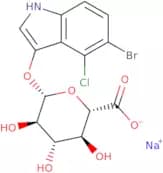
CAS :Chromogenic substrate for beta-glucuronidase
Formule :C14H12BrClNNaO7Degré de pureté :Min. 98 Area-%Couleur et forme :White Off-White PowderMasse moléculaire :444.59 g/mol5-Bromo-4-chloro-3-indolyl palmitate
CAS :5-Bromo-4-chloro-3-indolyl palmitate is a chromogenic substrate used to detect the specific enzymatic activity of lipase. After cleavage, 5-bromo-4-chloro-indoxyl is released, resulting in a blue to blue-green color change in bacterial colonies or media. 5-Bromo-4-chloro-3-indolyl palmitate is used in lipase activity assays or cystic fibrosis diagnostics.Formule :C24H35BrClNO2Degré de pureté :Min. 95%Couleur et forme :PowderMasse moléculaire :484.9 g/mol5-Bromo-6-chloro-3-indoxyl phosphate, disodium salt monohydrate
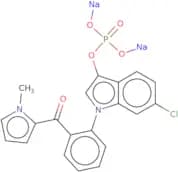
CAS :5-Bromo-6-chloro-3-indoxyl phosphate, disodium salt monohydrate is a substrate used to visualize phosphatase activity via showing magenta colored end product when used with Nitroblue Tetrazolium.Formule :C8H6BrClNNa2O5PDegré de pureté :Min. 99.0 Area-%Masse moléculaire :388.45 g/molAldol® 495 phosphate, disodium salt, Biosynth Patent: EP 2427431 and US 8940909
CAS :Aldol® 495 phosphate is a chromogenic and fluorogenic enzyme substrate used for detection of phosphatase activity. The colorless enzyme substrate is cleaved by acid and alkaline phosphatases secreted by bacteria in liquid or solid media, yielding orange color and green fluorescence. Aldol® 495 phosphate can also be used in Western blots and other immunoassay applications with phosphatase-coupled secondary antibodies. Aldol® 495 phosphate can be used under aerobic and anaerobic conditions.Formule :C20H14ClN2Na2O5PDegré de pureté :Min. 98%Couleur et forme :PowderMasse moléculaire :474.74 g/mol5-Bromo-4-chloro-3-indolyl myristate
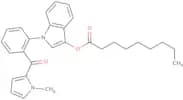
CAS :5-Bromo-4-chloro-3-indolyl myristate is a chromogenic substrate used to detect the specific enzymatic activity of lipase or esterase. After cleavage, 5-bromo-4-chloro-indoxyl is released, resulting in a blue to blue-green color change in bacterial colonies or media. 5-Bromo-4-chloro-3-indolyl myristate is used in screening assays for pancreatic lipase deficiency and lipid metabolism studies.Formule :C22H31BrClNO2Degré de pureté :Min. 95%Couleur et forme :PowderMasse moléculaire :456.84 g/molAldol® 495 nonanoate, Biosynth Patent: EP 2427431 and US 8940909
CAS :Produit contrôléAldol 495 nonanoate is a bioluminescent substrate that can be used to measure the activity of Aldolase, which is an enzyme that catalyzes the conversion of glyceraldehyde-3-phosphate and dihydroxyacetone phosphate to D-glyceraldehyde. This substrate is used in various diagnostic assays, including food testing and staining. Aldol 495 nonanoate was developed by Cymit Quimica Pharmaceuticals and has been patented by EP 2427431 and US 8940909.
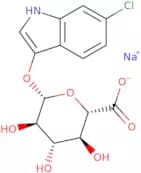
Formule :C29H31ClN2O3Degré de pureté :Min. 95.0 Area-%Masse moléculaire :491.02 g/mol6-Chloro-3-indolyl b-D-glucuronide sodium salt
CAS :6-Chloro-3-indolyl b-D-glucuronide sodium salt is a chromogenic substrate for beta-glucuronidase, a reporter gene used to monitor gene expression by detecting the enzyme's activity. It yields a salmon colored precipitate upon cleavage.
Degré de pureté :Min. 95%Couleur et forme :PowderMasse moléculaire :365.7 g/mol4-Nitrophenyl 4,6-benzylidene-α-D-maltoheptaoside
CAS :4-Nitrophenyl 4,6-benzylidene-alpha-D-maltoheptaoside is a chromogenic substrate for alpha-amylase. Upon hydrolysis, para-nitrophenol is released yielding a yellowish colour. 4-Nitrophenyl 4,6-benzylidene-alpha-D-maltoheptaoside is used in different applications such as the Starch digestion studies, industrial enzyme optimizationFormule :C55H79NO38Degré de pureté :Min. 95%Couleur et forme :PowderMasse moléculaire :1,362.2 g/molCelluchrome
Celluchrome (short name for remazol brilliant blue carboxymethyl cellulose or RBB-CMC) is a chromogenic substrate for cellulases. With a higher sensitivity, RBB-CMC allows for the detection of the enzyme activity even when small amounts are present.Degré de pureté :Min. 95%Couleur et forme :Powder4-Nitrophenyl 2-acetamido-2-deoxy-3-O-(b-D-galactopyranosyl)-a-D-galactopyranoside
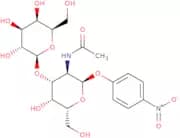
CAS :4-Nitrophenyl 2-acetamido-2-deoxy-3-O-(b-D-galactopyranosyl)-a-D-galactopyranoside is a superior chromogenic pNP enzyme substrate designed to deliver enhanced enzyme detection and outstanding assay performance. This cutting-edge substrate boasts excellent specificity, sensitivity, and stability, making it a powerful tool in the measurement of enzyme activity, substrate profiles, and inhibitor characterization. This premium substrate is perfect for researchers and professionals seeking reliable and efficient results for their enzyme-based investigations.Formule :C20H28N2O13Degré de pureté :Min. 98 Area-%Couleur et forme :White PowderMasse moléculaire :504.44 g/mol4-Nitrophenyl sulfate potassium salt
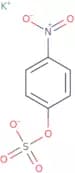
CAS :4-Nitrophenyl sulfate potassium salt is a chromogenic substrate for arylsulfatase. Upon hydrolysis, para-nitrophenol is released yielding a yellowish colour. 4-Nitrophenyl sulfate potassium salt is used in different applications such as the Metachromatic leukodystrophy diagnosis, sulfatase activity assaysFormule :C6H4KNO6SDegré de pureté :Min. 95%Couleur et forme :PowderMasse moléculaire :257.26 g/mol5-Bromo-3-indoxyl caprylate
CAS :5-Bromo-3-indoxyl caprylate is a fluorogenic substrate that can be used for the detection of β-galactosidase. It is an enzyme substrate that can be used to measure β-galactosidase activity in cell culture media. It has a high purity and high quality. 5-Bromo-3-indoxyl caprylate is also used as a chromogenic substrate for the detection of β-galactosidase. This product has a CAS number of 133950-69-3.
Formule :C16H20BrNO2Degré de pureté :Min. 99 Area-%Masse moléculaire :338.24 g/mol2-Nitrophenyl-N-acetyl-beta-D-glucosaminide
CAS :Chromogenic β-Glucosaminidase substrate yielding a yellow absorbent solution upon cleavage.Formule :C14H18N2O8Degré de pureté :Min. 99 Area-%Masse moléculaire :342.31 g/molBCM® O157:H7(+)
BIOSYNTH Culture Medium for the isolation andidentification of Escherichia coli O157:H7
2-Nitrophenyl-β-D-thiogalactopyranoside
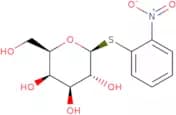
CAS :2-Nitrophenyl-beta-D-thiogalactopyranoside is a chromogenic substrate used to detect the presence of galactosidase enzymes in various biological and biochemical assays. It consists of a nitrophenyl group attached to a galactose sugar molecule through a thioglycosidic bond. When acted upon by enzymes such as galactosidases, it releases the colored nitrophenyl group, which can be detected using spectrophotometry. This substrate is commonly used in assays for the detection of LacZ activity in bacterial cultures, as lacZ encodes for β-galactosidase.Formule :C12H15NO7SDegré de pureté :Min. 98 Area-%Couleur et forme :Yellow PowderMasse moléculaire :317.32 g/molAldol® 458 nonanoate, Biosynth Patent: EP 2427431 and US 8940909
CAS :Produit contrôléAldol 458 nonanoate is a fluorogenic substrate that can be used in the detection of enzyme activity particularly C8/C9-esterases, lipases activity producing a yellow/green-orange color. Aldol 458 nonanoate reacts with enzymes, such as oxidoreductases and hydrolases, to produce light. This product is a conjugate of aldol 458 nonanoate and an enzyme substrate for the detection of these enzymes. It has been shown to be useful in food testing, staining, fluorogenic substrate, environmental testing, chromogenic substrate, conjugate, high purity, enzyme substrate for diagnostics and ligand.
Formule :C25H29NO4Degré de pureté :Min. 95%Masse moléculaire :407.5 g/molAldol® 484 beta-D-glucopyranoside, Biosynth Patent: EP 2427431 and US 8940909
CAS :Aldol® 484 beta-D-glucopyranoside is a chromogenic and fluorogenic enzyme substrate used for detection of beta-glucosidase activity. The colorless enzyme substrate is cleaved by bacteria producing beta-glucosidase in liquid or solid media, yielding intense red color and green fluorescent signal. Aldol® 484 beta-D-glucopyranoside can be used under aerobic and anaerobic conditions.Formule :C26H24ClFN2O7Degré de pureté :Min. 95%Couleur et forme :PowderMasse moléculaire :530.93 g/mol2-Chloro-4-nitrophenyl 4-O-b-D-galactopyranosylmaltoside
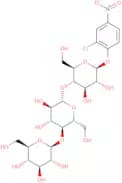
CAS :2-Chloro-4-nitrophenyl 4-O-b-D-galactopyranosylmaltoside, also known as Gal-G2-CNP, is a high quality, water soluble, chromogenic substrate that is used as an enzyme substrate and can be used in bioluminescence and chemiluminescence assays. This product is designed for use in diagnostics, culture media, food testing, environmental testing, and other research applications. 2-Chloro-4-nitrophenyl 4-O-b-D-galactopyranosylmaltoside has been tested in chromogenic assays with alpha-amylases.Formule :C24H34ClNO18Degré de pureté :(Hplc) Min. 90%Couleur et forme :PowderMasse moléculaire :659.98 g/molAldol® 495 acetate, Biosynth Patent: EP 2427431 and US 8940909
CAS :Produit contrôléAldol 495 is a chemiluminescent substrate for the detection of aldehyde reductase (ALR) activity. It is an acetate ester that reacts with ALR to form an aldehyde product, which then reacts with luminol in the presence of hydrogen peroxide to produce light. Aldol 495 is used in the diagnosis of ALR deficiency, which can cause acute intermittent porphyria and other diseases. Aldol 495 has been shown to be non-toxic and non-mutagenic.Formule :C22H17ClN2O3Degré de pureté :Min. 95%Couleur et forme :PowderMasse moléculaire :392.83 g/mol3-Indoxyl choline phosphate
CAS :Please enquire for more information about 3-Indoxyl choline phosphate including the price, delivery time and more detailed product information at the technical inquiry form on this pageFormule :C13H19N2O4PDegré de pureté :Min. 99 Area-%Masse moléculaire :298.28 g/molRef: 3D-I-5696
-Unit-ggÀ demander1gÀ demander5gÀ demander10gÀ demander500mgÀ demander2500mgÀ demander6-Bromo-2-naphthyl b-D-glucopyranoside
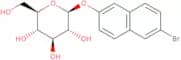
CAS :6-Bromo-2-naphthyl b-D-glucopyranoside is an enzyme substrate used in chromogenic assays with beta-glucosidases. It has been used in culture media for the identification of Legionella pneumophila.Formule :C16H17BrO6Degré de pureté :Min. 98 Area-%Couleur et forme :PowderMasse moléculaire :385.21 g/molNaphthol AS-BI N-acetyl-b-D-galactosaminide
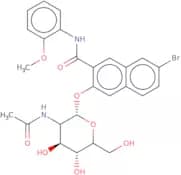
CAS :Modified naphtol AS substrate used in histochemical and cytochemical stainingFormule :C26H27BrN2O8Degré de pureté :Min. 95%Couleur et forme :PowderMasse moléculaire :575.41 g/mol2-Chloro-4-nitrophenyl β-D-cellotrioside
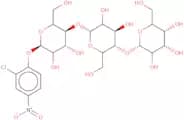
CAS :2-Chloro-4-nitrophenyl β-D-cellotrioside is a chromogenic substrate use in cellulase activity assays. This enzyme, which is responsible to break down cellulose, hydrolyzes 2-chloro-4-nitrophenyl beta-D-cellotrioside and releases 2-chloro-4-nitrophenol than can be quantified spectrophotometrically. The use of 2-chloro-4-nitrophenyl beta-D-cellotrioside as substrate for enzymatic assays allows detecting bacterial cellulose in urine tract infections in the biofilm state.Formule :C24H35ClNO18Degré de pureté :Min. 95%Couleur et forme :PowderMasse moléculaire :660.98 g/mol2-Naphthyl caprylate
CAS :Chromogenic substrate for carboxylesterase and lipase. 2-naphthol is released upon hydrolyzation. By simultaneous coupling with a diazonium salt, the corresponding azo-dye is formed. Naphthols can also be detected by fluorescence analysis. Used in an colorimetric assay for the extracellular lipase of Pseudomonas fluorescens B52.
Formule :C18H22O2Degré de pureté :Min. 98.0 Area-%Masse moléculaire :270.37 g/molRef: 3D-N-2220
-Unit-ggÀ demander1gÀ demander5gÀ demander250mgÀ demander500mgÀ demander2500mgÀ demander6-Chloro-3-indoxyl-N-acetyl-β-D-galactosaminide
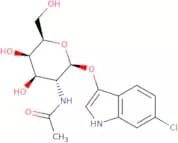
CAS :Chromogenic substrate for N-Acetyl-β-D-galactosaminidase yielding a salmon-colored precipitate.Formule :C16H19ClN2O6Degré de pureté :Min. 98.0 Area-%Masse moléculaire :370.79 g/molRef: 3D-C-4762
-Unit-ggÀ demander1gÀ demander50mgÀ demander100mgÀ demander250mgÀ demander500mgÀ demanderChlorophenol red-b-D-galactopyranoside sodium salt
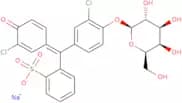
CAS :Chlorophenol red-b-D-galactopyranoside sodium salt is the salt from of CPRG (chlorophenol red-b-D-galactopyranoside), that has a higher solubility. It is a chromogenic substrate for beta-galactosidases that, after enzymatic cleavage, releases chlorophenol red, a dark red compound quantified by absorbance at 570 nm.Formule :C25H21Cl2O10SNaDegré de pureté :Min. 96 Area-%Couleur et forme :PowderMasse moléculaire :607.4 g/mol6-Chloro-1H-indol-3-yl octanoate
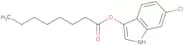
CAS :6-Chloro-1H-indol-3-yl octanoate is a fluorogenic substrate that can be used to detect enzymes such as phosphatases, lipases, esterases, and proteases. 6-Chloro-1H-indol-3-yl octanoate is a ligand for metal ions such as Cu(II), Ni(II) and Zn(II). This product has high purity and quality. It is an enzyme substrate for many enzymes such as phosphatases, lipases, esterases, and proteases. This product can be used in diagnostics of various substances including food testing, environmental testing and staining. 6CIO is a chromogenic substrate that can be used to detect bioluminescence reactions.
6CIO is CAS No. 159954-35-5.Degré de pureté :Min. 95%Masse moléculaire :293.79 g/mol6-Fluoro-3-indoxyl-beta-D-galactopyranoside
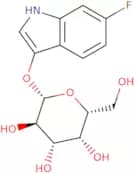
CAS :6-Fluoro-3-indoxyl-beta-D-galactopyranoside is a fluorescent chromogenic substrate that is commonly used for the detection and quantification of beta-galactosidase activity. When this substrate is hydrolyzed by beta-galactosidase, it produces a fluorescent blue product that can be easily detected and measured using a fluorometer or spectrophotometer. This substrate is often used in microbiology and molecular biology research to study gene expression and enzyme kinetics, and is also used in medical diagnostics as a marker for specific diseases and conditions.Formule :C14H16FNO6Degré de pureté :Min. 98.0 Area-%Masse moléculaire :313.29 g/mol2-Nitrophenyl a-D-galactopyranoside
CAS :2-Nitrophenyl alpha-D-galactopyranoside is a chromogenic substrate used to detect the enzymatic activity of alpha-galactosidase. After cleavage, the nitrophenyl moiety is released exhibiting a light yellowish color. 2-Nitrophenyl alpha-D-galactopyranoside is used in Fabry disease screening.Formule :C12H15NO8Degré de pureté :Min. 95%Couleur et forme :White Off-White PowderMasse moléculaire :301.25 g/mol