Antibiotiques Naturels et Semi-Synthétiques
Les antibiotiques naturels et semi-synthétiques se caractérisent par des structures chimiques comprenant des cycles hétérocycliques et des groupes fonctionnels actifs qui inhibent la croissance des micro-organismes. Leurs structures leur permettent d’interagir avec les processus vitaux des bactéries, ce qui les rend utiles pour le traitement des infections bactériennes. Les antibiotiques semi-synthétiques peuvent être modifiés afin d’améliorer leur spectre d’activité ou leur résistance à la dégradation.
Chez CymitQuimica, nous proposons des antibiotiques naturels et semi-synthétiques de haute qualité pour la recherche en microbiologie et le développement pharmaceutique.
6364 produits trouvés pour "Antibiotiques Naturels et Semi-Synthétiques"
Trier par
Degré de pureté (%)
0
100
|
0
|
50
|
90
|
95
|
100
15-O-Demethyl Tacrolimus
CAS :<p>Tacrolimus is a macrolide that is used as an immunosuppressive drug. It has been shown to bind to the FK-binding protein, which in turn inhibits calcineurin. This prevents the release of IL-2, TNF-α and other cytokines. The immunosuppressive effects of tacrolimus have been evaluated using analytical methods such as coefficients, affinity, and monitoring techniques such as immunoassays and agglutination. These techniques are used to evaluate the plasma concentration of tacrolimus. Tacrolimus also binds to proteins in the blood samples and can be detected by turbidimetric or electrochemiluminescence immunoassay reagents.</p>Formule :C43H67NO12Degré de pureté :Min. 95%Masse moléculaire :789.99 g/mol4H-Furo[2,3-c]pyranyl Mupirocin Sodium Impurity
CAS :<p>Impurity Mupirocin EP Impurity D<br>Stability Hygroscopic<br>Applications Mupirocin (M794000) impurity. (Mupirocin EP Impurity D) The rearrangement isomer of Mupirocin is prepared using an enzyme-catalyzed, selective deesterification.<br>References Sime, J.T., et al.: Tetrahedron Lett., 28, 5169 (1987),<br></p>Formule :C26H43O9·NaCouleur et forme :NeatMasse moléculaire :522.6015-Acetyl Deoxynivalenol (~90%)
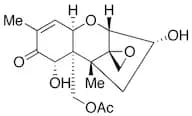
CAS :Produit contrôlé<p>Applications A mycotoxin produced by the fungi Fusarium culmorum and Fusarium graminearum, inhibits protein synthesis.Environmental contaminants; Food contaminants<br> Not a dangerous good if item is equal to or less than 1g/ml and there is less than 100g/ml in the package<br>References Ashraf, A.; et al.: Int. J. Biol. Biotechnol., 4, 391 (2007), Burlakoti, R., et al.: App. Environ. Microbiol., 74, 6513 (2008), Steinmetz, W., et al.: Eur. J. Med. Chem., 44, 4485 (2009), Zhang, Y., et al.: Phytopathol., 99, 95 (2009),<br></p>Formule :C17H22O7Degré de pureté :~90%Couleur et forme :WhiteMasse moléculaire :338.353-Acetyldeoxynivalenol
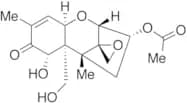
CAS :Produit contrôlé<p>Stability Appears to decompose in DMSO<br>Applications 3-Acetyldeoxynivalenol is a trichothecene mycotoxin that is produced in a plant-pathogenic fungus, Fusarium graminearum Schwabe.Environmental contaminants; Food contaminants<br> Not a dangerous good if item is equal to or less than 1g/ml and there is less than 100g/ml in the package<br>References Beyer, M., et al.: Int. J. Food. Microbiol., 119, 153 (2007); Schiefer, H.B., et al.: Can. J. Comp. Med., 49, 315 (1985); Mirocha, C.J., et al.: App. Enviro.Microbiol., 55, 1315 (1989);<br></p>Formule :C17H22O7Couleur et forme :WhiteMasse moléculaire :338.35


![4H-Furo[2,3-c]pyranyl Mupirocin Sodium Impurity](/_next/image/?url=https%3A%2Fstatic.cymitquimica.com%2Fproducts%2FTR%2Fthumb-webp%2FF864850.webp&w=3840&q=75)