Cétones et Dérivés
Les cétones sont des composés organiques contenant un groupe carbonyle (C=O) lié à deux atomes de carbone, formant une structure où le groupe carbonyle est entouré par des groupes alkyle ou aryle. En pharmacologie, les cétones sont utilisées dans la formulation des API en raison de leur capacité à améliorer la solubilité et la stabilité des principes actifs. Certaines cétones possèdent des propriétés anti-inflammatoires, analgésiques et antimicrobiennes. Les dérivés des cétones incluent des composés dans lesquels le groupe carbonyle est modifié, comme les énols, qui ont des applications dans la synthèse de médicaments et comme intermédiaires chimiques dans la fabrication d’autres composés bioactifs. Les dérivés des cétones sont utilisés dans la conception de nouveaux médicaments, notamment pour traiter les maladies neurodégénératives, les troubles métaboliques et certains types de cancer, grâce à leurs effets spécifiques sur les enzymes et les processus cellulaires.
2391 produits trouvés pour "Cétones et Dérivés"
Trier par
Degré de pureté (%)
0
100
|
0
|
50
|
90
|
95
|
100
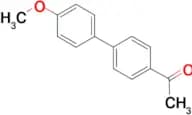
1-(4′-Methoxy-biphenyl-4-yl)-ethanone
CAS :Formule :C15H14O2Degré de pureté :≥95%Masse moléculaire :226.275Propiophenone
CAS :Formule :C9H10ODegré de pureté :99.0%Couleur et forme :Liquid, ClearMasse moléculaire :134.1785′-Acetyl-2′-fluoro-3-methyl-[1,1′-biphenyl]-4-carbaldehyde
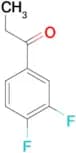
CAS :Degré de pureté :≥95%Masse moléculaire :256.2760013′,4′-Difluoropropiophenone
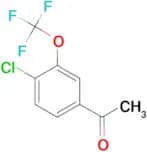
CAS :Formule :C9H8F2ODegré de pureté :97%Couleur et forme :LiquidMasse moléculaire :170.1594′-Chloro-3′-(trifluoromethoxy)acetophenone
CAS :Formule :C9H6ClF3O2Couleur et forme :SolidMasse moléculaire :238.591-[3-(ACETYLOXY)-4-METHOXYPHENYL]-ETHANONE
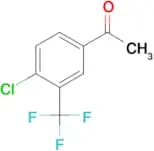
CAS :Formule :C11H12O4Degré de pureté :97%Masse moléculaire :208.2134-Chloro-3-(trifluoromethyl)acetophenone
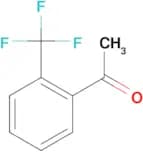
CAS :Formule :C9H6ClF3ODegré de pureté :98%Couleur et forme :SolidMasse moléculaire :222.592′-(Trifluoromethyl)acetophenone
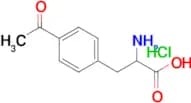
CAS :Formule :C9H7F3ODegré de pureté :98%Couleur et forme :Low Melting SolidMasse moléculaire :188.1493-(4-Acetylphenyl)-2-aminopropanoic acid hydrochloride
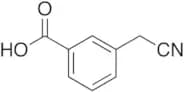
CAS :Formule :C11H14ClNO3Degré de pureté :95%Masse moléculaire :243.693-(Cyanomethyl)benzoic Acid
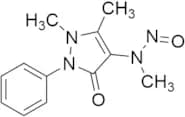
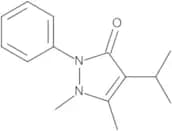
CAS :Produit contrôlé<p>Impurity Ketoprofen EP Impurity H<br>Applications 3-(Cyanomethyl)benzoic Acid (Ketoprofen EP Impurity H) is a reagent used in the synthesis of various pharmaceutically important compounds, such as its use in the synthesis of neprilysin inhibitors.<br>References Solomon, S.D., et al.: Lancet., 380 1387 (2012); Dadd, M.R., et al.: Enzyme. Microb. Tehcnol., 29, 20 (2001);<br></p>Formule :C9H7NO2Couleur et forme :NeatMasse moléculaire :161.16N-(1,5-Dimethyl-3-oxo-2-phenyl-2,3-dihydro-1H-pyrazol-4-yl)-N-methylnitrous amide
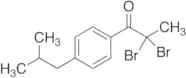
CAS :Produit contrôléFormule :C12H14N4O2Couleur et forme :NeatMasse moléculaire :246.274'-Isobutyl-2,2-dibromopropiophenone
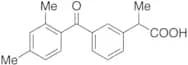
CAS :Produit contrôlé<p>Applications Intermediate in the synthesis of Ibuprofen.<br></p>Formule :C13H16Br2OCouleur et forme :NeatMasse moléculaire :348.07rac-2’,4’-Dimethyl Ketoprofen
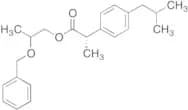
CAS :Produit contrôlé<p>Applications rac-2’,4’-Dimethyl Ketoprofen is an impurity of Ketoprofen (K200800), an anti-inflammatory and analgesic agent.<br>References Ueno, K., et al.: J. Med. Chem., 19, 941 (1976); Liversidge, G.G., Anal. Profiles Drug Subs., 10, 443 (1981); Jamali, F., et al.: Clin. Pharmacokinet., 19, 197 (1990)<br></p>Formule :C18H18O3Couleur et forme :NeatMasse moléculaire :282.33(S)-(+)-Ibuprofen 2-(Benzyloxy)propan-1-yl Ester
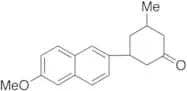
Produit contrôlé<p>Applications (S)-(+)-Ibuprofen 2-(Benzyloxy)propan-1-yl Ester is an intermediate in the synthesis of (S)-(+)-Ibuprofen Propylene Glycol Ester (I140100), a derivative of (S)-(+)-Ibuprofen (I140010), a nonsteroidal anti-inflammatory drug (NSAID).<br>References Busson, M., et al.: J. Int. Med Res., 14, 53 (1986), Meade, E.A., et al.: J. Biol. Chem., 268, 6610 (1993), Davies, N.M., et al.: Clin. Pharmacokinet., 34, 101 (1998),<br></p>Formule :C23H30O3Couleur et forme :NeatMasse moléculaire :354.4833-(6-Methoxy-2-naphthalenyl)-5-methylcyclohexanone (Impurity)
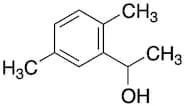
CAS :Formule :C18H20O2Couleur et forme :NeatMasse moléculaire :268.351-(2,5-Dimethylphenyl)ethanol
CAS :Produit contrôlé<p>Applications 1-(2,5-Dimethylphenyl)ethanol can be used as a reagent in reactions or as a aroma compound<br>References Zhou, J., et al.: Yuanyi Xuebao., 37, 1621-1628 (2010)<br></p>Formule :C10H14OCouleur et forme :NeatMasse moléculaire :150.22R-(-)-Norapomorphine Hydrochloride
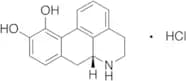
CAS :Produit contrôlé<p>Applications An Apomorphine derivative as inhibitor of amyloid-β (Aβ) fibril formation and their use in amyloidosis based disease.<br>References Howlett, D., et al.: Biochem. J., 340, 283 (1999), Kuner, P., et al.: J. Biol. Chem., 275, 1673 (2000), Ono, K., et al.: J. Neurosci. Res., 75, 742 (2004),<br></p>Formule :C16H15NO2•HClDegré de pureté :>90%Couleur et forme :NeatMasse moléculaire :253.303646(-)-N-Desmethyl Tramadol
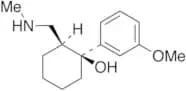
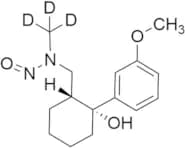
CAS :Produit contrôlé<p>Applications An optically active metabolite of Tramadol.<br> Not a dangerous good if item is equal to or less than 1g/ml and there is less than 100g/ml in the package<br>References Lintz, V.W., et al.: Arzneim.-Forsch./Drug Res., 31, II, 11, 1932 (1981)<br></p>Formule :C15H23NO2Couleur et forme :NeatMasse moléculaire :249.353-Methoxy Acetaminophen-d3
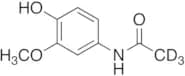
CAS :Produit contrôlé<p>Applications 3-Methoxy Acetaminophen-d3 is deuterium labeled 3-Methoxy Acetaminophen (M226050). 3-Methoxy Acetaminophen is a metabolite of Acetaminophen (A161220), an analgesic and antipyretic agent used as a pain reliever to treat headache, muscle aches, and arthritis (1,2,3).<br>References (1) McGill, M. R. and Jaeschke, H. Pharm Res. 30, 2174 (2013)(2) Fairbrother, J.E., et al.: Anal. Profiles Drug Subs., 3, 1 (1974) (3) Hinson, J.A., et al.: Rev. Biochem. Toxicol., 2, 103 (1980)<br></p>Formule :C92H3H8NO3Couleur et forme :NeatMasse moléculaire :184.207D 13223-d4 (Flupirtine Metabolite)
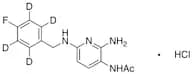
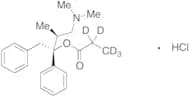
CAS :Produit contrôlé<p>Applications The major active labelled metabolite of Flupirtine in human plasma. A potassium channel opener<br>References Niebch, G., et al.: Arzneim.-Forsch., 42, 1343 (1992), Friedel, H., et al.: Drugs, 45, 548 (1993), Fu, I., et al.: J. Pharm. Biomed. Anal., 18, 347 (1998),<br></p>Formule :C14H12D4ClFN4OCouleur et forme :NeatMasse moléculaire :314.78L-Propoxyphene-d5 HCl (propionyl-d5)
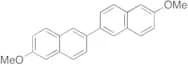
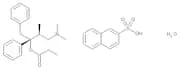
CAS :Produit contrôlé<p>Applications L-Propoxyphene-d5 Hydrochloride is the isotope labelled analog and L-isomer of Propoxyphene Hydrochloride (P831500); a controlled substance (opiate) and analgesic (narcotic). The α-DL-and D-diastereoisomers possess marked analgesic activity in contrast to the β-diastereoisomers which are substantially inactive. Oral administration of L-Propoxyphene Hydrochloride enhances the analgesic activity of D-Propoxyphene Hydrochloride.<br>References Goldenthal, E.I., et al.: Toxicol. Appl. Pharmacol., 18, 185 (1971); McEwan, B., et al.: Anal. Profiles Drug Subs., 1, 301 (1972); Murphy, P.J., et al.: J. Pharmacol. Exp. Ther., 199, 415 (1976)<br></p>Formule :C22H25D5ClNO2Couleur et forme :NeatMasse moléculaire :380.966,6'-Dimethoxy-2,2'-binaphthalene
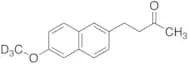
CAS :Produit contrôlé<p>Applications 6,6'-Dimethoxy-2,2'-binaphthalene, can be used for the synthesis of novel classes of non-steroidal substrate mimetics, as inhibitors of human CYP17. It is also an impurity of Nabumetone (N200500), a non-steroidal anti-inflammatory drug, acting as anti-inflammatory agent.<br>References Kumpulainen, H., et al.: J. Med. Chem., 49, 1207 (2006); Pinto-Bazurco, M. A. E., et al.: Bioorg. Med. Chem. Lett., 18, 267 (2008);<br></p>Formule :C22H18O2Couleur et forme :NeatMasse moléculaire :314.38Nabumetone-d3
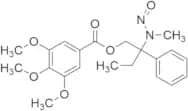
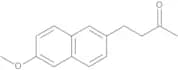
CAS :Produit contrôlé<p>Applications Labelled Nabumetone. Anti-inflammatory. Antibacterial.<br>References Kumpulainen, H., et al.: J. Med. Chem., 49, 1207 (2006),<br></p>Formule :C152H3H13O2Couleur et forme :NeatMasse moléculaire :231.30Trimebutine EP Impurity E-Nitroso
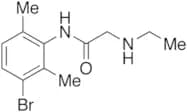
Produit contrôléFormule :C21H26N2O6Couleur et forme :NeatMasse moléculaire :402.441N-Desethyl 3-Bromo Lidocaine
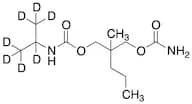
CAS :Produit contrôlé<p>Applications Intermediate in the preparation of hydroxylated Lidocaine metabolites.<br></p>Formule :C12H17BrN2OCouleur et forme :NeatMasse moléculaire :285.18(±)-Carisoprodol-d7 (iso-propyl-d7)
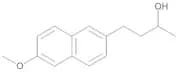
CAS :Produit contrôlé<p>Applications (±)-Carisoprodol-d7 (iso-propyl-d7) (CAS# 1218911-01-3) is a useful isotopically labeled research compound. As a deuterated drug analog, this compound can be used for inter-patient variability.<br>References Gant, T., et.al., U.S. Pat. Appl. Publ., 28,(2010);<br></p>Formule :C12H17D7N2O4Couleur et forme :NeatMasse moléculaire :267.382-Hydroxy Nabumetone
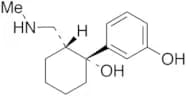
CAS :Produit contrôléFormule :C15H18O2Couleur et forme :White To Off-WhiteMasse moléculaire :230.30(+)-N,O-Didesmethyl Tramadol
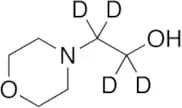
CAS :Produit contrôlé<p>Applications An optically active metabolite of Tramadol.<br>References Garrido, M., et al.: J. Pharmacol. Exp. Ther., 305, 710 (2003), Pedersen, R., et al.: Eur. J. Clin. Pharmacol., 62, 513 (2006),<br></p>Formule :C14H21NO2Couleur et forme :NeatMasse moléculaire :235.324-Morpholineethanol-d4
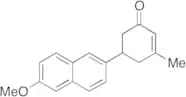
CAS :Produit contrôlé<p>Applications Labelled analogue 4-(2-Hydroxyethyl)morpholine, a morphiline derivative used in the preparation of ester prodrugs of naproxen. 4-(2-Hydroxyethyl)morpholine was also shown to induce repair in rat hepatocyte primary culture/DNA.<br></p>Formule :C6H9D4NO2Couleur et forme :NeatMasse moléculaire :135.205-(6-Methoxy-2-naphthalenyl)-3-methyl-2-cyclohexen-1-one
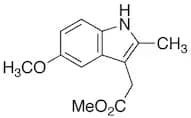
CAS :Produit contrôléFormule :C18H18O2Couleur et forme :NeatMasse moléculaire :266.33Methyl 5-Methoxy-2-methylindole-3-acetate
CAS :Produit contrôlé<p>Applications Intermediate in the preparation of Indomethacin<br>References Kalgutkar, A.S., et al.: Bioorg. Med. Chem., 13, 6810 (2005),<br></p>Formule :C13H15NO3Couleur et forme :NeatMasse moléculaire :233.26Trimebutine-d9 Maleate Salt
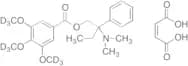
CAS :Produit contrôlé<p>Applications Trimebutine-d9 Maleate Salt, is the labeled analogue of Trimebutine Maleate Salt (T795605), acting as an opioid receptor agonist. Antispasmodic.<br>References Delvaux, M., et al.: J. Int. Med. Res., 25, 225 (1997), Lavit, M., et al.: Arzneim.-Forsch., 50, 640 (2000),<br></p>Formule :C22H20D9NO5·C4H4O4Couleur et forme :NeatMasse moléculaire :512.61-(3,4-Dimethylphenyl)ethanol
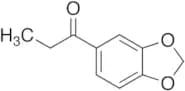
CAS :Produit contrôlé<p>Applications 1-(3,4-Dimethylphenyl)ethanol is an intermediate in the production of Medetomidine (M203250), α2-Adrenergic agonist. Sedative; analgesic.<br>References Kagechika, H., et al.: J. Med. Chem., 32, 1098 (1989), ; Scheinin, M., et al.: Br. J. Clin. Pharmacol., 24, 443 (1987),<br></p>Formule :C10H14OCouleur et forme :NeatMasse moléculaire :150.223,4-Methylenedioxy Propiophenone
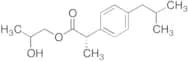
CAS :Produit contrôlé<p>Applications Intermediate in the production of Isosafrole and Ethylone.<br>References Katoch-Rouse, R., et al.: J. Med. Chem., 46, 642 (2003), Andrade, E., et al.: Chem. Biodivers., 5, 197 (2008),<br></p>Formule :C10H10O3Couleur et forme :NeatMasse moléculaire :178.18(S)-(+)-Ibuprofen Propylene Glycol Ester
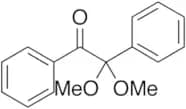
CAS :Produit contrôléFormule :C16H24O3Couleur et forme :NeatMasse moléculaire :264.362,2-Dimethoxy-2-phenylacetophenone
CAS :<p>Applications 2,2-Dimethoxy-2-phenylacetophenone (cas# 24650-42-8) is a compound useful in organic synthesis.<br> Not a dangerous good if item is equal to or less than 1g/ml and there is less than 100g/ml in the package<br></p>Formule :C16H16O3Couleur et forme :White PowderMasse moléculaire :256.3016,17-Dehydro Capsaicin
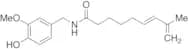
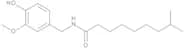
CAS :Produit contrôlé<p>Stability Light Sensitive<br>Applications A dehydrogenated metabolite of Capsaicin (C175680).<br> Not a dangerous good if item is equal to or less than 1g/ml and there is less than 100g/ml in the package<br>References Glinsukon, T., et al.: Toxicon, 18, 215 (1980), Obach, R., et al.: Drug Metab. Dispos., 29, 1599 (2001), Reilly, C., et al.: Toxicol. Sci., 73, 170 (2003),<br></p>Formule :C18H25NO3Couleur et forme :Off-White To BrownMasse moléculaire :303.4Nabumetone Dimer Impurity
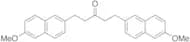
CAS :Produit contrôlé<p>Impurity Nabumetone Dimer Impurity<br>Applications An impurity in a Nabumetone (N200500) drug substance.<br>References Friedel, H., et al.: Drugs, 35, 504 (1988), Davies, N., et al.: Clin. Pharmacokinet., 33, 403 (1997),<br></p>Formule :C27H26O3Couleur et forme :NeatMasse moléculaire :398.49(±)-Ibuprofen-d3, Sodium Salt (α-methyl-d3)
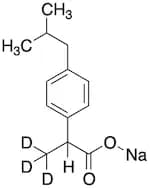
CAS :Produit contrôlé<p>Applications (±)-Ibuprofen-d3, Sodium Salt (alpha-methyl-d3) (CAS# 1219805-09-0) is a useful isotopically labeled research compound.<br></p>Formule :C13H14D3NaO2Couleur et forme :NeatMasse moléculaire :231.29Ketoprofen-13CD3 Methyl Ester
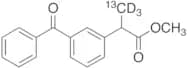
CAS :Produit contrôlé<p>Applications An intermediate for the synthesis of Labelled Ketoprofen.<br> Not a dangerous good if item is equal to or less than 1g/ml and there is less than 100g/ml in the package<br>References Derewenda, Z., et al.: J. Mol. Biol., 227, 818 (1992), Grochulski, P., et al.: J. Biol. Chem., 268, 12843 (1993).<br></p>Formule :C1613CH13D3O3Couleur et forme :NeatMasse moléculaire :272.325-Benzoyl-2,3-dihydro-1H-pyrrolizine-1-carboxylic acid - Racemic
CAS :<p>5-Benzoyl-2,3-dihydro-1H-pyrrolizine-1-carboxylic acid - Racemic (5BPC) is a drug that is used for the treatment of pain. It has been shown to be safe and effective in treating postoperative pain when given by intravenous infusion or as an oral tablet. 5BPC has minimal toxicity and is metabolized primarily by the liver with a half life of 2.6 hours. The drug has been found to have pharmacokinetic properties that allow it to be used safely in patients with hepatic impairment and in those recovering from abdominal surgery. 5BPC is a prodrug that undergoes biotransformation by esterases into its active form, pyrrolizidine alkaloid (PA). PA acts as a nonsteroidal anti-inflammatory agent and inhibits prostaglandin synthesis, which leads to analgesia. This drug also has minimal drug interactions because</p>Formule :C15H13O3NDegré de pureté :Min. 95%Masse moléculaire :255.27 g/molPelubiprofen
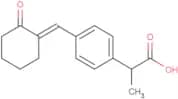
CAS :<p>Pelubiprofen is a non-steroidal anti-inflammatory agent and a COX-2 inhibitor, which effectively reduces PGE(2) production by inhibiting COX activity.</p>Formule :C16H18O3Degré de pureté :99.69%Couleur et forme :SolidMasse moléculaire :258.31(2-Amino-2-(hydroxymethyl)propane-3-ol-1-yl) (5-benzoyl-2,3-dihydro-1H-pyrrolizine-1-carboxylate), racemic
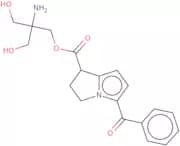
<p>Racemic 2-amino-2-(hydroxymethyl)propane-3-ol-1-yl (5-benzoyl-2,3-dihydro-1H-pyrrolizine-1-carboxylate) is a synthetic drug product. It is used in research and development as an impurity standard. It is also used to synthesize drug products, which are custom synthesis and not commercially available. The racemate is a metabolite of the natural compound "Lysergic acid" and has been studied for its effects on metabolism.</p>Formule :C19H22N2O5Degré de pureté :Min. 95%Masse moléculaire :358.39 g/molN-(4-Hydroxyphenyl)propanamide
CAS :<p>The N-(4-hydroxyphenyl)propionamide (HPPA) is a synthetic drug that binds to the human liver. It has been shown to be effective in preventing implantation of fertilized eggs, and can be used as a diagnostic agent for determining the presence of HPPA in human liver tissue. HPPA is also used as a diluent for other drugs. The HPPA binds to chromatographic components and can be detected using electrochemical detection, which allows it to be used as a targetable probe for cancer research. HPPA is also used to study iontophoretic transport of ions across reconstituted membranes in vitro.</p>Formule :C9H11NO2Degré de pureté :(%) Min. 97%Masse moléculaire :165.19 g/molN-(4-Hydroxyphenyl)acetamide sulfate-d3 sodium
CAS :Produit contrôlé<p>Please enquire for more information about N-(4-Hydroxyphenyl)acetamide sulfate-d3 sodium including the price, delivery time and more detailed product information at the technical inquiry form on this page</p>Formule :C8H6D3NO5S•NaDegré de pureté :Min. 95%Masse moléculaire :257.24 g/mol3-Carboxy-a-methyl-benzeneacetic acid
CAS :<p>3-Carboxy-a-methyl-benzeneacetic acid (3CMA) is an impurity in the synthesis of 3,4-methylenedioxyphenylacetone. It is a preservative that has been analysed as a potential source of contamination in pharmaceutical preparations. 3CMA has been shown to be effective at inhibiting the growth of bacteria, yeast and moulds. The analysis time for 3CMA is typically 8 hours or less. The parameters that are used to analyse 3CMA include the use of acetonitrile, optimal porosity and efficiency. The analytical methods used for 3CMA include chromatographic and chromolith methods.</p>Formule :C10H10O4Degré de pureté :Min. 95%Masse moléculaire :194.18 g/molNabumetone dimer
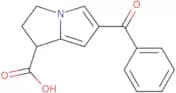
CAS :<p>Nabumetone is a nonsteroidal anti-inflammatory drug that is metabolized by the liver to form a dimer. The major metabolite of nabumetone is the dimer, which has been used as an impurity standard for this drug. Nabumetone has been shown to inhibit prostaglandin synthesis, and its metabolites have been studied for their effects on various enzymes.</p>Formule :C27H26O3Degré de pureté :Min. 95%Masse moléculaire :398.49 g/mol6-Benzoyl-2,3-dihydro-1H-pyrrolizine-1-carboxylic acid, racemic
CAS :<p>6-Benzoyl-2,3-dihydro-1H-pyrrolizine-1-carboxylic acid, racemic is a drug product that is used as an analytical standard in the development of new drugs. It is also used to study the metabolism of drugs. 6BPDC has been shown to inhibit bacterial growth by binding to DNA and RNA, thereby preventing transcription and replication. This metabolite can be synthesized in the laboratory.</p>Formule :C15H13NO3Degré de pureté :Min. 95%Masse moléculaire :255.27 g/mol3-Chloro-4-hydroxyacetanilide
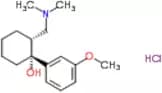
CAS :<p>3-Chloro-4-hydroxyacetanilide is a chemical compound that belongs to the class of acetanilides. It has long-term toxicity and is used as a drug substance in the production of aniline derivatives. 3-Chloro-4-hydroxyacetanilide has been shown to be carcinogenic in hamsters. The long term exposure to this chemical was shown to cause liver damage and increased incidence of tumours in rats. This drug also contains impurities and traces of chloride, chlorine, and thionyl chloride, which are toxic substances that can cause irritation or burns on contact with skin or eyes.</p>Formule :C8H8ClNO2Degré de pureté :Min. 95%Masse moléculaire :185.61 g/molTramadol Related Compound A CIV ((RS,SR)-1-(3-Methoxyphenyl)-2-(dimethylaminomethyl)cyclohexanol hydrochloride)
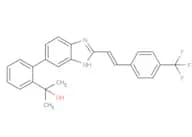
CAS :Produit contrôlé<p>Aromatic amino-alcohol-phenols, aromatic amino-acid-phenols and other aromatic amino compounds with oxygen function</p>Formule :C16H25NO2·HClCouleur et forme :White PowderMasse moléculaire :263.18853Mavatrep
CAS :<p>Mavatrep (JNJ-39439335) is a selective antagonist of TRPV1 with Ki of 6.5 nM and can be used for studies about inflammatory pain.</p>Formule :C25H21F3N2ODegré de pureté :98.51% - 99.31%Couleur et forme :SolidMasse moléculaire :422.44Tramadol Hydrochloride CIV
CAS :Produit contrôlé<p>Aromatic amino-alcohol-phenols, aromatic amino-acid-phenols and other aromatic amino compounds with oxygen function</p>Formule :C16H25NO2·HCICouleur et forme :White Crystalline PowderMasse moléculaire :403.10083Meperidine Hydrochloride CII
CAS :Produit contrôlé<p>Alfentanil (inn), anileridine (inn), bezitramide (inn), bromazepam (inn), difenoxin (inn), diphenoxylate (inn), dipipanone (inn), fentanyl (inn), etc.</p>Formule :C15H21NO2·HClCouleur et forme :White Crystalline PowderMasse moléculaire :247.15723JNJ-37822681 dihydrochloride
CAS :<p>JNJ-37822681 dihydrochloride 是特异性的、有中枢活性的,可快速解离的多巴胺 D2受体拮抗剂,与多巴胺 D2L 受体结合的亲和力适中 (Ki=158 nM)。JNJ-37822681 dihydrochloride 在精神分裂症和躁郁症领域有研究价值。</p>Formule :C17H19Cl2F5N4Degré de pureté :99.78%Couleur et forme :SolidMasse moléculaire :445.26Pethidine Acid Methyl Ester (Meperidine Acid Methyl Ester; Methyl 1-Methyl-4-phenylpiperidine-4-carboxylate) 0.1 mg/ml in Methanol
CAS :Couleur et forme :Single SolutionBenzoylphenylacetonitrile (3-Benzoylbenzeneacetonitrile)
CAS :<p>Nitrile function compounds, nesoi</p>Formule :C15H11NOMasse moléculaire :221.084062,4,5-Trimethylketoprofen ((2RS)-2-[3-(2,4,5-Trimethylbenzoyl)phenyl]propanoic Acid)
CAS :<p>Carboxylic acids with aldehyde or ketone function but without other oxygen function, their anhydrides, halides, peroxides, peroxyacids andtheir deriv</p>Formule :C19H20O3Couleur et forme :White Off-White SolidMasse moléculaire :296.14124Metamizole EP Impurity E
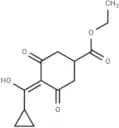
CAS :Formule :C12H15N3O4SCouleur et forme :White To Off-White SolidMasse moléculaire :297.33Trinexapac-ethyl
CAS :<p>Trinexapac-ethyl is a useful organic compound for research related to life sciences. The catalog number is T65154 and the CAS number is 95266-40-3.</p>Formule :C13H16O5Couleur et forme :SolidMasse moléculaire :252.271-(3-Chloro-2,6-difluorophenyl)ethan-1-one
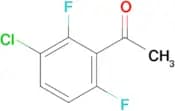
CAS :Degré de pureté :99%(GC-MS);RGMasse moléculaire :190.5700073


![5′-Acetyl-2′-fluoro-3-methyl-[1,1′-biphenyl]-4-carbaldehyde](/_next/image/?url=https%3A%2Fstatic.cymitquimica.com%2Fproducts%2F10%2Fthumb-webp%2FF628194.webp&w=3840&q=75)
![1-(6-Fluoro-[1,1′-biphenyl]-3-yl)ethanone](/_next/image/?url=https%3A%2Fstatic.cymitquimica.com%2Fproducts%2F10%2Fthumb-webp%2FF628181.webp&w=3840&q=75)
![1-[3-(ACETYLOXY)-4-METHOXYPHENYL]-ETHANONE](/_next/image/?url=https%3A%2Fstatic.cymitquimica.com%2Fproducts%2F10%2Fthumb-webp%2FF467729.webp&w=3840&q=75)