Dérivés du Benzimidazole et de l’Imidazole
Le benzimidazole est un composé constitué d’un noyau benzénique fusionné à un noyau imidazole, une structure à cinq membres contenant deux atomes d’azote. Les dérivés du benzimidazole, comme l’albendazole, sont connus pour leur activité antiparasitaire et antifongique, utilisés dans le traitement des infections parasitaires et de certaines maladies parasitaires chez les animaux et les humains. L’imidazole, quant à lui, est une structure à cinq membres avec deux atomes d’azote, présente dans divers composés biologiquement actifs. Les dérivés de l’imidazole, comme le métronidazole, possèdent des propriétés antimicrobiennes et antiparasitaires. Ces composés sont également utilisés dans l’industrie pharmaceutique pour le traitement des infections bactériennes, des maladies parasitaires et de certaines infections fongiques, ainsi qu’en chimie organique comme catalyseurs.
Chez CymitQuimica, nous proposons des benzimidazoles et des imidazoles de haute pureté pour la recherche en chimie médicinale, pharmacologie et biotechnologie.
10354 produits trouvés pour "Dérivés du Benzimidazole et de l’Imidazole"
Trier par
Degré de pureté (%)
0
100
|
0
|
50
|
90
|
95
|
100
(1R,3S,5S)-3-(2-Hydroxy-2,2-di(thiophen-2-yl)acetoxy)-8,8-dimethyl-8-azabicyclo[3.2.1]oct-6-en bromide
CAS :<p>The human red blood cell (RBC) is a non-nucleated cell in the human blood that carries oxygen to the body's cells. The erythrocyte is characterized by its biconcave shape and its lack of organelles. It has a volume of about 80 fL, and a diameter of about 7 micrometers. The RBCs are produced in bone marrow from precursor cells that differentiate into erythroid progenitor cells. This drug binds to the hemoglobin molecules in the red blood cells and alters their shape, causing an increase in their deformability. In addition, this drug decreases the viscosity of the plasma outside of the red blood cell, which increases its extravascular sensitivity. Evaluations have been performed on low doses to evaluate sensitivities within capillaries with microscopy parameters such as magnification and resolution. These evaluations have shown that this drug can be used for quantifying changes in capillary size due to low doses (</p>Formule :C19H22NO3S2·BrDegré de pureté :Min. 95%Masse moléculaire :456.42 g/mol2-Hydroxy-5-methyl-γ-phenylbenzenepropanol
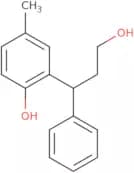
CAS :<p>2-Hydroxy-5-methylphenylbenzenepropanol is an aliphatic phenol that is used as a treatment for benzene poisoning. It is also used as a precursor to other compounds, such as the chlorides and alkylates of 2-hydroxy-5-methylphenylbenzenepropanol. This compound can be synthesized by reacting ethyl benzoylacetate with diisopropylamine in the presence of oxygen and chlorine gas. It is often immobilized using nutrients, l-tartaric acid, or cinnamic acid.</p>Formule :C16H18O2Degré de pureté :Min. 95%Masse moléculaire :242.31 g/molOxybutynin impurity C
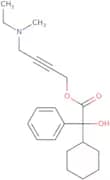
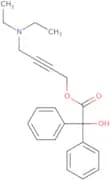
CAS :<p>Oxybutynin impurity C is a metabolite of the drug product Oxybutynin (CAS No. 1199574-70-3). It is an analytical standard for HPLC, and a natural impurity in the synthesis of Oxybutynin. This is a synthetic compound that has been shown to be metabolized through oxidation by cytochrome P450 enzymes, reduction by glutathione reductase, or conjugation with glucuronic acid. Oxybutynin impurity C has been used as an analytical reference material for drug development and research and development.</p>Degré de pureté :Min. 95%Albendazole impurity F
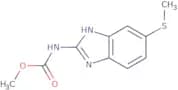
CAS :<p>Albendazole is an anti-helminthic drug that is structurally classified as a benzimidazole. It has been shown to be effective against a variety of helminths, including roundworms, pinworms, hookworms, and tapeworms. Albendazole impurity F is an analytical standard for the determination of albendazole in pharmaceutical products by HPLC. It also serves as a reference substance to establish the purity of drug products containing albendazole and its metabolites. Albendazole impurity F is not considered to be a metabolite of albendazole because it has been shown to be stable under acidic conditions and can be synthesized from other starting materials.</p>Formule :C10H11N3O2SDegré de pureté :Min. 95%Masse moléculaire :237.28 g/molEthyl (S)-1-phenyl-1,2,3,4-tetrahydro-2-isoquinolinecarboxylate
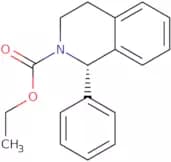
CAS :<p>Ethyl (S)-1-phenyl-1,2,3,4-tetrahydro-2-isoquinolinecarboxylate is an analytical standard used to identify impurities in drug products. It is a metabolite of the drug product and has been shown to be safe for human consumption. The compound is a synthetic chemical that is not found naturally in the environment. CAS No. 180468-42-2</p>Formule :C18H19NO2Degré de pureté :Min. 95%Masse moléculaire :281.35 g/molPantoprazole N-oxide
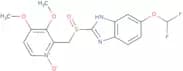
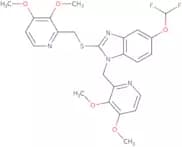
CAS :<p>Pantoprazole is a proton pump inhibitor that inhibits the gastric acid secretion by blocking the hydrogen/potassium ATPase enzyme in the stomach. Pantoprazole N-oxide, a prodrug of pantoprazole, is converted to pantoprazole after administration and has been shown to be more stable than pantoprazole. It has been shown to have tissue-specific effects, with high concentrations found in gastrointestinal tissues such as the abomasum, ileum, and colon. Pantoprazole N-oxide is also found in plasma samples at low levels. This drug may be useful for ulceration because it prevents heartburn caused by excess stomach acid.</p>Formule :C16H15F2N3O5SDegré de pureté :Min. 95%Couleur et forme :PowderMasse moléculaire :399.37 g/molTiotropium Bromide EP Impurity G
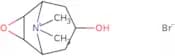
CAS :<p>Tiotropium Bromide EP Impurity G is an anticholinergic bronchodilator that is used in the treatment of asthma. Tiotropium Bromide EP Impurity G has been shown to have long-acting properties, with a half-life of about 20 hours. It has a high affinity for the muscarinic receptor and acts as a competitive antagonist at this site. Tiotropium Bromide EP Impurity G also has a cavity, which may be necessary for its activity.</p>Formule :C9H6BrNO2Degré de pureté :Min. 95%Masse moléculaire :240.05 g/molN-Desalkyl itraconazole
CAS :<p>N-Desalkyl itraconazole is a triazole antifungal drug that belongs to the group of medicines. It is used in the treatment of systemic mycoses, including blastomycosis and histoplasmosis. N-Desalkyl itraconazole has been shown to inhibit the growth of fungi by interfering with their cell membranes and inhibiting their production of ergosterol. Calibration studies have shown that this drug binds to human liver microsomes and plasma proteins, as well as transporters such as P-glycoprotein. These interactions may influence its pharmacokinetics, which can be determined using a bioanalytical method.</p>Formule :C31H30Cl2N8O4Degré de pureté :Min. 95%Masse moléculaire :649.53 g/mol4-Methyl-2-[3-[(1-methylethyl)amino]-1-phenylpropyl]phenol
CAS :<p>4-Methyl-2-[3-[(1-methylethyl)amino]-1-phenylpropyl]phenol is a synthetic impurity standard that is used in the synthesis of drug products. This compound is also known as 4-methyl-2-[3-[(1-methylethyl)amino]-1-phenylpropyl]phenol and has a CAS number of 480432-14-2. It is used to verify the purity of drugs and drug products. 4MMPP can be found in pharmacopoeia, drug development, and metabolite studies. This compound is a research and development product for niche markets. 4MMPP can be obtained through custom synthesis or by synthesis.</p>Formule :C19H25NODegré de pureté :Min. 95%Masse moléculaire :283.41 g/mol2-Methoxy-5-methyl-γ-phenylbenzenepropanol
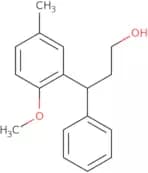
CAS :<p>2-Methoxy-5-methyl-gamma-phenylbenzenepropanol is a synthetic compound that is used as an intermediate in the synthesis of coumarin derivatives. Reaction with sulfonating agents produces sulfones, and reaction with borohydride reagents produces boronates. The synthesis of 2-methoxy-5-methyl-gamma-phenylbenzenepropanol can be accomplished by the reduction of diphenyl ethers with lithium aluminum hydride or borohydride. The reduction can also be carried out using lanthanum oxide and potassium borohydride. The reaction proceeds smoothly at room temperature in nonpolar solvents.<br>2-Methoxy-5-methyl-gamma-phenylbenzenepropanol reacts with chloride to produce the corresponding chlorides, which are useful intermediates for the synthesis of tolterodine tartrate, a drug used to treat urinary inc</p>Formule :C17H20O2Degré de pureté :Min. 95%Masse moléculaire :256.34 g/mol2-Methyl-3,4-dimethoxy pyridine hydrochloride
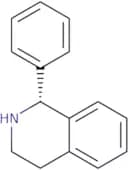
CAS :<p>2-Methyl-3,4-dimethoxy pyridine hydrochloride is an analytical standard that is used as a reference compound in the pharmaceutical industry to identify impurities in drug products. It also has a niche use as an API impurity and HPLC standard. 2-Methyl-3,4-dimethoxy pyridine hydrochloride is used as an intermediate for the synthesis of other drugs, including benzodiazepines and beta blockers. It is also used in research and development for its high purity. This chemical is natural or synthetic in origin but can be custom synthesized to meet specific requirements. 2-Methyl-3,4-dimethoxy pyridine hydrochloride also has CAS number 1210824-88-6.</p>Formule :C8H11NO2HClDegré de pureté :Min. 95%Masse moléculaire :189.64 g/mol(R)-1-Phenyl-1,2,3,4-tetrahydroisoquinoline
CAS :<p>(R)-1-Phenyl-1,2,3,4-tetrahydroisoquinoline is a chiral molecule with four stereocenters. It is synthesized by the reaction of sulfamic acid and cyclohexene in the presence of p-toluenesulfonic acid. The product formed is then dehydrogenated to produce (R)-1-phenyl-1,2,3,4-tetrahydroisoquinoline. This compound is soluble in organic solvents such as benzene and ethane and can be used as an acceptor for chiral stationary phases.</p>Formule :C15H15NDegré de pureté :Min. 95%Couleur et forme :PowderMasse moléculaire :209.29 g/molDehydrodeoxy donepezil
CAS :<p>Dehydrodeoxy donepezil is an analytical standard that is used in the manufacture of pharmaceuticals. It is a synthetic drug impurity, and its CAS number is 120013-45-8. Dehydrodeoxy donepezil can be found in the API impurity grade of various drugs, including those that are manufactured by Custom synthesis and natural synthesis. The pharmacopoeia states that dehydrodeoxy donepezil has a purity level of 98% or greater. This product can also be found as a metabolite in humans, with its half-life being approximately 40 minutes.</p>Formule :C24H29NO2Degré de pureté :Min. 95%Masse moléculaire :363.49 g/molOxybutynin EP impurity B
CAS :<p>Oxybutynin EP impurity B is a metabolite of oxybutynin and is a natural product. It is used as an analytical reference substance, to develop new drugs, and in pharmacopoeia in order to measure the purity of oxybutynin. The compound is synthesized by chemical synthesis and can be used as a standard for HPLC analysis.</p>Degré de pureté :Min. 95%1-[[4-(3-Methoxypropoxy)-3-methyl-2-pyridinyl]methyl]-2-[[[4-(3-methoxypropoxy)-3-methyl-2-pyridinyl]methyl]thio]-1H-benzimidazole
CAS :<p>1-[[4-(3-Methoxypropoxy)-3-methyl-2-pyridinyl]methyl]-2-[[[4-(3-methoxypropoxy)-3-methyl-2-pyridinyl]methyl]thio]-1H-benzimidazole is a drug product with analytical applications. It has been shown to have natural and synthetic origins, as well as impurities of its own. It is a custom synthesis and research and development compound that is used for HPLC standardization. The compound has been synthesized for the purpose of drug development and it is intended for niche use.</p>Formule :C29H36N4O4SDegré de pureté :Min. 95%Masse moléculaire :536.69 g/mol2,12-Dihydro-1,3-dimethyl-9-methoxy-12-thioxobenzo [4,5] pyrido [1,2-c] imidazo [1,2-a] imidazol-2-one
CAS :<p>2,12-Dihydro-1,3-dimethyl-9-methoxy-12-thioxobenzo [4,5] pyrido [1,2-c] imidazo [1,2-a] imidazol-2-one is a synthetic compound that has not been evaluated in humans. This compound is an impurity standard for the synthesis of an API. The purity of this compound is >98% and it has been shown to be stable under acidic conditions.</p>Formule :C16H13N3O2SDegré de pureté :Min. 95%Masse moléculaire :311.36 g/molPantoprazole impurity
CAS :<p>Pantoprazole is a proton pump inhibitor. It is used in the treatment of gastroesophageal reflux disease and other conditions involving excessive stomach acid production. The chemical name for Pantoprazole impurity is (E)-1-(4-chlorophenyl)ethyl-3-[(pyrrolidin-2-yl)oxy]propanediol. This substance is an enantiomer of pantoprazole, which has been determined to be inactive. Pantoprazole impurity can be identified by its melting point, crystallizing habit, and optical rotation. Active carbon filtration can be used to remove this substance from the final product.</p>Formule :C24H24F2N4O5SDegré de pureté :Min. 95%Masse moléculaire :518.53 g/molAmino albendazole sulfone
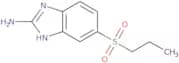
CAS :<p>Amino albendazole sulfone is an anthelmintic drug that is used to treat worm infestations in animals. It is the active metabolite of fenbendazole sulfone and has a terminal half-life of 12 hours in humans. Amino albendazole sulfone can be prepared by chromatographic methods, such as liquid chromatography or gas chromatography, and it can be analyzed with a fluorescence detector. This drug has been shown to have a concentration–time curve following administration to rats and results in an increase in the number of worms eliminated from the body.</p>Formule :C10H13N3O2SDegré de pureté :Min. 95%Masse moléculaire :239.3 g/mol1-[[3-Methyl-4-(2,2,2-trifluoroethoxy)-2-pyridinyl]methyl]-2-[[[3-methyl-4-(2,2,2-trifluoroethoxy)-2-pyridinyl]methyl]sulfinyl]-1H-b enzimidazole
CAS :<p>1-[[3-Methyl-4-(2,2,2-trifluoroethoxy)-2-pyridinyl]methyl]-2-[[[3-methyl-4-(2,2,2-trifluoroethoxy)-2-pyridinyl]methyl]sulfinyl]-1H-b enzimidazole is an impurity of a drug product. It is a metabolite that has been shown to be present in human plasma and urine. This compound is synthetically produced and is not found in nature. It has been shown to have niche applications in both analytical chemistry and pharmacopoeia.</p>Formule :C25H22F6N4O3SDegré de pureté :Min. 95%Masse moléculaire :572.52 g/molSolifenacin Impurity D
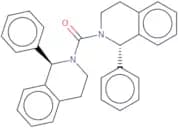
CAS :<p>Solifenacin Impurity D is a synthetic impurity of solifenacin. Solifenacin is an anti-cholinergic drug used to treat overactive bladder and urinary incontinence. The purity of this product is 99%. It is soluble in methanol, ethanol, chloroform, and acetone. Solifenacin Impurity D can be used as a reference material for analytical purposes or as an impurity standard in the development of new drugs.</p>Formule :C31H28N2ODegré de pureté :Min. 96 Area-%Couleur et forme :White PowderMasse moléculaire :444.57 g/mol
![(1R,3S,5S)-3-(2-Hydroxy-2,2-di(thiophen-2-yl)acetoxy)-8,8-dimethyl-8-azabicyclo[3.2.1]oct-6-en bro…](/_next/image/?url=https%3A%2Fstatic.cymitquimica.com%2Fproducts%2F3D%2Fthumb-webp%2FIH42882.webp&w=3840&q=75)


![4-Methyl-2-[3-[(1-methylethyl)amino]-1-phenylpropyl]phenol](/_next/image/?url=https%3A%2Fstatic.cymitquimica.com%2Fproducts%2F3D%2Fthumb-webp%2FIM27501.webp&w=3840&q=75)


![1-[[4-(3-Methoxypropoxy)-3-methyl-2-pyridinyl]methyl]-2-[[[4-(3-methoxypropoxy)-3-methyl-2-pyridin…](/_next/image/?url=https%3A%2Fstatic.cymitquimica.com%2Fproducts%2F3D%2Fthumb-webp%2FIM25351.webp&w=3840&q=75)
![2,12-Dihydro-1,3-dimethyl-9-methoxy-12-thioxobenzo [4,5] pyrido [1,2-c] imidazo [1,2-a] imidazol-2…](/_next/image/?url=https%3A%2Fstatic.cymitquimica.com%2Fproducts%2F3D%2Fthumb-webp%2FID57925.webp&w=3840&q=75)
![1-[[3-Methyl-4-(2,2,2-trifluoroethoxy)-2-pyridinyl]methyl]-2-[[[3-methyl-4-(2,2,2-trifluoroethoxy)…](/_next/image/?url=https%3A%2Fstatic.cymitquimica.com%2Fproducts%2F3D%2Fthumb-webp%2FIM25689.webp&w=3840&q=75)