Dérivés du Benzimidazole et de l’Imidazole
Le benzimidazole est un composé constitué d’un noyau benzénique fusionné à un noyau imidazole, une structure à cinq membres contenant deux atomes d’azote. Les dérivés du benzimidazole, comme l’albendazole, sont connus pour leur activité antiparasitaire et antifongique, utilisés dans le traitement des infections parasitaires et de certaines maladies parasitaires chez les animaux et les humains. L’imidazole, quant à lui, est une structure à cinq membres avec deux atomes d’azote, présente dans divers composés biologiquement actifs. Les dérivés de l’imidazole, comme le métronidazole, possèdent des propriétés antimicrobiennes et antiparasitaires. Ces composés sont également utilisés dans l’industrie pharmaceutique pour le traitement des infections bactériennes, des maladies parasitaires et de certaines infections fongiques, ainsi qu’en chimie organique comme catalyseurs.
Chez CymitQuimica, nous proposons des benzimidazoles et des imidazoles de haute pureté pour la recherche en chimie médicinale, pharmacologie et biotechnologie.
10345 produits trouvés pour "Dérivés du Benzimidazole et de l’Imidazole"
Trier par
Degré de pureté (%)
0
100
|
0
|
50
|
90
|
95
|
100
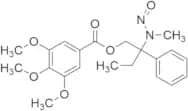
Trimebutine EP Impurity E-Nitroso
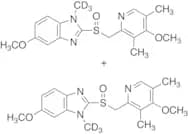
Produit contrôléFormule :C21H26N2O6Couleur et forme :NeatMasse moléculaire :402.441N-Methyl Omeprazole-d3 (Mixture of isomers with the methylated nitrogens of imidazole)
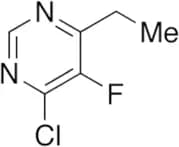
CAS :Produit contrôlé<p>Applications Labelled Omeprazole (O635000) impurity.<br>References Allenmark, S., et al.: Anal. Biochem., 136, 293 (1984), Besancon, M., et al.: J. Biol. Chem., 272, 22438 (1997),<br></p>Formule :C18H18D3N3O3SCouleur et forme :NeatMasse moléculaire :362.464-Chloro-6-ethyl-5-fluoropyrimidine
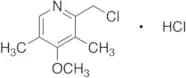
CAS :Produit contrôlé<p>Applications A pyrimidine derivative used as a building block in the preparation of bio-active compounds such as broad-spectrum triazole antifungal agents.<br>References Butters, M. et al.: Org. Proc. Res. Dev., 5, 28 (2001); Tong, L. et al.: Zhong. Yao., 8, 280 (2010);<br></p>Formule :C6H6ClFN2Couleur et forme :NeatMasse moléculaire :160.582-(Chloromethyl)-4-methoxy-3,5-dimethylpyridine Hydrochloride
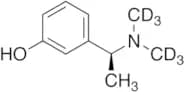
CAS :Produit contrôlé<p>Impurity Omeprazole EP Impurity XI<br>Applications 2-(Chloromethyl)-4-methoxy-3,5-dimethylpyridine Hydrochloride (Omeprazole EP Impurity XI) is an intermediate in the production of the antiulcer agent Omeprazole.<br>References Roma, G., et al.: J. Med. Chem., 50, 2886 (2007), Hoffmann, S., et al.: Toxicol. Lett., 180, 9 (2008),<br></p>Formule :C9H12ClNO·ClHCouleur et forme :WhiteMasse moléculaire :222.11N-Ethylcarbamic Acid 3-[(1S)-1-(Dimethylamino)ethyl]phenyl Ester
CAS :Produit contrôléFormule :C13H20N2O2Couleur et forme :NeatMasse moléculaire :236.31(2R,3R)-3-(2,4-Difluorophenyl)-3-hydroxy-4-(1H-1,2,4-triazol-1-yl)butan-2-yl methanesulfonate
CAS :Produit contrôléFormule :C13H15F2N3O4SCouleur et forme :NeatMasse moléculaire :347.34Propyl Itraconazole
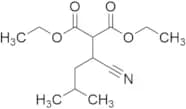
CAS :Produit contrôléFormule :C34H36Cl2N8O4Couleur et forme :NeatMasse moléculaire :691.611,3-Diethyl 2-(1-cyano-3-methylbutyl)propanedioate
CAS :Produit contrôléFormule :C13H21NO4Couleur et forme :NeatMasse moléculaire :255.314'-Desmethoxy Omeprazole
CAS :Produit contrôlé<p>Applications 4'-Desmethoxy Omeprazole is one of two impurities in the synthesis of Esomeprazole, an anti-ulcerative drug for treatment of acid-related diseases.<br>References Liu, X., et al.: Lat. Am. J. Pharm., 34, 1265-1268 (2015);<br></p>Formule :C16H17N3O2SCouleur et forme :NeatMasse moléculaire :315.39N-Nitroso Albendazole (mixtures of regional isomers)
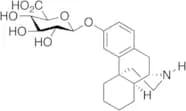
Produit contrôléFormule :C13H16N4O3SCouleur et forme :NeatMasse moléculaire :616.712N-Desmethyl Dextrorphan β-D-O-Glucuronide
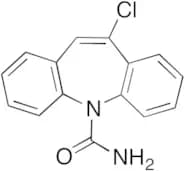
CAS :Produit contrôlé<p>Stability Hygroscopic<br>Applications A labelled metabolite of Dextromethorphan.<br>References Gonzalez, F., et al.: Nature, 331, 442 (1988), Chen, S., et al.: Clin. Pharmacol. Ther., 60, 522 (1996), Hartter, S., et al.: Ther. Drug Monit., 18, 297 (1996), Garcia-Martin, E., et al.: Clin. Pharmacol. Ther., 71, 196 (2002),<br></p>Formule :C22H29NO7Couleur et forme :NeatMasse moléculaire :419.4710-Chloro Carbamazepine
CAS :<p>Applications 10-Chloro Carbamazepine is a derivative of Carbamazepine (C175840) which is used in treatment of pain associated with trigeminal neuralgia.<br>References Stenger, E.G., et al.: Med. Exp., 11, 191 (1964), Pynnonen, S., et al.: Ther. Drug Monit., 1, 409 (1979), Sidebottom, A., et al.: J. Clin. Pharm. Ther., 20, 31 (1995)<br></p>Formule :C15H11ClN2OCouleur et forme :White PowderMasse moléculaire :270.71NAP 226-90-d6
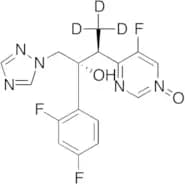
CAS :Produit contrôléFormule :C102H6H9NOCouleur et forme :NeatMasse moléculaire :171.27Voriconazole-d3 N-Oxide (~90%)
CAS :Produit contrôléFormule :C16D3H11F3N5O2Degré de pureté :~90%Couleur et forme :NeatMasse moléculaire :368.332-(Ethylthio)ethanol
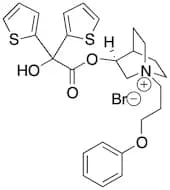
CAS :Produit contrôlé<p>Applications 2-(Ethylthio)ethanol is used to prepare aryldihydropyrimidinones as inhibitors of fatty acid transporter FATP4.<br> Not a dangerous good if item is equal to or less than 1g/ml and there is less than 100g/ml in the package<br>References Blackburn, C., et al.: Bioorg. Med. Chem. Lett., 16, 3504 (2006)<br></p>Formule :C4H10OSCouleur et forme :NeatMasse moléculaire :106.19(S)-Aclidinium Bromide
CAS :Produit contrôlé<p>Applications (S)-Aclidinium Bromide is an isomer of Aclidinium Bromide (A190180) a novel long-acting antimuscarinic bronchodilator in phase II clinical trials for the treatment of chronic obstructive pulmonary disease (1,2).<br>References (1) Gupta, V. and Singh, D.: Expert Rev Respir Med. 6, 581 (2012)(2) De La Motte, S., et al.: Int. J. Clin. Pharmacol. Therap., 50,403 (2012)<br></p>Formule :C26H30BrNO4S2Couleur et forme :Off-WhiteMasse moléculaire :564.559-Acridinecarboxylic acid
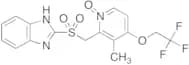
CAS :Produit contrôlé<p>Applications 9-Acridinecarboxylic acid is used in the synthesis of short DNA-binding peptides.<br></p>Formule :C14H9NO2Couleur et forme :YellowMasse moléculaire :223.23Lansoprazole Sulfone N-Oxide
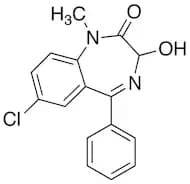
CAS :Produit contrôlé<p>Applications An impurity of Lansoprazole.<br>References Barradell, L., et al.: Drugs, 44, 225 (1992), Aydogmus, Z., et al.: Acta Pharm. Sci., 48, 45 (2006), El-Sherif, Z., et al.: Chem. Pharm. Bull., 54, 814 (2006),<br></p>Formule :C16H14F3N3O4SCouleur et forme :WhiteMasse moléculaire :401.36Temazepam
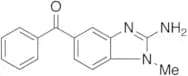
CAS :Produit contrôlé<p>Applications Temazepam is a pharmacologically active metabolite of Diazepam. It is used as a sedative and hypnotic drug.<br>References Sarteschi, P., et al.: Arzneim.-Forsch., 22, 93 (1972), Schwandt, H.J., et al.: Xenobiotica, 4, 733 (1974), Curry, S.H., et al.: Br. J. Pharmacol., 57, 427 (1976), Heel, R.C., et al.: Drugs, 21, 321 (1981),<br></p>Formule :C16H13ClN2O2Couleur et forme :Light YellowMasse moléculaire :300.742-Amino-5-benzoyl-1-methylbenzimidazole
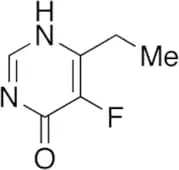
CAS :Produit contrôlé<p>Applications Mebendazole (M200500) thermal decomposition product. Mebendazole impurity.<br>References Himmelreich, M., et al.: Aus. J. Pharmaceut. Sci., 6, 123 (1977),<br></p>Formule :C15H13N3OCouleur et forme :NeatMasse moléculaire :251.286-Ethyl-5-fluoropyrimidin-4(3H)-one
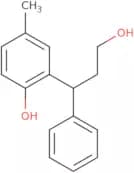
CAS :Produit contrôlé<p>Applications A pyrimidine derivative used in the preparation of bio-active compounds such as broad-spectrum triazole antifungal agents.<br>References Butters, M. et al.: Org. Proc. Res. Dev., 5, 28 (2001); Tong, L. et al.: Zhong. Yao., 8, 280 (2010);<br></p>Formule :C6H7FN2OCouleur et forme :NeatMasse moléculaire :142.132-Hydroxy-5-methyl-γ-phenylbenzenepropanol
CAS :<p>2-Hydroxy-5-methylphenylbenzenepropanol is an aliphatic phenol that is used as a treatment for benzene poisoning. It is also used as a precursor to other compounds, such as the chlorides and alkylates of 2-hydroxy-5-methylphenylbenzenepropanol. This compound can be synthesized by reacting ethyl benzoylacetate with diisopropylamine in the presence of oxygen and chlorine gas. It is often immobilized using nutrients, l-tartaric acid, or cinnamic acid.</p>Formule :C16H18O2Degré de pureté :Min. 95%Masse moléculaire :242.31 g/mol2-[[(4-Chloro-3-methyl-2-pyridinyl)methyl]sulfinyl]-1H-benzimidazole
CAS :<p>2-[[(4-Chloro-3-methyl-2-pyridinyl)methyl]sulfinyl]-1H-benzimidazole (CAS No. 168167-42-8) is a synthetic compound that is used as an analytical reference standard for HPLC. It is also used in the study of drug metabolism, and it has been shown to induce natural oxidation in vitro. 2-[(4-Chloro-3-methylpyridinium)methylsulfinyl]-1Hbenzimidazole is an impurity found in pharmaceutical products that are synthesized from 1-(2,4,6trichlorophenyl)-3-[(4chloromethyl)phenyl]urea.</p>Formule :C14H12ClN3OSDegré de pureté :Min. 95 Area-%Couleur et forme :Brown PowderMasse moléculaire :305.78 g/mol1-Deoxy-4-O-β-D-galactopyranosyl-1-[(4R)-4-(2-methylpropyl)-2-oxo-1-pyrrolidinyl]-β-D-fructopyranose/furanose
CAS :<p>Lactose conjugate degradation product of pregabalin</p>Formule :C20H35NO11Degré de pureté :Min. 95%Couleur et forme :PowderMasse moléculaire :465.49 g/molPantoprazole impurity
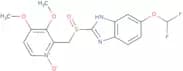
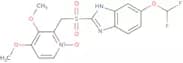
CAS :<p>Pantoprazole is a proton pump inhibitor. It is used in the treatment of gastroesophageal reflux disease and other conditions involving excessive stomach acid production. The chemical name for Pantoprazole impurity is (E)-1-(4-chlorophenyl)ethyl-3-[(pyrrolidin-2-yl)oxy]propanediol. This substance is an enantiomer of pantoprazole, which has been determined to be inactive. Pantoprazole impurity can be identified by its melting point, crystallizing habit, and optical rotation. Active carbon filtration can be used to remove this substance from the final product.</p>Formule :C24H24F2N4O5SDegré de pureté :Min. 95%Masse moléculaire :518.53 g/molLansoprazole impurity H
CAS :<p>Lansoprazole impurity H is a metabolite of lansoprazole, a proton pump inhibitor that inhibits the production of stomach acid. Lansoprazole impurity H is used in research and development as an analytical standard to measure lansoprazole concentrations in drug products. It is also used as an impurity standard for pharmacopoeia purposes. Lansoprazole impurity H is not known to be toxic, but it has not been evaluated for carcinogenicity or reproductive toxicity.</p>Formule :C23H16F3N5OSDegré de pureté :90%MinMasse moléculaire :467.47 g/molN-Desalkyl itraconazole
CAS :<p>N-Desalkyl itraconazole is a triazole antifungal drug that belongs to the group of medicines. It is used in the treatment of systemic mycoses, including blastomycosis and histoplasmosis. N-Desalkyl itraconazole has been shown to inhibit the growth of fungi by interfering with their cell membranes and inhibiting their production of ergosterol. Calibration studies have shown that this drug binds to human liver microsomes and plasma proteins, as well as transporters such as P-glycoprotein. These interactions may influence its pharmacokinetics, which can be determined using a bioanalytical method.</p>Formule :C31H30Cl2N8O4Degré de pureté :Min. 95%Masse moléculaire :649.53 g/molTiotropium Bromide EP Impurity G
CAS :<p>Tiotropium Bromide EP Impurity G is an anticholinergic bronchodilator that is used in the treatment of asthma. Tiotropium Bromide EP Impurity G has been shown to have long-acting properties, with a half-life of about 20 hours. It has a high affinity for the muscarinic receptor and acts as a competitive antagonist at this site. Tiotropium Bromide EP Impurity G also has a cavity, which may be necessary for its activity.</p>Formule :C9H6BrNO2Degré de pureté :Min. 95%Masse moléculaire :240.05 g/mol1-Phenyl-1,2,3,4-tetrahydro-isoquinoline
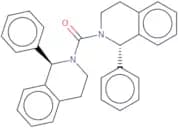
CAS :<p>1-Phenyl-1,2,3,4-tetrahydro-isoquinoline is a synthetic compound which has been used as a lead compound for the development of drugs with dopamine β-hydroxylase inhibitory activity. In vitro studies have shown that 1-phenyl-1,2,3,4-tetrahydro-isoquinoline inhibits human serum dopamine β-hydroxylase and can be used to study the possible role of this enzyme in Parkinson's disease. This drug is racemized in the body and has been found to be effective against Parkinson's disease in rats. It is also an enantiomer that has industrial applications for the production of polyurethane foam insulation coatings.</p>Formule :C15H15NDegré de pureté :Min. 95%Couleur et forme :PowderMasse moléculaire :209.29 g/mol(4R)-1-(4-O-b-D-Galactopyranosyl-b-D-glucopyranosyl)-4-(2-methylpropyl)-2-pyrrolidinone
CAS :<p>(4R)-1-(4-O-b-D-Galactopyranosyl-b-D-glucopyranosyl)-4-(2-methylpropyl)-2-pyrrolidinone is a synthetic, impurity standard and research and development compound. (4R)-1-(4-O-b-D-Galactopyranosyl-b-D-glucopyranosyl)-4-(2-methylpropyl)-2pyrrolidinone is used as an analytical reference in the synthesis of other compounds. It is also used in drug development for the treatment of tuberculosis. This product has a high purity level and is pharmacopoeia grade.</p>Formule :C20H35NO11Degré de pureté :Min. 95%Masse moléculaire :465.49 g/molAlbendazole sulfone
CAS :<p>Albendazole sulfone is a metabolite of the drug albendazole. It is used as an analytical standard to measure the concentration of albendazole in human plasma and urine samples. The concentration-time curve for albendazole sulfone can be determined using a nonlinear regression analysis, with the rate constant being calculated from the slope and intercept. This method has been shown to be accurate for predicting pharmacokinetic parameters in humans. Albendazole sulfone is also used as a probe in wastewater treatment studies, where it binds to colloidal gold particles that are used to visualize the removal of small particles by microorganisms.</p>Formule :C12H15N3O4SDegré de pureté :Min. 95 Area-%Couleur et forme :PowderMasse moléculaire :297.33 g/molOmeprazole Impurity 65
<p>Impurity 65 is an impurity of Omeprazole, a drug used to treat gastroesophageal reflux disease and peptic ulcer. Impurity 65 is a metabolite of Omeprazole that can be found in the drug product at a concentration up to 0.5%. It has been shown to have anti-inflammatory effects and can be used as a research and development standard for HPLC analysis. Impurity 65 is also used as an impurity standard in the USP pharmacopoeia and other pharmacopoeias around the world.</p>Formule :C17H17N3O4Degré de pureté :Min. 95%Masse moléculaire :327.33 g/molDonepezil benzyl bromide (donepezil impurity)
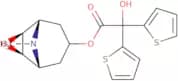
CAS :<p>Donepezil benzyl bromide is a by-product of donepezil hydrochloride, which is an industrially important drug used to treat Alzheimer's disease. It has been shown to be more efficient than its hydrochloride form. Donepezil benzyl bromide is a crystalline substance that is insoluble in water and soluble in organic solvents such as acetone or ethanol. The compound can be purified through recrystallization from an appropriate solvent.</p>Formule :C31H36BrNO3Degré de pureté :Min. 95%Masse moléculaire :550.53 g/molScopine-2,2-dithienyl glycolate
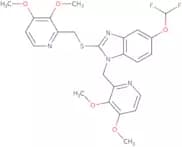
CAS :<p>Scopine-2,2-dithienyl glycolate is a catalyst that belongs to the class of dithienyl glycolates. Scopine-2,2-dithienyl glycolate is used in the pharmaceutical industry as an average catalyst for reactions and can be used to recover dimethylbenzene. The method of detection for scopine-2,2-dithienyl glycolate is based on its ability to absorb light at a wavelength of 360 nm. The reaction solution must be monitored carefully during the synthetic process because it has been shown that it can react with water or air and form hydrogen sulfide gas. If this happens, the reaction solution will become cloudy or turbid. This product is a white crystalline solid that appears as tiny needles and has a melting point of 173 degrees Celsius (340 degrees Fahrenheit).</p>Formule :C18H19NO4S2Degré de pureté :Min. 95%Masse moléculaire :377.48 g/mol1-[[4-(3-Methoxypropoxy)-3-methyl-2-pyridinyl]methyl]-2-[[[4-(3-methoxypropoxy)-3-methyl-2-pyridinyl]methyl]thio]-1H-benzimidazole
CAS :<p>1-[[4-(3-Methoxypropoxy)-3-methyl-2-pyridinyl]methyl]-2-[[[4-(3-methoxypropoxy)-3-methyl-2-pyridinyl]methyl]thio]-1H-benzimidazole is a drug product with analytical applications. It has been shown to have natural and synthetic origins, as well as impurities of its own. It is a custom synthesis and research and development compound that is used for HPLC standardization. The compound has been synthesized for the purpose of drug development and it is intended for niche use.</p>Formule :C29H36N4O4SDegré de pureté :Min. 95%Masse moléculaire :536.69 g/molAmino albendazole
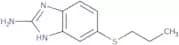
CAS :<p>Albendazole is a sulfoxide anthelmintic drug that is used to treat worm infections in livestock and pets. Albendazole inhibits the synthesis of the parasitic cell membrane, which disrupts the integrity of the cell and leads to death. The analytical method for measuring albendazole includes extraction with hexane followed by analysis using gas chromatography. In humans, albendazole may be used to treat cancer, especially when it occurs in cavities or fatty tissues. It can also be used as a treatment for certain types of parasitic infections, such as toxoplasmosis, amebiasis, and cysticercosis. Albendazole is absorbed well after oral administration and plasma concentrations are proportional to dosage levels. The most common side effects are nausea and headache.</p>Formule :C10H13N3SDegré de pureté :Min. 95%Masse moléculaire :207.3 g/molcis-(±)-4-[4-[4-[4-[[2-(2,4-Dichlorophenyl)-2-(1H-1,2,4-triazol-1-ylmethyl)-1,3-dioxolan-4-yl]methoxy]phenyl]-1-piperazinyl]phenyl]- 2,4-dihydro-2-propyl-3H-1,2,4-triazol-3-one
CAS :<p>cis-(±)-4-[4-[4-[4-[[2-(2,4-Dichlorophenyl)-2-(1H-1,2,4-triazol-1-ylmethyl)-1,3-dioxolan-4-yl]methoxy]phenyl]-1-piperazinyl]phenyl]- 2,4-dihydro-2-propyl-3H-1,2,4-triazol-3-one is a drug product that is used as a research and development tool. It is an impurity standard for HPLC. This compound has a chemical name of cis-(±)-4-[4-[4-[4-(hydroxymethyl)phenyl]-1piperazinyl]phenyl]-2, 4dihydro 2propyl 3H 1 2 4 triazol 3one. The CAS number for this compound is 7485591 7. This compound</p>Formule :C34H36Cl2N8O4Degré de pureté :Min. 95%Masse moléculaire :691.61 g/mol2-[[(4-Methoxy-3-methyl-2-pyridinyl)methyl]sulfinyl]-1H-benzimidazole
CAS :<p>2-[(4-Methoxy-3-methyl-2-pyridinyl)methyl]sulfinyl]-1H-benzimidazole is a synthetic, impurity standard that is used in the synthesis of drug products. It has been shown to inhibit the metabolism of drugs and may be used as a marker for drug metabolism. This compound may also be used as a marker in analytical studies to assess the purity of a drug product. 2-[(4-Methoxy-3-methyl-2-pyridinyl)methyl]sulfinyl]-1H-benzimidazole has not been evaluated for safety or efficacy.</p>Formule :C15H15N3O2SDegré de pureté :Min. 95%Masse moléculaire :301.36 g/molPantoprazole sulfone N-oxide
CAS :<p>Pantoprazole sulfone N-oxide is a prodrug that is converted to the active form pantoprazole in the stomach where it inhibits gastric acid secretion. Pantoprazole sulfone N-oxide has been shown to be genotoxic, and can cause polyvinyl chloride to degrade when stored together. Reconstituted solution of this drug should be used within 24 hours after reconstitution, as the chemical stability of this drug decreases rapidly. Validation studies have been conducted on different analytical methods for determining pantoprazole concentrations in reconstituted solutions, and these methods have been harmonized with those published by the United States Pharmacopeia (USP). The pump inhibitor activity of pantoprazole sulfone N-oxide has been demonstrated in dogs, and it is also useful for treating acid reflux disease in humans. Pantoprazole sulfone N-oxide is unstable at high temperatures (>25°C), so should not be refrigerated or</p>Formule :C16H15F2N3O6SDegré de pureté :Min. 95%Masse moléculaire :415.37 g/mol1-[[4-(3-Methoxypropoxy)-3-methyl-2-pyridinyl]methyl]-2-[[[4-(3-methoxypropoxy)-3-methyl-2-pyridinyl]methyl]sulfonyl]-1H-benzimidazo le
CAS :<p>1-[[4-(3-Methoxypropoxy)-3-methyl-2-pyridinyl]methyl]-2-[(4-(3-methoxypropoxy)-3-methyl-2-pyridinyl)methylsulfonyl]-1H-benzimidazole (MKC1807) is a synthetic drug product. MKC1807 is an analytical standard in the HPLC assay for the determination of Epiandrosterone sulfate and its metabolites. 1-[4-(3-Methoxypropoxy)-3,5,6,7,8 -pentamethylcyclohexyl]methyl 2-[(4-(3 -methoxypropoxy) 3,5,6,7,8 -pentamethylcyclohexyl)methylsulfonyl]-1H benzimidazole has been shown to be a natural metabolite of Epiandrosterone sulfate. This compound</p>Formule :C29H36N4O6SDegré de pureté :Min. 95%Masse moléculaire :568.69 g/molCarbamazepine impurity
CAS :<p>Carbamazepine is a drug that has been used to treat epileptic seizures and trigeminal neuralgia. Impurities in the drug are removed by using chromatographic methods, such as high-performance liquid chromatography (HPLC). The rotarod test is an animal model of motor coordination and balance that can be used to assess the effects of drugs on these functions. Carbamazepine impurities may cause depression and have an epileptic effect on animals. Chronic exposure to carbamazepine can lead to drug reactions and gene polymorphisms, which may alter the metabolism of the drug. Analytical methods for determining carbamazepine impurities include HPLC, gas chromatography mass spectrometry (GC-MS), and thin-layer chromatography (TLC).</p>Formule :C15H14N2ODegré de pureté :Min. 95%Masse moléculaire :238.28 g/mol1-[[3-Methyl-4-(2,2,2-trifluoroethoxy)-2-pyridinyl]methyl]-2-[[[3-methyl-4-(2,2,2-trifluoroethoxy)-2-pyridinyl]methyl]thio]-1H-benzi midazole
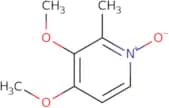
CAS :<p>1-[[3-Methyl-4-(2,2,2-trifluoroethoxy)-2-pyridinyl]methyl]-2-[[[3-methyl-4-(2,2,2-trifluoroethoxy)-2-pyridinyl]methyl]thio]-1H-benzi midazole is a high purity analytical standard that is used to calibrate HPLC. It is found as an impurity in the drug product and as a metabolite. 1-[(3-Methyl-4-(2,2,2 -trifluoroethoxy) - 2 - pyridinyl) methyl] - 2 - [[[3 - methyl (4 ( 2 , 2 , 2 - trifluoroethoxy) - 2 pyridinyl) methyl] thio] - 1 H benzimidazole is the IUPAC name for this compound. This chemical has been synthesized</p>Formule :C25H22F6N4O2SDegré de pureté :Min. 95%Masse moléculaire :556.52 g/mol3,4-Dimethoxy-2-methylpyridine-N-oxide
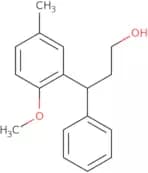
CAS :<p>3,4-Dimethoxy-2-methylpyridine-N-oxide is a potent inhibitor of somatostatin, which is known to play a role in the regulation of cancer cell growth and apoptosis. This compound has been shown to inhibit the activity of human kinases, including those involved in tumor cell proliferation. 3,4-Dimethoxy-2-methylpyridine-N-oxide is an anticancer agent that can be used to treat various types of cancer. It has also been found to have inhibitory effects on urine quetiapine and Chinese hamster ovary cells. The compound is a potent analog of kinase inhibitors and can be used as a lead compound for developing new drugs with anticancer properties.</p>Formule :C8H11NO3Degré de pureté :Min. 95%Masse moléculaire :169.18 g/mol2-Methoxy-5-methyl-γ-phenylbenzenepropanol
CAS :<p>2-Methoxy-5-methyl-gamma-phenylbenzenepropanol is a synthetic compound that is used as an intermediate in the synthesis of coumarin derivatives. Reaction with sulfonating agents produces sulfones, and reaction with borohydride reagents produces boronates. The synthesis of 2-methoxy-5-methyl-gamma-phenylbenzenepropanol can be accomplished by the reduction of diphenyl ethers with lithium aluminum hydride or borohydride. The reduction can also be carried out using lanthanum oxide and potassium borohydride. The reaction proceeds smoothly at room temperature in nonpolar solvents.<br>2-Methoxy-5-methyl-gamma-phenylbenzenepropanol reacts with chloride to produce the corresponding chlorides, which are useful intermediates for the synthesis of tolterodine tartrate, a drug used to treat urinary inc</p>Formule :C17H20O2Degré de pureté :Min. 95%Masse moléculaire :256.34 g/mol2,12-Dihydro-1,3-dimethyl-9-methoxy-12-thioxobenzo [4,5] pyrido [1,2-c] imidazo [1,2-a] imidazol-2-one
CAS :<p>2,12-Dihydro-1,3-dimethyl-9-methoxy-12-thioxobenzo [4,5] pyrido [1,2-c] imidazo [1,2-a] imidazol-2-one is a synthetic compound that has not been evaluated in humans. This compound is an impurity standard for the synthesis of an API. The purity of this compound is >98% and it has been shown to be stable under acidic conditions.</p>Formule :C16H13N3O2SDegré de pureté :Min. 95%Masse moléculaire :311.36 g/molPregabalin impurity PD 0312236 and Pregabalin impurity PD 0312237 (mixture of tautomeric isomers)
CAS :<p>Lactose conjugate degradation product of pregabalin</p>Formule :C20H35NO11Degré de pureté :Min. 95%Masse moléculaire :465.49 g/mol4-Methyl-2-[3-[(1-methylethyl)amino]-1-phenylpropyl]phenol
CAS :<p>4-Methyl-2-[3-[(1-methylethyl)amino]-1-phenylpropyl]phenol is a synthetic impurity standard that is used in the synthesis of drug products. This compound is also known as 4-methyl-2-[3-[(1-methylethyl)amino]-1-phenylpropyl]phenol and has a CAS number of 480432-14-2. It is used to verify the purity of drugs and drug products. 4MMPP can be found in pharmacopoeia, drug development, and metabolite studies. This compound is a research and development product for niche markets. 4MMPP can be obtained through custom synthesis or by synthesis.</p>Formule :C19H25NODegré de pureté :Min. 95%Masse moléculaire :283.41 g/molSolifenacin Impurity D
CAS :<p>Solifenacin Impurity D is a synthetic impurity of solifenacin. Solifenacin is an anti-cholinergic drug used to treat overactive bladder and urinary incontinence. The purity of this product is 99%. It is soluble in methanol, ethanol, chloroform, and acetone. Solifenacin Impurity D can be used as a reference material for analytical purposes or as an impurity standard in the development of new drugs.</p>Formule :C31H28N2ODegré de pureté :Min. 96 Area-%Couleur et forme :White PowderMasse moléculaire :444.57 g/molPantoprazole N-oxide
CAS :<p>Pantoprazole is a proton pump inhibitor that inhibits the gastric acid secretion by blocking the hydrogen/potassium ATPase enzyme in the stomach. Pantoprazole N-oxide, a prodrug of pantoprazole, is converted to pantoprazole after administration and has been shown to be more stable than pantoprazole. It has been shown to have tissue-specific effects, with high concentrations found in gastrointestinal tissues such as the abomasum, ileum, and colon. Pantoprazole N-oxide is also found in plasma samples at low levels. This drug may be useful for ulceration because it prevents heartburn caused by excess stomach acid.</p>Formule :C16H15F2N3O5SDegré de pureté :Min. 95%Couleur et forme :PowderMasse moléculaire :399.37 g/molSolifenacin EP impurity F succinate
CAS :<p>Solifenacin is an anti-cholinergic drug that has been shown to have a potent antagonistic effect on muscarinic receptors. It is used in the treatment of overactive bladder, urinary incontinence, and irritable bowel syndrome. Solifenacin succinate is a metabolite of solifenacin and it has been found to be an antagonist of M3 muscarinic receptors. The presence of solifenacin and its metabolites in wastewater can interfere with treatment processes by inhibiting the removal of other organic chemicals such as tamsulosin hydrochloride. Optimisation studies for solifenacin production have shown that famotidine can be used as a process aid to reduce solifenacin impurities. Famotidine is also an antagonist of M3 muscarinic receptors and can be used to remove solifenacin from wastewater. Analytes detected in wastewater samples include solifenacin, famot</p>Formule :C27H32N2O6Degré de pureté :Min. 95%Masse moléculaire :480.55 g/mol

![N-Ethylcarbamic Acid 3-[(1S)-1-(Dimethylamino)ethyl]phenyl Ester](/_next/image/?url=https%3A%2Fstatic.cymitquimica.com%2Fproducts%2FTR%2Fthumb-webp%2FE900885.webp&w=3840&q=75)







![2-[[(4-Chloro-3-methyl-2-pyridinyl)methyl]sulfinyl]-1H-benzimidazole](/_next/image/?url=https%3A%2Fstatic.cymitquimica.com%2Fproducts%2F3D%2Fthumb-webp%2FIC21226.webp&w=3840&q=75)
![1-Deoxy-4-O-β-D-galactopyranosyl-1-[(4R)-4-(2-methylpropyl)-2-oxo-1-pyrrolidinyl]-β-D-fructopyrano…](/_next/image/?url=https%3A%2Fstatic.cymitquimica.com%2Fproducts%2F3D%2Fthumb-webp%2FID63811.webp&w=3840&q=75)






![1-[[4-(3-Methoxypropoxy)-3-methyl-2-pyridinyl]methyl]-2-[[[4-(3-methoxypropoxy)-3-methyl-2-pyridin…](/_next/image/?url=https%3A%2Fstatic.cymitquimica.com%2Fproducts%2F3D%2Fthumb-webp%2FIM25351.webp&w=3840&q=75)
![cis-(±)-4-[4-[4-[4-[[2-(2,4-Dichlorophenyl)-2-(1H-1,2,4-triazol-1-ylmethyl)-1,3-dioxolan-4-yl]meth…](/_next/image/?url=https%3A%2Fstatic.cymitquimica.com%2Fproducts%2F3D%2Fthumb-webp%2FID27219.webp&w=3840&q=75)
![2-[[(4-Methoxy-3-methyl-2-pyridinyl)methyl]sulfinyl]-1H-benzimidazole](/_next/image/?url=https%3A%2Fstatic.cymitquimica.com%2Fproducts%2F3D%2Fthumb-webp%2FIM21228.webp&w=3840&q=75)
![1-[[4-(3-Methoxypropoxy)-3-methyl-2-pyridinyl]methyl]-2-[[[4-(3-methoxypropoxy)-3-methyl-2-pyridin…](/_next/image/?url=https%3A%2Fstatic.cymitquimica.com%2Fproducts%2F3D%2Fthumb-webp%2FIM25352.webp&w=3840&q=75)

![1-[[3-Methyl-4-(2,2,2-trifluoroethoxy)-2-pyridinyl]methyl]-2-[[[3-methyl-4-(2,2,2-trifluoroethoxy)…](/_next/image/?url=https%3A%2Fstatic.cymitquimica.com%2Fproducts%2F3D%2Fthumb-webp%2FIM25690.webp&w=3840&q=75)
![2,12-Dihydro-1,3-dimethyl-9-methoxy-12-thioxobenzo [4,5] pyrido [1,2-c] imidazo [1,2-a] imidazol-2…](/_next/image/?url=https%3A%2Fstatic.cymitquimica.com%2Fproducts%2F3D%2Fthumb-webp%2FID57925.webp&w=3840&q=75)

![4-Methyl-2-[3-[(1-methylethyl)amino]-1-phenylpropyl]phenol](/_next/image/?url=https%3A%2Fstatic.cymitquimica.com%2Fproducts%2F3D%2Fthumb-webp%2FIM27501.webp&w=3840&q=75)