Flavonoïdes et Polyphénols
Les flavonoïdes sont des composés phénoliques contenant une structure de 15 atomes de carbone, composée de deux cycles aromatiques reliés par un pont de trois atomes de carbone. Les polyphénols sont une classe plus large de composés organiques contenant plusieurs groupes phénoliques. Ces deux groupes possèdent de puissantes propriétés antioxydantes, leur permettant de protéger les cellules contre les dommages causés par les radicaux libres. Les flavonoïdes sont couramment présents dans les fruits, les légumes et le thé, et sont associés à l’amélioration de la santé cardiovasculaire et à la prévention des maladies chroniques. Les polyphénols ont également des applications dans la prévention du cancer et la promotion de la santé cérébrale.
Chez CymitQuimica, nous proposons des flavonoïdes et des polyphénols de haute qualité pour la recherche en chimie, pharmacologie et biomédecine.
16999 produits trouvés pour "Flavonoïdes et Polyphénols"
Trier par
Degré de pureté (%)
0
100
|
0
|
50
|
90
|
95
|
100
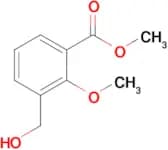
Methyl 3-(hydroxymethyl)-2-methoxybenzoate
CAS :Degré de pureté :95%Couleur et forme :SolidMasse moléculaire :196.2Nordalbergin
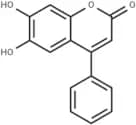
CAS :<p>Nordalbergin, a coumarin isolated from the bark of Dalbergia sissoo, can significantly induce the differentiation of HL-60 cells.</p>Formule :C15H10O4Degré de pureté :99.84% - 99.86%Couleur et forme :SolidMasse moléculaire :254.2427-Deoxyactein
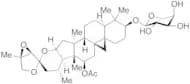
CAS :Produit contrôlé<p>Applications 27-Deoxyactein has shown stimulation of osteoblast function and inhibits bone resorbing mediators in the treatment of osteoporosis. It is a derivative of Actein (A191800), a gamma secretase modulators derived from botanicals.<br>References Choi, E. et al. J. App. Toxicol., 33, 190 (2010); Findeis, M. et al.: ACS. Chem. Neurosci., 3, 941 (2012); Einbond, L. et al.: Fund. Clin. Pharm., 23, 311 (2009);<br></p>Formule :C37H56O10Couleur et forme :NeatMasse moléculaire :660.83Triclosan (3',5',6'-d3) O-β-D-Glucuronide Sodium Salt
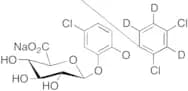
CAS :Produit contrôlé<p>Applications Triclosan (3',5',6'-d3) O-β-D-Glucuronide Sodium Salt is an isotope labelled compound of Triclosan O-β-D-Glucuronide Sodium Salt (T774260), a metabolite of Triclosan (T774250).<br>References Moss, T. et al.: Food Chem. Toxicol., 38, 361 (2000); Wu, J. et al.: Sepu, 27, 724 (2009);<br></p>Formule :C18D3H11Cl3NaO8Couleur et forme :NeatMasse moléculaire :490.666Cannflavin A
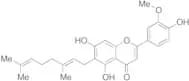
CAS :Produit contrôlé<p>Stability Light Sensitive<br>Applications Cannflavin A exhibits cyclooxygenase and lipoxygenase inhibition; some of its constituents have anti-inflammatory therapeutic potential.<br>References Evans, A.; et al.: Biochem. Pharmacol, 36, 2035 (1987)<br></p>Formule :C26H30O6Couleur et forme :Off-White To Light YellowMasse moléculaire :438.5128Diosmetin 3',7-Diglucuronide-d3
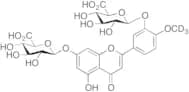
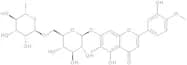
CAS :Produit contrôlé<p>Applications Diosmetin 3’,7-Diglucuronide-d3 is labelled Diosmetin 3’,7-Diglucuronide (D485040), a metabolite of Diosmetin (D485000) which is a flavonoid often administered in the treatment of chronic venous insufficiency, hemorrhoids, and related affections.<br>References Silverstro, L., et al.: Anal. Bioanal. Chem., 405, 8295 (2013); Boutin, J., et al.; Drug Metab. Dispos., 21, 1157 (1993)<br></p>Formule :C28H25D3O18Couleur et forme :NeatMasse moléculaire :655.536-Iodo Diosmin (1 mg/mL in DMSO)
CAS :Produit contrôléFormule :C28H31IO15Couleur et forme :Single SolutionMasse moléculaire :734.44Silychristin
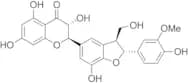
CAS :<p>Applications Silychristin is a new natural product has been isolated from silymarin, the hepatoprotective extract of milk thistle (Silybum marianum) fruits. Silychristin has been shown to be an antihepatotoxic flavonolignan.<br>References Smith, W.A., et al.: Planta. Med., 71, 877 (2005); Hong, L., et al.: Process. Biochem., 45, 799 (2010); Hitoshi, T., et al.: J. Chem. Soc., 11, 749 (1988);<br></p>Formule :C25H22O10Couleur et forme :White To Off-WhiteMasse moléculaire :482.44Triclosan O-Sulfate Sodium Salt
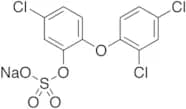
CAS :Produit contrôlé<p>Stability Hygroscopic, Moisture Sensitive<br>Applications Triclosan O-Sulfate is a metabolite of the bacteriostat, Triclosan (T774250).<br>References Wu, J. et al.: Sepu, 27, 724 (2009);<br></p>Formule :C12H6Cl3NaO5SCouleur et forme :NeatMasse moléculaire :391.592-Chloro-3,5-dimethylphenol
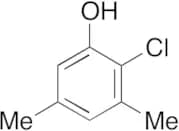
CAS :Produit contrôlé<p>Applications 2-Chloro-3,5-dimethylphenol is an impurity in the synthesis of Chloroxylenol (C427950) an antiseptic and germicide. Chloroxylenol is used for mildew prevention. Chloroxylenol is also an antibacterial; antiseptic (topical and urinary).<br>References Heberer, T., et al.: Toxicol. Lett., 131, 5 (2002), Nikolaou, A., et al.: Anal. Bioanal. Chem., 387, 1225 (2007), Focazio, M., et al.: Sci. Total Environ., 402, 201 (2008), Miege, C., et al.: Environ. Pollut., 157, 1721 (2009),<br></p>Formule :C8H9ClOCouleur et forme :White To Light Orange Colour Light BrownMasse moléculaire :156.614-Amino-3,5-xylenol
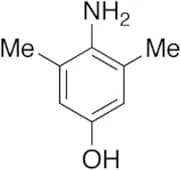
CAS :Produit contrôlé<p>Applications A major Lidocaine metabolite.<br> Not a dangerous good if item is equal to or less than 1g/ml and there is less than 100g/ml in the package<br>References Falany, C., et al.: Drug Metab. Disposition, 27, 1057 (1999), Gan, J., et al.: Chem. Res. Toxicol., 14, 672 (2001), Lienert, J., et al.: Envir. Sci. Technol., 41, 4471 (2007),<br></p>Formule :C8H11NOCouleur et forme :NeatMasse moléculaire :137.18rac Secoisolariciresinol Diglucoside
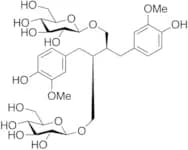
CAS :Produit contrôlé<p>Applications Secoisolariciresinol diglucoside (SDG) is a lignan found in flaxseed and is an emerging source in the functional food area. Flaxseed is the richest source of the lignan secoisolariciresinol diglucoside (SDG). SDG metabolites may protect against CVD and the metabolic syndrome by reducing lipid and glucose concentration, lowering blood pressure, and decreasing oxidative stress and inflammation.<br>References Lucas, E., et al.: J. Clin. Endocrinol Metab., 87, 1527 (2002), Choo, W., et al.: J. Food Compost. Anal., 20, 202 (2007), Sicilia, T., et al.: J. Agric. Food Chem., 51, 1181 (2003),<br></p>Formule :C32H46O16Couleur et forme :NeatMasse moléculaire :686.70Genistein-2’,6’-d2
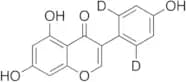
CAS :Produit contrôlé<p>Applications Exhibits specific inhibitory activity against tyrosine kinases,including autophosphorylation of epidermal growth factor receptor kinase (IC50 - 2.6uM). Also inhibits other protein kinases through competitive inhibition of ATP. Inhibits tumor cell proliferation and induces tumor cell differentiation. Produces cell-cycle arrest and apoptosis in Jurat T-leukemia cells. However, it prevents anti-CD3 monoclonal antibody-induced thymic apoptosis. Genistein also inhibits topoisomerase II activity in vitro. Genistein has also been shown to inhibit the action of GABA on recombinant GABAA receptors2. uv(max)ethanol: 262.5 nm (e= 138). moderately sol. in hot alcohol<br>References Akiyama, T., et al.: J. Biol. Chem., 262, 5592 (1987), O'Dell, T.J., et al.: Nature, 353, 588 (1991), Aharonovits, O., et al.: Biochim Biophys. Acta, 1112, 181 (1992), Platanias, L.C., et al.: J. Biol. Chem., 267, 24053 (1992), Yoshida, H., et al.: Biochim. Biophys. Acta, 1137, 321 (1992), Uckun, F.M., et al.: Science, 267, 886 (1995)Merck Index 12th ed. 43952. Huang, R.Q.; Fang, M.J.; Dillon, G.H., Mol. Brain Res. 67: 177-183 (1999)<br></p>Formule :C152H2H8O5Couleur et forme :NeatMasse moléculaire :272.25Dihydroresveratrol
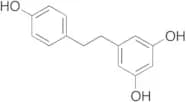
CAS :Produit contrôlé<p>Applications Dihydroresveratrol is a natural phytoestrogen.<br></p>Formule :C14H14O3Couleur et forme :NeatMasse moléculaire :230.26Urolithin B Glucuronide
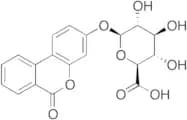
CAS :Produit contrôlé<p>Stability Light Sensitive<br>Applications Urolithin B Glucuronide counteracts trimethylamine-N-oxide (TMAO)-induced cell damage and other detrimental effects of the cardiovascular systems triggered by TMAO.<br>References Savi, M., et al.: Molecules, 23, 549 (2018)<br></p>Formule :C19H16O9Couleur et forme :NeatMasse moléculaire :388.3249Di-(tert-Butyl-dimethylsilyl) Curcumin
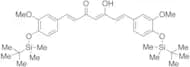
CAS :Produit contrôlé<p>Applications Protected Curcumin (C838500). A natural phenolic compound. Potent anti-tumor agent having anti-inflammatory and anti-oxidant properties. Induces apoptosis in cancer cells and inhibits phorbol ester-induced protein kinase C (PKC) activity. Reported to inhibit production of inflammatory cytokines by peripheral blood monocytes and alveolar macrophages. Potent inhibitor of EGFR tyrosine kinase and IκB kinase. Inhibits inducible nitric oxide synthase (iNOS), cycloxygenase and lipoxygenase. Easily penetrates into the cytoplasm of cells, accumulating in membranous structures such as plasma membrane, endoplasmic reticulum and nuclear envelope.<br>References Srinivasan, et al.: J. Pharm. Pharmacol., 5, 448 (1953), Tu, B., et al.: J .Cell Biol., 164, 341 (2004), Xu, G., et al.: Biochemistry, 44, 9817 (2005), Johnson, J., et al.: Cancer Lett., 255, 170 (2007),<br></p>Formule :C33H48O6Si2Couleur et forme :NeatMasse moléculaire :596.9Khellin
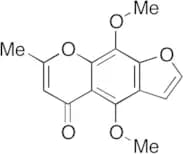
CAS :Produit contrôlé<p>Applications Khellin is a compound present in the kella or picktooth fruit, used as a muscle relaxant.<br>References Shinde, P. et al.: Indian J. Nat. Prod. Res., 5, 40 (2014); Sztiller-Sikorska, M. et al.:<br></p>Formule :C14H12O5Couleur et forme :Off-White To Light YellowMasse moléculaire :260.24Methyl trans-Cinnamate
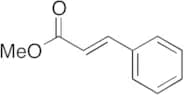
CAS :Produit contrôlé<p>Applications Methyl trans-Cinnamate is one of the odour active compounds of Tahitian vanilla flavour and basil oil. Methyl trans-Cinnamate is naturally found in Magnolia liliflora oil, which is used to create a variety of nematicides. Methyl trans-Cinnamate also inhibits mushroom tyrosinase and has antimicrobial effects against Escherechia coli in food.<br>References Adams, A., et al.: J. Am. Oil Chem. Soc., 88, 201 (2011); Blank, A., et al.: Ind. Crop. Prod., 38, 93 (2012); Brunschwig, C., et al.: Food Res. Int., 46, 148 (2012); Huang, Q., et al.: J. Agr. Food Chem., 57, 2565 (2009)<br></p>Formule :C10H10O2Couleur et forme :NeatMasse moléculaire :162.19