Terpénoïdes et Dérivés
Les terpènoïdes, également appelés isoprénoïdes, sont des composés dérivés de l’isoprène (C₅H₈) et possèdent une structure basée sur la répétition de ces unités monomériques. Ils sont responsables des propriétés aromatiques de nombreuses plantes et présentent une large gamme d’activités biologiques, notamment antibactériennes, anti-inflammatoires et antioxydantes. Les dérivés des terpènoïdes incluent des composés tels que les caroténoïdes et les stéroïdes, qui jouent un rôle essentiel dans des processus biologiques comme la photosynthèse et la régulation hormonale. Ces composés sont largement utilisés dans l’industrie pharmaceutique, cosmétique et alimentaire en raison de leurs bienfaits thérapeutiques et de leurs propriétés sensorielles.
Chez CymitQuimica, nous proposons des terpènoïdes et leurs dérivés de haute pureté pour des applications en pharmacologie, cosmétique et biotechnologie.
3839 produits trouvés pour "Terpénoïdes et Dérivés"
Trier par
Degré de pureté (%)
0
100
|
0
|
50
|
90
|
95
|
100
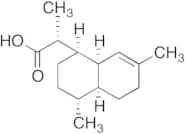
Dihydroartemisinic Acid
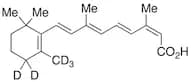
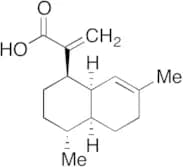
CAS :Produit contrôléFormule :C15H24O2Couleur et forme :NeatMasse moléculaire :236.3513-cis-Retinoic Acid-d5
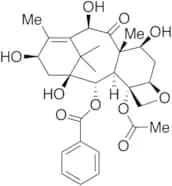
CAS :Produit contrôlé<p>Stability Light Sensitive, Temperature Sensitive<br>Applications Used as a treatment for severe acne. Presently being studied in conjuction with the treatment of photoaged skin.<br>References Lerche, C., et al.: Exp. Dermatol., 17, 972 (2008), Sato, T., et al.: J. Med. Chem., 51, 7705 (2008), Gan, J., et al.: Chem. Res. Toxicol., 22, 690 (2009), Macejova, D., et al.: Toxicol. Lett., 184, 114 (2009), Chen, P., et al.: Toxicol. App. Pharmacol., 234, 143 (2009),<br></p>Formule :C20D5H23O2Couleur et forme :NeatMasse moléculaire :305.46613-epi-10-Deacetyl Baccatin III
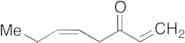
CAS :Produit contrôlé<p>Applications 13-epi-10-Deacetyl Baccatin III is a new analog of 10-Deacetylbaccatin III (D198250).<br>References Gabetta, B., et al.: J. Natural Products, 58, 1508 (1995),<br></p>Formule :C29H36O10Couleur et forme :NeatMasse moléculaire :544.59(Z)-Octa-1,5-dien-3-one (~0.1% Hydroquinone)
CAS :Produit contrôlé<p>Stability Volatile<br>Applications (Z)-Octa-1,5-dien-3-one is an odorant found in green tea, and palm wines.<br>References Katsuno, T., et. al.: Food Chem., 148, 388 (2014); Lasekan, O.: Molecules, 18, 11809 (2013)<br></p>Formule :C8H12ODegré de pureté :>80%Couleur et forme :NeatMasse moléculaire :124.182-Desbenzoyl-2-tiglyl Docetaxel
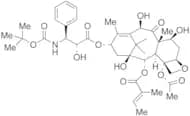
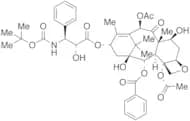
CAS :<p>Stability Hygroscopic<br>Applications Docetaxel (D494420) injection impurity A.<br>References Vasu Dev, R., et al.: J. Pharm. Biomed. Anal., 40, 614 (2006),<br></p>Formule :C41H55NO14Couleur et forme :White To Off-WhiteMasse moléculaire :785.87Artemisic Acid
CAS :<p>Applications Artemisic Acid is a derivative of Artemisinin (A777500), an antimalarial constituent of the tradional Chinese medicinal herb Artemisia annua L., Compositae, which has been known for almost 2000 years as Qinghao. Antimalarial.<br>References Klayman, D.L., et al.: Science, 228, 1049 (1985), Price, R.N., et al.: Expert Opin. Invest. Drugs, 9, 1815 (2000), Meshnick, S.R., et al.: Int. J., Parasitol., 32, 1655 (2002),<br></p>Formule :C15H22O2Couleur et forme :NeatMasse moléculaire :234.334-Keto 13-cis-Retinoic Acid-d3
CAS :Produit contrôlé<p>Stability Light Sensitive, Temperature Sensitive<br>Applications A labelled metabolite of Retinoic acid in neuroblastoma.<br>References Andreola, F., et al.: J. Biol. Chem., 279, 3434 (2004), Armstrong, J., et al.: Biochem. Pharmacol., 69, 1299 (2005), Njar, V., et al.: Bioorg. Med. Chem., 14, 4323 (2006), Veal, G., et al.: Br. J. Cancer, 96, 424 (2007),<br></p>Formule :C20H23D3O3Couleur et forme :NeatMasse moléculaire :317.444-Keto Retinol (~90%)
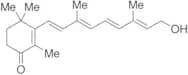
CAS :Produit contrôléFormule :C20H28O2Degré de pureté :~90%Couleur et forme :NeatMasse moléculaire :300.44Campesterol-d3 (Mixture of Diastereomers)
CAS :Produit contrôlé<p>Applications Labelled Campesterol (C155360). A phytosterol, which may inhibit the intestinal absorption of cholesterol.<br>References Fransen, H., et al.: J. Nut., 140, 1062 (2010), Kojoma, M., et al.: Plant Biotechnol., 27, 59 (2010), Orozco-Solano, M., et al.: J. Agric. Food Chem., 58, 7539 (2010),<br></p>Formule :C28D3H45OCouleur et forme :White To Off-WhiteMasse moléculaire :403.713-O-(Triethylsilyl) Baccatin III
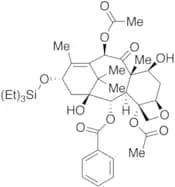
CAS :Produit contrôlé<p>Impurity Paclitaxel - In House Impurity<br>Applications Protected Baccatin III. Paclitaxel - In House Impurity.<br></p>Formule :C37H52O11SiCouleur et forme :NeatMasse moléculaire :700.89Lupeol-d3
CAS :Produit contrôlé<p>Applications Lupeol-d3 is the isotope labelled analog of Lupeol (L474850); a pentacyclic triterpene that is used as a therapeutic and chemopreventive agent for the treatment of inflammation and cancer.<br>References Geetha, T., et al.: J. Ethnopharmacol., 76, 77 (2001); Saleem, M., et al.: Cancer Lett., 285, 109 (2009)<br></p>Formule :C30H47D3OCouleur et forme :NeatMasse moléculaire :429.7410-Deacetyl-7-xylosyl Paclitaxel (62%)
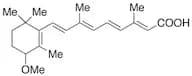
CAS :Produit contrôlé<p>Impurity Paclitaxel - In House Impurity<br>Stability Hygroscopic<br>Applications A metabolite of Paclitaxel (P132500). Paclitaxel - In House Impurity.<br>References Gut, I., et al.: Xenobiotica, 36, 772 ( 2006), Zhang, J., et al.: Drug Metab. Dispos., 36, 418 (2008), Li, S., et al.: J. Pharm. Biomed. Anal., 49, 81, (2009),<br></p>Formule :C50H57NO17Degré de pureté :62%Couleur et forme :NeatMasse moléculaire :943.984-Methoxy Retinoic Acid
CAS :Produit contrôlé<p>Applications: An impurity contained in samples of all trans-retinoic acid.<br>References Newton, D., et al.: Cancer Res., 40, 3413 (1980), Curley, R., et al.: Bioorg. Med. Chem. Lett., 2, 1133 (1992), Tanaka, H., et al.: Chem. Pharm. Bull., 43, 356 (1995), Patel, J., et al.: J. Med. Chem., 47, 6716 (2004),<br></p>Formule :C21H30O3Couleur et forme :Off White SolidMasse moléculaire :330.46Docetaxal
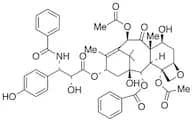
CAS :Produit contrôlé<p>Impurity Docetaxel EP Impurity G<br>Applications Docetaxal (Docetaxel EP Impurity G) is an impurity of Docetaxel (D494420), a semisynthetic derivative of Paclitaxel (P132500). Docetaxel is an antimitotic agent that promotes the assembly of micro-tubules and inhibits their de-polymerization to free tubulin.<br>References Zhu, Q.Q., et al.: J. Med. Chem., 40, 4319 (1997); Burkhart, C.A., et al.: Cancer. Res., 54, 5779 (1994); Ringel, I., et al.: J. Natl. Cancer Inst., 83, 288 (1991), Extra, J.-M., et al.: Cancer Res., 53, 1037 (1993)<br></p>Formule :C45H55NO15Couleur et forme :NeatMasse moléculaire :849.923-Hydroxy Midostaurin-13C6
CAS :Produit contrôlé<p>Stability Hygroscopic<br>Applications 3-Hydroxy Midostaurin-13C6 is the labelled analogue of 3-Hydroxy Midostaurin (H939985), a metabolite of Midostaurin (M343760), a compound shown to possess antiproliferative characteristics via inhibition of protein kinase C, kinase insert domain receptor, and c-kit.<br>References Tahtouh, T., et al.: J. Med. Chem., 55, 9312 (2012); Pedeboscq, S., et al.: PLoS. One., 7, 36811 (2012);<br></p>Formule :C2913C6H30N4O5Couleur et forme :NeatMasse moléculaire :592.594-Oxo-(9-cis,13-cis)-Retinoic Acid
CAS :Produit contrôlé<p>Stability Light Sensitive, Temperature Sensitive<br>Applications An oxo analogue of 9-cis,13-cis-Retinoic Acid (R245015): a major plasma metabolite of 9-cis Retinoic Acid (R245000).<br> Not a dangerous good if item is equal to or less than 1g/ml and there is less than 100g/ml in the package<br></p>Formule :C20H26O3Couleur et forme :NeatMasse moléculaire :314.4213-Acetyl-9-dihydrobaccatin-III
CAS :Produit contrôlé<p>Applications 13-Acetyl-9-dihydrobaccatin-III is an apoptosis inducer.<br></p>Formule :C33H42O12Couleur et forme :NeatMasse moléculaire :630.68Maytansinol
CAS :<p>Applications Maytansinol is used in the preparation of site-specific trastuzumab maytansinoid antibody-drug conjugates with improved therapeutic activity.<br>References Pillow, T.H., et. al.: J. Med. Chem., 57, 7890 (2014)<br></p>Formule :C28H37ClN2O8Couleur et forme :NeatMasse moléculaire :565.05Methoprene
CAS :Produit contrôlé<p>Applications Methoprene, is a juvenile hormone (JH) analog which can be used as an insecticide that acts as a growth regulator. Useful in cannabis testing kits as a component of pesticide mixes (P698235).<br> Not a dangerous good if item is equal to or less than 1g/ml and there is less than 100g/ml in the package<br>References Xiao-li, M., et al.: Nongyao, 52, 380 (2013); Anon.IP.com Journal, 12, 9 (2012);<br></p>Formule :C19H34O3Couleur et forme :Colourless To Light YellowMasse moléculaire :310.47