Acides Gras et Dérivés Lipidiques
32393 produits trouvés pour "Acides Gras et Dérivés Lipidiques"
3-[6-Chloro-4-(trifluoromethyl)pyridin-2-yl]benzoic acid
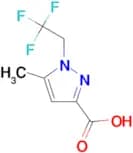
CAS :Degré de pureté :95.0%Couleur et forme :SolidMasse moléculaire :301.64999389648445-Methyl-1-(2,2,2-trifluoroethyl)-1H-pyrazole-3-carboxylic acid
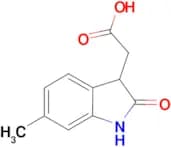
CAS :Degré de pureté :95.0%Masse moléculaire :208.13999938964844(6-methyl-2-oxo-2,3-dihydro-1H-indol-3-yl)acetic acid
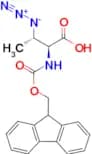
CAS :Degré de pureté :95.0%Masse moléculaire :205.21299743652344(2S,3S)-(Fmoc-amino)-3-azidobutyric acid
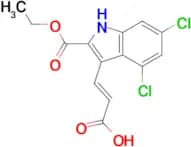
CAS :Degré de pureté :99.0%Masse moléculaire :366.377014160156253-(4,6-Dichloro-2-(ethoxycarbonyl)-1H-indol-3-yl)acrylic acid
CAS :Degré de pureté :95.0%Masse moléculaire :328.1499938964844(1R,4R)-rel-2-Benzyl-5-(tert-butoxycarbonyl)-2,5-diazabicyclo[2.2.1]heptane-3-carboxylic acid
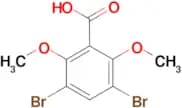
CAS :Masse moléculaire :332.43,5-Dibromo-2,6-dimethoxy-benzoic acid
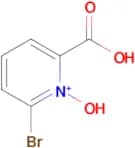
CAS :Degré de pureté :95.0%Masse moléculaire :339.96701049804692-BROMO-6-CARBOXY-1-OXO-1,2-DIHYDROPYRIDIN-1-IUM
CAS :Degré de pureté :95.0%Masse moléculaire :219.01300048828125Pitavastatin 3S,5R isomer calcium
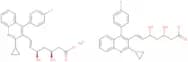
CAS :Pitavastatin 3S,5R isomer Calcium Salt is a potent inhibitor of cholesterol biosynthesis. It is marketed as the hemihydrate form under the trade name Pravacol and is used in the treatment of type 2 diabetes. Pitavastatin 3S,5R isomer Calcium Salt inhibits cholesterol biosynthesis by blocking HMG-CoA reductase, which converts 3-hydroxy-3-methylglutaryl coenzyme A (HMG-CoA) to mevalonate (MVA). The active metabolite, pitavastatin, binds to the regulatory region of HMG-CoA reductase and prevents it from converting MVA to HMG-CoA. This reduces the pool of HMG-CoA available for conversion to cholesterol. The inhibition of this enzyme slows down the production of cholesterol and decreases blood levels. It has been approved for use in adults with type 2 diabetes and for lowering highFormule :(C25H24FNO4)2•CaDegré de pureté :Min. 95%Couleur et forme :White/Off-White SolidMasse moléculaire :880.98 g/mol6-Epi pravastatin sodium
CAS :6-Epi pravastatin sodium salt is a synthetic compound with the same molecular formula and chemical structure as the natural product. It has been used in pharmacological studies, drug development, and research. 6-Epi pravastatin sodium salt is a metabolite of pravastatin.
Formule :C23H36O7•NaDegré de pureté :Min. 92.0 Area-%Masse moléculaire :447.51 g/molAtorvastatin methyl ester
CAS :Atorvastatin methyl ester is a statin drug that inhibits the synthesis of cholesterol and other lipids in the body. It is used to reduce high levels of low-density lipoprotein (LDL) cholesterol, which may lead to heart disease or stroke. Atorvastatin methyl ester has been shown to be effective in reducing the uptake of LDL cholesterol into cells by preventing the formation of LDL particles. This drug also decreases the production of biphosphate-containing phospholipids, which are essential for dendritic cell maturation. The crystalline polymorphs have been characterized by X-ray diffraction and microscopy. Impurities can be detected using ultraviolet spectroscopy, infrared spectroscopy, or nuclear magnetic resonance spectroscopy.
Formule :C34H37FN2O5Degré de pureté :Min. 95%Couleur et forme :PowderMasse moléculaire :572.67 g/molAtorvastatin epoxydione impurity
CAS :Atorvastatin epoxydione impurity (EPI) is a heptanoic, hydrate, diastereoisomer, racemic mixture, enantiomer and impurity of Atorvastatin. The EPI has been minimized in the formulation process by using a novel synthesis route that employs a chiral pyrrole derivative as an intermediate. This minimization has allowed for the elimination of the tautomer and other impurities present in the original compound.
Formule :C26H22FNO4Degré de pureté :Min. 95 Area-%Couleur et forme :White PowderMasse moléculaire :431.46 g/molAtorvastatin impurity F
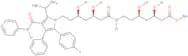
CAS :Atorvastatin impurity F is an impurity that can be found in atorvastatin. It is a white to off-white crystalline solid with a melting point of 142°C. It has a molecular weight of 273.5 and chemical formula of C14H13N3O2. This impurity can be found in atorvastatin as an API impurity, which may have an effect on the efficacy or toxicity of the drug product. Impurities are present in all pharmaceutical products and should be identified, characterized, and quantified for quality control purposes. Impurities are often unavoidable byproducts of the manufacturing process and can lead to potential safety concerns if they are not detected early on during drug development. The presence of impurities may also affect the pharmacological effects or therapeutic efficacy of the drug product.
Formule :C40H47FN3O8NaDegré de pureté :Min. 95%Couleur et forme :PowderMasse moléculaire :739.8 g/mol4-(Benzyloxy)butanoic acid
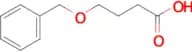
CAS :Formule :C11H14O3Degré de pureté :95%Couleur et forme :LiquidMasse moléculaire :194.23trans-4-(4-Chlorophenyl)cyclohexanecarboxylic acid
CAS :Degré de pureté :97%Masse moléculaire :238.713-(N-Phenyl-N-methyl)aminoacrolein
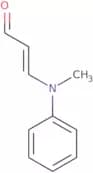
CAS :3-(N-Phenyl-N-methyl)aminoacrolein is a hydrophobic compound that has been shown to reversibly bind to serum albumin. This binding leads to a decrease in the lipid content of lipoproteins and a decrease in the rate of their metabolism. These effects are mediated by hydrophobic interactions with the hydrophobic regions of serum albumin. 3-(N-Phenyl-N-methyl)aminoacrolein also interacts with human serum albumin, which is involved in lipid transport and metabolism, and can be used as a contrast agent for X-ray diffraction studies.
Formule :C10H11NODegré de pureté :Min. 97 Area-%Couleur et forme :PowderMasse moléculaire :161.2 g/mol
![3-[6-Chloro-4-(trifluoromethyl)pyridin-2-yl]benzoic acid](/_next/image/?url=https%3A%2Fstatic.cymitquimica.com%2Fproducts%2F10%2Fthumb-webp%2FF317175.webp&w=3840&q=75)

![(1R,4R)-rel-2-Benzyl-5-(tert-butoxycarbonyl)-2,5-diazabicyclo[2.2.1]heptane-3-carboxylic acid](/_next/image/?url=https%3A%2Fstatic.cymitquimica.com%2Fproducts%2F10%2Fthumb-webp%2FF986861.webp&w=3840&q=75)