Détergents
Les détergents, classés sous les tensioactifs et détergents, sont des composés essentiels conçus pour réduire la tension superficielle dans divers produits, facilitant ainsi les processus de nettoyage et d'émulsification. Cette section comprend une large gamme de tensioactifs, connus pour leur grande efficacité à modifier les propriétés de surface. Parmi eux, les détergents zwitterioniques se distinguent par leur nature plus douce et non dénaturante, ce qui les rend idéaux pour les applications nécessitant une action douce mais efficace. Ces détergents sont cruciaux tant dans les environnements industriels que de laboratoire, où ils aident à nettoyer, émulsionner et stabiliser les produits sans compromettre leur intégrité. Leur polyvalence et leur efficacité les rendent indispensables dans de nombreuses applications, des produits de nettoyage domestiques aux réactifs de laboratoire spécialisés.
Sous-catégories appartenant à la catégorie "Détergents"
746 produits trouvés pour "Détergents"
Trier par
Degré de pureté (%)
0
100
|
0
|
50
|
90
|
95
|
100
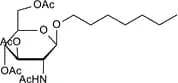
Heptyl 2-acetamido-3,4,6-tri-O-acetyl-2-deoxy-b-D-glucopyranoside
CAS :<p>Heptyl 2-acetamido-3,4,6-tri-O-acetyl-2-deoxy-b-D-glucopyranoside is a chemical compound that binds to the promoter region of genes and regulates their expression. It has been shown to regulate gene expression levels in a variety of cells, including humans. Heptyl 2-acetamido-3,4,6-tri-O-acetyl-2 deoxy -b D glucopyranoside binds to the promoter region of genes and alters their expression levels. The regulation of these genes can be used for research purposes or as a potential treatment for disease.</p>Formule :C21H35NO9Degré de pureté :Min. 95%Masse moléculaire :445.5 g/molNonanoyl-D-glucopyranoside
CAS :<p>Nonanoyl-D-glucopyranoside is a custom-synthesized carbohydrate that functions as a glycosylation and fluorination agent. Nonanoyl-D-glucopyranoside can be used to modify oligosaccharides, carbohydrates, or polysaccharides. This product has CAS No. 191039-78-8, is synthesized with high purity, and is available in both monosaccharide and disaccharide forms.</p>Formule :C15H28O7Degré de pureté :Min. 95%Masse moléculaire :320.38 g/mol1-Oxododecyl a-D-glucopyranoside
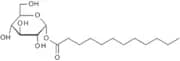
CAS :<p>1-Oxododecyl a-D-glucopyranoside is a synthetic, high purity, and complex carbohydrate that has been synthesized with methylation, saccharide, polysaccharide, click modification and modification. This product is custom synthesized to order for the synthesis of oligosaccharides. 1-Oxododecyl a-D-glucopyranoside is available in CAS No. 64395-91-1 and has been fluorinated for stability and modification.</p>Formule :C18H34O7Degré de pureté :Min. 95%Couleur et forme :White To Off-White SolidMasse moléculaire :362.46 g/molNonyl β-D-glucopyranoside
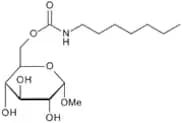
CAS :<p>Nonyl β-D-glucopyranoside is an alkylglycoside non-ionic mild detergent used for cell lysis and membrane protein isolation. As it is uncharged it is unlikely to cause protein denaturation or refolding issues, allowing for the isolation of intact macromolecular complexes without affecting protein-protein interactions. Nonyl β-D-glucopyranoside is useful for the solubilization and crystallization of many biological membrane proteins and isolation of membrane-bound proteins. It has also been used for enantiomeric separation by capillary electrophoresis. Nonyl β-D-glucopyranoside is also known as B-Nonylglucoside or Nonyl D-glucoside and has an aggregation number of 133. It is dialyzable from membrane protein preparations and has a Critical Micelle Concentration (CMC) of 6.5mM.</p>Formule :C15H30O6Degré de pureté :Min. 95%Couleur et forme :PowderMasse moléculaire :306.4 g/molMethyl 6-O-(N-heptylcarbamoyl)-a-D-glucopyranoside
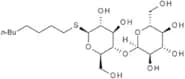
CAS :<p>Non-ionic surfactant; used to study membrane proteins</p>Formule :C15H29NO7Degré de pureté :Min. 97 Area-%Couleur et forme :White PowderMasse moléculaire :335.39 g/molOctyl b-D-thiomaltopyranoside
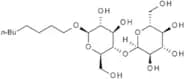
CAS :<p>Octyl b-D-thiomaltopyranoside is a colorless to yellow liquid with a sweet, malty odor. It is soluble in alcohol and ether. This product has been used as an analytical reagent in the analysis of sulfur compounds for GC/MS and LC/MS. It can be used to determine the concentration of dimethylsulfide (DMS) in marine systems. Octyl b-D-thiomaltopyranoside has also been used as a cycling agent for column chromatography, as well as an additive for animal injection compositions. Octyl b-D-thiomaltopyranoside is not toxic to animals at concentrations up to 2000 mg/kg body weight.</p>Formule :C20H38O10SDegré de pureté :Min. 95%Masse moléculaire :470.58 g/moln-Octyl β-D-maltoside
CAS :<p>n-Octyl β-D-maltoside (OBM) is a fatty acid that is used as a sample preparation agent. OBM is chemically stable and has been shown to be non-carcinogenic in mammalian tissue. The structural analysis of OBM revealed that the molecule contains two nitrogen atoms, one on each end. In addition, OBM binds to antimicrobial peptides and inhibits their activity by preventing them from binding to their target site on the bacterial membrane. OBM also has anti-cancer properties due to its ability to prevent the proliferation of cervical cancer cells.</p>Formule :C20H38O11Degré de pureté :Min. 98 Area-%Couleur et forme :White PowderMasse moléculaire :454.51 g/molN-Decanoyl-N-methylglucamine
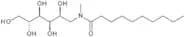
CAS :<p>N-Decanoyl-N-methylglucamine is a fatty acid that is used as a cationic surfactant in detergents and cleaning products. It has been shown to have conformational properties that can be influenced by the acyl chain length. N-Decanoyl-N-methylglucamine has also been shown to bind to antibodies and other proteins, which may lead to antibody response or changes in their conformation. N-Decanoyl-N-methylglucamine binds to receptors on cells, triggering cell lysis and monoclonal antibody production. The optimum pH for this chemical is between 5 and 6, and it has been shown to undergo titration calorimetry at temperatures greater than 100°C.</p>Formule :C17H35NO6Degré de pureté :Min. 95%Couleur et forme :White PowderMasse moléculaire :349.47 g/molHexadecyl b-D-maltopyranoside
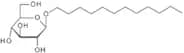
CAS :<p>Hexadecyl b-D-maltopyranoside is a lamellar liquid crystal composed of octadecanol and hexadecyl b-D-maltopyranoside. It is an inorganic, crystalline polymorph that forms monomers and micelles with surfactant properties. Hexadecyl b-D-maltopyranoside has been shown to transduce x-ray data, which can be used in techniques such as microscopy. The lamellar phase of this compound may be metastable and depend on additives.</p>Formule :C28H54O11Degré de pureté :Min. 95%Couleur et forme :PowderMasse moléculaire :566.72 g/molUndecyl b-D-glucopyranoside
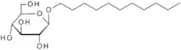
CAS :<p>Undecyl b-D-glucopyranoside is a potentiometer that can be used in fields such as modification and implementation. This compound has been shown to be stable and efficient, with a result that is implemented.</p>Formule :C17H34O6Degré de pureté :Min. 95%Couleur et forme :White to off-white solid.Masse moléculaire :334.45 g/molCYMAL-7 neopentyl glycol
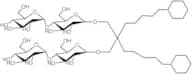
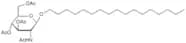
CAS :<p>CYMAL-7 neopentyl glycol is a custom synthesis and is not commercially available. It is a complex carbohydrate that has been modified by methylation, glycosylation, and carbamate formation. CYMAL-7 neopentyl glycol has been modified with a fluorination reaction to give it high purity. This product has CAS No. 1423310-08-0 and is classified as an Oligosaccharide or Polysaccharide.</p>Formule :C49H88O22Degré de pureté :Min. 98 Area-%Couleur et forme :PowderMasse moléculaire :1,029.21 g/molHeptadecyl 2-acetamido-3,4,6-tri-O-acetyl-2-deoxy-b-D-glucopyranoside
CAS :<p>Heptadecyl 2-acetamido-3,4,6-tri-O-acetyl-2-deoxy-b-D-glucopyranoside is a custom synthesis, fluorinated carbohydrate.</p>Formule :C31H55NO9Degré de pureté :Min. 95%Masse moléculaire :585.77 g/molDodecyl b-D-galactopyranoside
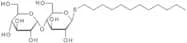
<p>Dodecyl b-D-galactopyranoside is a methylated sugar that can be used to modify glycoproteins and polysaccharides. Dodecyl b-D-galactopyranoside has been shown to be useful for the synthesis of complex carbohydrate oligosaccharides, as well as for click chemistry, which involves the use of copper (II) ions. This product is available in custom synthesis, high purity, and fluorination.</p>Formule :C18H36O6Degré de pureté :Min. 95%Masse moléculaire :348.48 g/molDodecyl b-D-thiomaltopyranoside
CAS :<p>Dodecyl b-D-thiomaltopyranoside is a surfactant that is used in the formulation of multilayer tablets. It is a glycosidic surfactant and an adsorbent. Dodecyl b-D-thiomaltopyranoside has been shown to form micelles in solution and on electrodes, with the size of the micelle depending on the concentration. The surface area of micelles can be increased by increasing the concentration of electrolytes. Dodecyl b-D-thiomaltopyranoside may also form monolayers at low concentrations, which are less effective for adsorption than micelles.</p>Formule :C24H46O10SDegré de pureté :Min. 95%Couleur et forme :PowderMasse moléculaire :526.68 g/moln-Dodecyl-β-D-glucopyranoside
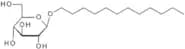
CAS :<p>Non-ionic detergent; solubilises membrane-bound proteins</p>Formule :C18H36O6Couleur et forme :White PowderMasse moléculaire :348.47 g/molOctyl D-glucuronide methyl ester
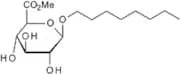
CAS :<p>Octyl D-glucuronide methyl ester is a modification of the oligosaccharide octyl glucuronide. Octyl D-glucuronide methyl ester is a white to off-white solid with a molecular weight of 787. It has been synthesized using a custom synthesis, and is available in high purity and with high purity. The CAS number for this compound is 1423035-40-8.</p>Formule :C15H28O7Degré de pureté :Min. 95%Couleur et forme :White PowderMasse moléculaire :320.39 g/molDecyl β-D-maltopyranoside
CAS :<p>Non-ionic detergent; solubilises proteins for SDS-PAGE analysis</p>Formule :C22H42O11Degré de pureté :Min. 97 Area-%Couleur et forme :White PowderMasse moléculaire :482.56 g/molHeptyl b-D-glucopyranoside
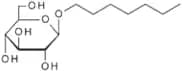
CAS :<p>Heptyl b-D-glucopyranoside is a natural product that belongs to the class of 5HT agonists. It was originally isolated from plants and has been shown to have antiinflammatory activity. It has also been observed to have effects on human serum, lymphocyte transformation, high salt, polymerase chain reaction (PCR), and kinetic energy. Heptyl b-D-glucopyranoside is synthesized by reacting heptanol with 5-hydroxybenzaldehyde in the presence of an acid catalyst.</p>Formule :C13H26O6Degré de pureté :Min. 95%Couleur et forme :White PowderMasse moléculaire :278.34 g/molAcidic Sophorolipids non-acetylated
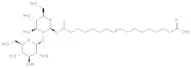
<p>Acidic Sophorolipids non-acetylated is a disaccharide consisting of β-1,2′ linked glucose residues with an unsaturated (cis-9) 18 carbon fatty acid chain. Acidic Sophorolipids are produced by various yeast species, notably Starmerella bombicola. Acidic Sophorolipids are amphiphilic molecules and therefore possess the attributes of surfactants; however as bio-surfactants they have several advantages over synthetic surfactants including low toxicity, biodegradability and the potential for low cost manufacture. The mixed acetylated version is also available.</p>Formule :C30H54O13Couleur et forme :White PowderMasse moléculaire :622.74 g/molTetradecyl b-D-glucopyranoside
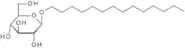
<p>Tetradecyl b-D-glucopyranoside is a glycosylated, fluorinated, modified monosaccharide that is synthesized by fusing the tetradecyl moiety to the hydroxyl group of a-D-glucopyranose. The synthesis is accomplished by click chemistry, which involves copper catalysis and an azide/alkyne cycloaddition. Tetradecyl b-D-glucopyranoside has been shown to inhibit the growth of Gram-positive bacteria when used in combination with antibiotics such as ampicillin and vancomycin. This compound also has been shown to have antimicrobial properties against mycobacterium tuberculosis.<br>Tetradecyl b-D-glucopyranoside is an excellent substrate for glycosylation reactions with various saccharides including glucose, maltose, lactose, galactose, and trehalose. It can also</p>Formule :C20H40O6Degré de pureté :Min. 95%Couleur et forme :PowderMasse moléculaire :376.53 g/mol