Détergents
Les détergents, classés sous les tensioactifs et détergents, sont des composés essentiels conçus pour réduire la tension superficielle dans divers produits, facilitant ainsi les processus de nettoyage et d'émulsification. Cette section comprend une large gamme de tensioactifs, connus pour leur grande efficacité à modifier les propriétés de surface. Parmi eux, les détergents zwitterioniques se distinguent par leur nature plus douce et non dénaturante, ce qui les rend idéaux pour les applications nécessitant une action douce mais efficace. Ces détergents sont cruciaux tant dans les environnements industriels que de laboratoire, où ils aident à nettoyer, émulsionner et stabiliser les produits sans compromettre leur intégrité. Leur polyvalence et leur efficacité les rendent indispensables dans de nombreuses applications, des produits de nettoyage domestiques aux réactifs de laboratoire spécialisés.
Sous-catégories appartenant à la catégorie "Détergents"
746 produits trouvés pour "Détergents"
Trier par
Degré de pureté (%)
0
100
|
0
|
50
|
90
|
95
|
100
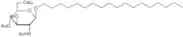
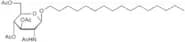
Octadecyl 2-acetamido-3,4,6-tri-O-acetyl-2-deoxy-b-D-glucopyranoside
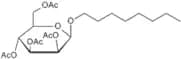
CAS :<p>Octadecyl 2-acetamido-3,4,6-tri-O-acetyl-2-deoxy-b-D-glucopyranoside is a synthetic monosaccharide that has been modified with a click chemistry. It is also known as octadecyl 2-(N′,N′′-(diacetoxyacetyl)-2′,3′,4′,6′-triacetyl)alpha,alpha″-(1″→4″→1″)dideoxygalactopyranosiduronic acid. This compound is an oligosaccharide that consists of a chain of three sugar units and may have a glycosylation site at either position 1 or 4. Octadecyl 2-(N′,N′′-(diacetoxyacetyl)-2’,3’,4’,6’-triacetyl)alpha,alpha”-(</p>Formule :C32H57NO9Degré de pureté :Min. 95%Masse moléculaire :599.8 g/molOctyl 2,3,4,6-tetra-O-acetyl-b-D-mannopyranoside
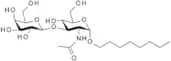
CAS :<p>Octyl 2,3,4,6-tetra-O-acetyl-b-D-mannopyranoside is a glycosylated monosaccharide. This sugar is synthesized by the enzymatic action of acetyl CoA:mannose 3-O-acetyltransferase and bromoacetamidomalonic acid in the presence of ATP. The product of this reaction is an acetamidomalonic acid derivative with a beta (1,2)-linked mannose at C2 and an acetylated alpha (1,3)-linked mannose at C4. The compound has been shown to inhibit the growth of bacteria that are resistant to penicillin, ampicillin, and erythromycin.</p>Formule :C22H36O10Degré de pureté :Min. 95%Masse moléculaire :460.52 g/molOctyl 2-acetamido-2-deoxy-3-O-(b-D-galactopyranosyl)-a-D-glucopyranoside
CAS :<p>Octyl 2-acetamido-2-deoxy-3-O-(b-D-galactopyranosyl)-a-D-glucopyranoside is a synthetic sugar that is used in the production of various drugs. It is used as an intermediate in the synthesis of a variety of drugs, including antihistamines, antidiabetic agents, and antihypertensive agents. Octyl 2-acetamido-2-deoxy-3-O-(b-D-galactopyranosyl)-a-D--glucopyranoside is also used to modify proteins and carbohydrates. This compound has been shown to be useful for the fluorination of saccharides and for click modification with an azide group.</p>Formule :C22H41NO11Degré de pureté :Min. 95%Masse moléculaire :495.56 g/molHexadecyl 2-acetamido-3,4,6-tri-O-acetyl-2-deoxy-b-D-glucopyranoside
CAS :<p>Hexadecyl 2-acetamido-3,4,6-tri-O-acetyl-2-deoxy-b-D-glucopyranoside (HAT) is an antibiotic that belongs to the class of macrolides. It has been shown to be heritable and its heritability is dependent on the type of animal species. HAT also has a basic structure with substituents that are either acidic or hydroxylated. The heterogeneity in this compound can be seen by the different lactation periods for different animals. Regression analysis was used to find out if there was a correlation between the lactation period and the basicity of HAT. This study found that there was no such correlation and therefore concluded that there is no relationship between HAT's basicity and its heritability.</p>Formule :C30H53NO9Degré de pureté :Min. 95%Masse moléculaire :571.74 g/molHexyl 2-acetamido-2-deoxy-b-D-glucopyranoside
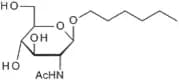
CAS :<p>Hexyl 2-acetamido-2-deoxy-b-D-glucopyranoside is a sugar that is used in the study of immune reactions. It can be used to measure albumin levels and tissue samples, as well as in animal experiments. Hexyl 2-acetamido-2-deoxy-b-D-glucopyranoside has been shown to have toxic effects on cells, which may be due to its ability to inhibit DNA concentrations. This substance also has a directional fluorescence, which means that it will emit light in one direction only when stimulated with light of a certain wavelength.</p>Formule :C14H27NO6Degré de pureté :Min. 95%Masse moléculaire :305.37 g/molOctyl 2-acetamido-3,4,6-tri-O-acetyl-2-deoxy-b-D-glucopyranoside
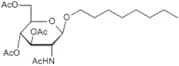
CAS :<p>Octyl 2-acetamido-3,4,6-tri-O-acetyl-2-deoxy-b-D-glucopyranoside is an antigen that is expressed in tumor tissue. It is a polynucleotide molecule that can be used for the diagnosis of cancer and autoimmune diseases. The octyl 2-acetamido-3,4,6-tri-O acetyl 2 deoxy b D glucopyranoside molecule is a programmable molecule that can be used to induce a specific phenotype in cells. Octyl 2 acetamido 3,4,6 tri O acetyl 2 deoxy b D glucopyranoside has been shown to be an effective antigen for the generation of CD8+ T cells.</p>Formule :C22H37NO9Degré de pureté :Min. 95%Masse moléculaire :459.53 g/mol2-(N-Octylcarboamido)phenyl-2-acetamido-2-deoxy-b-D-glucopyranoside
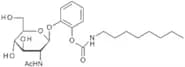
<p>2-(N-Octylcarboamido)phenyl-2-acetamido-2-deoxy-b-D-glucopyranoside is a modified carbohydrate which is used as a synthetic monosaccharide. It is also used in the preparation of Oligosaccharides, Carbohydrates, and Complex Carbohydrates. 2-(N-Octylcarboamido)phenyl-2-acetamido-2-deoxy-b-D--glucopyranoside has been fluorinated to 2-(N-[3,5-(diiodo)phenyl]carboamido)phenyl)-2-[3,5-(diiodo)phenyl]-acetamide.</p>Formule :C23H36N2O8Degré de pureté :Min. 95%Masse moléculaire :468.54 g/molOctyl 2-acetamido-2-deoxy-b-D-glucopyranoside
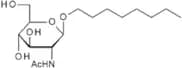
CAS :<p>Octyl 2-acetamido-2-deoxy-b-D-glucopyranoside is a lyotropic liquid that is flammable. It can be used to prepare potassium hydride, which is an organometallic. Potassium hydride reacts with organic acids and atorvastatin to produce argon gas. This reaction can be done in the presence of chlorine gas instead of air. Preparative methods for octyl 2-acetamido-2-deoxy-b-D-glucopyranoside include heating it in a vacuum or under argon gas and then reacting it with potassium tetrachlorocobaltate in water or ethanol solution.</p>Formule :C16H31NO6Degré de pureté :Min. 95%Masse moléculaire :333.42 g/molHeptyl b-D-thioglucopyranoside
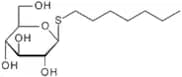
CAS :<p>Heptyl b-D-thioglucopyranoside is a small molecule that is used as a regulator of the phosphatase enzyme (PP1). PP1 is an important enzyme in the regulation of cellular signaling pathways. Heptyl b-D-thioglucopyranoside interacts with the regulatory domain of PP1, which is required for its activity. The ligand binds to an antenna on the regulatory domain and induces conformational changes in the protein, leading to increased phosphatase activity. This small molecule also has two binding sites for ATP and L-phenylalanine, which are required for its regulatory function.</p>Formule :C13H26O5SDegré de pureté :Min. 95%Masse moléculaire :294.41 g/molLauryl glucose neopentyl glycol
CAS :<p>Lauryl glucose neopentyl glycol is a sugar that is used in the synthesis of glycoconjugates. It is synthesized from lauryl alcohol and neopentyl glycol. Lauryl glucose neopentyl glycol can be modified with fluorine, glycosylation, methylation, or modification. This compound has been shown to have anti-inflammatory properties and to inhibit the growth of prostate cancer cells.</p>Formule :C31H60O12Degré de pureté :Min. 95%Masse moléculaire :624.8 g/mol4-Methylumbelliferyl α-L-idopyranosiduronic acid methyl ester
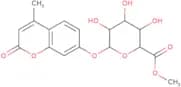
CAS :<p>Please enquire for more information about 4-Methylumbelliferyl α-L-idopyranosiduronic acid methyl ester including the price, delivery time and more detailed product information at the technical inquiry form on this page</p>Formule :C17H18O9Degré de pureté :Min. 95%Masse moléculaire :366.3 g/molN-Nonanoyl-N-methylglucamine
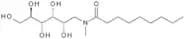
CAS :<p>N-Nonanoyl-N-methylglucamine is a nonionic surfactant that has been shown to be effective in the treatment of some inherited blood disorders. N-Nonanoyl-N-methylglucamine is used as a red cell membrane stabilizer and has been shown to increase the proton concentration in human serum. It also increases the transfer rate of p-nitrophenyl phosphate from erythrocytes to plasma. This drug has been found to have enzyme activity on soybean trypsin, model system, and epoxidase activity. N-Nonanoyl-N-methylglucamine has shown to be an effective protective agent against sodium citrate induced hemolysis and monoclonal antibody mediated cytotoxicity. It also shows kinetic data for protein synthesis and gene expression at different concentrations.</p>Formule :C16H33NO6Degré de pureté :Min. 95%Couleur et forme :PowderMasse moléculaire :335.44 g/molTetradecyl 2-acetamido-2-deoxy-b-D-glucopyranoside
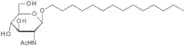
CAS :<p>Tetradecyl 2-acetamido-2-deoxy-b-D-glucopyranoside is a custom synthesis, modification, fluorination, methylation, monosaccharide and synthetic compound. It is the CAS No. 152914-69-7. It is a saccharide composed of glucose that has been glycosylated with tetradecyl acetate in the alpha position and aminated with ammonia in the beta position. This product is also classified as a complex carbohydrate.</p>Formule :C22H43NO6Degré de pureté :Min. 95%Masse moléculaire :417.58 g/molDecyl 2-acetamido-2-deoxy-b-D-glucopyranoside
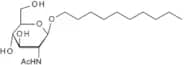
CAS :<p>Decyl 2-acetamido-2-deoxy-b-D-glucopyranoside is a glycoside that is found in the cell walls of photosynthetic organisms. It is one of the main sugars found in bacteria, fungi, and plants. In these organisms, it is linked to amino acids through amido bonds. Decyl 2-acetamido-2-deoxy-b-D-glucopyranoside has been shown to be a substrate for galactosidases, β-glycosidases, and α mannosidases. The thermal analysis of this compound shows an exothermic transition at around 200°C that may indicate its involvement in a chemical reaction. This compound also has lyotropic properties and can form micelles in water with high concentrations. The thermal parameters for this molecule are <br>T(transition) = 220°C<br>ΔH(transition) = -6 kcal/</p>Formule :C18H35NO6Degré de pureté :Min. 95%Masse moléculaire :361.47 g/molUndecyl 2-acetamido-3,4,6-tri-O-acetyl-2-deoxy-b-D-glucopyranose
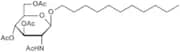
CAS :<p>Undecyl 2-acetamido-3,4,6-tri-O-acetyl-2-deoxy-b-D-glucopyranose is a custom synthesis and modification of a carbohydrate that is used as a saccharide. It can be found in polysaccharides and oligosaccharides. This product has been modified with fluorination, methylation, glycosylation, and carbonylation. Undecyl 2-acetamido-3,4,6-tri-O-acetyl-2-deoxyb -D -glucopyranose is not currently CAS No. 1737252401 but is available for purchase on request.</p>Formule :C25H43NO9Degré de pureté :Min. 95%Masse moléculaire :501.61 g/molDecanoyl-N-hydroxyethylglucamide
CAS :<p>Detergent with CMC of ~ 39mM</p>Formule :C18H37NO7Degré de pureté :Min. 95%Masse moléculaire :379.49 g/mol1,2-o-Isopropylidene-α-D-glucofuranose
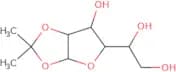
CAS :<p>1,2-o-Isopropylidene-α-D-glucofuranose is a potent inhibitor of xylan, which is essential for the growth and development of cancer cells. This compound has been shown to inhibit the activity of several kinases involved in cancer cell proliferation, including protein kinase C and acetylcholine kinase. 1,2-o-Isopropylidene-α-D-glucofuranose exhibits anticancer properties and induces apoptosis in human cancer cells. It is an analog of aprepitant, a drug used to prevent chemotherapy-induced nausea and vomiting in cancer patients. This compound may have potential as a therapeutic agent for the treatment of various types of tumors.</p>Formule :C9H16O6Degré de pureté :Min. 95%Masse moléculaire :220.22 g/molRhamnolipids C8-C8
CAS :<p>Rhamnolipids C8-C8 are a group of lipids that are produced by the bacterium Burkholderia cepacia. They have been shown to have a strong ability to bind to and remove substances from water, such as heavy metals, lignin, and polychlorinated biphenyls. Rhamnolipids C8-C8 can be used in industrial settings for wastewater treatment or in the environment for bioremediation of pollutants. The physicochemical properties of rhamnolipids C8-C8 are determined by their composition of fatty acids and their degree of unsaturation. These properties can vary depending on the origin of the bacteria producing them.</p>Formule :C22H40O9Degré de pureté :Min. 95%Masse moléculaire :448.55 g/mol1-Oxododecyl-D-glucopyranoside
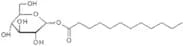
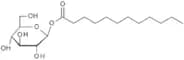
CAS :<p>1-Oxododecyl-D-glucopyranoside is a custom synthesis that contains an oligosaccharide and polysaccharide. The monosaccharides are modified with methylation, glycosylation, or fluorination. The complex carbohydrate is prepared by the click modification of a sugar. 1-Oxododecyl-D-glucopyranoside is synthesized with high purity and high quality. It can be used in medicine as an anti-inflammatory drug and for treatment of diabetes.</p>Formule :C18H34O7Degré de pureté :Min. 95%Couleur et forme :SolidMasse moléculaire :362.4 g/molHexyl b-D-thioglucopyranoside
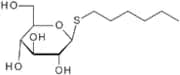
CAS :<p>Hexyl b-D-thioglucopyranoside is an insect pheromone that attracts male mealworms. It can be used for the detection of chiral elements, such as carbon and hydrogen. The profile of hexyl b-D-thioglucopyranoside is dynamically programmable and can be modified to detect different types of insects by changing the carbon skeleton. Hexyl b-D-thioglucopyranoside has been shown to have a strong electromagnetic activity, which may be due to its carbon skeleton.</p>Formule :C12H24O5SDegré de pureté :Min. 95%Couleur et forme :White To Off-White SolidMasse moléculaire :280.38 g/molDecyl glucose neopentyl glycol
CAS :<p>Decyl glucose neopentyl glycol is a molecule that is commonly used in cell-based assays to measure the hydrogen peroxide release by cells. It is also used to transport hydrogen peroxide, which is a reactive oxidative species, intracellularly and extracellularly. Decyl glucose neopentyl glycol has been shown to have a range of different isoforms in cellular systems. This allows it to be used as an effective fluorescent marker for the detection of hydrogen peroxide mediated events.</p>Formule :C35H68O12Degré de pureté :Min. 95%Masse moléculaire :680.91 g/molUndecanoyl-N-hydroxyethylglucamide
CAS :<p>Undecanoyl-N-hydroxyethylglucamide is a custom synthesis that has been modified with fluorination, methylation, and click modification. It has a carbohydrate chain of monosaccharides and oligosaccharides. The saccharide is glycosylated to form a complex carbohydrate.</p>Formule :C19H39NO7Degré de pureté :Min. 95%Masse moléculaire :393.52 g/molRhamnolipids C14-C14
CAS :<p>Rhamnose based 'green' surfactant</p>Formule :C34H64O9Degré de pureté :Min. 95%Couleur et forme :PowderMasse moléculaire :616.88 g/molUndecyl b-D-maltopyranoside
CAS :<p>Undecyl b-D-maltopyranoside is a cell culture reagent that belongs to the group of monomers. It is used in the synthesis of dodecyl maltoside and is also used as a substrate for bacterial enzymes. Undecyl b-D-maltopyranoside has been shown to inhibit the activity of leukotriene A4 hydrolase, an enzyme involved in the metabolism of leukotrienes. This product has been shown to be effective in chromatographic separation of metal ions from other components. Undecyl b-D-maltopyranoside can also be used for solubilizing peptides and proteins, including those that are neutral or have a low pH. This product is also used as a substrate for recombinant monoclonal antibodies and viral coat proteins.</p>Formule :C23H44O11Degré de pureté :Min. 95%Couleur et forme :PowderMasse moléculaire :496.59 g/molDodecyl a-D-glucopyranoside
CAS :<p>Dodecyl a-D-glucopyranoside is a fatty acid that is found in the form of dodecyl glucoside. It has been shown to be effective against infectious diseases, such as pneumococcal infections and influenza. Dodecyl a-D-glucopyranoside inhibits bacterial growth by preventing the synthesis of lipopolysaccharides, which are important for the cell wall structure of Gram-negative bacteria. Dodecyl a-D-glucopyranoside also inhibits monoclonal antibody production, which may be due to its ability to inhibit protein synthesis. In addition, dodecyl a-D-glucopyranoside is used as an adjuvant in vaccines against autoimmune diseases.</p>Formule :C18H36O6Degré de pureté :Min. 95%Couleur et forme :PowderMasse moléculaire :348.47 g/molNonyl b-D-thioglucopyranoside
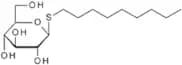
CAS :<p>Nonyl b-D-thioglucopyranoside is a methylating agent that can be used in the synthesis of oligosaccharides and polysaccharides. This compound is a fluorinated sugar that is used as an intermediate in the synthesis of saccharide derivatives. Nonyl b-D-thioglucopyranoside is also a highly pure, stable chemical that has been modified to meet customer specifications. It can be used for the preparation of glycosyl fluorides, which are used to modify monosaccharides and other carbohydrates.</p>Formule :C15H30O5SDegré de pureté :Min. 95%Masse moléculaire :322.46 g/molOctyl D-glucopyranoside
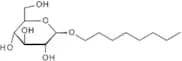
CAS :<p>Octyl D-glucopyranoside is a glucoside that is used as an analytical reagent. It has been shown to have detergent properties and can be used for the extraction of proteins. Octyl D-glucopyranoside also has a high binding affinity for guanine nucleotides, protein, and glycol ethers. The rate constant for the reaction between octyl D-glucopyranoside with the guanine nucleotide was found to be 0.25 x 10^(-5) s^(-1). This product can be used in biochemical research and chromatographic analysis.</p>Formule :C14H28O6Degré de pureté :Min. 98 Area-%Couleur et forme :White PowderMasse moléculaire :292.37 g/molPolysorbate 60
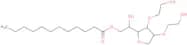
CAS :<p>Polysorbate 60 is a polyoxyethylene-polyoxypropylene block copolymer that is composed of two different saturated fatty acid chains. It has been used as a surfactant and stabilizer in the manufacture of pharmaceuticals, foods, cosmetics, and other products. Polysorbate 60 has been shown to inhibit the growth of epidermal cells by binding to epidermal growth factor (EGF) receptors on the cell surface. The effects of polysorbate 60 are also mediated through hydrogen bonding with the EGF receptor. The pharmacokinetic properties of polysorbate 60 have been studied in vitro using human serum. This polymer is used as an excipient in solid dispersions for oral administration and can be administered intravenously or subcutaneously. Polysorbate 60 is chemically stable at acidic pH levels and hydrochloric acid does not affect its structure. Polysorbate 60 also has protease activity against trypsin at high temperatures,</p>Formule :C64H126O26Degré de pureté :Min. 95%Couleur et forme :Light (Or Pale) Yellow To Yellow Solid Or Liquid (May Vary)Masse moléculaire :1,311.67 g/molTween 65
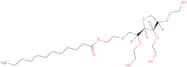
CAS :<p>Tween 65 is a polyoxyethylene sorbitan monooleate (polysorbate) surfactant that is used as a film-forming polymer and dispersing agent in solid preparations. Tween 65 has been shown to inhibit the proliferation of prostate cancer cells, which may be due to its ability to bind to anti-prostate specific antigen (anti-pcsk9) antibody causing the antibody to aggregate and form a particle. This process inhibits the interaction between the antibody and its target, preventing it from binding with PCSK9 protein. The addition of propranolol hydrochloride has been shown to increase the effectiveness of Tween 65.</p>1-Oxododecyl β-D-glucopyranoside
CAS :<p>1-Oxododecyl β-D-glucopyranoside is a synthetic compound that is used as an intermediate in the synthesis of oligosaccharides, monosaccharides, saccharides, and other carbohydrates. It has a purity of >98% and can be custom synthesized to meet your specifications. 1-Oxododecyl β-D-glucopyranoside is also available for purchase with fluorination, glycosylation, and methylation modifications. The CAS number for this product is 64395-92-2.</p>Formule :C18H34O7Degré de pureté :Min. 95 Area-%Couleur et forme :PowderMasse moléculaire :362.46 g/molOleylamine, min. 95%
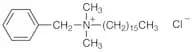
CAS :<p>Oleylamine, min. 95%</p>Formule :CH3(CH2)7CHCH(CH2)7CH2NH2Degré de pureté :min. 95%Couleur et forme :colorless liq.Masse moléculaire :267.49Benzylcetyldimethylammonium Chloride
CAS :Formule :C25H46ClNDegré de pureté :>97.0%(HPLC)Couleur et forme :White to Almost white powder to crystalineMasse moléculaire :396.10Dodecyldimethyl(3-sulfopropyl)ammonium Hydroxide Inner Salt [for Biochemical Research]
CAS :Formule :C17H37NO3SDegré de pureté :>98.0%(HPLC)(N)Couleur et forme :White to Almost white powder to crystalMasse moléculaire :335.55Propylene Glycol Dicaprylate/Dicaprate
CAS :Fatty substances of animal or vegetable orgin and mixtures thereof not elsewhere specified or includedFormule :C10H20O2·C8H16O2·C3H8O2Couleur et forme :Colorless OilMasse moléculaire :392.31379Polyoxyl 20 Stearyl Ether
CAS :Polyethers, nesoiFormule :(C2H4O)nC18H38OCouleur et forme :SolidMasse moléculaire :314.5463Polyglyceryl 3 Diisostearate
CAS :Polyethers, nesoiFormule :C18H36O2(C3H8O3)xCouleur et forme :Yellow LiquidOleoyl Polyoxylglycerides
Fatty substances of animal or vegetable orgin and mixtures thereof not elsewhere specified or includedCouleur et forme :Clear Amber LiquidGlyceryl Monolinoleate
CAS :Oleic, linoleic or linolenic acidsFormule :C21H38O4Couleur et forme :Yellow Liquid May Solidify At Room TemperatureMasse moléculaire :354.277014,4,5,5,6,6,7,7,8,8,9,9,10,10,11,11,11-Heptadecafluoroundecanoic acid
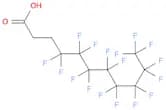
CAS :Formule :C11H5F17O2Degré de pureté :97%Couleur et forme :SolidMasse moléculaire :492.12911-Dodecanaminium, N,N-dimethyl-N-(2-phenoxyethyl)-, bromide
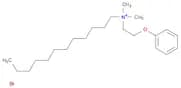
CAS :Formule :C22H40BrNODegré de pureté :97%Couleur et forme :SolidMasse moléculaire :414.4631Dodecanoic acid, 2,2,3,3,4,4,5,5,6,6,7,7,8,8,9,9,10,10,11,11,12,12,12-tricosafluoro-
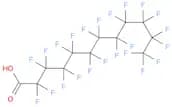
CAS :Formule :C12HF23O2Degré de pureté :95%Couleur et forme :SolidMasse moléculaire :614.0984Trimethylstearylammonium Chloride
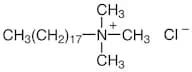
CAS :Formule :C21H46ClNDegré de pureté :>98.0%(T)Couleur et forme :White powder to crystalMasse moléculaire :348.06Sodium Dodecylbenzenesulfonate (soft type) (mixture) (62%, wetted with Water)
CAS :Formule :C18H29NaO3SCouleur et forme :White or Colorless to Light yellow powder to lump to clear liquidMasse moléculaire :348.48Sodium Dodecylbenzenesulfonate (hard type) (mixture)
CAS :Formule :C18H29NaO3SDegré de pureté :>95.0%(T)Couleur et forme :White to Light yellow to Light orange powder to crystalMasse moléculaire :348.4823-(4-Nonylphenoxy)-3,6,9,12,15,18,21-heptaoxatricosan-1-ol
CAS :Formule :C31H56O9Couleur et forme :NeatNonadecafluorodecanoic Acid
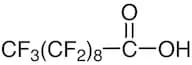
CAS :Formule :C10HF19O2Degré de pureté :>98.0%(T)Couleur et forme :White to Almost white powder to crystalineMasse moléculaire :514.09






![Dodecyldimethyl(3-sulfopropyl)ammonium Hydroxide Inner Salt [for Biochemical Research]](/_next/image/?url=https%3A%2Fstatic.cymitquimica.com%2Fproducts%2F3B%2Fthumb-webp%2FD3860.webp&w=3840&q=75)