Monosaccharides
Sous-catégories appartenant à la catégorie "Monosaccharides"
- Alloses(11 produits)
- Arabinoses(21 produits)
- Erythroses(11 produits)
- Fructoses(9 produits)
- Fucoses(36 produits)
- Galactosamine(41 produits)
- Galactoses(261 produits)
- Glucoses(365 produits)
- Acides glucuroniques(52 produits)
- Glyco-substrats pour l'enzyme(78 produits)
- Guloses(6 produits)
- Idoses(4 produits)
- Inositols(15 produits)
- Lyxoses(4 produits)
- Mannoses(65 produits)
- O-Glycanes(48 produits)
- Psicoses(3 produits)
- Rhamnoses(10 produits)
- Ribos(61 produits)
- Acides sialiques(100 produits)
- Sorboses(4 produits)
- Sucres(173 produits)
- Tagatoses(4 produits)
- Taloses(8 produits)
- Xyloses(20 produits)
6088 produits trouvés pour "Monosaccharides"
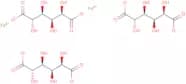
Iron sucrose - 20% Iron
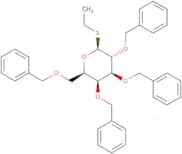
CAS :Iron sucrose is a form of iron that is used in the treatment of iron deficiency anemia. Iron sucrose is administered orally and absorbed in the small intestine. The amounts of iron absorbed are not sufficient to correct the underlying cause of iron deficiency anemia, but can be used as a substitute for oral iron therapy. Iron sucrose has been shown to be safe and effective in treating chronic bowel disease and may be useful in other diseases with inflammatory components, such as infectious diseases and inflammatory bowel disease. Iron sucrose may also be helpful for patients with congestive heart failure or nephrology dialysis who require supplemental erythropoietin.Formule :C12H22O11FeDegré de pureté :Min. 95%Masse moléculaire :398.14 g/molEthyl 2,3,4,6-tetra-O-benzyl-β-D-thiogalactopyranoside
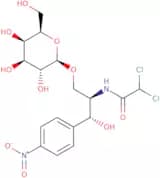
CAS :Synthetic building blockFormule :C36H40O5SDegré de pureté :Min. 95%Couleur et forme :White PowderMasse moléculaire :584.77 g/molChloramphenicol 1-O-β-D-galactopyranoside
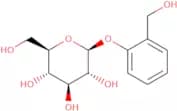
CAS :Chloramphenicol 1-O-b-D-galactopyranoside is an antibiotic that binds to the 50S ribosomal subunit and inhibits bacterial protein synthesis. It is a modified form of chloramphenicol, which has been chemically altered to make it more soluble in water. Chloramphenicol 1-O-b-D-galactopyranoside can be used for the treatment of infections caused by bacteria such as Mycobacterium avium complex, Clostridium perfringens, or Staphylococcus aureus. This drug is also used to protect against meningitis caused by H. influenzae type b and other Gram negative bacteria. Chloramphenicol 1-O-b-D-galactopyranoside is also used for the prevention of disease recurrence in patients with superficial bladder cancer who have had a partial cystectomy and are at high risk for tumor recurrenceFormule :C17H22N2O10Cl2Degré de pureté :Min. 95%Couleur et forme :PowderMasse moléculaire :485.27 g/molD-Salicin
CAS :D-Salicin is a naturally occurring compound, classified as a biologically active glycoside. It is acquired from the bark of willow trees, primarily species within the genus Salix. The primary mode of action of D-Salicin involves its metabolic conversion into salicylic acid within the human body. This conversion occurs in the gastrointestinal tract and bloodstream, ultimately displaying effects similar to non-steroidal anti-inflammatory drugs (NSAIDs).Formule :C13H18O7Degré de pureté :Min. 98 Area-%Couleur et forme :White Off-White PowderMasse moléculaire :286.28 g/molMethyl a-D-thiomannopyranoside
CAS :Methyl a-D-thiomannopyranoside is a synthetic, fluorinated carbohydrate. It is an intermediate in the synthesis of complex carbohydrates that contain saccharide and oligosaccharide moieties. Methyl a-D-thiomannopyranoside can be modified by glycosylation or methylation reactions to produce desired products.
Formule :C7H14O5SDegré de pureté :Min. 95%Couleur et forme :PowderMasse moléculaire :210.25 g/molD-Galactosamine hydrochloride - Synthetic origin
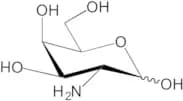
CAS :D-Galactosamine (GalN) is an aldohexose (2-Amino-2-deoxygalactose) in which the hydroxyl group at position 2 is replaced by an amino group (Collins, 2006). Galactosamine (as the N-Acetyl derivative) forms a key part of both N- and O-linked glycoproteins, glycolipids and glycosaminoglycans. Treatment of experimental animals with D-galactosamine / lipopolysaccharide causes lethal liver injury characterized by apoptosis of the hepatocyte and it is used as a laboratory model to study the effect of therapeutic agents (Hirono, 2001).Formule :C6H13NO5·HClDegré de pureté :Min. 98 Area-%Couleur et forme :White PowderMasse moléculaire :215.63 g/mol1,2:5,6-Di-O-isopropylidene-a-D-gulofuranose
CAS :Synthetic building blockFormule :C12H20O6Degré de pureté :Min. 98 Area-%Couleur et forme :White PowderMasse moléculaire :260.28 g/molGypsogenin-3-O-glucuronide
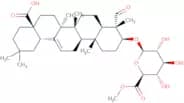
CAS :Gypsogenin-3-O-glucuronide is a saponin found in the roots of Gypsophila paniculata, a plant native to China. It has been shown to have anti-inflammatory and anti-tumor activities. Gypsogenin-3-O-glucuronide has been shown to inhibit tumor growth in mice by inhibiting protein synthesis. The pentasaccharides that make up gypsogenin are present in different proportions, which leads to differences in the biological activity of this compound. This is one of the reasons why saponins have not yet been fully explored for potential use in medicine.Formule :C37H56O10Degré de pureté :Min. 95%Couleur et forme :PowderMasse moléculaire :660.83 g/mol3,5-Dimethyl-D-fructose
3,5-Dimethyl-D-fructose is a glycosylation product of 3,5-dimethoxy-4-hydroxybenzoic acid and D-glucose. It can be synthesized by the reaction of 3,5-dimethoxy-4-hydroxybenzoic acid with D-glucose in the presence of sodium cyanoborohydride. This product has been used as a reactant in click chemistry and as a fluorinating agent for saccharides. 3,5-Dimethyl-D-fructose is a custom synthesis that can be ordered in high purity at CAS No. 52674-57-6.br>br>
3,5 - Dimethyl - D - fructose
is an oligosaccharide that is used as an intermediate in the synthesis of other sugars. This product has been shown to have antiinflammatory properties due to its inhibition of prostaglandin synthesis.brDegré de pureté :Min. 95%N-Azidoacetylmannosamine
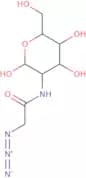
CAS :N-Azidoacetylmannosamine, also called ManNAz and 2-[(2-azidoacetyl)amino]-2-deoxy-D-mannose, is a click reagent for metabolic labelling of ManNAc. The azide is able to react with an alkyne in a 1,3-dipolar cycloaddition reaction (click chemistry) to enable linking to a fluorescent probe or a biotin. N-Azidoacetylmannosamine has been used in the chemical modification of glycoproteins to improve their in vivo efficacy and to label them for detection.Formule :C8H14N4O6Degré de pureté :Min. 90%Couleur et forme :White PowderMasse moléculaire :262.22 g/molCarrageenan
CAS :Carageenan is a mixture of gelling sulphated galactans extracted from red algae (typically Euchuma cottonii, Euchuma spinosum Mastocarpus stellata and Chondrus crispus). The structure of all carrageenans consists of a strictly alternating masked repeating unit of 1,3 linked α-D-galactose and 1,4 linked β-D-galactose with variable proportions of sulphate. The α-linked galactose residue occurs as α-3-6-anhydro-2-sulphate. The images were kindly provided by Prof Mike Guiry from Cork who runs ‘The Seaweed Site’.Couleur et forme :White PowderSunitinib N-glucuronide
Sunitinib N-glucuronide is a synthetic small molecule with a molecular weight of 517.63 Da and a chemical formula of C14H18F3N5O6S. Sunitinib N-glucuronide is a monosaccharide sugar that is modified with fluorine. It is one of the products of the methylation, custom synthesis, and click modification reactions. The CAS number for this product is 70698-74-7. Sunitinib N-glucuronide has a purity level of 98%, which means that it has less than 2% impurities. This product can be used in oligosaccharides, polysaccharides, or saccharides as a complex carbohydrate or high purity carbohydrate. It can also be used as an additive to modify the properties of monosaccharides and sugars.Degré de pureté :Min. 95%1,2:5,6-Di-O-cyclohexylidene-α-D-glucofuranose
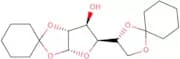
CAS :1,2:5,6-Di-O-cyclohexylidene-a-D-glucofuranose is a synthetic sugar which is used as a starting material for the synthesis of oligosaccharides and polysaccharides. This chemical is also used in the modification of glycosylation and carbohydrate. It can be used to synthesize high purity sugars, including monosaccharides and oligosaccharides. 1,2:5,6-Di-O-cyclohexylidene-a-D-glucofuranose is not fluorescent under UV light.Formule :C18H28O6Degré de pureté :Min. 95%Couleur et forme :White PowderMasse moléculaire :340.41 g/molb-D-Glucose - 85%
CAS :Glycol ethers are compounds that are used as solvents and plasticizers. They have been shown to inhibit the activity of enzymes, such as glucose-6-phosphate dehydrogenase, which is involved in the conversion of glucose to phosphate. Glycol ethers also promote sugar transport by inhibiting the sodium-dependent glucose transporter (SGLT). This transport mechanism is important for maintaining normal blood sugar levels and preventing diabetic neuropathy. Glycol ethers are also anti-diabetic agents that can increase insulin sensitivity by stimulating insulin release from pancreatic beta cells and improving the response of peripheral tissues to insulin stimulation.
Formule :C6H12O6Degré de pureté :Min. 95%Couleur et forme :White PowderMasse moléculaire :180.16 g/molL-Erythrono-1,4-lactone
CAS :L-Erythrono-1,4-lactone is a dicarboxylic acid that is synthesized from l-threonic acid and d-arabinose. L-Erythrono-1,4-lactone is biosynthesized by the conversion of l-serine to pyruvate and then to erythrose 4-phosphate. This compound is also produced by the oxidation of ascorbic acid and can be used for the synthesis of dermatan sulfates. The accumulation of L-Erythrono-1,4-lactone in high concentrations has been found in patients with dermatan sulfate deficiency.Formule :C4H6O4Degré de pureté :Min. 95%Couleur et forme :PowderMasse moléculaire :118.09 g/molMethyl 2,3-di-O-methyl-α-D-xylofuranoside
CAS :A useful xylose building blockFormule :C8H16O5Degré de pureté :Min. 95%Couleur et forme :PowderMasse moléculaire :192.21 g/mol(-)-isolariciresinol-2a-O-b-D-xylopyranoside
(-)-isolariciresinol-2a-O-b-D-xylopyranoside is a methylated saccharide that is used in the synthesis of complex carbohydrates. It is synthesized by reacting an aldehyde with an alcohol, and it has been modified using click chemistry. The product is purified to be at least 98% pure, and it can be custom synthesized to order. (-)-isolariciresinol-2a-O-b-D-xylopyranoside can be fluorinated for use as a fluorescent probe for various applications. It has a CAS number of 564964-92-1.
Degré de pureté :Min. 95%D-Galactose non-animal origin
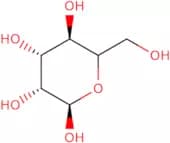
CAS :D-Galactose is a monosaccharide that is found in the cells of plants and animals. It can be synthesized from D-glucose by adding a D-galactose molecule to the alpha carbon of an existing glucose molecule. The resulting bond is called a glycosidic linkage. This process is called glycosylation. Glycosylation occurs when a sugar molecule reacts with another molecule, such as an amino acid, lipid, or nucleotide, to form what is known as a glycoside linkage. In this case, the sugar is D-galactose and the other molecules are either amino acids or lipids. The reaction between D-galactose and other molecules often results in polysaccharides and complex carbohydrates such as cellulose, chitin, and glycogen.
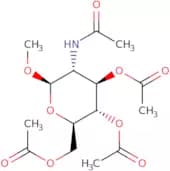
Methylation of D-galactose can produce methyl galactoside (CAS No. 1881-42-7), whichFormule :C6H12O6Degré de pureté :Min. 98 Area-%Masse moléculaire :180.16 g/molMethyl 2-acetamido-3,4,6-tri-O-acetyl-2-deoxy-β-D-glucopyranoside
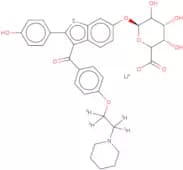
CAS :Methyl 2-acetamido-3,4,6-tri-O-acetyl-2-deoxy-β-D-glucopyranoside is an Oligosaccharide that is used in the preparation of complex carbohydrates. It has a CAS number of 2771-48-4 and can be synthesized using a custom synthesis. This product is available in high purity and monosaccharide form. It has been glycosylated and methylated as well as fluorinated and saccharified.Formule :C15H23NO9Degré de pureté :Min. 95%Couleur et forme :White Off-White PowderMasse moléculaire :361.34 g/molRaloxifene-6-D-glucuronide D4 lithium salt
Produit contrôléThis is a custom synthesis of an oligosaccharide with a 6-D-glucuronide D4 lithium salt. It is a complex carbohydrate that has been modified with methylation and glycosylation. This compound can be used as a synthetic intermediate for the production of other compounds or it can be used as a pharmaceutical agent.Formule :C34H30NO10SD4·LiDegré de pureté :Min. 95%Masse moléculaire :659.66 g/mol