Monosaccharides
Sous-catégories appartenant à la catégorie "Monosaccharides"
- Alloses(11 produits)
- Arabinoses(21 produits)
- Erythroses(11 produits)
- Fructoses(9 produits)
- Fucoses(36 produits)
- Galactosamine(41 produits)
- Galactoses(261 produits)
- Glucoses(365 produits)
- Acides glucuroniques(52 produits)
- Glyco-substrats pour l'enzyme(78 produits)
- Guloses(6 produits)
- Idoses(4 produits)
- Inositols(15 produits)
- Lyxoses(4 produits)
- Mannoses(65 produits)
- O-Glycanes(48 produits)
- Psicoses(3 produits)
- Rhamnoses(10 produits)
- Ribos(61 produits)
- Acides sialiques(100 produits)
- Sorboses(4 produits)
- Sucres(173 produits)
- Tagatoses(4 produits)
- Taloses(8 produits)
- Xyloses(20 produits)
6088 produits trouvés pour "Monosaccharides"
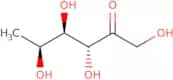
1-Deoxy-D- tagatofuranose
1-Deoxy-D-tagatofuranose is a sugar that is found in many plants. It is a monosaccharide with a carbohydrate group at the reducing end of the molecule. 1-Deoxy-D-tagatofuranose has been synthesized by Click chemistry, which enables selective modification of its hydroxyl groups. This sugar is methylated, glycosylated, and fluorinated to make it more stable and resistant to chemical degradation. 1-Deoxy-D-tagatofuranose has various applications such as use as a food additive and as a pharmaceutical drug in the treatment of cancer.Degré de pureté :Min. 95%Methyl 2-deoxy-D-ribofuranoside
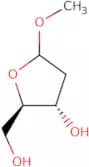
CAS :Methyl 2-deoxy-D-ribofuranoside is a methylglucoside that is synthesized by the reaction of thiourea with chloroacetic acid. The anomers of this compound are atypical and the product can be obtained in high yield (70%) by the use of chromatographic purification. This chemical has been used to produce a variety of compounds including carbamates, chloroacetamides, sulfonamides and others. Methyl 2-deoxy-D-ribofuranoside is also an intermediate for asymmetric synthesis. It can act as a catalyst for reactions involving alkali metals and nucleophiles such as chloride, hydantoin and dimethylformamide. The structure of this molecule has been determined by nmr spectroscopy and its 1H NMR spectrum is consistent with that predicted from its molecular formula.
Formule :C6H12O4Degré de pureté :Min. 95%Couleur et forme :Slightly Yellow Clear LiquidMasse moléculaire :148.16 g/molButyl b-D-glucopyranoside
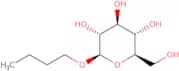
CAS :Butyl b-D-glucopyranoside is a fluorinated monosaccharide that is used in the synthesis of oligosaccharides and polysaccharides. It is also used as a synthetic sugar for glycosylation, methylation, and click modification reactions. Butyl b-D-glucopyranoside has been shown to be stable under both acidic and basic conditions and has a CAS number of 5391-18-4.Formule :C10H20O6Degré de pureté :Min. 95%Couleur et forme :White PowderMasse moléculaire :236.26 g/molN-Azidoacetylgalactosamine
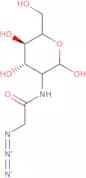
Click reagent for metabolic labeling of GalNAcFormule :C8H14N4O6Degré de pureté :Min. 98 Area-%Couleur et forme :White PowderMasse moléculaire :262.22 g/molMaltol glucoside
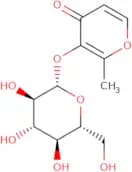
CAS :Maltol is a polyhydric alcohol that is a natural product of plants. Maltol glucoside is an oligomer of maltol that is formed by the glycosylation of maltol with glucose. This compound has been used as a diagnostic agent to detect lymphocyte transformation and bound form in viruses. It has also been shown to inhibit cancer cell growth, which may be due to its ability to interact with complex enzyme systems. Maltol glucoside has been shown to have anti-inflammatory effects in humans, which may be due to its inhibition of inflammatory enzymes such as cyclooxygenase-2 (COX-2) and lipoxygenase (LOX).Formule :C12H16O8Degré de pureté :Min. 95%Couleur et forme :PowderMasse moléculaire :288.25 g/molMethylanthranilate glucoside
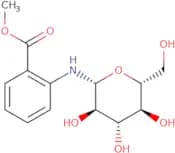
CAS :Methylanthranilate glucoside is a carbohydrate that is custom synthesized to order. It is a synthetic, high purity, methylated, glycosylated, and click-modified oligosaccharide. This product has CAS No. 1875079-80-3 and can be used in medical research for the identification of saccharides or glycans with a specific modification pattern.Formule :C14H19NO7Degré de pureté :Min. 95%Couleur et forme :PowderMasse moléculaire :313.3 g/molAllyl 4,6-O-benzylidene-L-glucopyranoside
Allyl 4,6-O-benzylidene-L-glucopyranoside is a modification of the carbohydrate allyl 4,6-O-benzylidene-D-glucopyranoside. This modification can be synthesized from benzyl alcohol and sodium hydroxide in the presence of sodium borohydride. Allyl 4,6-O-benzylidene-L-glucopyranoside is a monosaccharide with a CAS number of 159430-38-3. It is an important component of many polysaccharides and glycosides. This compound has been fluorinated to produce allyl 4,6-(difluoroacetoxy)-L glucopyranoside (CAS No. 160105).
Allyl 4,6 - O - benzyldene - L - glucopyranoside has high purity and is available for customFormule :C16H20O6Degré de pureté :Min. 95%Couleur et forme :White to off-white solid.Masse moléculaire :308.33 g/molN-Acetylneuraminic acid
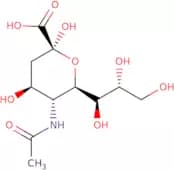
CAS :N-Acetylneuraminic acid (NANA or Neu5Ac), as the most common sialic acid, is a nine-carbon monosaccharide whose amino group is acetylated (Collins, 2006). Sialic acid is found across the animal kingdom and some prokaryotes. Sialic acid occurs as a component of oligosaccharides (N- and O-linked glycoproteins, glycolipids, human milk, blood groups), bacterial polysaccharides and glycoconjugates. Sialic acid is also found in free form in body fluids (Schauer, 1997).Formule :C11H19NO9Degré de pureté :Min. 98 Area-%Couleur et forme :White PowderMasse moléculaire :309.27 g/molMethyl 6-deoxy-β-D-glucopyranoside
CAS :Methyl 6-deoxy-b-D-glucopyranoside is a custom synthesis that produces methylated sugars. It is a high purity, complex carbohydrate with a molecular weight of 312.06 g/mol and CAS No. 6340-52-9. Methyl 6-deoxy-b-D-glucopyranoside is produced by the click modification of glucose, which is an oligosaccharide composed of six molecules of glucose linked together. This product has been used in the synthesis of polysaccharides and saccharides.Formule :C7H14O5Degré de pureté :Min. 95%Couleur et forme :PowderMasse moléculaire :178.18 g/molL-Fuculose - aqueous solution
CAS :Fuculose is a monosaccharide that is a constituent of fucose-containing glycoproteins. It is found in the blood and urine, as well as in various tissues, such as liver, lung, kidney, and spleen. The biological properties of L-fuculose are related to its ability to form hydrogen bonds with other molecules. Fuculose has been shown to be an effective activator for cutaneous lesions in mice models. The structural analysis of L-fuculose has revealed that it contains a reactive site for the synthesis of glycosaminoglycans and polysaccharides. Fuculose has also been shown to increase the proliferation of some cells, including corynebacterium glutamicum and human umbilical vein endothelial cells (HUVECs). This property may be due to its ability to activate growth factors or interfere with cell signaling pathways.
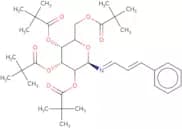
Formule :C6H12O5Degré de pureté :Min. 95%Couleur et forme :Clear LiquidMasse moléculaire :164.16 g/molN-(Phenyl-1-propenyl)imino-2,3,4,6-tetra-O-pivaloyl-D-glucopyranoside
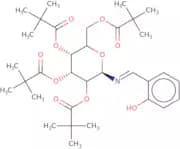
N-(Phenyl-1-propenyl)imino-2,3,4,6-tetra-O-pivaloyl-D-glucopyranoside (NPG) is a synthetic oligosaccharide. It is an Methylation and Click modification of the natural glycosylation product of glucose with pivalic acid. NPG has been shown to inhibit the Glycosylation enzyme by methylating it and preventing it to be able to catalyze the attachment of a sugar molecule to an amino acid residue. This inhibition prevents the production of complex carbohydrates in bacteria. NPG is also fluorinated at the 2,3,4,6 positions on the glucose ring which allows for better binding to bacterial cells. NPG has been shown to bind specifically to mycobacterial cell wall glycolipids and inhibit their synthesis as well as other bacterial cells such as staphylococcus aureus.Formule :C35H51NO9Degré de pureté :Min. 95%Masse moléculaire :629.78 g/molN-(2-Hydroxybenzyliden)imino-2,3,4,6-tetra-O-pivaloyl-b-D-glucopyranoside
The 2-hydroxybenzylidenimino-2,3,4,6-tetra-O-pivaloyl-b-D-glucopyranoside is a modification of the carbohydrates. It is an oligosaccharide that has been synthesized and it is a complex carbohydrate. This compound has a CAS No. and it is a monosaccharide. It is methylated and glycosylated and it can be used as a sugar or as a polysaccharide. This compound also has fluorination and saccharide modifications.Formule :C33H49NO10Degré de pureté :Min. 95%Masse moléculaire :619.74 g/moln-Octyl-β-D-thiogalactopyranoside
CAS :n-Octyl-beta-D-thiogalactopyranoside is a modification of the sugar Galactose. It is a mono saccharide that can be found in the form of an oligosaccharide or polysaccharide. The modification of the sugar is done by methylation, glycosylation and fluorination. n-Octyl-beta-D-thiogalactopyranoside has CAS No. 42891-16-7 and can be found on PubChem CID: 5135624.
Formule :C14H28O5SMasse moléculaire :308.44 g/mol5-Deoxy-iso-DMDP HCl
5-Deoxy-iso-DMDP HCl is a custom synthesis sugar that can be modified with Click chemistry. It is fluorinated, glycosylated, and methylated. The CAS number for 5-Deoxy-iso-DMDP HCl is 97790-10-2. This oligosaccharide has a molecular weight of about 607.5 Daltons and contains monosaccharides and saccharides. The carbohydrate complex has a molecular weight of about 1201 Daltons and includes complex carbohydrates such as polysaccharides, glycoproteins, glycogen, and polysaccharolytic enzymes.Degré de pureté :Min. 95%Isopropyl 2,3,4,6-tetra-O-acetyl-b-D-thiogalactopyranoside
CAS :Isopropyl 2,3,4,6-tetra-O-acetyl-b-D-thiogalactopyranoside is a carbohydrate that is a modification of the sugar galactose. It is a synthetic monosaccharide with a high purity and custom synthesis. The chemical modification includes fluorination and methylation. This compound has been shown to be effective in inhibiting bacterial growth and is used in the treatment of tuberculosis.Degré de pureté :Min. 95%Cyanidin-3-O-lathyroside chloride
CAS :Cyanidin-3-O-lathyroside chloride is a synthetic compound with antioxidant and anti-inflammatory effects. It is activated by the chloride ion, leading to increased bioavailability of the molecule. Cyanidin-3-O-lathyroside chloride has been shown to have anticancer properties, as well as an ability to activate calcium metabolism in cells. This compound also has a low bioavailability, which may be due to its hydrophobic nature and the fact that it is not orally active. This compound has been shown to be beneficial for cancer therapy because of its ability to inhibit cancer growth, induce apoptosis in cancer cells, and reduce tumor size. Cyanidin-3-O-lathyroside chloride has also been shown to have positive effects on fertility when taken at high doses orally.Formule :C26H29O15•ClDegré de pureté :Min. 95%Couleur et forme :PowderMasse moléculaire :616.95 g/molEthyl 3,5,6-tri-O-benzyl-D-glucofuranoside
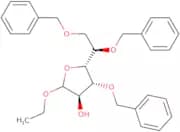
CAS :Ethyl 3,5,6-tri-O-benzyl-D-glucofuranoside is a modification of the natural carbohydrate D-glucose and has been synthesized by methylation. This product has a purity of 99% and is made up of three monosaccharides: D-glucose, D-mannose, and D-galactose. It also contains an oligosaccharide chain that consists of 6 sugar units. Ethyl 3,5,6-tri-O-benzyl-D-glucofuranoside is insoluble in water but soluble in acetone. The molecular weight of this product is 522.2 g/mol.Formule :C29H34O6Degré de pureté :Min. 95%Couleur et forme :Yellow Clear LiquidMasse moléculaire :478.58 g/molBenzyl 2-acetamido-4,6-O-benzylidene-2-deoxy-α-D-muramic acid
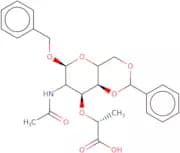
CAS :Benzyl 2-acetamido-4,6-O-benzylidene-2-deoxy-a-D-muramic acid is an analog of benzyl 2-acetamido-4,6-O-benzylidene-2,3,5,6 tetra deoxy a -D muramic acid. It is activated by ethyl bromoacetate and can be conjugated with various biological molecules such as proteins or peptides. The biological properties of this compound have been studied in bioassays. This analog has shown to have anticancer effects and also has anorectic effects in rats. It also inhibits the growth of cancer cells that are resistant to other anticancer drugs. Benzyl 2 acetamido 4,6 O benzylidene 2 deoxy a D muramic acid has also been shown to inhibit pancreatic tumor growth in mice without causing any toxicity to the pancreas.br> BenzFormule :C25H29NO8Degré de pureté :Min. 95%Couleur et forme :PowderMasse moléculaire :471.5 g/molD-Glucose-6-phosphate disodium salt dihydrate
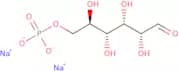
CAS :Glucose 6-phosphatase substrateFormule :C6H11Na2O9P·2H2ODegré de pureté :Min. 98%Couleur et forme :White PowderMasse moléculaire :340.13 g/mol(3-N-Boc-aminopropyl) 4,6-O-benzylidene-3-O-pivaloyl-b-D-galactopyranoside
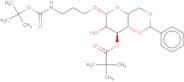
3-N-Boc-aminopropyl) 4,6-O-benzylidene-3-O-pivaloyl-b-D-galactopyranoside is a sugar that is custom synthesized. It is a fluorinated saccharide with an aminopropyl group at the 3' position and benzylidene group at the 6' position.Formule :C26H39NO9Degré de pureté :Min. 95%Masse moléculaire :509.59 g/mol