Monosaccharides
Les monosaccharides sont la forme la plus simple des glucides et servent de building blocks fondamentaux pour les sucres plus complexes et les polysaccharides. Ces molécules de sucre unique jouent des rôles critiques dans le métabolisme énergétique, la communication cellulaire et les composants structuraux des cellules. Dans cette section, vous trouverez une large gamme de monosaccharides essentiels pour la recherche en biochimie, biologie moléculaire et glycosciences. Ces composés sont cruciaux pour étudier les voies métaboliques, les processus de glycosylation et le développement d'agents thérapeutiques. Chez CymitQuimica, nous proposons des monosaccharides de haute qualité pour répondre à vos besoins de recherche, garantissant précision et fiabilité dans vos investigations scientifiques.
Sous-catégories appartenant à la catégorie "Monosaccharides"
- Alloses(11 produits)
- Arabinoses(21 produits)
- Erythroses(11 produits)
- Fructoses(9 produits)
- Fucoses(36 produits)
- Galactosamine(41 produits)
- Galactoses(261 produits)
- Glucoses(365 produits)
- Acides glucuroniques(51 produits)
- Glyco-substrats pour l'enzyme(77 produits)
- Guloses(6 produits)
- Idoses(4 produits)
- Inositols(15 produits)
- Lyxoses(4 produits)
- Mannoses(65 produits)
- O-Glycanes(48 produits)
- Psicoses(3 produits)
- Rhamnoses(10 produits)
- Ribos(61 produits)
- Acides sialiques(100 produits)
- Sorboses(4 produits)
- Sucres(173 produits)
- Tagatoses(4 produits)
- Taloses(8 produits)
- Xyloses(20 produits)
Affichez 17 plus de sous-catégories
6090 produits trouvés pour "Monosaccharides"
Trier par
Degré de pureté (%)
0
100
|
0
|
50
|
90
|
95
|
100
4-Hydroxypropofol-4-O-b-D-glucuronide
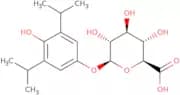
CAS :<p>4-Hydroxypropofol-4-O-b-D-glucuronide (HPG) is a synthetic carbohydrate with a 4,5-dihydroxypropyl group at C2 and an O-glycosidic bond between the hydroxyl group at C1 and the b position of a glucuronic acid. HPG is used in the synthesis of complex carbohydrates and saccharides. It can be methylated in order to produce 5,6-dimethoxycarbonyloxypropyl glycosides or glycosylated to produce mannosides. HPG has been synthesized by click modification from 4,5-dihydroxypropionic acid.</p>Formule :C18H26O8Degré de pureté :Min. 95%Masse moléculaire :370.4 g/mol6-O-tert-Butyldimethylsilyl-D-glucal
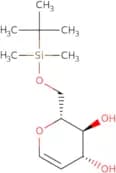
CAS :6-O-tert-Butyldimethylsilyl-D-glucal is a glycosyl compound that is produced from the reaction of ethyl diazoacetate and cyclopropanes. This process can be catalyzed by metal catalysts, such as palladium. The use of bromides in this reaction allows for the production of unsaturated compounds. This compound has been shown to undergo cyclopropanation with alkenes, leading to the synthesis of cyclopropanes. 6-O-tert-Butyldimethylsilyl-D-glucal is used as a precursor to other compounds, such as polymers and pharmaceuticals.Degré de pureté :Min. 95%1,2,3,4-Tetra-O-acetyl-D-xylopyranose
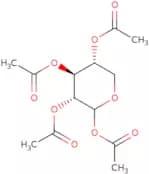
CAS :<p>1,2,3,4-Tetra-O-acetyl-D-xylopyranose is a molecule that is derived from D-xylose. It has been shown to inhibit the growth of fungi such as T. rubrum and L. candidum by acetylation of l-threonine at the C2 position. This molecule can be recycled and its inhibitory activity can be increased through acetylation of the hydroxymethyl group on the C4 position. The mechanism of inhibition is not known but it may be due to steric hindrance or peracylation.</p>Formule :C13H18O9Degré de pureté :Min. 95%Masse moléculaire :318.28 g/molEthyl a-D-thiomannopyranoside
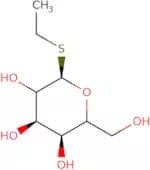
CAS :<p>Ethyl a-D-thiomannopyranoside is an oligosaccharide that is synthesized by the methylation of a-D-mannopyranoside. This product is also known as 3,6-O-(2-acetamido)-a-D-glucopyranose, which is a type of saccharide. It has been fluorinated for use in structural studies. The modification of this product includes click chemistry and glycosylation to produce a complex carbohydrate with high purity and high molecular weight. The monosaccharides include glucose, galactose, and mannose. This product has been used as a synthetic sugar to produce oligosaccharides or polysaccharides.</p>Formule :C8H16O5SDegré de pureté :Min. 95%Masse moléculaire :224.28 g/mol2,3,6-Tri-O-carboxymethyl-D-glucose
CAS :<p>2,3,6-Tri-O-carboxymethyl-D-glucose (TCMG) is a potent polyelectrolyte that can be used as an additive to cellulose. TCMG is synthesized by the reaction of 2,3,6-tri-O-carboxymethylcellulose with potassium bitartrate in acidic medium. TCMG has been shown to interact with cellulose and form a gel matrix. This reaction is due to the ionic interactions between the carboxyl groups in TCMG and the hydroxyl groups in cellulose. The conductimetric titration measurement shows that TCMGs have a constant value at pH 5.5, indicating that they are anionic polyelectrolytes. Potentiometric titration indicates that TCMGs are nonionic polyelectrolytes and the interaction between these two polymers is due to electrostatic forces.</p>Formule :C12H18O12Degré de pureté :Min. 95%Couleur et forme :White To Off-White SolidMasse moléculaire :354.26 g/molcis-Resveratrol 4'-O-b-D-glucuronide
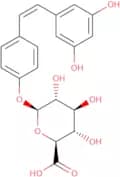
CAS :<p>cis-Resveratrol 4'-O-b-D-glucuronide is a synthetic compound that is a sugar, with a molecular weight of 598. It is an oligosaccharide and has been modified with fluorination on the C2 position. cis-Resveratrol 4'-O-b-D-glucuronide is the methylated form of resveratrol. It has been shown to have anti-inflammatory properties and can be used for the treatment of inflammation associated with arthritis, psoriasis, or septic shock. cis-Resveratrol 4'-O-b-D-glucuronide binds to polysaccharides in the body and inhibits their ability to bind to glycoproteins on cell surfaces. This results in a decrease in inflammation and other inflammatory responses that are mediated by these cells.</p>Formule :C20H20O9Degré de pureté :Min. 95%Masse moléculaire :404.37 g/mol5-Deoxy-3,4-di-O-methyl-D-ribose
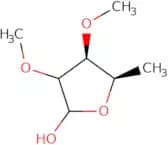
<p>5-Deoxy-3,4-di-O-methyl-D-ribose is a fluorinated monosaccharide that has been synthesized from D-ribose and 5-deoxyadenosine. It can be found in glycosylated polysaccharides or as the methylated derivative. This product is custom synthesized for research purposes, and is not intended for use in humans. It is available in high purity, with a CAS number of 6042-92-0.</p>Degré de pureté :Min. 95%Dabigatran acyl-b-D-glucuronide
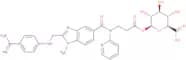
CAS :<p>Dabigatran acyl-b-D-glucuronide is a synthetic, high purity, high quality carbohydrate that has been modified by fluorination and methylation. It is an oligosaccharide with a glycosylation site at the reducing end of the sugar. Dabigatran acyl-b-D-glucuronide is a carbohydrate that can be synthesized in custom amounts for research purposes.</p>Formule :C31H33N7O9Degré de pureté :Min. 95%Masse moléculaire :647.64 g/molRamiprilat-D5 acyl-b-D-glucuronide
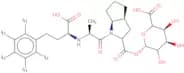
Produit contrôlé<p>Ramiprilat-D5 acyl-b-D-glucuronide is a synthetic, fluorinated, complex carbohydrate. It is a monosaccharide sugar that has been modified by methylation and Click chemistry to produce an elegant compound with a diverse range of applications. Ramiprilat-D5 acyl-b-D-glucuronide is synthesized in high purity, making it an ideal candidate for use in research. This molecule has been shown to be effective as a fluoroquinolone antibiotic against bacterial strains such as Mycobacterium tuberculosis, Mycobacterium avium complex, and Clostridium perfringens.</p>Formule :C27H31D5N2O11Degré de pureté :Min. 95%Masse moléculaire :569.61 g/mol4-(Hydroxymethyl)-1,2-O-isopropylidene-3-O-benzyl-beta-L-threo-pentofuranose
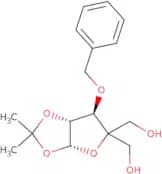
CAS :<p>4-(Hydroxymethyl)-1,2-O-isopropylidene-3-O-benzyl-beta-L-threo-pentofuranose is a synthetic fluorinated monosaccharide that can be used to produce oligosaccharides and polysaccharides. It is a custom synthesis that can be modified with methylation or click chemistry. This product has been shown to bind to proteins via glycosylation, which may be useful for protein analysis. 4-(Hydroxymethyl)-1,2-O-isopropylidene-3-O-benzyl-beta-L-threo pentofuranose is CAS No. 72261 44 00 and has a purity of >99%.</p>Formule :C16H22O6Degré de pureté :Min. 95%Masse moléculaire :310.34 g/mol2-Deoxy-1,3:4,5-di-O-isopropylidene-2-oxamoylamino-D-mannitol
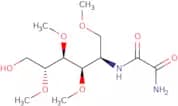
CAS :<p>2-Deoxy-1,3:4,5-di-O-isopropylidene-2-oxamoylamino-D-mannitol is a synthetic glycosylation building block that has been fluorinated and custom synthesized. It is used for the synthesis of oligosaccharides and polysaccharides. This product is also used for click modification and complex carbohydrate modification. 2-Deoxy-1,3:4,5-di-O-isopropylidene-2-oxamoylamino D mannitol has a CAS number of 128741–75–3.</p>Formule :C14H24N2O7Degré de pureté :Min. 95%Masse moléculaire :332.35 g/molMethyl 6-azido-6-deoxy-2,3-di-O-benzyl-a-D-glucopyranoside
CAS :<p>Methyl 6-azido-6-deoxy-2,3-di-O-benzyl-a-D-glucopyranoside is a custom synthesized compound that belongs to the group of glycosylation. It is an Oligosaccharide, sugar, Synthetic, Fluorination, Custom synthesis, Methylation, Monosaccharide, Polysaccharide and saccharide. This compound has CAS No. 54522-58-6 and a molecular weight of 598.29 g/mol. The purity level is >99% and the modification level is Click modification.</p>Formule :C21H25N3O5Degré de pureté :Min. 95%Masse moléculaire :399.18 g/molMethyl 2,4,6-tri-O-methyl-a-D-glucopyranoside
CAS :<p>Methyl 2,4,6-tri-O-methyl-a-D-glucopyranoside is a sugar that has been modified by the addition of a methyl group to the hydroxyl group at the C2 position. The chemical name for this sugar is methyl 2,4,6-tri-O-methyl-β--glucopyranoside. This modification of the sugar molecule can be achieved through either a Click or an Oligosaccharide synthesis approach.<br>Methyl 2,4,6-tri-O-methyl-a-D--glucopyranoside is used in various applications including as a synthetic intermediate for saccharides or as a carbohydrate building block for glycosylations. Methyl 2,4,6--tri--O--methyl--β--glucopyranoside is also used in fluorination reactions to produce fluoro sugars and can be used as a custom synthesis service with high purity</p>Degré de pureté :Min. 95%Glcnacβ(1-2)man-α-ethylazide
CAS :<p>Glcnacβ(1-2)man-α-ethylazide is a modified oligosaccharide that has been synthesized from the sugar GlcNAcβ(1-2)mannose. It is a complex carbohydrate with a high purity, which can be used as a custom synthesis. The synthesis of this product involves fluorination and saccharide methylation. The CAS number for this product is 1858224-15-3.</p>Formule :C16H28N4O11Degré de pureté :Min. 95%Masse moléculaire :452.41 g/molMethyl 4,7,8,9-tetra-O-acetyl-2-thio-N-acetyl-a-D-neuraminic acid methyl ester
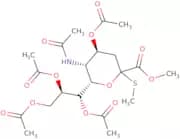
CAS :<p>Methyl 4,7,8,9-tetra-O-acetyl-2-thio-N-acetyl-a-D-neuraminic acid methyl ester is a fluorescent analog of sialic acid. It is a water soluble compound that can be used in the modification of proteins and glycoproteins. This product is synthesized by methylation and fluorination of the C4 hydroxyl group of a sialic acid. This process leads to a high degree of purity as well as the desired chemical modifications. The modification of saccharides with this product has many applications in research and industrial settings.</p>Formule :C21H31NO12SDegré de pureté :Min. 95%Masse moléculaire :521.54 g/molD-Glucose-4-D
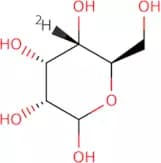
CAS :Produit contrôlé<p>D-Glucose-4-D is a deuterated form of glucose. It is a halophilic sugar that is used in the biosynthesis of lipids. D-Glucose-4-D can be synthesized chemically or by isotope effect by using d-glucose as the starting material. This compound can be used to study lipid synthesis and lipid metabolism in bacteria, such as E. coli, because it has been shown to inhibit the enzyme glycerol dehydratase, which catalyzes the conversion of glycerol to dihydroxyacetone phosphate, an intermediate in lipid biosynthesis. D-Glucose-4-D also inhibits the enzyme phosphatidate phosphohydrolase, which converts phosphatidic acid to diacylglycerol. These compounds are important for membrane lipid formation and are involved in cellular signalling pathways.</p>Formule :C6H11DO6Degré de pureté :Min. 95%Masse moléculaire :181.16 g/molIvermectin b1 monosaccharide
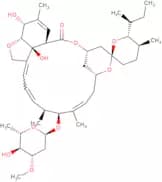
CAS :<p>Ivermectin is a derivative of avermectin that is used for the treatment of parasitic infections. Ivermectin b1 monosaccharide is an analog of the parent molecule, which lacks a carbon atom at position 1 and has a spiroketal group at position 2. It is known to be more potent than ivermectin in animal studies.</p>Formule :C41H62O11Degré de pureté :Min. 95%Couleur et forme :PowderMasse moléculaire :730.92 g/molN1-b-D-Galactopyranosylamino-guanidine HNO3
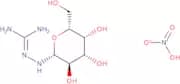
CAS :<p>N1-b-D-Galactopyranosylamino-guanidine HNO3 is a synthetic compound that has been modified by methylesterification and glycosylation. It can be used for the preparation of saccharides, polysaccharides, oligosaccharides, and custom synthesis. The CAS No. 109853-86-3 is 109853-86-3.</p>Formule :C7H16N4O5·HNO3Degré de pureté :Min. 95%Masse moléculaire :299.24 g/mol2-Amino-a-D-ribofurano[1',2':4,5]oxazoline
CAS :<p>2-Amino-a-D-ribofurano[1',2':4,5]oxazoline is a modified ribose analogue</p>Formule :C5H10N2O4Degré de pureté :Min. 95%Masse moléculaire :162.2 g/mol1-Pyrenyl-2,3,4-tri-O-acetyl-b-D-glucuronide methyl ester
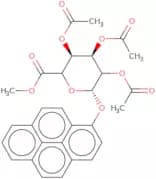
<p>1-Pyrenyl-2,3,4-tri-O-acetyl-b-D-glucuronide methyl ester is a custom synthesis product that can be used to modify oligosaccharides and polysaccharides. This product is a fluorinated sugar that has been modified with acetyl groups at the 1 and 4 positions of the pyrene ring. It is an Oligosaccharide, Polysaccharide, saccharide, Carbohydrate and Monosaccharide. The complex carbohydrate modification provides high purity and high quality. The 1-Pyrenyl-2,3,4-tri-O-acetyl-b-D-glucuronide methyl ester is useful in Click chemistry applications as well as in other chemical reactions such as polymerization and condensation reactions.</p>Formule :C29H26O10Degré de pureté :Min. 95%Masse moléculaire :534.51 g/mol




![2-Amino-a-D-ribofurano[1',2':4,5]oxazoline](/_next/image/?url=https%3A%2Fstatic.cymitquimica.com%2Fproducts%2F3D%2Fthumb-webp%2FMA01170.webp&w=3840&q=75)