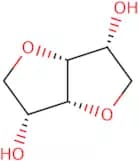
Monosaccharides
Sous-catégories appartenant à la catégorie "Monosaccharides"
- Alloses(11 produits)
- Arabinoses(21 produits)
- Erythroses(11 produits)
- Fructoses(9 produits)
- Fucoses(36 produits)
- Galactosamine(41 produits)
- Galactoses(261 produits)
- Glucoses(365 produits)
- Acides glucuroniques(52 produits)
- Glyco-substrats pour l'enzyme(78 produits)
- Guloses(6 produits)
- Idoses(4 produits)
- Inositols(15 produits)
- Lyxoses(4 produits)
- Mannoses(65 produits)
- O-Glycanes(48 produits)
- Psicoses(3 produits)
- Rhamnoses(10 produits)
- Ribos(61 produits)
- Acides sialiques(100 produits)
- Sorboses(4 produits)
- Sucres(173 produits)
- Tagatoses(4 produits)
- Taloses(8 produits)
- Xyloses(20 produits)
6088 produits trouvés pour "Monosaccharides"
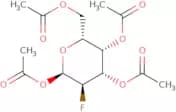
1,3,4,6-Tetra-O-acetyl-2-deoxy-2-fluoro-D-galactopyranose
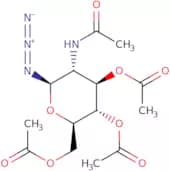
CAS :1,3,4,6-Tetra-O-acetyl-2-deoxy-2-fluoro-D-galactopyranose is a fluorinated sugar that is used in the synthesis of glycosides. It is a synthetic compound that is prepared by reacting 1,3,4,6-tetraacetyl galactose with potassium bifluoride and diethyl oxalate in presence of anhydrous sodium sulfate. The product obtained has the following structural formula: The chemical name for this compound is 1,3,4,6-Tetraacetyl -2-[(1R)-1-(ethoxycarbonyl)propyl]-2-(fluorooxymethyl) -D-galactopyranose. The CAS number for this compound is 83697–45–4.Formule :C14H19FO9Degré de pureté :(As Sum Of Anomers) Min. 98 Area-%Couleur et forme :White PowderMasse moléculaire :350.3 g/mol2-Acetamido-3,4,6-tri-O-acetyl-2-deoxy-β-D-glucopyranosyl azide
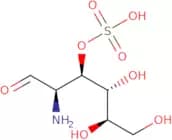
CAS :2-Acetamido-3,4,6-tri-O-acetyl-2-deoxy-β-D-glucopyranosyl azide is a custom synthesis that is a complex carbohydrate. It is a glycosylation product of 2,3,4,6-tetraacetyl α--D--glucose and 2,3,6 -tri--O--acetyl--2--deoxy--β--D--glucopyranose. This compound has been modified by Click chemistry with 4-(dimethylamino)pyridine (DMAP). The modification has produced an acetamido group at the C2 position of the glucopyranoside moiety. The compound is available in high purity for research purposes.Formule :C14H20N4O8Degré de pureté :Min. 95%Couleur et forme :White PowderMasse moléculaire :372.33 g/molD-Glucosamine-3-O-sulphate
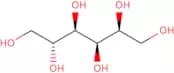
CAS :D-Glucosamine-3-O-sulphate is a naturally occurring sugar found in the human body. It is a structural component of a number of important molecules, such as glycoproteins, heparin, and glycosaminoglycans. D-Glucosamine-3-O-sulphate has been shown to inhibit the growth of mouse tumor cells by activating effector proteins that induce apoptosis and inhibit axonal growth. It also promotes oligodendrocyte differentiation, which may be due to its ability to increase heparin levels and reduce hepcidin expression.Formule :C6H13NO8SDegré de pureté :Min. 95%Couleur et forme :White PowderMasse moléculaire :259.23 g/molD-Sorbitol
CAS :Sorbitol, also known as glucitol, occurs widely in plants, such as, the fruits of the Sorbus and Crataegus spp. Commercially it is produced by the catalytic hydrogenation of glucose (Collins, 2006). Sorbitol is approved as a sugar substitute with the E number 420 and has âgenerally recognized as safeâ status (GRAS) from the US Food and Drug Administration. It is about 60% as sweet as sucrose and is a mild laxative. Sorbitol has a wide range of other functional properties, including: humectancy, plasticizing ability, non-cariogenicity, and good chemical stability in harsh conditions, such as, alkaline pH and heat. Toothpaste production is the second largest application of sorbitol, accounting for 50,000 tons a year in Western Europe alone. Other important uses of sorbitol as a humectant, include: formulation of cough syrups, multivitamin preparations, emulsions, and suspensions (OâNeil, 2013).
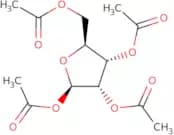
Formule :C6H14O6Degré de pureté :Min. 98 Area-%Couleur et forme :White PowderMasse moléculaire :182.17 g/mol1,2,3,5-Tetra-O-acetyl-b-L-ribofuranose
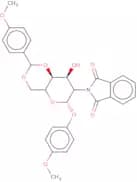
CAS :1,2,3,5-Tetra-O-acetyl-b-L-ribofuranose is a synthetic carbohydrate that can be modified with fluorination, methylation, or monosaccharide. It is a monomeric sugar that is used in the synthesis of oligosaccharides and polysaccharides. The compound has been shown to have antiviral properties against human immunodeficiency virus type 1 (HIV-1).Formule :C13H18O9Degré de pureté :Min. 95%Couleur et forme :White PowderMasse moléculaire :318.3 g/mol4-Methoxyphenyl 2-deoxy-4,6-O-(4-methoxybenzylidene)-2-phthalimido-β-D-glucopyranoside
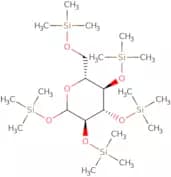
4-Methoxyphenyl 2-deoxy-4,6-O-(4-methoxybenzylidene)-2-phthalimido-b-D-glucopyranoside is a complex carbohydrate that has been modified with methylation and glycosylation. This product can be used for custom synthesis and is a high purity product. It is soluble in water. The CAS number for this compound is 57810-97-0. The molecular weight of this product is 576. The chemical formula for this compound is C24H28N2O8F3O7, which corresponds to an empirical formula of C24H28N2O8F3O7.Formule :C29H27NO9Degré de pureté :Min. 95%Masse moléculaire :533.53 g/mol1,2,3,4,6-Penta-O-trimethylsilyl-D-glucopyranose
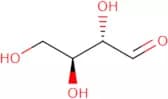
CAS :1,2,3,4,6-Penta-O-trimethylsilyl-D-glucopyranose is a high purity product custom synthesized for research purposes. It is a sugar that has been modified by the Click modification and fluorination. 1,2,3,4,6-Penta-O-trimethylsilyl-D-glucopyranose is an oligosaccharide with a complex carbohydrate structure that can be used in glycosylation reactions. This product is a saccharide with a CAS number of 19126-99-9.Formule :C21H52O6Si5Degré de pureté :Min. 95%Couleur et forme :Colorless PowderMasse moléculaire :541.07 g/molL-Erythrose
CAS :L-Erythrose is a monosaccharide that contains an hydroxyl group on the second carbon atom. It can be synthesized by a synthetic scheme involving glycolaldehyde and hydroxylamine. L-Erythrose has been shown to inhibit the enzyme phosphoglycerate kinase, which converts 2-phosphoglycerate into phosphoenolpyruvate. L-Erythrose has also been shown to inhibit dehydroascorbic acid reductase, which converts dehydroascorbic acid into ascorbic acid, and galactitol reductase, which converts galactitol into D-tagatose. The mutant strain of Escherichia coli K12 that was engineered to produce L-erythrose showed a decreased susceptibility to phage infection and an increased resistance to oxidative stress. In addition, the polyol pathway in E. coli was induced by L-erythrose treatment.Formule :C4H8O4Degré de pureté :(%) Min. 90%Couleur et forme :Slightly Yellow PowderMasse moléculaire :120.1 g/mol1,2,6-Tri-O-acetyl-3,4-di-O-benzyl-α-D-mannopyranose
CAS :1,2,6-Tri-O-acetyl-3,4-di-O-benzyl-a-D-mannopyranose is a synthetic sugar that has been modified with three acetates and benzyl groups. It is used in the synthesis of glycosides and oligosaccharides. 1,2,6-Tri-O-acetyl-3,4-di-O-benzyl-a-D-mannopyranose is also an important building block for the synthesis of complex carbohydrates.Formule :C26H30O9Degré de pureté :Min. 95%Masse moléculaire :486.51 g/molL-Sorbose
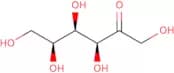
CAS :Resource for the industrial synthesis of ascorbic acid alias Vitamin C
Formule :C6H12O6Degré de pureté :Min. 98 Area-%Couleur et forme :White Off-White PowderMasse moléculaire :180.16 g/mol3-O-Benzyl-D-glucopyranose
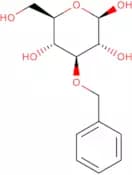
CAS :3-O-Benzyl-D-glucopyranose is a molecule that has been optimized for its autodock score. It binds to the active site of peptidases, which are enzymes that break down proteins in the body. 3-O-Benzyl-D-glucopyranose is a nauclea that can be used as a pharmacokinetic (PK) or pharmacodynamic (PD) inhibitor. Nauclea have shown effectiveness against diabetes by preventing the breakdown of glucose, which is an important energy source for cells. 3-O-Benzyl-D-glucopyranose has also been found to be an effective inhibitor of DPPIV, which is an enzyme involved in breaking down insulin and other hormones in blood circulation. In vitro studies have shown that it may also have antiaging properties due to its ability to inhibit production of inflammatory cytokines such as IL1β, IL6, and TNFα.Formule :C13H18O6Degré de pureté :Min. 95%Couleur et forme :PowderMasse moléculaire :270.28 g/molPhenyl 3,4,6-tri-O-acetyl-2-deoxy-2-phthalimido-b-D-selenoglucopyranoside
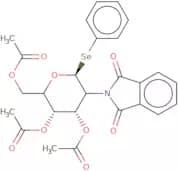
CAS :Phenyl 3,4,6-tri-O-acetyl-2-deoxy-2-phthalimido b-D-selenoglucopyranoside is a chemical compound that is used in the synthesis of saccharides and oligosaccharides. It has been modified with the Click reaction to give it a reactive group. This modification can be used for glycosylation or for incorporation into polysaccharides such as starch. Phenyl 3,4,6-tri-O-acetyl-2-deoxy b -D selenoglucopyranoside is a high purity synthetic compound that is available in custom synthesis quantities.Formule :C26H25NO9SeDegré de pureté :Min. 95%Masse moléculaire :574.44 g/molAllyl 2-acetamido-2-deoxy-?-D-glucopyranoside
CAS :Allyl 2-acetamido-2-deoxy-a-D-glucopyranoside is a synthetic oligosaccharide that has the ability to bind to the O antigen of bacterial cells. It is used in vaccines as an adjuvant and has been shown to increase antibody production and provide protection against Shigella, a bacterial infection. This compound also shows chemoenzymatic activity, which allows for regiospecifically catalytic conversion of glycosides. Allyl 2-acetamido-2-deoxy-a-D-glucopyranoside binds to specific microbial enzymes that contain an acceptor site, with its catalytic function being activated by these enzymes.Formule :C11H19NO6Degré de pureté :Min. 95%Couleur et forme :PowderMasse moléculaire :261.27 g/mol1-Deoxymannojirimycin HCl
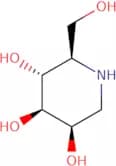
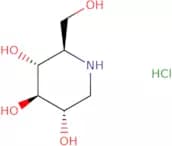
CAS :Potent and specific inhibitor of α-mannosidase I. It is active against the Golgi isoform (GMI) of the enzyme and blocks carbohydrate branch elongation from immature to complex and hybrid N-glycans. Its anti-viral activity against HIV-1 is characterized by the alteration of N-glycan pattern and shift to high-mannose glycans on viral glycoprotein gp120, resulting in decreased infectivity of newly synthesized virions.
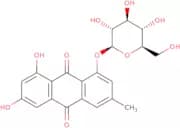
Formule :C6H13NO4·HClDegré de pureté :Min. 98 Area-%Couleur et forme :White Off-White PowderMasse moléculaire :199.63 g/molEmodin 1-glucoside
CAS :Emodin 1-glucoside is a natural anthraquinone glycoside that is produced by plants and has been shown to have cytotoxic effects against human cells. Emodin 1-glucoside inhibits the function of enzymes, such as glycosidases, phosphatases, and proteases. This compound is activated by calcium ions and has been shown to disrupt mitochondrial membrane potential. Emodin 1-glucoside also inhibits sugar residues and has shown significant cytotoxicity against cultured human cells at higher concentrations. It may be used as a medicine for the treatment of inflammation or cancer.Formule :C21H20O10Degré de pureté :Min. 95%Couleur et forme :PowderMasse moléculaire :432.38 g/mol2,3,5-Tri-O-benzyl-b-D-ribofuranose
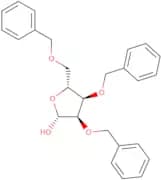
CAS :2,3,5-Tri-O-benzyl-b-D-ribofuranose is a synthetic monosaccharide that is used in the synthesis of complex carbohydrates such as glycosylation and polysaccharides. One use for this chemical is to modify the sugar moiety with methyl groups, yielding 2,3,5-tri-O-methyl b-D-ribofuranose. This modification helps prevent the sugar from being metabolized by enzymes in the body. The chemical can also be fluorinated to yield 2,3,5-trifluoro b-D-ribofuranose.
Formule :C26H28O5Degré de pureté :Min. 95%Couleur et forme :White PowderMasse moléculaire :420.5 g/molPhenyl-β-D-thioglucuronic acid
CAS :Phenyl-beta-D-thioglucuronic acid is a drug that is used to treat inflammatory diseases and autoimmune diseases. It is a basic structure that has been shown to have anti-estrogenic effects in vitro, although the mechanism of action is not well understood. Phenyl-beta-D-thioglucuronic acid can be crosslinked with proteins to form a matrix for wound healing. This drug has also been shown to be a potent inhibitor of proteases, and may inhibit other enzymes such as matrix metalloproteinases and serine proteases.
Formule :C12H14O6SMasse moléculaire :286.31 g/molRef: 3D-P-4300
-Unit-ggÀ demander1gÀ demander5gÀ demander10gÀ demander500mgÀ demander2500mgÀ demander1-Deoxynojirimycin hydrochloride
CAS :Glucose analog and potent inhibitor of α-glucosidases of class I and II. It interferes with N-linked glycosylation and oligosaccharide processing. The compound inhibits intestinal α-glucosidase and has protective effects against obesity-induced hepatic injury as well as mitochondrial dysfunction. It also has neuroprotective effects since it reduces senescence-related cognitive impairment, neuroinflammation and amyloid beta deposition in mice.Formule :C6H13NO4•HClCouleur et forme :PowderMasse moléculaire :199.63 g/molD-Sorbitol hexaacetate
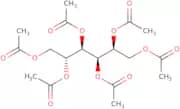
CAS :Sorbitol hexaacetate is a low-energy compound that has a hydroxyl group and a phenolic acid. It is used as an intermediate in the production of detergents, surfactants, and other industrial chemicals. In addition to this, sorbitol hexaacetate can be used as a radiation shield and an effective dose for radiation therapy. Sorbitol hexaacetate is also used as an ingredient in lipolytic enzymes. It has been shown to inhibit the activity of lipolytic enzymes by forming hydrogen bonds with the enzyme active site. Magnetic resonance spectroscopy studies have revealed that sorbitol hexaacetate has a cavity that can be filled with water molecules, which may explain its ability to act as an optical polarizer.Formule :C18H26O12Degré de pureté :Min. 97 Area-%Couleur et forme :White PowderMasse moléculaire :434.39 g/mol1,4:3,6-Dianhydro-D-mannitol
CAS :Building block for polymers synthesis, ionic liquids and chiral auxiliaries
Formule :C6H10O4Degré de pureté :Min. 95%Couleur et forme :PowderMasse moléculaire :146.14 g/mol