Monosaccharides
Sous-catégories appartenant à la catégorie "Monosaccharides"
- Alloses(11 produits)
- Arabinoses(21 produits)
- Erythroses(11 produits)
- Fructoses(9 produits)
- Fucoses(36 produits)
- Galactosamine(41 produits)
- Galactoses(261 produits)
- Glucoses(365 produits)
- Acides glucuroniques(52 produits)
- Glyco-substrats pour l'enzyme(78 produits)
- Guloses(6 produits)
- Idoses(4 produits)
- Inositols(15 produits)
- Lyxoses(4 produits)
- Mannoses(65 produits)
- O-Glycanes(48 produits)
- Psicoses(3 produits)
- Rhamnoses(10 produits)
- Ribos(61 produits)
- Acides sialiques(100 produits)
- Sorboses(4 produits)
- Sucres(173 produits)
- Tagatoses(4 produits)
- Taloses(8 produits)
- Xyloses(20 produits)
6088 produits trouvés pour "Monosaccharides"
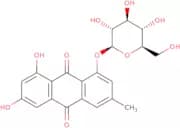
Emodin 1-glucoside
CAS :Emodin 1-glucoside is a natural anthraquinone glycoside that is produced by plants and has been shown to have cytotoxic effects against human cells. Emodin 1-glucoside inhibits the function of enzymes, such as glycosidases, phosphatases, and proteases. This compound is activated by calcium ions and has been shown to disrupt mitochondrial membrane potential. Emodin 1-glucoside also inhibits sugar residues and has shown significant cytotoxicity against cultured human cells at higher concentrations. It may be used as a medicine for the treatment of inflammation or cancer.Formule :C21H20O10Degré de pureté :Min. 95%Couleur et forme :PowderMasse moléculaire :432.38 g/molL-Erythrose
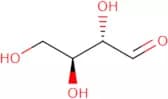
CAS :L-Erythrose is a monosaccharide that contains an hydroxyl group on the second carbon atom. It can be synthesized by a synthetic scheme involving glycolaldehyde and hydroxylamine. L-Erythrose has been shown to inhibit the enzyme phosphoglycerate kinase, which converts 2-phosphoglycerate into phosphoenolpyruvate. L-Erythrose has also been shown to inhibit dehydroascorbic acid reductase, which converts dehydroascorbic acid into ascorbic acid, and galactitol reductase, which converts galactitol into D-tagatose. The mutant strain of Escherichia coli K12 that was engineered to produce L-erythrose showed a decreased susceptibility to phage infection and an increased resistance to oxidative stress. In addition, the polyol pathway in E. coli was induced by L-erythrose treatment.Formule :C4H8O4Degré de pureté :(%) Min. 90%Couleur et forme :Slightly Yellow PowderMasse moléculaire :120.1 g/mol3-Deoxy-3-fluoro-D-xylopyranose
3-Deoxy-3-fluoro-D-xylopyranose is a carbohydrate, modification, saccharide and oligosaccharide. It is an Oligosaccharide sugar that has a CAS number of 104863-98-2. 3DFX can be custom synthesized in high purity with methylation and glycosylation. This product can be used for click modification with the desired molecule.Degré de pureté :Min. 95%Ethyl 4,6-O-benzylidene-2-O-levulinoyl-b-D-thioglucopyranoside
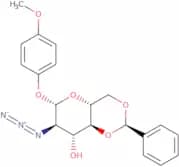
Ethyl 4,6-O-benzylidene-2-O-levulinoyl-b-D-thioglucopyranoside is a highly functionalized glycoside that is synthesized from levulinic acid as the starting material. It is an important chemical intermediate for various applications in biotechnology and medicine. Ethyl 4,6-O-benzylidene-2-O-levulinoyl-b-D-thioglucopyranoside can be used to modify saccharides, oligosaccharides, and polysaccharides with fluorine or methyl groups. This product has been custom synthesized to specifications and is of high purity.Formule :C20H26O7SDegré de pureté :Min. 95%Masse moléculaire :410.48 g/mol4-Methoxyphenyl 2-azido-4,6-O-benzylidene-2-deoxy-β-D-glucopyranoside
CAS :The objective of this study is to investigate the efficacy of 4-methoxyphenyl 2-azido-4,6-O-benzylidene-2-deoxy-b-D-glucopyranoside (MPAB) as a vaccine adjuvant for the prevention of esophageal candidiasis. MPAB was shown to induce antigen specific immune responses in vitro and in vivo. In addition, MPAB enhanced the protective efficacy of Covid® 19 pandemic influenza vaccine against gastrointestinal infection by Candida albicans. The results from this study provide proof of concept that MPAB can be used as a vaccine adjuvant for the prevention of esophageal candidiasis.Formule :C20H21N3O6Degré de pureté :Min. 95%Couleur et forme :PowderMasse moléculaire :399.41 g/mol4-Pentenyl 3,6-di-O-benzyl-a-D-mannopyranoside
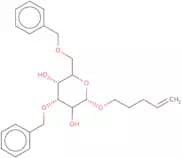
CAS :4-Pentenyl 3,6-di-O-benzyl-a-D-mannopyranoside is a synthetic oligosaccharide containing a single monosaccharide. It is fluorinated at the C4 position and methylated at the C6 position. This product is available for custom synthesis and modification to meet specific customer needs. It has not been evaluated by the FDA and should be used only in research settings.Formule :C25H32O6Degré de pureté :Min. 95%Masse moléculaire :428.52 g/molUDP-a-D-xylose
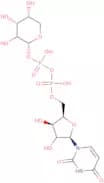
CAS :Substrate for xylosyltransferasesFormule :C14H22N2O16P2Degré de pureté :Min. 90 Area-%Couleur et forme :PowderMasse moléculaire :536.28 g/mol1,2,3,4-Tetra-O-acetyl-β-D-mannopyranose
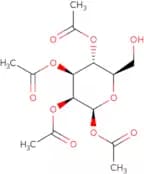
CAS :1,2,3,4-Tetra-O-acetyl-β-D-mannopyranose is a fluorinated monosaccharide that has been synthesized. It is a complex carbohydrate with the molecular formula C12H24O8 and a molecular weight of 256.24 g/mol. 1,2,3,4-Tetra-O-acetyl-β-D-mannopyranose has been modified with glycosylation and polysaccharides to create a click modification. It can be used in custom synthesis and provides high purity.Formule :C14H20O10Degré de pureté :Min. 95%Couleur et forme :White Off-White PowderMasse moléculaire :348.3 g/molDapagliflozin propanediol monohydrate - Bio-X ™
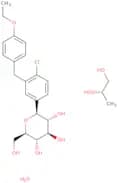
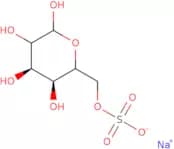
CAS :Dapagliflozin is a sodium-glucose cotransporter subtype 2 (SGLT2) inhibitor that can be used in the treatment of diabetes mellitus type 2. It inhibits glucose reabsorption in the proximal tubule of the nephron and results in glycosuria, which helps to improve glycaemic control. Also, Dapagliflozin is used to lower the risk of sustained eGFR decline, end-stage renal disease, cardiovascular death, and hospitalization for heart failure in patients with chronic kidney disease who are at risk of progression.Formule :C21H25ClO6•C3H8O2•H2ODegré de pureté :Min. 95%Couleur et forme :PowderMasse moléculaire :502.98 g/molD-Mannose-6-O-sulphate sodium salt
CAS :D-Mannose-6-O-sulphate sodium salt (DMS) is a synthetic sugar that is used in the preparation of biopolymers. It is a complex carbohydrate that is composed of both saccharide and phosphate groups. DMS has been modified to contain methyl groups, which can be used for click chemistry reactions. The CAS number for this compound is 204575-08-6. DMS has been shown to be useful as a fluorination reagent. It has also been synthesized using click chemistry, which allows it to be incorporated into polymers and other organic compounds.Formule :C6H11O9SNaDegré de pureté :Min. 95%Couleur et forme :PowderMasse moléculaire :282.2 g/mol1-O-Methyl-beta-D-xylopyranoside
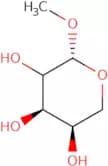
CAS :1-O-Methyl-beta-D-xylopyranoside is a matrix component that is used as an artificial sweetener. This product has been shown to have the ability to protect cells against radiation and toxic chemicals. 1-O-Methyl-beta-D-xylopyranoside also inhibits the growth of coliform bacteria by inhibiting their energy metabolism and may be used for wastewater treatment. It has been shown to be effective in analytical methods to identify the presence of human feces in water samples.
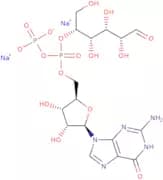
Formule :C6H12O5Degré de pureté :Min. 98 Area-%Couleur et forme :White PowderMasse moléculaire :164.16 g/molGDP-D-glucose sodium salt
CAS :Substrate for glucosyltransferaseFormule :C16H25N5O16P2·2NaDegré de pureté :Min. 95 Area-%Couleur et forme :White Off-White PowderMasse moléculaire :651.34 g/molβ,β-Trehalose
CAS :β,β-Trehalose is a carbohydrate that is synthesized by the expression of a trehalose synthase enzyme from the yeast Saccharomyces cerevisiae. β,β-Trehalose is an acidic sugar with two glucose subunits. It has been shown to have an enzymatic mechanism similar to that of glucose. β,β-Trehalose has been found to increase the solubility and stability of proteins in acidic phs (pHs) by binding to hydroxyl groups on protein surfaces. β,β-Trehalose also binds to alcohols such as ethanol and methanol, which may be due to its ability to form hydrogen bonds between oxygen atoms. This sugar also forms hexamers in solution, which may contribute to its effectiveness as a stabilizer for proteins and other molecules. The optimum ph for β,β-trehalose synthesis is around 5.5-6.0 and it can be used at higher phFormule :C12H22O11Degré de pureté :Min. 99 Area-%Couleur et forme :White Off-White PowderMasse moléculaire :342.3 g/mol2,5-Anhydro-1-O-trityl-D-mannitol
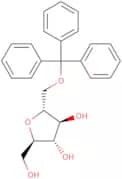
CAS :2,5-Anhydro-1-O-trityl-D-mannitol is a complex carbohydrate with the molecular formula C6H14O6 that has been modified for use in glycosylation reactions. It is a type of sugar that can be modified to create desired properties and can be used as an alternative to other sugars such as glucose. 2,5-Anhydro-1-O-trityl-D-mannitol can be used in the synthesis of oligosaccharides and monosaccharides. This product is available in high purity and has a CAS number of 68774-48-1.
Formule :C25H26O5Degré de pureté :Min. 95%Masse moléculaire :406.48 g/mol1,2,3,4-Tetra-O-acetyl-b-D-glucuronide
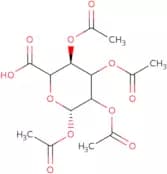
CAS :1,2,3,4-Tetra-O-acetyl-b-D-glucuronide is a chemical compound that is used as an acetylating agent in organic synthesis. It is produced by the reaction of pyridine and acetic anhydride with sodium hydroxide as a catalyst. The acetylation process takes place in two steps: first, the pyridine reacts with the acetic anhydride to form 4-(pyridinium) acetate; second, this intermediate reacts with sodium hydroxide to form 1,2,3,4-tetra-O-acetyl-b-D-glucuronide. Acetylation reactions are important because they can be used to introduce functional groups onto molecules that would not otherwise have them. Acetylated compounds are also often more soluble in water than nonacetylated compounds. This product is used in medicines and other chemical processes.Formule :C14H18O11Degré de pureté :Min. 95 Area-%Couleur et forme :White Clear LiquidMasse moléculaire :362.29 g/molOsmaronin
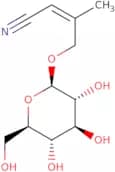
CAS :Leucine-âderived gamma-hydroxynitrile glucoside
Formule :C11H17NO6Degré de pureté :Min. 95%Masse moléculaire :259.26 g/molMethyl 4-deoxy-4-fluoro-a-D-glucose
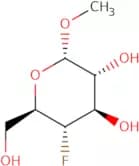
CAS :Methyl 4-deoxy-4-fluoro-a-D-glucose is a synthetic and custom synthesis monosaccharide for use in glycosylation, polysaccharide modification, and click chemistry. It is a fluorinated sugar that can be used in the synthesis of oligosaccharides and complex carbohydrates. Methyl 4-deoxy-4-fluoro-a-D-glucose has CAS number 56926-53-5.Formule :C7H13FO5Degré de pureté :Min. 98 Area-%Couleur et forme :PowderMasse moléculaire :196.17 g/molMethyl 4,6-O-benzylidene-β-D-glucopyranoside
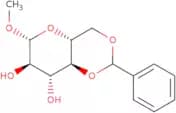
CAS :Methyl 4,6-O-benzylidene-b-D-glucopyranoside is a nitro derivative of methyl b-D-glucopyranoside. The anomeric proton and the nitro group are in the same plane and on opposite sides of the molecule. This compound has been shown to be both a receptor binding agent and a gelation agent. It is used to study biological membranes because it binds to phospholipids in the cell membrane, which alters its physical properties. Methyl 4,6-O-benzylidene-b-D-glucopyranoside is also known for its ability to form hydrogen bonds with water molecules. This is due to its cavity that can accommodate one water molecule per monomer unit. The crystal structure of this compound has been determined by x ray crystallography and shows that it forms dimers through hydrogen bonding between two molecules in each dimer. These interactions are
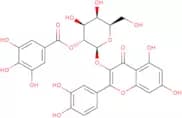
Formule :C14H18O6Degré de pureté :Min. 95%Couleur et forme :PowderMasse moléculaire :282.29 g/molQuercetin 3-b-galactoside-2'-O-gallate
CAS :Quercetin 3-b-galactoside-2'-O-gallate is a compound that has been shown to have hepatoprotective effects, inhibiting the mitochondrial membrane potential and microbial infection. Quercetin 3-b-galactoside-2'-O-gallate also has anti-inflammatory properties and reduces the production of inflammatory cells, such as hepg2 cells. The mechanism of action for its protective effect is due to the inhibition of mapk activation, which leads to decreased necrosis factor and interleukin (IL) production. Quercetin 3-b-galactoside-2'-O-gallate can be used in the treatment of acute liver injury induced by LPS.Formule :C28H24O16Degré de pureté :Min. 95%Couleur et forme :Yellow PowderMasse moléculaire :616.48 g/mol1-O-Methyl-α-D-galactopyranoside monohydrate
CAS :1-O-Methyl-α-D-galactopyranoside is a gratuitous α-galactosidase inducer.Formule :C7H16O7Masse moléculaire :212.20 g/mol