Sels métalliques
Dans cette section, vous trouverez diverses sels métalliques, qui sont des composés caractérisés par la présence d'atomes métalliques et non métalliques. Essentiellement, les sels métalliques sont composés de cations qui sont un ou plusieurs atomes métalliques. Ces sels jouent un rôle crucial dans de nombreuses réactions et applications chimiques, servant de catalyseurs, réactifs ou intermédiaires dans divers processus industriels et de recherche. Chez CymitQuimica, nous proposons une large sélection de sels métalliques de haute qualité pour répondre à vos besoins de recherche et industriels, garantissant des performances fiables et efficaces dans vos applications.
2870 produits trouvés pour "Sels métalliques"
Trier par
Degré de pureté (%)
0
100
|
0
|
50
|
90
|
95
|
100
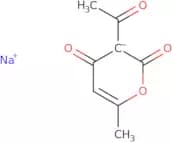
Dehydroacetic acid sodium salt
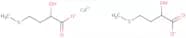
CAS :<p>Dehydroacetic acid sodium salt is a chemical compound with the formula CH3COOCH2NaO2. It is an ionic liquid that can be used as a preservative or stabilizer in foods and other products. Dehydroacetic acid sodium salt has been shown to inhibit the growth of bacteria and fungi in biological studies. The analytical method for dehydroacetic acid sodium salt is based on x-ray diffraction data, which is used to identify its purity and concentration. The reaction solution includes dehydroacetic acid, water vapor, sodium salts, phosphorus pentoxide, and control analysis.</p>Formule :C8H7O4NaDegré de pureté :Min. 95%Couleur et forme :PowderMasse moléculaire :190.13 g/mol2-Hydroxy-4-(methylthio)butyric acid calcium salt
CAS :<p>2-Hydroxy-4-(methylthio)butyric acid calcium salt (2HMBAC) is a fatty acid that is found in malic acid. It is an important industrial chemical used for the preparation of other chemicals such as acetic anhydride, adipic acid, and butyric acid. 2HMBAC has been shown to have various biological functions including the inhibition of protein synthesis and the reduction of chloride ion transport. The dietary administration of 2HMBAC has been shown to relieve diarrhoea in rats.</p>Formule :C10H18CaO6S2Degré de pureté :Min. 95%Masse moléculaire :338.46 g/mol1,1'-Dibenzoylferrocene
CAS :<p>1,1'-Dibenzoylferrocene is a ferrocene derivative that has been shown to be an excellent ligand for the separation of heavy metal ions. The physicochemical properties of 1,1'-dibenzoylferrocene make it a good candidate for ionization and separation techniques. It can accommodate different substituents on the ferrocene molecule, which allows it to interact with different types of metal ions. 1,1'-Dibenzoylferrocene has been used in metallocene catalysis as a solvent, although its use as a ligand has not yet been explored.</p>Formule :C24H18FeO2Degré de pureté :Min. 95%Masse moléculaire :394.24 g/molRuthenium dioxide
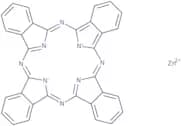
CAS :<p>Ruthenium dioxide is a chemical compound that can be used as an oxidation catalyst. It is a solid material with high resistance and can be used in the water treatment process as well as in electrochemical processes, such as wastewater treatment. Ruthenium dioxide has been shown to have an acidic reaction mechanism, which is related to the particle size of the substance. The large particle size leads to a higher surface area for catalytic activity. Ruthenium dioxide also has the ability to react with hydrogen gas and form hydrogen bonds. This property makes it useful for electrochemical processes, such as wastewater treatment. Ruthenium dioxide also reacts with cationic surfactants containing boron nitride, which allows it to be used in catalysis and electrochemical processes.</p>Formule :RuO2Degré de pureté :Min. 95%Masse moléculaire :133.07 g/molZinc phthalocyanine
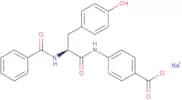
CAS :<p>Zinc phthalocyanine is a blue dye that is used in the manufacture of paints, plastics, and rubber. It has been shown to be a potential cancer treatment for skin cancer because it absorbs ultraviolet light. Zinc phthalocyanine can also be used in wastewater treatment as a coagulant and disinfectant. In addition, zinc phthalocyanine has been shown to have anti-microbial properties against opportunistic fungal and bacterial infections. This compound is also an antioxidant that can protect cells from damage caused by reactive oxygen species. Zinc phthalocyanine's photophysical properties are characterized by its absorption spectrum, which includes the visible region of the electromagnetic spectrum between 400 nm and 700 nm. It is a strong electron acceptor with a redox potential of -0.4 V at pH 7 and 0°C. This molecule also inhibits cytochrome P450 activity in model systems.</p>Formule :C32H16N8ZnDegré de pureté :90%MinMasse moléculaire :577.9 g/molBz-Tyr-4-Abz-OH·sodium salt
CAS :<p>Please enquire for more information about Bz-Tyr-4-Abz-OH·sodium salt including the price, delivery time and more detailed product information at the technical inquiry form on this page</p>Formule :C23H19N2NaO5Degré de pureté :Min. 95%Masse moléculaire :426.4 g/molSodium dicyanamide
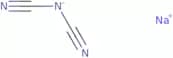
CAS :<p>Sodium dicyanamide is a diphenyl ether that has been shown to be effective in the treatment of polycystic ovarian syndrome. It binds to picolinic acid, which is a cofactor for the enzyme phenylalanine hydroxylase, and inhibits the production of tyrosine. This leads to an increase in the levels of luteinizing hormone and follicle-stimulating hormone, which helps ovulation. Sodium dicyanamide also interacts with hydrogen bond interactions and chelate ligands. The reaction mechanism of this compound is not well understood, but it is known that it can react with oxygen at high temperatures.</p>Formule :C2N3NaDegré de pureté :Min. 95%Couleur et forme :White PowderMasse moléculaire :89.03 g/molSodium N-Lauroylsarcosinate - 30% solution
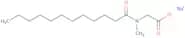
CAS :<p>Sodium N-lauroylsarcosinate is a chemical compound that is used in the production of sodium salts. It has high resistance to biological samples and is soluble in water, organic solvents, and other chemicals. It can be used to measure biochemical properties, such as reaction solution polymerase chain reaction (PCR) or electrochemical impedance spectroscopy (EIS). Sodium N-lauroylsarcosinate can also be used for wastewater treatment and water permeability. It has been used as an analytical method for proteins, peptides, amino acids, and carbohydrates. It has been shown to have biological properties on human serum.</p>Formule :C15H28NNaO3Couleur et forme :Clear LiquidMasse moléculaire :293.38 g/molSodium fluoroacetate
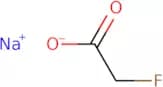
CAS :<p>Sodium fluoroacetate is a salt that is synthesized by the reaction of methyl ethyl and sodium trifluoroacetate. It has been used as an insecticide, but also has been used to treat metabolic disorders such as bowel disease and eye disorders. Sodium fluoroacetate also has been used in natural products for the treatment of autoimmune diseases. The toxicological studies of sodium fluoroacetate have shown that it can cause eye disorders and x-ray crystal structures have revealed its mechanism of action.</p>Formule :C2H2FNaO2Couleur et forme :White PowderMasse moléculaire :100.02 g/molDiethylenetriaminepenta(methylenephosphonic acid) sodiumsalt
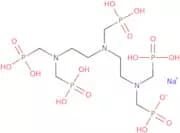
CAS :<p>Diethylenetriaminepenta(methylenephosphonic acid) sodium salt (DTPMP) is a substance that can be found in the environment. It is toxic to living organisms and may cause toxic effects if it is swallowed or inhaled. DTPMP has been classified as a toxic substance by the United States Environmental Protection Agency (EPA).</p>Formule :C9H18N3Na10O15P5Degré de pureté :Min. 95%Couleur et forme :LiquidMasse moléculaire :793.02 g/molCalcium-Like Peptide 3 trifluoroacetate salt
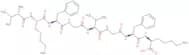
CAS :<p>Please enquire for more information about Calcium-Like Peptide 3 trifluoroacetate salt including the price, delivery time and more detailed product information at the technical inquiry form on this page</p>Formule :C44H68N10O9Degré de pureté :Min. 95%Masse moléculaire :881.07 g/molDioctyl sulfosuccinate sodium salt
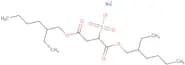
CAS :<p>Dioctyl sulfosuccinate sodium salt (DSS) is a surfactant that is used in the formulation of aerosol products. It can be used as a matrix for the analytical determination of enzyme activities such as glutathione reductase and cytochrome p450, which are involved in the metabolism of xenobiotics. DSS has been shown to have an optimum concentration of 0.1% and fluorescence probe with a pH range between 7-9. The surfactant also shows ionotropic gelation properties at concentrations greater than 1%.</p>Formule :C20H37NaO7SDegré de pureté :Min. 95%Couleur et forme :White PowderMasse moléculaire :444.57 g/molα-Ketoglutaric acid potassium
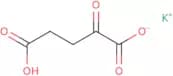
CAS :<p>Intermediate in the Krebs cycle; nitrogen transporter</p>Formule :C5H5O5KDegré de pureté :Min. 98 Area-%Couleur et forme :PowderMasse moléculaire :184.19 g/molCopper(II) stearate
CAS :<p>Copper(II) stearate is an inorganic compound that consists of copper chloride and stearic acid. It has a reactive functional group, a copper complex, and a metal-metal bond. Copper(II) stearate is used as an ingredient in cosmetics to enhance the color stability of pigments, such as iron oxides, titanium dioxide, and zinc oxide. The particle size of the compound can be adjusted by controlling the ratio of copper chloride to stearic acid. Copper(II) stearate has been shown to have good chemical stability at high temperatures and is not affected by boron nitride or calcium stearate. Activation energies for the formation of copper(II) stearate are found at about -4.8 kJ/mol for copper chloride and about -5.6 kJ/mol for stearic acid. It also exhibits electrochemical impedance spectroscopy properties with a higher resistance than other metal salts with similar functional groups</p>Formule :C36H70CuO4Degré de pureté :Min. 95%Masse moléculaire :630.48 g/molp-Sulfophenylazochromotropic acid trisodium salt
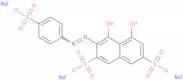
CAS :<p>p-Sulfophenylazochromotropic acid trisodium salt is a chemical that can be used as a building block for the synthesis of various organic compounds. It is an intermediate for the synthesis of other chemicals and can be used as a research chemical in laboratories. This compound has been shown to be useful in the production of pharmaceuticals, agrochemicals, and dyes. CAS No. 23647-14-5.</p>Formule :C16H9N2Na3O11S3Degré de pureté :Min. 95 Area-%Couleur et forme :Yellow PowderMasse moléculaire :570.42 g/molZinc trifluoromethanesulfonate
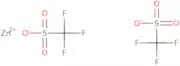
CAS :<p>Zinc trifluoromethanesulfonate is a catalyst that catalyses the reaction of amines with coumarin derivatives, producing an electrochemical impedance spectroscopy. It has been shown to have a redox potential that is higher than ferrocenecarboxylic acid. Zinc trifluoromethanesulfonate has been used in asymmetric synthesis, which involves substituting a hydrogen atom with another atom or group, and in salt metathesis, which is the process of forming new chemical compounds from reactants without using any energy. The zinc trifluoromethanesulfonate can also be activated by light or heat. This makes it possible for this compound to release the corrosive sulfur dioxide gas when heated to high temperatures, producing a synergic effect with other substances such as potassium permanganate (KMnO4).</p>Formule :C2F6O6S2ZnDegré de pureté :Min. 95%Couleur et forme :White PowderMasse moléculaire :363.52 g/molSodium pyroglutamate
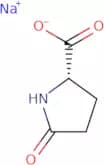
CAS :<p>Sodium pyroglutamate is a surface methodology that inhibits leukemia inhibitory factor and has been shown to be effective in inhibiting the growth of mouse tumor cells. Sodium pyroglutamate has been shown to be cytotoxic to prostate cancer cells, which may be due to its ability to inhibit glutamate-mediated activation of the MAP kinase pathway. This drug also has anti-tumor effects on skin cells, which may be due to its inhibition of cell proliferation and induction of apoptosis. Sodium pyroglutamate also inhibits the production of collagenase, a major enzyme in the degradation of extracellular matrix, by human fibroblast cells. It also has an anti-inflammatory effect and is used as a food additive.</p>Formule :C5H7NO3•NaDegré de pureté :Min. 95%Couleur et forme :Colorless PowderMasse moléculaire :152.1 g/mol2,7-Naphthalenedisulfonic acid disodium salt
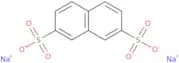
CAS :<p>2,7-Naphthalenedisulfonic acid disodium salt is a heteronuclear molecule that is synthesized by the reaction of 2,7-naphthalenedisulfonyl chloride with sodium sulfite in water. It has been used in the manufacture of dyes and pigments, as a corrosion inhibitor for steel and aluminum, and as an intermediate in the synthesis of pharmaceuticals. The compound has been detected in groundwater samples at concentrations up to 10 mg/L. The compound is also found in geothermal waters at concentrations up to 0.6 mg/L.</p>Formule :C10H6Na2O6S2Degré de pureté :Min. 95%Masse moléculaire :332.26 g/molPotassium acrylate
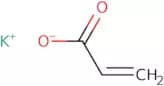
CAS :<p>Potassium acrylate is a diamine tetraacetic acid that functions as a control agent. It is used in analytical methods to measure the effectiveness of other agents. It can be used to produce carboxylate, coordination complex, and hydroxide solution. It has been shown to be effective at doses of 3-5 mM. Potassium acrylate is soluble in water and is stable in air. The FTIR spectrum shows an absorption band at 1657 cm-1, which corresponds to the C=O stretching vibration of the carboxylate group.</p>Formule :C3H3KO2Degré de pureté :Min. 95%Masse moléculaire :110.15 g/molH-Tyr(SO3H)-OH sodium salt
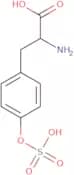
CAS :<p>Please enquire for more information about H-Tyr(SO3H)-OH sodium salt including the price, delivery time and more detailed product information at the technical inquiry form on this page</p>Formule :C9H11NO6SDegré de pureté :Min. 95%Masse moléculaire :261.25 g/mol