Sels métalliques
Dans cette section, vous trouverez diverses sels métalliques, qui sont des composés caractérisés par la présence d'atomes métalliques et non métalliques. Essentiellement, les sels métalliques sont composés de cations qui sont un ou plusieurs atomes métalliques. Ces sels jouent un rôle crucial dans de nombreuses réactions et applications chimiques, servant de catalyseurs, réactifs ou intermédiaires dans divers processus industriels et de recherche. Chez CymitQuimica, nous proposons une large sélection de sels métalliques de haute qualité pour répondre à vos besoins de recherche et industriels, garantissant des performances fiables et efficaces dans vos applications.
2870 produits trouvés pour "Sels métalliques"
Trier par
Degré de pureté (%)
0
100
|
0
|
50
|
90
|
95
|
100
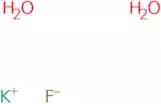
Potassium fluoride dihydrate
CAS :Produit contrôlé<p>Potassium fluoride is an inorganic chemical that is used in the water fluoridation process. It is also used as a source of fluoride ions for the synthesis of hydroxyapatite, a mineral found in teeth and bones. Fluoride ions are also used to treat certain infectious diseases, such as malaria. The asymmetric synthesis of potassium fluoride was first reported by M. S. Kharasch and J. A. Fink in 1943 using plasma mass spectrometry. This method has been widely adopted for commercial production of potassium fluoride because it can be scaled up easily and does not require specialized equipment.<br><br>Potassium fluoride has been shown to inhibit viral replication by hydrogen bonding with the guanine-cytosine base pairs on the viral dsDNA, which prevents the DNA from uncoiling and copying its genetic information into new viral particles. Potassium fluoride has also been shown to be effective against hepatitis B virus (HBV) and mammalian cells infected by HB</p>Formule :KF·2H2ODegré de pureté :Min. 95%Masse moléculaire :94.13 g/molSodium sulphate anhydrous
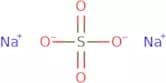
CAS :Produit contrôlé<p>Sodium sulphate anhydrous is a salt of sodium and sulfuric acid that is used in the treatment of bowel disease. It has been shown to reduce the concentration-time curve for dextran sulfate in maternal blood and to improve the mitochondrial membrane potential in fetal bovine erythrocytes. Sodium sulphate anhydrous also inhibits inflammatory activity by reducing the activity of cytochrome P450 enzymes. This drug is not active against infectious diseases, but has been shown to have antiinflammatory effects.</p>Formule :Na2SO4Degré de pureté :Min. 95%Couleur et forme :White/Off-White SolidMasse moléculaire :142.04 g/molLead dibromide
CAS :<p>Lead dibromide is a non-radioactive catalyst that can be used in the organic synthesis of pharmaceuticals and other organic compounds. It is typically used as an oxidizing agent for the formation of carbon-carbon bonds. The electron microscopic study of lead dibromide reveals the presence of small, crystalline particles with a diameter of about 0.2 microns. Lead dibromide is soluble in allylation, n-dimethyl formamide, and trifluoroacetic acid and insoluble in water or polar solvents. This compound has been found to stabilize reactive intermediates in organic reactions, such as those involving ketones, epoxides, and nitriles.</p>Formule :PbBr2Degré de pureté :Min. 95%Masse moléculaire :367.01 g/molRef: 3D-FL59683
Produit arrêtéZinc oxide
CAS :<p>Zinc oxide is a white, crystalline solid that has been used as an antimicrobial agent in the past. It is effective against bacteria, fungi, and viruses. The inhibitory properties of zinc oxide are due to its ability to disrupt energy metabolism. Zinc oxide also has been shown to be toxic to neurons in vitro and is under investigation for use in the treatment of neurodegenerative diseases such as Alzheimer's and Parkinson's disease. Zinc oxide is also used in wastewater treatment because it can bind up metal ions such as copper chloride or zirconium oxide. Zinc oxide nanoparticles have been shown to be effective at killing bacteria in water vapor when irradiated with laser light.</p>Formule :ZnODegré de pureté :Min. 95%Couleur et forme :White Clear LiquidMasse moléculaire :81.38 g/molRef: 3D-FZ32039
Produit arrêtéBarium selenite
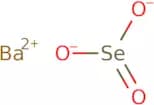
CAS :<p>A barium selenite molecule has a diameter of about 3.5 nm. It is a polyvinyl compound that contains a hydroxyl group and a selenium compound, which is composed of two hydroxy groups (OH-). Barium selenite can be used in the detection and treatment of cancer cells, as well as degenerative diseases. The chemical species may be detected by plasma mass spectrometry. This molecule has an aluminium ion with a redox potential of +1.5 V.</p>Formule :BaO3SeDegré de pureté :Min. 95%Masse moléculaire :264.29 g/molSodium pyrophosphate decahydrate
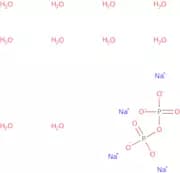
CAS :<p>Sodium pyrophosphate decanhydrate is a methyltransferase inhibitor that blocks the enzyme form of the DNA methyltransferase, which is responsible for maintaining DNA methylation patterns. It has been shown to inhibit the enzymatic activity of this enzyme in a model system. Sodium pyrophosphate decanhydrate inhibits the growth of bacteria by binding to water molecules and preventing them from binding to other molecules, causing dehydration. This drug also has potential as a natriuretic peptide levels inhibitor, with electrochemical impedance spectroscopy studies showing that it may have a high affinity for sodium ions. Studies have also shown that sodium pyrophosphate decanhydrate has no toxicity in mice.</p>Formule :H4O7P2•Na4•(H2O)10Degré de pureté :Min. 95%Couleur et forme :PowderMasse moléculaire :450.09 g/molLead(II) oxide
CAS :<p>Lead(II) oxide is a chemical compound that has been shown to have biological properties. It acts as a surface glycoprotein and has been shown to be stable in various environments. Lead(II) oxide is also chemically inert, with redox potentials that are higher than those of many other compounds. When lead(II) oxide is heated, it can react with water to form lead hydroxide and hydrogen gas. Studies show that lead(II) oxide is toxic when inhaled or ingested. Lead(II) oxide has been shown to be effective in wastewater treatment due to its high solubility and low toxicity to microorganisms. Lead(II) oxide is also used in the production of thermometers, which require a material that does not expand or contract significantly with changes in temperature. Lead(II) oxide has been shown to have bioavailability in vivo and transfer reactions have been observed between this compound and other metals such as copper and zinc.</p>Formule :PbODegré de pureté :Min. 95%Couleur et forme :PowderMasse moléculaire :223.2 g/molLithium hydroxide anhydrous
CAS :<p>Lithium hydroxide is a white solid with a high melting point. It is used in the production of other lithium salts, such as lithium carbonate, lithium citrate, and lithium bromide. Lithium hydroxide reacts with acids to produce hydrogen fluoride and water vapor. The reaction is reversible and the equilibrium constant can be calculated by measuring the concentrations of reactants and products at various temperatures. The chemical biology of lithium hydroxide has been studied using different electrochemical impedance spectroscopy techniques.</p>Formule :LiOHCouleur et forme :White PowderMasse moléculaire :23.95 g/molSilver hexafluoroantimonate(V)
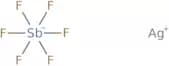
CAS :<p>Silver hexafluoroantimonate is a polymeric matrix that is used for its reaction mechanism. The hydroxyl group on the surface of the silver hexafluoroantimonate reacts with hydrochloric acid to produce hydrogen fluoride and an ionic silver chloride complex. Silver hexafluoroantimonate can also be synthesized by cationic polymerization, which involves a coordination complex between the metal and the nitrogen atoms. This coordination geometry allows for hydrogen bonding interactions.</p>Formule :AgSbF6Degré de pureté :Min. 95%Couleur et forme :White PowderMasse moléculaire :343.62 g/molRef: 3D-FS59850
Produit arrêtéRuthenium(III) nitrosyl nitrate, soluble in 10% dilute nitric acid
CAS :<p>Please enquire for more information about Ruthenium(III) nitrosyl nitrate, soluble in 10% dilute nitric acid including the price, delivery time and more detailed product information at the technical inquiry form on this page</p>Formule :RuN4O10Degré de pureté :Min. 95%Couleur et forme :Clear LiquidMasse moléculaire :317.09 g/molRhodium 5% on Carbon (wetted with ca. 55% Water)
CAS :<p>Rhodium 5% on Carbon (wetted with ca. 55% Water) is a catalyst that has a phase transition temperature of approximately -36 degrees Celsius. This product is used in the reaction of alkanoic acids and also for the preparation of stable complexes with metal hydroxides. Rhodium 5% on Carbon (wetted with ca. 55% Water) has been shown to have beneficial effects on autoimmune diseases, including multiple sclerosis, rheumatoid arthritis, and psoriasis. The metal-carbon bond in this product is covalent, which means it forms strong chemical bonds that are difficult to break. Rhodium 5% on Carbon (wetted with ca. 55% Water) has been shown to be an excellent catalyst for reactions involving water vapor or other molecules containing hydrogen atoms.</p>Formule :RhDegré de pureté :Min. 95%Masse moléculaire :102.91 g/molSodium nitrate
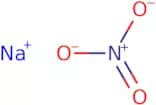
CAS :Produit contrôlé<p>Sodium nitrate is a versatile compound that possesses several unique characteristics. It is commonly used as a viscosity modifier in various applications, including activated cephalosporins and glucans. Additionally, sodium nitrate exhibits metallic properties and acts as an antibiotic, making it suitable for use in polymers and other controlled products. This compound also demonstrates inhibitory effects on serine protease activity and can be combined with α-tocopherol to enhance its emission properties. Furthermore, sodium nitrate has been utilized in the production of alkaloids and as an electrode material in potassium-based systems. Its wide range of applications makes sodium nitrate a valuable ingredient in various industries.</p>Formule :NaNO3Degré de pureté :Min. 95%Masse moléculaire :84.99 g/molSodium phosphate dibasic heptahydrate
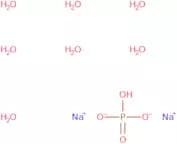
CAS :<p>The particle size of sodium phosphate dibasic heptahydrate is between 0.1 and 1.0 μm. It has a fluorescence detector that can be used to identify metabolic disorders in humans, such as autoimmune diseases and human immunoglobulin deficiency. The particle size of sodium phosphate dibasic heptahydrate is between 0.1 and 1.0 μm. It has a fluorescence detector that can be used to identify metabolic disorders in humans, such as autoimmune diseases and human immunoglobulin deficiency. The particle size of sodium phosphate dibasic heptahydrate is between 0.1 and 1.0 μm. It has a fluorescence detector that can be used to identify metabolic disorders in humans, such as autoimmune diseases and human immunoglobulin deficiency</p>Formule :Na2HPO4·7H2ODegré de pureté :Min. 95%Couleur et forme :White PowderMasse moléculaire :268.07 g/molTin(IV) oxide
CAS :<p>Tin(IV) oxide is a chemical compound that can be used in the treatment of cancer. It is a white powder with a low melting point and is soluble in water, alcohols, and ethers. Tin(IV) oxide has been used as an additive to microscopy techniques to improve contrast. The compound has also been shown to have anticancer properties by inhibiting the growth of cancer cells. Tin(IV) oxide blocks the formation of chalcones, which are products that are formed when reactions between hydrochloric acid and aluminium take place at high temperatures. This blockage prevents the formation of hydrogen gas, thereby preventing cell death due to dehydration or exposure to infrared radiation from heat sources such as microwaves or lasers. Tin(IV) oxide also has been used in infrared spectroscopy for its ability to produce a characteristic absorption band at 3690 cm-1 and as an alternative material for the production of semiconductors when producing thin films.</p>Formule :SnO2Degré de pureté :95%NmrCouleur et forme :Off-White To Grey SolidMasse moléculaire :150.71 g/molRef: 3D-FT33030
Produit arrêtéPotassium hexafluorophosphate
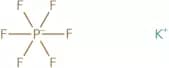
CAS :<p>Potassium hexafluorophosphate is a chemical compound that is used as an antimicrobial agent in the laboratory. It reacts with hydroxyl groups on various surfaces to form potassium hexafluorophosphate and water. The reaction solution can be used to disinfect equipment and surfaces, and is stable at room temperature. Potassium hexafluorophosphate has been shown to have biological properties such as inhibiting the growth of bacteria and fungi, but not viruses. This chemical compound has been shown to be effective against E. coli, Klebsiella pneumoniae, Staphylococcus aureus, Proteus vulgaris, Bacillus subtilis, Pseudomonas aeruginosa, Aspergillus niger, Candida albicans, or Saccharomyces cerevisiae.</p>Formule :KPF6Degré de pureté :Min. 95%Couleur et forme :PowderMasse moléculaire :184.06 g/molRef: 3D-FP38776
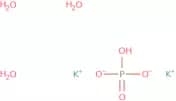
Produit arrêtéDipotassium hydrogen phosphate trihydrate
CAS :<p>Please enquire for more information about Dipotassium hydrogen phosphate trihydrate including the price, delivery time and more detailed product information at the technical inquiry form on this page</p>Formule :K2HPO4•(H2O)3Masse moléculaire :228.22 g/molAluminumoxide - Partical size 40-50nm
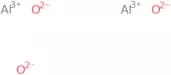
CAS :<p>Aluminum oxide is a non-toxic, inert solid that is used as a catalyst in the production of polymers and plastics. Aluminum oxide is also used for wastewater treatment, as it has high chemical stability. It can be used to remove pollutants such as hydrogen fluoride, hydrochloric acid and heavy metals from water. The particle size of aluminum oxide ranges from 40-50nm. The phase transition temperature of aluminum oxide is typically at 1,000°C which makes it suitable for use in industrial processes with high temperatures. Aluminum oxide has been shown to reduce inflammation, inhibit angiogenesis and increase vascular permeability in inflammatory diseases such as rheumatoid arthritis and asthma. Alumina can also induce apoptosis in cancer cells by disrupting their cell membranes.</p>Formule :Al2O3Degré de pureté :Min. 95%Couleur et forme :White SolidMasse moléculaire :101.96 g/molRef: 3D-FA156768
Produit arrêtéIndium - 99.999% trace metals basis
CAS :<p>Indium-99.999% trace metals basis is a radioactive metal whose atomic number is 49, and it is the heaviest element in Group 3 of the periodic table. Indium-99.999% trace metals basis can be used in the treatment of bowel disease, such as inflammatory bowel disease (IBD) and Crohn's disease. It may also be used to diagnose other diseases that are not visible through medical imaging techniques, such as cancer or inflammatory diseases of the bowel. It can be used to measure cell nuclei and nuclear DNA for disease activity, or identify response elements for autologous stem-cell transplantation. It has been shown that this metal can cause long-term toxicity to cells when combined with injury models. This toxicity may be due to its coordination geometry, which causes a disruption in electron flow during oxidation reactions.</p>Formule :InDegré de pureté :Min. 95%Masse moléculaire :114.82 g/molPalladium hydroxide on carbon - 20 wt. % loading (dry basis)
CAS :<p>Palladium hydroxide on carbon is a metal oxide with antimicrobial activity. Palladium hydroxide on carbon has been shown to have significant receptor activity against bacteria and fungi, as well as other microorganisms. It has also been shown to inhibit the growth of Helicobacter pylori, which is associated with ulcers and stomach cancer. Palladium hydroxide on carbon is used in the treatment of bowel disease and infections caused by bacteria such as Escherichia coli, Salmonella typhi, Staphylococcus aureus, Streptococcus pyogenes, Mycobacterium tuberculosis, and Helicobacter pylori. Palladium hydroxide on carbon has also been shown to be effective in the treatment of autoimmune diseases such as rheumatoid arthritis and multiple sclerosis.</p>Formule :H2O2PdDegré de pureté :Min. 95%Masse moléculaire :140.43 g/molRef: 3D-FP15914
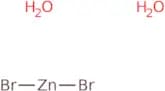
Produit arrêtéZinc bromide dihydrate
CAS :<p>Zinc bromide dihydrate is a crystalline compound that is used as a catalyst for the conversion of metalloporphyrins to hydroporphyrins. This process is used in the production of vitamin B12. Zinc bromide dihydrate can also be used to inhibit the function of ion pumps, which are proteins that pump ions across membranes. The inhibition of these pumps may lead to a decrease in intracellular calcium levels and an increase in free radicals.<br>Zinc bromide dihydrate has been shown to react with chlorophylls, vinylated heterostructures, and polyvinyl nonmetals. These reactions produce morphology changes in zinc bromide dihydrate crystals</p>Formule :ZnBr2•2H2ODegré de pureté :Min. 95%Couleur et forme :PowderMasse moléculaire :261.22 g/mol