Sels métalliques
2872 produits trouvés pour "Sels métalliques"
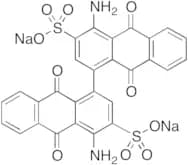
Disodium 4,4'-Diaminodianthraquinone 3,3'-disulfonate
CAS :Produit contrôléApplications Dye precursor and a potential building block for laboratory research.
References Jia, Di, et al.: Guisuanyan Tongbao, 20(Suppl.), 20-21 (2001)Formule :C28H14N2Na2O10S2Couleur et forme :NeatMasse moléculaire :648.528Carboxymethyl Lactose Sodium Salt
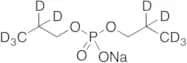
CAS :Produit contrôléFormule :C26H29Na7O25Couleur et forme :NeatMasse moléculaire :902.422Di(propyl-d5) Sodium Phosphate
CAS :Produit contrôléFormule :C6D10H4NaO4PCouleur et forme :NeatMasse moléculaire :214.198Acetyl Coenzyme A Trisodium Salt
CAS :Applications Acetyl Coenzyme A Trisodium Salt is used in skin-lightening cosmetics.
Formule :C23H38N7O17P3S·3NaCouleur et forme :NeatMasse moléculaire :878.54Sodium 1-Pentanesulfonate Monohydrate
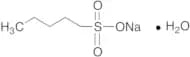
CAS :Produit contrôléApplications Sodium 1-Pentanesulfonate Monohydrate serves as a reagent (conversion reagent) for the simple and accurate photometric determination of the content of hemoglobin in the blood.
References Wolf, H. U., PCT Int. Appl. (2007), WO 2007071377 A1 20070628Formule :C5H11O3S·Na·H2OCouleur et forme :NeatMasse moléculaire :192.209Silver Acetate
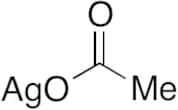
CAS :Produit contrôléApplications Silver Acetate is used as a reagent in chemical synthesis in reaction such as carbonylation of primary and secondary amines as well as in woodward cis-hydroxylation converting alkenes into cis-diols. Also used in gum, lonzenges and sprays that are targeted to assist people in quitting the habit of smoking since it produces a bad taste when combined with cigarettes.
Not a dangerous good if item is equal to or less than 1g/ml and there is less than 100g/ml in the package
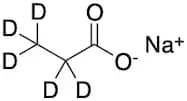
References Wright, L., et al.: J. Phys. Chem., 59, 1060 (1955); Woodward, R., et al.: J. Am. Chem. Soc., 80, 209 (1958); Lancaster, T., et al.: Cochrane DB Syst. Rev., 2, 191 (2000);Formule :C2H3AgO2Couleur et forme :NeatMasse moléculaire :166.91Sodium Propionate-d5
CAS :Produit contrôléApplications Sodium Propionate-d5 (CAS# 202529-18-8) is a useful isotopically labeled research compound.
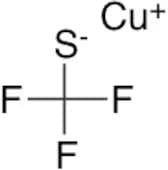
Formule :C3D5NaO2Couleur et forme :NeatMasse moléculaire :101.09Copper(I) Trifluoromethanethiolate
CAS :Produit contrôléApplications COPPER(I) TRIFLUOROMETHANETHIOLATE (cas# 3872-23-9) is a useful research chemical.
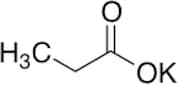
Formule :CCuF3SCouleur et forme :NeatMasse moléculaire :164.62Potassium propionate
CAS :Produit contrôléStability Hygroscopic
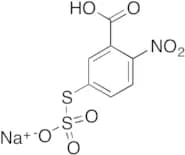
Applications Potassium propionate 98% (cas# 327-62-8) is a useful research chemical.Formule :C3H5KO2Couleur et forme :NeatMasse moléculaire :112.172-Nitro-5-(sulfothio)benzoic Acid Monosodium Salt
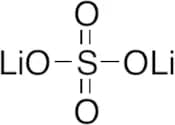
CAS :Produit contrôléFormule :C7H4NO7S2·NaCouleur et forme :NeatMasse moléculaire :301.229Lithium sulfate, anhydrous
CAS :Produit contrôléApplications Lithium sulfate, anhydrous (cas# 10377-48-7) is a useful research chemical.
Formule :Li2SO4Couleur et forme :NeatMasse moléculaire :109.95Sodium Hexadecanoate-16,16,16-d3
CAS :Produit contrôléApplications Sodium Hexadecanoate-16,16,16-d3 (CAS# 347841-37-6) is a useful isotopically labeled research compound.
Formule :C16H28D3NaO2Couleur et forme :NeatMasse moléculaire :281.43Chlorotriethoxytitanium (Contains <10% Chlorotriisopropoxytitanium)
CAS :Produit contrôléStability Moisture Sensitive
Applications Chlorotriethoxytitanium is an intermediate in the synthesis of D-erythro-Sphingosine-1-phosphate-13C2,D2 (S681502), which is a labelled putative lipid second messenger; found to inhibit cellular mobility of melanoma cells at very low concentrations with no toxic effects thereby making it a possible agent for prevention of tumor cell metastasis and inflammatory processes; mobilizes intracellular calcium stores; decreases cellular cAMP; activates phospholipase D; does not inhibitprotein kinase C.
Not a dangerous good if item is equal to or less than 1g/ml and there is less than 100g/ml in the package
References Zhang, H., et al.: J. Cell Biol., 114, 155 (1991) Sadahira, Y., et al.: Proc. Natl. Acad. Sci. USA (1992), Cuvillier, O., et al.: Nature, 381, 800 (1996)Formule :C6H15ClO3TiCouleur et forme :NeatMasse moléculaire :218.54,4'-(1Z)-Diaminostilbene-2,2'-disulfonic Acid Disodium Salt
CAS :Produit contrôléApplications 4,4'-(1Z)-Diaminostilbene-2,2'-disulfonic Acid Disodium Salt is a reactant in the synthesis of (arylamino)triazinylamino-substituted stilbenedisulfonic acid, to be used as an optical brightener.
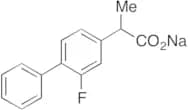
References Okuom, Macduff, et al.: Inter. J. of Org. Chem., 3(4), 256-261 (2013)Formule :C14H12N2Na2O6S2Couleur et forme :NeatMasse moléculaire :414.364Flurbiprofen Sodium
CAS :Produit contrôléApplications Sodium salt of Flurbiprofen (F598700) an anti-inflammatory used as an analgesic.
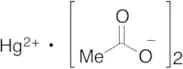
References Chalmers, et al.: Ann. Rheum. Dis., 31, 319 (1972), Nishizawa, et al.: Thromb. Res., 3, 577 (1973)Formule :C15H12FO2·NaCouleur et forme :NeatMasse moléculaire :266.24Mercury(II) Acetate
CAS :Produit contrôléApplications Mercury(II) acetate is a reagent that is used in the investigation of diastereoselective acyclic α-alkoxydithioacetal substitutions involving thiacarbenium intermediates.
Not a dangerous good if item is equal to or less than 1g/ml and there is less than 100g/ml in the package
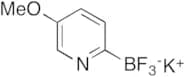
References Prevost, M., et al.: J. Org. Chem. 79, 10504 (2014);Formule :C4H6HgO4Couleur et forme :NeatMasse moléculaire :318.68Potassium Trifluoro(5-methoxy-2-pyridinyl)-borate
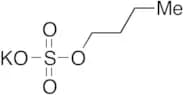
CAS :Produit contrôléFormule :C6H6BF2NO·F·KCouleur et forme :NeatMasse moléculaire :215.023Butyl Potassium Sulfate
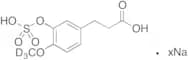
CAS :Produit contrôléFormule :C4H9KO4SCouleur et forme :NeatMasse moléculaire :192.275Dihydro Isoferulic Acid-d3 3-O-Sulfate Sodium Salt
CAS :Produit contrôléApplications Labelled Dihydroisoferulic Acid 3-O-Sulfate, the sulfate conjugate of Dihydroisoferulic Acid (H946365). Dihydroisoferulic Acid 3-O-Sulfate is a minor circulating metabolite in human plasma after coffee consumption.
References Fumeaux, R. et al.: Org. Biomol. Chem., 8, 5199 (2010); Redeuil, K. et al.: J. Chrom. A, 1218, 4678 (2011);Formule :C10H9D3O7S·xNaCouleur et forme :NeatMasse moléculaire :279.283,3,4,4,5,5,6,6,7,7,8,8,8-Tridecafluorooctane-1-sulphonic Acid Sodium Salt-13C
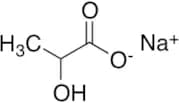
CAS :Produit contrôléFormule :CC7H4F13NaO3SCouleur et forme :NeatMasse moléculaire :451.142Sodium DL-Lactate (60% w/w in H2O)
CAS :Applications The sodium salt of lactic acid (L113490). It acts as a preservative, acidity regulator, and bulking agent.
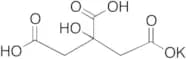
References Kim, Y., et al.: ?Food. Nutr. Res., 10, 588-605 (2019)Formule :C3H5O3·NaCouleur et forme :ColourlessMasse moléculaire :112.06Potassium Citrate Monobasic
CAS :Produit contrôléApplications Potassium Citrate Monobasic is a buffering agent and chelator.
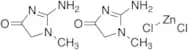
Formule :C6H7KO7Couleur et forme :NeatMasse moléculaire :230.21Creatinine Zinc Chloride
CAS :Produit contrôléApplications Creatinine zinc chloride (cas# 62708-52-5) is a useful research chemical.
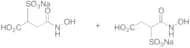
Formule :C4H7N3O·Zn·2ClCouleur et forme :White To Off-WhiteMasse moléculaire :362.554-Hydroxyamino-2-sulfosuccinic Acid Sodium Salt and 4-Hydroxyamino-3-sulfosuccinic Acid Sodium Salt
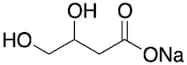
CAS :Produit contrôléFormule :C4H6NNaO7SCouleur et forme :NeatMasse moléculaire :470.2953,4-Dihydroxybutanoic Acid Sodium Salt
CAS :Produit contrôléApplications 3,4-Dihydroxybutanoic Acid Sodium Salt, has been shown to have weak hexenal-induced anesthesia effect.
References Uspenskii, A. E. et al.: Farmakologiya i Toksikologiya , Vol.36, P:185-91 (1973);Formule :C4H7NaO4Couleur et forme :NeatMasse moléculaire :142.0865,6-Dihydroxy-Des(dimethoxy) Bosutinib
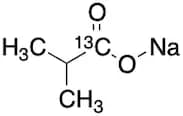
CAS :Produit contrôléFormule :C24H25Cl2N5O3Couleur et forme :NeatMasse moléculaire :502.393Sodium 2-Methylpropionate-1-13C
CAS :Produit contrôléApplications Sodium 2-Methylpropionate-1-13C (CAS# 71105-51-6) is a useful isotopically labeled research compound.
Formule :C3C)H7NaO2Couleur et forme :NeatMasse moléculaire :111.08Lithium Chloride
CAS :Applications Lithium Chloride is primarily used in the synthesis of lithium metal by electrolysis. Also acts as a prescribed drug for bipolar mood disorder, it may also exhibit anti-inflammatory properties. Anti-cancer agent.
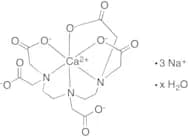
References Tsao, N. et al.: Antimicrob. Agents Chemother., 59, 1525 (2015); Cockle, J. et al.: 112, 693 (2015);Formule :Cl·LiCouleur et forme :NeatMasse moléculaire :42.394Diethylenetriamine-pentaacetic Acid Calcium Trisodium Salt
CAS :Produit contrôléApplications Diethylenetriamine-pentaacetic acid calcium trisodium salt
Formule :C14H18CaN3O10•3Na•x(H2O)Couleur et forme :NeatMasse moléculaire :515.38Methoxy(monomethyl Carbonato-O')-magnesium (~0.4M in Methanol)
CAS :Produit contrôléFormule :C3H6MgO4Couleur et forme :Single SolutionMasse moléculaire :130.38Calcium Gluceptate
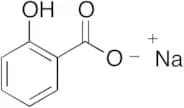
CAS :Produit contrôléFormule :C14H26O16CaCouleur et forme :NeatMasse moléculaire :490.42Sodium Salicylate
CAS :Applications Sodium 2-Hydroxybenzoate is used in the preparation of inhibitors for tyrosyl-tRNA synthetase as an antibacterial. Also used in the preparation of a copolymers for the use of drug carriers.
References Wang, X. et al.: Bioorg. Med. Chem., 21, 4914 (2013); Vorob'eva, A. et al.: Russ. J. App. Chem., 85, 1758 (2012);Formule :C7H5O3·NaCouleur et forme :White To Off-WhiteMasse moléculaire :160.1PNPP, Disodium Hexahydrate
CAS :Applications PNPP, Disodium Salt is a colorimetric alkaline phosphatase soluble substrate, p-Nitrophenyl Phosphate (pNPP) is the substrate of choice for use with alkaline phosphatase in Enzyme Linked Immunosorbant Assay (ELISA) procedures.
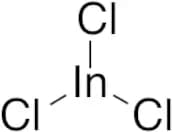
References Voller, A., et al. 1976. Bull. World Health Organ. 53: 55-65; Engvall, E. 1980. Meth. Enzymol. 70: 419-439; Voller, A., et al. 1986. Manual of Clinical Laboratory Immunology, 3rd Edition. In Rose, N., et al. eds., Washington, D.C. American Society for Microbiology, 106-107Formule :C6H4NNa2O6P•6(H2O)Couleur et forme :Light YellowMasse moléculaire :263.05 + 6(18.01)Indium(III) Chloride
CAS :Produit contrôléApplications Indium(III) Chloride is a potent genotoxic chemical that has genotoxic effect on mammalian cells both in vivo and in vitro and which may be mediated partly by inducing oxidative stress.
Not a dangerous good if item is equal to or less than 1g/ml and there is less than 100g/ml in the package
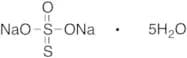
References Lin, R., et al.: Environ. Toxicol., 28, 595 (2013); Takagi, R., et al.: J. Occup. Health, 53, 102 (2011)Formule :Cl3InCouleur et forme :NeatMasse moléculaire :221.18Sodium Thiosulfate Pentahydrate
CAS :Applications Sodium Thiosulfate is used primarily as a medicament against cyanide poisoning, able to convert cyanide into thiocyanate, a reaction which is catalyzed by the enzyme Rhodanese. Antioxidant.
References Emuebie, O. et al: Aus. J. Basic App. Sci., 5, 507 (2011); Cambal, L. et al.: Chem. Res. Toxicol., 24, 1104 (2011); Lam, X. et al.: J. Pharm. Sci., 86, 1250 (1997);Formule :Na·O3S2·5H2OCouleur et forme :NeatMasse moléculaire :248.18Cesium Acetate
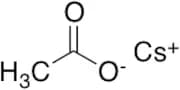
CAS :Produit contrôléApplications Cesium Acetate (cas# 3396-11-0) is a useful research chemical.
Formule :C2H3CsO2Couleur et forme :NeatMasse moléculaire :191.95Sodium L-lactate-13C3
CAS :Please enquire for more information about Sodium L-lactate-13C3 including the price, delivery time and more detailed product information at the technical inquiry form on this pageFormule :C3H5NaO3Degré de pureté :Min. 95%Couleur et forme :PowderMasse moléculaire :115.04 g/molBenzene-1,3-disulfonic acid disodium
CAS :This is a polynuclear compound that has an electrochemical method for detection. It is catalytic, with a low detection limit. The shape of the crystals are spherical, which is due to the size of the crystals. There are no interferences in these measurements, as well as photomicrographs and dopamine sensor. This compound will have synergistic effects with chloride and glucose sensors. The following are some properties of benzene-1,3-disulfonic acid disodium salt: -It has a molecular weight of 227.2 -It has a melting point of about 237 degrees Celsius -It is soluble in water -It has a boiling point at about 515 degrees Celsius -Benzene-1,3-disulfonic acid disodium salt is not hazardous to humans if it is ingested orally; however, it can be harmful if inhaled or if it comes into contact with skinFormule :C6H4Na2O6S2Degré de pureté :Min. 95%Couleur et forme :PowderMasse moléculaire :282.2 g/molPotassium tetracyanoplatinate(II)trihydrate
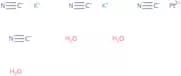
CAS :Produit contrôléPotassium tetracyanoplatinate(II)trihydrate (KTP) is a nanomaterial that is made of metal ions, such as ruthenium and copper, and organic molecules. It has the ability to absorb electrons from water, which are then transferred to carbon sources. This process can be used to remove proton in the water, thereby creating an acidic solution. The KTP particles have been shown to produce cavitation when exposed to ultrasound waves or other high-frequency sound waves. Cavitation occurs when bubbles form and rapidly collapse within a liquid. The resulting shockwaves can break down the cell membrane of microorganisms.Formule :C4H6K2N4O3PtDegré de pureté :Min. 95%Masse moléculaire :431.4 g/molSodium taurodeoxycholate monohydrate
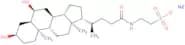
CAS :Sodium taurodeoxycholate monohydrate is a bile salt, which is a biochemical compound derived from the conjugation of bile acids with taurine. This compound is sourced from bovine bile, where it functions as a surfactant in the digestive system by emulsifying fats, thereby facilitating their absorption in the intestine.Formule :C26H44NO6S·H2O·NaDegré de pureté :Min. 95%Masse moléculaire :539.7 g/molLithium formate
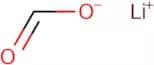
CAS :Lithium formate is an inorganic compound that belongs to the group of sodium salts. It is a white crystalline solid that is soluble in water and has a melting point of -10°C. Lithium formate is used as an antimicrobial agent in wastewater treatment systems and as a polymerase chain reaction (PCR) model system. The mechanism of action for lithium formate was determined to be inhibition of the enzyme structural analysis, activity index, wild-type strain, phase transition temperatureFormule :CHLiO2Degré de pureté :Min. 95%Couleur et forme :White To Off-White SolidMasse moléculaire :51.96 g/mol4-Acetamido-4'-isothiocyanatostilbene-2,2'-disulfonic acid, sodium salt
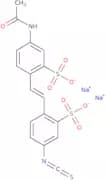
CAS :4-Acetamido-4'-isothiocyanatostilbene-2,2'-disulfonic acid, sodium salt (AITC-S) is a stilbene derivative with inhibitory properties. It has been shown to inhibit the uptake of camp in rat ventricular myocytes and caco-2 cells as well as the release of camp from rat renal proximal tubules. AITC-S also inhibits the transport of camp into the cells. The mechanism by which AITC-S inhibits uptake is not yet known, but it may be due to competition for a common carrier or an effect on intracellular metabolism. This compound has also been shown to have an acute ischemic protective effect on rats when administered before reperfusion following coronary artery occlusion.Formule :C17H12N2Na2O7S3Degré de pureté :Min. 95%Masse moléculaire :498.46 g/molGanciclovir sodium
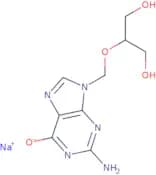
CAS :Anti-viral; DNA polymerase inhibitor; dGTP competitive inhibitor
Formule :C9H13N5NaO4Degré de pureté :Min. 95%Masse moléculaire :278.22 g/molCopper(II) sulfate, anhydrous
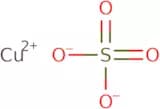
CAS :Copper sulfate is a salt of copper and sulfuric acid. It is used as an antibiotic in the treatment of bacterial infections, although it does not exhibit a bactericidal effect. Copper sulfate can be used to create a synergistic effect with other antibiotics, such as penicillin, erythromycin, tetracycline, and clindamycin. The mechanism of action for this drug is unclear but may involve disruption of membrane function by formation of pores or alteration of ion channels. This drug also has been shown to have an inhibitory effect on toll-like receptor 4 (TLR4) activation and cytokine production in vitro. This inhibition may be due to its ability to bind copper ions in the cytoplasm or nucleus. Copper sulfate also has been shown to inhibit the ryanodine receptor, which is involved in calcium release from intracellular stores and regulation of cardiac muscle contraction. Clinical studies have shown that copper sulfate can increase the rate
Formule :CuSO4Degré de pureté :Min. 95%Couleur et forme :PowderMasse moléculaire :159.61 g/molLead dibromide
CAS :Lead dibromide is a non-radioactive catalyst that can be used in the organic synthesis of pharmaceuticals and other organic compounds. It is typically used as an oxidizing agent for the formation of carbon-carbon bonds. The electron microscopic study of lead dibromide reveals the presence of small, crystalline particles with a diameter of about 0.2 microns. Lead dibromide is soluble in allylation, n-dimethyl formamide, and trifluoroacetic acid and insoluble in water or polar solvents. This compound has been found to stabilize reactive intermediates in organic reactions, such as those involving ketones, epoxides, and nitriles.Formule :PbBr2Degré de pureté :Min. 95%Masse moléculaire :367.01 g/mol1,1'-Diacetylferrocene
CAS :Produit contrôlé1,1'-Diacetylferrocene is an organic compound that has been synthesized by a reaction of ferrocene with benzoylhydrazone. Ferrocenes are compounds containing a ferrocene unit, a cyclic system with alternating double bonds and single bonds. The hydroxyl group on 1,1'-diacetylferrocene can be replaced by other substituents such as carboxylic acids or alcohols to produce different derivatives. 1,1'-Diacetylferrocene is soluble in water and solvents such as acetonitrile. It reacts with peroxide to form the corresponding hydroperoxides. This product has been shown to have the ability to interact specifically with ferrocenes when introduced into the solution.Formule :C14H14FeO2Degré de pureté :Min. 95%Masse moléculaire :270.1 g/molSodium stearyl maleate
CAS :Sodium stearyl maleate is a pharmaceutical excipient that has been used as a diluent and granule. It is an effective particle in the treatment of pancreatitis. Sodium stearyl maleate is also used to help treat chronic bladder inflammation by increasing its fluidity. The use of sodium stearyl maleate in lipoprotein preparations can increase their proliferative activity, which can be useful in cancer research and the treatment of malignant and benign tumors. The long-chain fatty acids found in sodium stearyl maleate have been shown to decrease cholesterol levels and prevent the progression of liver cirrhosis and hepatocellular carcinoma.Formule :C22H39NaO4Degré de pureté :Min. 95%Masse moléculaire :390.53 g/molSodium hexamethylene-1,6-bisthiosulfate dihydrate
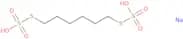
CAS :Sodium hexamethylene-1,6-bisthiosulfatedihydrate is a salt of an oxide of benzene with hexamethylene 1,6-disulfate dihydrate. It has a white to off-white crystalline appearance and is used as an additive in mixtures to improve the wetting and dispersing properties of the mixture. The chemical formula for this compound is C8H4NaOS·2H2O.Formule :C6H12Na2O6S4Degré de pureté :Min. 95%Couleur et forme :PowderMasse moléculaire :354.4 g/molMercury(II) bis(dithizonate)
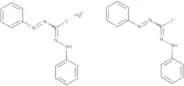
CAS :Produit contrôléMercury(II) bis(dithizonate) is an isomeric form of mercury that exhibits photochromism. It has a yellow color in the solid state and can reversibly change to a red color when exposed to light. Mercury(II) bis(dithizonate) is soluble in organic solvents and forms bright yellow crystals with a melting point of 81-82 °C. It has been used as an optical dye for microscopy, where it absorbs ultraviolet radiation and emits visible light. This property makes it useful for detection of bacteria or other microorganisms by optical microscopy or fluorescence microscopy. The solvents acetonitrile, diethylether, or acetone can be used to dissolve this compound. Mercury(II) bis(dithizonate) is metastable which means that it will decompose spontaneously into mercury(I) oxide and hydrogen gas if heated to 180 °C.
Formule :C26H22HgN8S2Degré de pureté :Min. 95%Couleur et forme :Dark Red SolidMasse moléculaire :711.23 g/mol1-Acetylferrocene
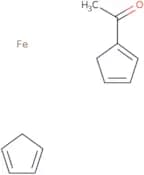
CAS :Produit contrôlé1-Acetylferrocene is a reaction vessel for the synthesis of ferrocenecarboxylic acids and their derivatives. It is also used as an initiator for the polymerization of epoxides, dienes, and cyclohexenes. 1-Acetylferrocene is used in the production of active substances such as anti-cancer drugs, pharmaceuticals, and pesticides. This compound has been shown to have a redox potential that is lower than copper complex compounds. 1-Acetylferrocene can be used for desulfurization reactions because it reacts with sulfur dioxide at low temperatures.
Formule :C7H8O·C5H6FeDegré de pureté :Min. 95%Couleur et forme :Light yellow low melting solid.Masse moléculaire :230.08 g/mol