Sucres
173 produits trouvés pour "Sucres".
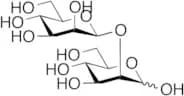
2-O-β-D-Mannopyranosyl-D-mannose
CAS :Produit contrôléFormule :C12H22O11Couleur et forme :NeatMasse moléculaire :342.296D-Mannose-6-O-sulphate Sodium Salt
CAS :Produit contrôléApplications D-Mannose-6-O-sulphate Sodium Salt (cas# 204575-08-6) was a product of esterase-catalyzed regioselective deacylation and acid-catalyzed rearrangement from per-acetylated derivatives.
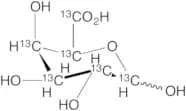
References Horrobin, T., et al.: J. Chem. Soc. Perkin 1, 1069 (1998)Formule :C6H11O9SNaCouleur et forme :NeatMasse moléculaire :282.2D-Galacturonic Acid-13C6
CAS :Produit contrôléApplications D-Galacturonic Acid-13C6 is labelled D-Galacturonic Acid (G186500, Monohydrate) which is used in the synthesis of N-(D-galacturonoyl) amino acids and dipeptides.
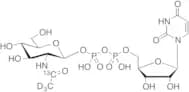
References Klaus, U., et al.: Environ. Sci. Technol., 34, 3514 (2000),Formule :C6H10O7Couleur et forme :NeatMasse moléculaire :200.095Uridine 5’-Diphospho-N-acetylglucosamine-13C,d3
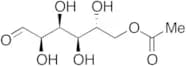
CAS :Produit contrôléFormule :C16CH24D3N3O17P2Couleur et forme :NeatMasse moléculaire :611.366-Acetylglucose
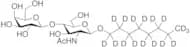
CAS :Produit contrôléFormule :C8H14O7Couleur et forme :NeatMasse moléculaire :222.193Octyl-d17 2-(Acetylamino)-2-deoxy-4-O-β-D-galactopyranosyl-β-D-glucopyranoside
CAS :Produit contrôléFormule :C22D17H24NO11Couleur et forme :NeatMasse moléculaire :512.666Phenyl 1-thio-β-D-glucopyranosiduronic Acid Methyl Ester 2,3,4-Triacetate
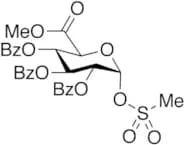
CAS :Produit contrôléFormule :C19H22O9SCouleur et forme :NeatMasse moléculaire :426.438α-D-Glucopyranuronic Acid Methyl Ester 2,3,4-Tribenzoate 1-Methanesulfonate
CAS :Produit contrôléApplications α-D-Glucopyranuronic Acid Methyl Ester 2,3,4-Tribenzoate 1-Methanesulfonate is a reactant in organic synthesis. It is used in the preparation of novel quaternary glucuronyl reagent for preparation of tertiary amines.
References Araya, I. & Akita, H.: Heterocycles., 75, 1213 (2008)Formule :C29H26O12SCouleur et forme :NeatMasse moléculaire :598.576-O-[(1,1Dimethylethyl)diphenylsilyl]-2,3,4-tris-O-D-gluconic Acid δ-lactone
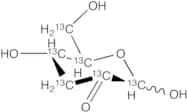
CAS :Produit contrôléFormule :C43H46O6SiCouleur et forme :NeatMasse moléculaire :686.923-Deoxyglucosone-13C6
Produit contrôléStability Hygroscopic, Light Sensitive, Temperature Sensitive
Applications 3-Deoxyglucosone-13C6, is the labeled anologue of 3-Deoxyglucosone (D239150), an intermediate in the Maillard reaction of proteins with glucose, which is metabolised to 3-Deoxyfructose. An intermediate in the formation of pyrraline, which might contribute to a pathological effect, such as carcinogenesis.
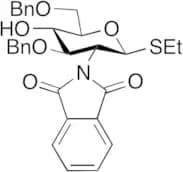
References Kato, H. et al.: Agric. Biol. Chem., 51, 683 (1987), Hayase, F. et al.: J. Biol. Chem., 264, 3758 (1989), Kato, H. et al.: Biochimica et Biophysica Acta, 1035, 71 (1990)Formule :C6H10O5Couleur et forme :NeatMasse moléculaire :168.096Ethyl 2-Deoxy-2-(1,3-dihydro-1,3-dioxo-2H-isoindol-2-yl)-3,6-bis-O-(phenylmethyl)-1-thio-β-D-glucopyranoside
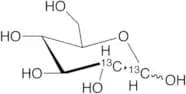
CAS :Produit contrôléFormule :C30H31NO6SCouleur et forme :NeatMasse moléculaire :533.64D-Glucose-1,2-13C2
CAS :Applications Labelled D-Glucose is a simple sugar that is present in plants. A monosaccharide that may exist in open chain or cyclic conformation if in solution. It plays a vital role in photosynthesis and fuels the energy required for cellular respiration. D-Glucose is used in various metabolic processes including enzymic synthesis of cyclohexyl-α and β-D-glucosides. Can also be used as a diagnostic tool in detection of type 2 diabetes mellitus and potentially Huntington's disease through analysis of blood-glucose in type 1 diabetes mellitus.
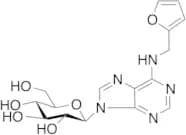
References Wang, R., et al.: J. Mol. Catal. B. Enz., 56, 131 (2009); Springhorn, C. et al.: J. Clin. Endocrinol. Metab., 97, 4640 (2012); Hashimoto, K. et al.: J. Clin. Endocrinol. Metab., 97, 3016 (2012); Avelange, M. et al.: Plant. Phys., 94, 1157 (1990); Cramer, C. et al.: J. Chem. Soc., 115, 5745 (1993);Formule :C2C4H12O6Couleur et forme :NeatMasse moléculaire :182.14Kinetin-9-glucoside
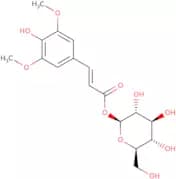
CAS :Produit contrôléFormule :C16H19N5O6Couleur et forme :NeatMasse moléculaire :377.352Sinapic acid acyl-beta-D-glucoside
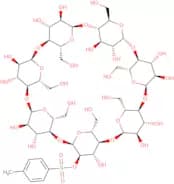
CAS :a functionalised glucosideFormule :C17H22O10Degré de pureté :Min. 95%Masse moléculaire :386.35 g/molMono-2-O-(p-toluenesulfonyl)-b-cyclodextrin hydrate
CAS :This beta-cyclodextrin (β-CD) derivative is a functionalized cyclic oligosaccharide composed of seven glucose units, characterized by a hydrophilic exterior and a lipophilic cavity (bigger than α-CD and smaller than γ-CDs), which allows it to encapsulate various guest molecules. This structural feature facilitates its use in multiple applications, including pharmaceuticals, food enhancement, and cosmetics. In the pharmaceutical industry, it enhances the solubility and stability of poorly water-soluble drugs, improving their bioavailability and efficacy while also masking unpleasant tastes. The food sector utilizes it as a stabilizer for flavors, colors, and nutrients, extending shelf life by protecting sensitive ingredients from degradation. In cosmetics, it serves as a complexing agent for fragrances and active components, ensuring their stability and controlled release. Its use expands to many other fields, including nanotechnology for drug delivery systems, environmental remediation for extracting organic pollutants, textiles for slow-release fragrances, and analytical chemistry for chiral separation.Formule :C49H76O37S•(H2O)xDegré de pureté :Min. 97 Area-%Couleur et forme :PowderMasse moléculaire :1,289.17 g/molGalacto-RGD trifluoroacetate salt
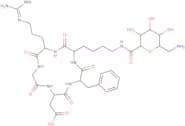
CAS :Please enquire for more information about Galacto-RGD trifluoroacetate salt including the price, delivery time and more detailed product information at the technical inquiry form on this pageFormule :C34H52N10O12Degré de pureté :Min. 95%Couleur et forme :PowderMasse moléculaire :792.84 g/molGlucose dehydrogenase
CAS :Glucose Dehydrogenase is an enzyme, which is typically derived from microbial sources such as bacteria and fungi. It functions by catalyzing the oxidation of glucose to gluconolactone, concurrently reducing a cofactor such as NAD⁺ or PQQ. This biochemical reaction is critical in various analytical applications due to its specificity and efficiency in glucose detection.Glucose Dehydrogenase is widely employed in the development of biosensors and diagnostic assays. Its primary application is in blood glucose monitoring devices, where its ability to accurately quantify glucose levels is crucial for managing diabetes. Additionally, it is utilized in research and development settings for biochemical assays that require precise glucose measurements. The enzyme's rapid and specific action on glucose molecules makes it an indispensable tool in both clinical and laboratory environments, contributing to advancements in biosensing technologies and metabolic studies.3'-methoxy apiin;Chrysoeiol-7-(2-O-apiosylglucoside)
CAS :Please enquire for more information about 3'-methoxy apiin;Chrysoeiol-7-(2-O-apiosylglucoside) including the price, delivery time and more detailed product information at the technical inquiry form on this page
Degré de pureté :Min. 95%Phenethyl glucosinolate potassium salt
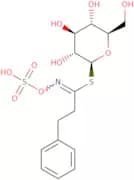
CAS :Phenethyl glucosinolate potassium salt is a compound found in plants belonging to the Brassicaceae family. It has been shown to be highly toxic to larvae of the cabbage butterfly and other insects that feed on brassica plants. Phenethyl glucosinolate potassium salt has been shown to inhibit the development of these insects, probably by inhibiting protein synthesis in the insect's gut. The major sulfur-containing compound in this product is gluconasturtiin, which has been shown to inhibit growth of pekinensis at high temperatures. This compound also inhibits radiation-induced DNA damage and does not show significant effects on nonsignificant organisms such as yeast and mold.Formule :C15H20NO9S2KDegré de pureté :Min. 95%Couleur et forme :PowderMasse moléculaire :461.55 g/molNON-GMO -GALACTOSE
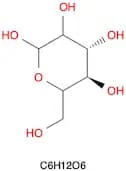
CAS :Formule :C6H12O6Degré de pureté :95%Couleur et forme :SolidMasse moléculaire :180.1559N-azidoacetylglucosamine-tetraacylated (Ac4GlcNAz)
CAS :Formule :C16H22N4O10Degré de pureté :98%Couleur et forme :SolidMasse moléculaire :430.36672-ACETAMIDO-2-DEOXY-3,4,6-TRI-O-ACETYL-α-D-GALACTOPYRANOSYL CHLORIDE
CAS :Formule :C14H20ClNO8Degré de pureté :97%Couleur et forme :SolidMasse moléculaire :365.7635L-Glucose
CAS :Formule :C6H12O6Degré de pureté :98%Couleur et forme :SolidMasse moléculaire :180.1559Ref: IN-DA0036X6
Produit arrêté



![6-O-[(1,1Dimethylethyl)diphenylsilyl]-2,3,4-tris-O-D-gluconic Acid δ-lactone](/_next/image/?url=https%3A%2Fstatic.cymitquimica.com%2Fproducts%2FTR%2Fthumb-webp%2FD480803.webp&w=3840&q=75)