APIs pour la recherche et les impuretés
Les principes actifs pharmaceutiques (API) sont les substances présentes dans les médicaments qui sont responsables de leurs effets thérapeutiques. Dans cette section, vous trouverez une grande variété d'API destinés à un usage de recherche. Ces composés sont essentiels pour le développement, les tests et la validation de nouvelles formulations pharmaceutiques. Chez CymitQuimica, nous proposons des API de haute qualité pour soutenir la recherche dans la découverte et le développement de médicaments.
Sous-catégories appartenant à la catégorie "APIs pour la recherche et les impuretés"
- Acides Aminés et Dérivés(12.330 produits)
- Anthraquinones et Dérivés(405 produits)
- Dérivés du Benzimidazole et de l’Imidazole(10.444 produits)
- Dérivés des Benzodiazépines(335 produits)
- Glucides et Glycoconjugués(5.017 produits)
- Esters et Dérivés(42.242 produits)
- Acides Gras et Dérivés Lipidiques(32.403 produits)
- Flavonoïdes et Polyphénols(17.087 produits)
- Radicaux Libres et Agents Oxydants/Réducteurs(213 produits)
- Cétones et Dérivés(2.404 produits)
- Antibiotiques Naturels et Semi-Synthétiques(6.388 produits)
- Nitriles et Dérivés Cyano(3.067 produits)
- Nitrosamines et Dérivés(55 produits)
- Nucléosides et Nucléotides(3.433 produits)
- Phosphates et Phosphonates Organiques(1.202 produits)
- Sulfonates et Sulfates Organiques(10.435 produits)
- Composés Organométalliques(4.422 produits)
- Autres(6.294 produits)
- Peptides et Protéines(3.154 produits)
- Polymères et Dérivés(100 produits)
- Dérivés des Purines et Pyrimidines(8.950 produits)
- Dérivés de Quinazoline et de Quinoléine(66.011 produits)
- Quinones et Dérivés(24.351 produits)
- Sels et Dérivés d’API(79.811 produits)
- Stéroïdes et Dérivés(4.977 produits)
- Sulfamides et Dérivés(2.596 produits)
- Terpénoïdes et Dérivés(3.846 produits)
- Thiazolidinediones et Thiopyranes(2.752 produits)
- Composés β-Adrénergiques(230 produits)
Affichez 21 plus de sous-catégories
57078 produits trouvés pour "APIs pour la recherche et les impuretés"
Trier par
Degré de pureté (%)
0
100
|
0
|
50
|
90
|
95
|
100
aR453588
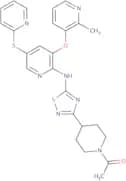
CAS :<p>aR453588 is a human analog of Voriconazole, which has been found to have anticancer properties. This compound is a kinase inhibitor that works by inducing apoptosis in cancer cells. It has been shown to be effective against various types of tumors, including those resistant to other inhibitors. aR453588 also inhibits the growth of cancer cells by blocking protein synthesis and cell division. This compound is derived from cellulose and can be detected in urine samples after administration. Overall, aR453588 shows great promise as a potential treatment for cancer.</p>Formule :C25H25N7O2S2Degré de pureté :Min. 95%Masse moléculaire :519.6 g/mol3-(2-Bromoethyl)-7-hydroxy-4-methyl-coumarin
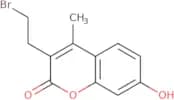
CAS :<p>Please enquire for more information about 3-(2-Bromoethyl)-7-hydroxy-4-methyl-coumarin including the price, delivery time and more detailed product information at the technical inquiry form on this page</p>Formule :C12H11BrO3Degré de pureté :Min. 95%Masse moléculaire :283.12 g/mol4-Epi-dolutegravir
CAS :<p>4-Epi-dolutegravir is the active metabolite of dolutegravir. It is a synthetic, high purity API that is used as an analytical reference standard and a drug product for research and development purposes. The CAS number for 4-epi-dolutegravir is 1357289-37-2. 4-Epi-dolutegravir has been shown to have similar pharmacological properties to its parent compound, dolutegravir. Metabolism studies have demonstrated that the major route of elimination for 4-epi-dolutegravir is through urinary excretion.</p>Formule :C20H19F2N3O5Degré de pureté :Min. 95%Masse moléculaire :419.40 g/mol3-Dodecenal
CAS :<p>3-Dodecenal is a human analog that has been studied for its potential anticancer properties. It has been shown to induce apoptosis, or programmed cell death, in tumor cells. This medicinal compound acts as an inhibitor of protein kinases, which play a crucial role in regulating the cell cycle and are often overactive in cancer cells. 3-Dodecenal has shown promising results in inhibiting cancer cell growth in Chinese hamster ovary cells and may have potential as a natural alternative to traditional cancer treatments. In addition, this compound has been detected in human urine and is believed to have potential health benefits beyond its anticancer properties.</p>Formule :C12H22ODegré de pureté :Min. 95%Masse moléculaire :182.3 g/molSLMP53-1
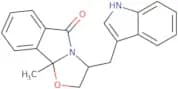
CAS :<p>SLMP53-1 is an anticancer agent that has been shown to induce apoptosis in cancer cells. It works by inhibiting kinases, which are enzymes involved in cell signaling pathways that regulate cell growth and division. SLMP53-1 has been found to be effective against a variety of tumors, including those of the bladder, breast, and lung. In addition, it has shown promising results as a potential treatment for Chinese hamster ovary (CHO) cells and human cancer cell lines. SLMP53-1 is also an analog of hepcidin, a protein that regulates iron metabolism in the body. Its unique structure allows it to bind specifically to cancer cells without affecting healthy cells, making it a promising candidate for targeted cancer therapy.</p>Formule :C20H18N2O2Degré de pureté :Min. 95%Masse moléculaire :318.4 g/molFenticonazole sulfone nitric acid salt
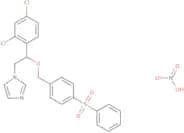
CAS :<p>Fenticonazole sulfone nitric acid salt is an analog of dabigatran, which is a protein kinase inhibitor that has shown potential in the treatment of cancer. It induces apoptosis in human cancer cells and inhibits the activity of various kinases involved in tumor growth and proliferation. Fenticonazole sulfone nitric acid salt has been studied extensively for its anticancer properties, showing promising results in Chinese hamster ovary cells and urine samples from cancer patients. This drug also exhibits inhibitory effects on protein kinases that are involved in the regulation of cell cycle progression, angiogenesis, and metastasis. Overall, Fenticonazole sulfone nitric acid salt holds great promise as a potential anticancer agent.</p>Formule :C24H21Cl2N3O6SDegré de pureté :Min. 95%Masse moléculaire :550.4 g/molN-Methyl-4-phenylpiperidine
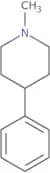
CAS :<p>N-Methyl-4-phenylpiperidine is a synthetic drug that acts as a stimulant. It is a structural analog of the neurotransmitter acetylcholine and has been shown to have similar effects in knockout mice. N-Methyl-4-phenylpiperidine is metabolized by hydrolysis of the amide group, leading to the formation of alphaprodine and hydroxyphenylacetic acid. This drug has been shown to inhibit dopamine and serotonin uptake in rats, which may be related to its psychostimulant effects. Clinical pharmacology studies have shown that this drug can increase blood pressure, heart rate, and respiration rates in humans.</p>Formule :C12H17N·HClDegré de pureté :Min. 95%Masse moléculaire :211.73 g/mol1,3-Bis-O-(tert-butyldimethylsilyl)-calcipotriene
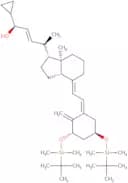
CAS :<p>1,3-Bis-O-(tert-butyldimethylsilyl)-calcipotriene is a synthetic silyl ether of calcipotriene. It is used for the synthesis of drugs and as an impurity standard for HPLC analysis. 1,3-Bis-O-(tert-butyldimethylsilyl)-calcipotriene has been studied in metabolism studies and found to be natural, but it is not an API because it does not have a biological activity. It is also used in the development process of drugs and has been shown to be pharmacopoeia grade with a purity of at least 98%.</p>Formule :C39H68O3Si2Degré de pureté :Min. 95 Area-%Couleur et forme :PowderMasse moléculaire :641.13 g/mol3-(tert-Butylsulfinyl)propanoic acid
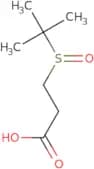
CAS :<p>Please enquire for more information about 3-(tert-Butylsulfinyl)propanoic acid including the price, delivery time and more detailed product information at the technical inquiry form on this page</p>Formule :C7H14O3SDegré de pureté :Min. 95%Masse moléculaire :178.25 g/mol(1-Ethyl-1-methylpropyl)benzene
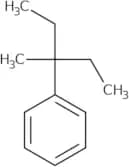
CAS :<p>(1-Ethyl-1-methylpropyl)benzene is an impurity of some drugs. It is a metabolite of the drug, and can be found in urine or blood samples as a result of its excretion from the body. (1-Ethyl-1-methylpropyl)benzene is used as an analytical standard for HPLC analysis. This chemical is not on the USP list of impurities, but it is listed on the pharmacopoeia. The CAS number for (1-Ethyl-1-methylpropyl)benzene is 1985-97-3.</p>Formule :C12H18Degré de pureté :Min. 95%Masse moléculaire :162.27 g/molMidostaurin Impurity 2
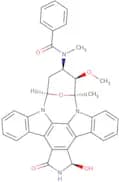
CAS :<p>Midostaurin Impurity 2 is a drug product that has been custom synthesized by our scientists. It is of high purity, and is used in analytical studies to understand its metabolism. This impurity also plays a role in drug development and pharmacopoeia. It can be found under CAS No. 155848-20-7, and has the molecular formula C10H16N4O2S. This compound has an analytical standard at HPLC, which can be used to make sure that it's purity meets FDA standards for research and development purposes.</p>Degré de pureté :Min. 95%Triclosan o-β-D-glucuronide sodium salt
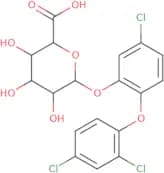
CAS :<p>Triclosan o-β-D-glucuronide sodium salt is an analog of Triclosan, which is a potent inhibitor of bacterial enoyl-acyl carrier protein reductase. It has been shown to have anticancer properties, inhibiting the growth of cancer cells by inducing apoptosis and inhibiting kinase activity. This compound has been found to be effective against a variety of tumors and cancers, including thyroid cancer. Triclosan o-β-D-glucuronide sodium salt has also been shown to inhibit the activity of human protein kinases, making it a potential candidate for the development of new anticancer drugs. This compound can be detected in urine samples from both humans and Chinese hamsters, indicating its potential for use as a diagnostic tool for cancer detection.</p>Formule :C18H15Cl3O8Degré de pureté :Min. 95%Masse moléculaire :465.7 g/molGemcitabine diphosphate triethylamine salt
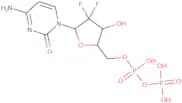
CAS :<p>Gemcitabine diphosphate triethylamine salt is an inhibitor that has been shown to be effective in the treatment of various forms of cancer. It works by inhibiting the activity of kinases, which are enzymes involved in the regulation of cell growth and division. Gemcitabine diphosphate triethylamine salt is a prodrug that is converted to its active form, gemcitabine, in vivo. This drug has been shown to inhibit the uptake of xylose by cancer cells, leading to decreased protein synthesis and induction of apoptosis. In addition, it has been found to be effective against human and Chinese medicinal tumor cells. Gemcitabine diphosphate triethylamine salt is a promising treatment option for patients with cancer who have not responded well to traditional chemotherapy or radiation therapy.</p>Formule :C9H13F2N3O10P2Degré de pureté :Min. 95%Masse moléculaire :423.16 g/molAcetylsalicylic acid sodium salt
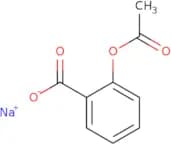
CAS :<p>Acetylsalicylic acid sodium salt is a potent inhibitor of kinases in both human and Chinese cells. It is an analog of salicylic acid and has been shown to inhibit the growth of cancer cells in vitro. Acetylsalicylic acid sodium salt also induces apoptosis, or programmed cell death, in cancer cells. Additionally, it has been shown to inhibit heparin-induced platelet aggregation and reduce the risk of blood clots. This drug has potential anticancer properties due to its ability to inhibit chitin synthesis, which is necessary for tumor growth and survival. Acetylsalicylic acid sodium salt may be useful as a therapeutic agent for the treatment of cancer and other diseases associated with abnormal kinase activity.</p>Formule :C9H7NaO4Degré de pureté :Min. 95%Masse moléculaire :202.14 g/molUnc-926 hydrochloride
CAS :<p>Unc-926 is a pluripotent stem cell (PSC) that can differentiate into cells from all three germ layers. Unc-926 cells have been shown to be glucose-dependent and utilize the mitochondrial respiratory chain for respiration. These cells are capable of differentiating into insulin-producing beta cells and pancreatic islet cells, which can be used in the treatment of diabetes.</p>Formule :C16H22BrClN2ODegré de pureté :Min. 95%Masse moléculaire :373.7 g/mol1'-Epi gemcitabine, hydrochloride
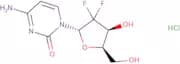
CAS :<p>Gemcitabine hydrochloride is an analog of the natural nucleoside cytidine. It is a chemotherapeutic drug that is used in the treatment of pancreatic, lung and breast cancer. Gemcitabine hydrochloride is metabolized to its active form by deamination of cytosine residues in DNA. This conversion is catalyzed by the enzyme cytidine deaminase. Gemcitabine hydrochloride has been shown to be effective against metastatic pancreatic cancer and advanced-stage non-small cell lung cancer, as well as early-stage breast cancer. Gemcitabine hydrochloride has also been shown to be effective against certain types of lymphoma and leukemia.</p>Formule :C9H12ClF2N3O4Degré de pureté :Min. 95%Masse moléculaire :299.66 g/molEplivanserin
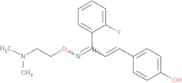
CAS :<p>Eplivanserin is a potent tumor inhibitor that belongs to the class of indirubin kinase inhibitors. It has shown great promise as an anticancer agent due to its ability to induce apoptosis in cancer cells and inhibit their growth cycle. Eplivanserin has been found to be effective against a variety of cancers, including breast, lung, and prostate cancer. This medicinal compound is derived from Chinese herbs and has been extensively studied for its potential in cancer treatment. In addition, eplivanserin has been found in urine samples from humans, indicating that it may have potential as a diagnostic tool for cancer detection. Its protein targets are still being investigated, but it is believed that eplivanserin works by inhibiting key enzymes involved in cell signaling pathways that promote cancer cell growth and survival.</p>Formule :C19H21FN2O2Degré de pureté :Min. 95%Masse moléculaire :328.4 g/molAlpha-[4-(2-dimethylaminoethoxy)phenyl]stilbene
CAS :<p>Alpha-[4-(2-dimethylaminoethoxy)phenyl]stilbene (DS) is a synthetic, analytical standard that is used as an impurity in the manufacture of pharmaceutical products. DS is also sold as a reference material for HPLC and GC/MS analysis.</p>Formule :C24H25NODegré de pureté :Min. 95%Masse moléculaire :343.50 g/molAmpicillin desoxocarboxylic acid-[(R)-(phenyl-d5)glycine]
CAS :<p>Ampicillin desoxocarboxylic acid-[(R)-(phenyl-d5)glycine] is an analytical standard for HPLC. It has the CAS number 1207726-28-0 and is available in various quantities. The impurity of this standard is determined by the HPLC chromatogram and can be found in the USP and EP. This product is a drug product that has niche application, meaning it's not a common pharmaceutical ingredient. It can be used as a metabolite or impurity standard for pharmacopoeia purposes. Custom synthesis and natural are also possible options for purchase.</p>Formule :C24H26N4O5SDegré de pureté :Min. 95%Masse moléculaire :482.6 g/molDes(methylpiperazinyl) imatinib dimer piperazinium chloride
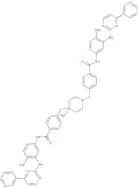
CAS :<p>Please enquire for more information about Des(methylpiperazinyl) imatinib dimer piperazinium chloride including the price, delivery time and more detailed product information at the technical inquiry form on this page</p>Formule :C53H51N12O2Degré de pureté :Min. 95%Masse moléculaire :888 g/mol



![Alpha-[4-(2-dimethylaminoethoxy)phenyl]stilbene](/_next/image/?url=https%3A%2Fstatic.cymitquimica.com%2Fproducts%2F3D%2Fthumb-webp%2FUAA95751.webp&w=3840&q=75)
![Ampicillin desoxocarboxylic acid-[(R)-(phenyl-d5)glycine]](/_next/image/?url=https%3A%2Fstatic.cymitquimica.com%2Fproducts%2F3D%2Fthumb-webp%2FHYB72628.webp&w=3840&q=75)