APIs pour la recherche et les impuretés
Les principes actifs pharmaceutiques (API) sont les substances présentes dans les médicaments qui sont responsables de leurs effets thérapeutiques. Dans cette section, vous trouverez une grande variété d'API destinés à un usage de recherche. Ces composés sont essentiels pour le développement, les tests et la validation de nouvelles formulations pharmaceutiques. Chez CymitQuimica, nous proposons des API de haute qualité pour soutenir la recherche dans la découverte et le développement de médicaments.
Sous-catégories appartenant à la catégorie "APIs pour la recherche et les impuretés"
- Acides Aminés et Dérivés(12.328 produits)
- Anthraquinones et Dérivés(405 produits)
- Dérivés du Benzimidazole et de l’Imidazole(10.438 produits)
- Dérivés des Benzodiazépines(335 produits)
- Glucides et Glycoconjugués(5.016 produits)
- Esters et Dérivés(42.240 produits)
- Acides Gras et Dérivés Lipidiques(32.395 produits)
- Flavonoïdes et Polyphénols(17.087 produits)
- Radicaux Libres et Agents Oxydants/Réducteurs(213 produits)
- Cétones et Dérivés(2.402 produits)
- Antibiotiques Naturels et Semi-Synthétiques(6.380 produits)
- Nitriles et Dérivés Cyano(3.067 produits)
- Nitrosamines et Dérivés(55 produits)
- Nucléosides et Nucléotides(3.431 produits)
- Phosphates et Phosphonates Organiques(1.202 produits)
- Sulfonates et Sulfates Organiques(10.434 produits)
- Composés Organométalliques(4.422 produits)
- Autres(6.292 produits)
- Peptides et Protéines(3.153 produits)
- Polymères et Dérivés(100 produits)
- Dérivés des Purines et Pyrimidines(8.948 produits)
- Dérivés de Quinazoline et de Quinoléine(65.966 produits)
- Quinones et Dérivés(24.349 produits)
- Sels et Dérivés d’API(79.696 produits)
- Stéroïdes et Dérivés(4.975 produits)
- Sulfamides et Dérivés(2.594 produits)
- Terpénoïdes et Dérivés(3.846 produits)
- Thiazolidinediones et Thiopyranes(2.752 produits)
- Composés β-Adrénergiques(230 produits)
Affichez 21 plus de sous-catégories
57012 produits trouvés pour "APIs pour la recherche et les impuretés"
Trier par
Degré de pureté (%)
0
100
|
0
|
50
|
90
|
95
|
100
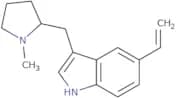
(R)-3-((1-Methylpyrrolidin-2-yl)methyl)-5-vinyl-1H-indole
CAS :<p>Please enquire for more information about (R)-3-((1-Methylpyrrolidin-2-yl)methyl)-5-vinyl-1H-indole including the price, delivery time and more detailed product information at the technical inquiry form on this page</p>Formule :C16H20N2Degré de pureté :Min. 95%Masse moléculaire :240.34 g/molUlifloxacin acyl-β-D-glucuronide
CAS :<p>Ulifloxacin acyl-β-D-glucuronide is an inhibitor of protein kinases that has been shown to induce apoptosis in cancer cells. This compound is a metabolite of ulifloxacin, a fluoroquinolone antibiotic used to treat urinary tract infections. Ulifloxacin acyl-β-D-glucuronide has potent anticancer activity and has been shown to inhibit the growth of tumor cells in vitro. This compound is an analog of other kinase inhibitors and has been extensively studied in Chinese hamster ovary (CHO) cells, where it was found to be effective against various types of cancer. Ulifloxacin acyl-β-D-glucuronide also possesses toxin-binding properties and may have potential as an anti-toxin agent.</p>Formule :C22H24FN3O9SDegré de pureté :Min. 95%Masse moléculaire :525.5 g/mol(7Alpha,17Alpha)- 9,17-Dihydroxy-3-oxo-pregn-4-ene-7,21-dicarboxylic acid di-gamma-lactone
CAS :<p>(7Alpha,17Alpha)- 9,17-Dihydroxy-3-oxo-pregn-4-ene-7,21-dicarboxylic acid di-gamma-lactone is a synthetic analogue of progesterone. It is used as a drug product for research and development purposes. The product has been shown to be metabolized through the 3beta hydroxysteroid dehydrogenase pathway or the side chain cleavage enzyme pathways. This product has not been evaluated in humans and should not be used for any human applications. (7Alpha,17Alpha)- 9,17-Dihydroxy-3-oxo-pregn-4-ene-7,21 -dicarboxylic acid di gamma lactone is an impurity standard for HPLC analysis of progesterone in urine.</p>Formule :C23H28O5Degré de pureté :Min. 95%Masse moléculaire :384.50 g/molSurfactin
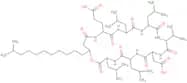
CAS :<p>Surfactin is a cyclic lipopeptide that has been found in urine and has shown potential as an anticancer agent. It has been shown to inhibit kinases, including indirubin and Chinese hamster ovary cell tumor kinase, which are involved in cancer cell proliferation. Surfactin analogs have also been developed as inhibitors of cancer cell growth and inducers of apoptosis. In addition to its anticancer properties, surfactin has been found to have antimicrobial activity against a variety of bacteria, including Clostridium perfringens. Overall, surfactin shows promise as a multifunctional therapeutic agent with potential applications in both cancer treatment and microbial control.</p>Formule :C53H93N7O13Degré de pureté :Min. 95%Masse moléculaire :1,036.3 g/mol(1-Ethyl-1-methylpropyl)benzene
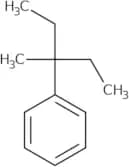
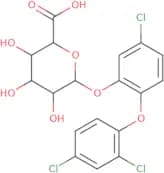
CAS :<p>(1-Ethyl-1-methylpropyl)benzene is an impurity of some drugs. It is a metabolite of the drug, and can be found in urine or blood samples as a result of its excretion from the body. (1-Ethyl-1-methylpropyl)benzene is used as an analytical standard for HPLC analysis. This chemical is not on the USP list of impurities, but it is listed on the pharmacopoeia. The CAS number for (1-Ethyl-1-methylpropyl)benzene is 1985-97-3.</p>Formule :C12H18Degré de pureté :Min. 95%Masse moléculaire :162.27 g/molTriclosan o-β-D-glucuronide sodium salt
CAS :<p>Triclosan o-β-D-glucuronide sodium salt is an analog of Triclosan, which is a potent inhibitor of bacterial enoyl-acyl carrier protein reductase. It has been shown to have anticancer properties, inhibiting the growth of cancer cells by inducing apoptosis and inhibiting kinase activity. This compound has been found to be effective against a variety of tumors and cancers, including thyroid cancer. Triclosan o-β-D-glucuronide sodium salt has also been shown to inhibit the activity of human protein kinases, making it a potential candidate for the development of new anticancer drugs. This compound can be detected in urine samples from both humans and Chinese hamsters, indicating its potential for use as a diagnostic tool for cancer detection.</p>Formule :C18H15Cl3O8Degré de pureté :Min. 95%Masse moléculaire :465.7 g/molEmtricitabine impurity 17
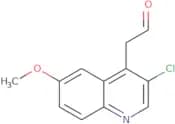
CAS :<p>Please enquire for more information about Emtricitabine impurity 17 including the price, delivery time and more detailed product information at the technical inquiry form on this page</p>Formule :C8H10FN3O4SDegré de pureté :Min. 95%Masse moléculaire :263.24 g/molRef: 3D-IE183412
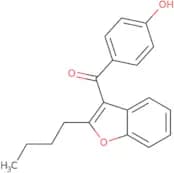
Produit arrêtéAmiodarone impurity E
CAS :<p>Amiodarone impurity E is a nucleophilic compound that is synthesized by the acylation of a diazonium salt with an amine. It has been shown to be active against staphylococci, but not against subtilis. The reaction may be catalyzed by acid or chloride. Amiodarone impurity E is also demethylated and dehydrated to form the final product, amiodarone.</p>Formule :C19H18O3Degré de pureté :Min. 95%Couleur et forme :PowderMasse moléculaire :294.34 g/molRef: 3D-IA63609
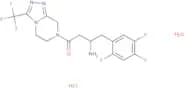
Produit arrêtéSitagliptin monohydrochloride monohydrate
CAS :<p>Sitagliptin monohydrochloride monohydrate is an inhibitor of dipeptidyl peptidase-4 (DPP-4), which is responsible for the degradation of incretin hormones. It is used in the treatment of type 2 diabetes mellitus, as it increases insulin secretion and reduces blood glucose levels. Recent studies have shown that Sitagliptin has anticancer properties, as it induces apoptosis in cancer cells. It also inhibits protein kinases, which are involved in tumor growth and metastasis. Capsaicin, a compound found in chili peppers, has been shown to enhance the anticancer activity of Sitagliptin in Chinese hamster ovary cells. The drug is excreted primarily through urine and has a low potential for drug interactions with other kinase inhibitors. Overall, Sitagliptin monohydrochloride monohydrate shows great promise as both a diabetes medication and an anticancer agent.</p>Formule :C16H18ClF6N5O2Degré de pureté :Min. 95%Couleur et forme :PowderMasse moléculaire :461.79 g/molRef: 3D-MJB15692
Produit arrêtéAmlodipine EP Impurity F maleate
CAS :<p>Amlodipine EP Impurity F maleate is an impurity of amlodipine, a drug product. It is a natural substance that has been classified as an API impurity in the United States Pharmacopeia (USP). The chemical name for this drug is 3-(2-chlorophenyl)-1-methyl-5-(o-tolyloxy)-2,4-dihydro-6H-[1,3]thiazolo[3,2-a]pyrimidin-7-one. Amlodipine EP Impurity F maleate has the following properties: C12H9ClNO2S and a melting point of 210°C with a purity of 99.5%. This compound was synthesized by custom synthesis and is used as an analytical standard for HPLC. This compound was also used during the development of amlodipine to determine its metabolism studies.</p>Formule :C19H23ClN2O5•C4H4O4Degré de pureté :Min. 95%Masse moléculaire :510.92 g/mol2,2',4,4',6,6'-Hexachlorobiphenyl
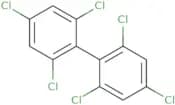
CAS :Produit contrôlé<p>2,2',4,4',6,6'-Hexachlorobiphenyl (PCB-136) is a potent anticancer agent that has been shown to induce apoptosis in cancer cells. It acts as a kinase inhibitor by blocking the activity of specific kinases involved in tumor growth and progression. PCB-136 has been studied extensively in human and Chinese hamster ovary cells and has been found to be highly effective against various types of cancer. This medicinal analog also exhibits inhibitory effects on the protein kinases that regulate cell division and proliferation, making it a promising candidate for cancer therapy. In addition, PCB-136 shows potential for use as a urinary biomarker for exposure to environmental pollutants due to its persistence in the environment and ability to accumulate in body tissues.</p>Formule :C12H4Cl6Degré de pureté :Min. 95%Masse moléculaire :360.9 g/mol(-)-Sabinene
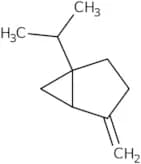
CAS :<p>(-)-Sabinene is a natural compound found in urine and various medicinal plants, including Chinese herbs. It has been identified as an analog of another natural compound that exhibits potent anticancer activity. (-)-Sabinene has been shown to inhibit the activity of certain proteins involved in cell cycle regulation and apoptosis, which are important processes for the growth and survival of cancer cells. In addition, (-)-Sabinene has been found to have inhibitory effects on tumor kinase activity, making it a promising candidate for the development of new anticancer drugs. Studies have shown that (-)-Sabinene can effectively inhibit the growth of various types of cancer cells, making it a potential therapeutic agent for the treatment of cancer.</p>Formule :C10H16Degré de pureté :Min. 95%Couleur et forme :Clear LiquidMasse moléculaire :136.23 g/mol