


APIs pour la recherche et les impuretés
Sous-catégories appartenant à la catégorie "APIs pour la recherche et les impuretés"
- Acides Aminés et Dérivés(12.444 produits)
- Anthraquinones et Dérivés(407 produits)
- Dérivés du Benzimidazole et de l’Imidazole(10.465 produits)
- Dérivés des Benzodiazépines(335 produits)
- Glucides et Glycoconjugués(5.390 produits)
- Esters et Dérivés(42.308 produits)
- Acides Gras et Dérivés Lipidiques(32.489 produits)
- Flavonoïdes et Polyphénols(17.102 produits)
- Radicaux Libres et Agents Oxydants/Réducteurs(215 produits)
- Cétones et Dérivés(2.692 produits)
- Antibiotiques Naturels et Semi-Synthétiques(6.414 produits)
- Nitriles et Dérivés Cyano(3.070 produits)
- Nitrosamines et Dérivés(55 produits)
- Nucléosides et Nucléotides(3.494 produits)
- Phosphates et Phosphonates Organiques(1.205 produits)
- Sulfonates et Sulfates Organiques(10.452 produits)
- Composés Organométalliques(4.425 produits)
- Autres(6.340 produits)
- Peptides et Protéines(3.162 produits)
- Polymères et Dérivés(100 produits)
- Dérivés des Purines et Pyrimidines(8.976 produits)
- Dérivés de Quinazoline et de Quinoléine(66.237 produits)
- Quinones et Dérivés(24.381 produits)
- Sels et Dérivés d’API(92.986 produits)
- Stéroïdes et Dérivés(4.987 produits)
- Sulfamides et Dérivés(2.607 produits)
- Terpénoïdes et Dérivés(3.871 produits)
- Thiazolidinediones et Thiopyranes(2.755 produits)
- Composés β-Adrénergiques(232 produits)
66910 produits trouvés pour "APIs pour la recherche et les impuretés"
N,N'-Bis[3-acetyl-4-[3-[(1,1-dimethylethyl)amino]-2-hydroxypropoxy]phenyl]-urea
CAS :N,N'-Bis[3-acetyl-4-[3-[(1,1-dimethylethyl)amino]-2-hydroxypropoxy]phenyl]-urea is a synthetic drug product that is used in research and development for the treatment of various diseases. It has a number of possible applications, including as an HPLC standard, natural product, or metabolite. N,N'-Bis[3-acetyl-4-[3-[(1,1-dimethylethyl)amino]-2-hydroxypropoxy]phenyl]-urea can be used to study the metabolism of drugs and may also be used as an API impurity or a pharmacopoeia.Formule :C31H46N4O7Degré de pureté :Min. 95%Masse moléculaire :586.7 g/molPropylidine Ropinirole Hydrochloride
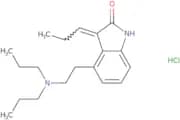
CAS :Propylidine ropinirole hydrochloride is a synthetic drug product that is used to treat Parkinson's disease. It has a high purity, analytical, and research and development. The CAS number for this compound is 221264-43-3. This compound is metabolized in the body by cytochrome P450 enzymes. Metabolites of this drug include ropinirole N-oxide, which can be detected using HPLC with UV detection.
Formule :C19H29ClN2ODegré de pureté :Min. 95%Masse moléculaire :336.9 g/mol3,5-Diiodo-4-hydroxy-DL-phenyllactic acid
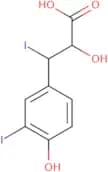
CAS :Please enquire for more information about 3,5-Diiodo-4-hydroxy-DL-phenyllactic acid including the price, delivery time and more detailed product information at the technical inquiry form on this page
Formule :C9H8I2O4Degré de pureté :Min. 95%Masse moléculaire :433.97 g/mol3’,4’-Di-o-methoxy 3,7-bis(benzyloxy) quercetin
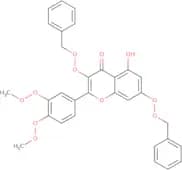
CAS :Please enquire for more information about 3’,4’-Di-o-methoxy 3,7-bis(benzyloxy) quercetin including the price, delivery time and more detailed product information at the technical inquiry form on this pageFormule :C31H26O11Degré de pureté :Min. 95%Masse moléculaire :574.5 g/mol(3R)-3-Amino-1-[5,6-dihydro-3-(trifluoromethyl)-1,2,4-triazolo[4,3-α]pyrazin-7(8H)-yl]-4-(2,3,5-trifluorophenyl)-1-butanone
CAS :Please enquire for more information about (3R)-3-Amino-1-[5,6-dihydro-3-(trifluoromethyl)-1,2,4-triazolo[4,3-α]pyrazin-7(8H)-yl]-4-(2,3,5-trifluorophenyl)-1-butanone including the price, delivery time and more detailed product information at the technical inquiry form on this page
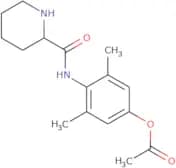
Formule :C16H15F6N5ODegré de pureté :Min. 95%Masse moléculaire :407.31 g/mol4-Acetyloxy-N-despropyl ropivacaine
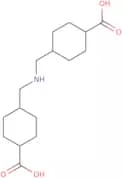
CAS :Please enquire for more information about 4-Acetyloxy-N-despropyl ropivacaine including the price, delivery time and more detailed product information at the technical inquiry form on this pageFormule :C16H22N2O3Degré de pureté :Min. 95%Masse moléculaire :290.36 g/moltrans-trans-4,4'-Iminodimethylenedi(cyclohexanecarboxylic acid)
CAS :Trans-trans-4,4'-Iminodimethylenedi(cyclohexanecarboxylic acid) is a hydrophobic particle that is soluble in water. It has an average particle diameter of 20 nm and a viscosity of 10 cps. Trans-trans-4,4'-Iminodimethylenedi(cyclohexanecarboxylic acid) is used in skin care products as a thickener and viscosity enhancer. It provides a silky feel to the skin and improves the skin's elasticity. This product also helps to protect the skin from UV radiation by forming a barrier on the surface of the skin. The natural polymer can be produced from glycerin or amide to produce different properties for different applications. Trans-trans-4,4'-Iminodimethylenedi(cyclohexanecarboxylic acid) is an amphoteric molecule that can react with both acidic
Formule :C16H27NO4Degré de pureté :Min. 95%Masse moléculaire :297.39 g/mol11β-Hydroxy-5α-pregnane-3,20-dione
CAS :Produit contrôlé11β-Hydroxy-5α-pregnane-3,20-dione is a medicinal compound that has been found to have potential anticancer properties. It is a steroid analog that inhibits protein kinases, which are enzymes involved in the regulation of cell cycle and tumor growth. This compound has shown promising results as an inhibitor of various cancer cells in Chinese hamster ovary cells and human urine-derived bladder cancer cells. 11β-Hydroxy-5α-pregnane-3,20-dione may also have applications as an inhibitor of other kinases involved in cancer growth and progression. Its unique chemical structure makes it a promising candidate for further research into its potential therapeutic applications.Formule :C21H32O3Degré de pureté :Min. 95%Masse moléculaire :332.5 g/mol4-Glutathionyl cyclophosphamide
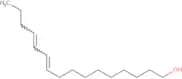
CAS :4-Glutathionyl cyclophosphamide is an analog of the anticancer drug cyclophosphamide that has been modified to include a glutathione moiety. This modification enhances the drug's ability to inhibit cancer cell growth by acting as a kinase inhibitor, which prevents cancer cells from dividing and proliferating. In addition, 4-Glutathionyl cyclophosphamide has been shown to induce apoptosis in human tumor cells, leading to their death. This drug also inhibits the activity of dabigatran, a protein involved in blood clotting. 4-Glutathionyl cyclophosphamide is excreted in urine and can be used as a potential biomarker for monitoring cancer treatment efficacy. This drug may also have synergistic effects when used in combination with other chemotherapeutic agents such as chloroquine.Formule :C17H30Cl2N5O8PSDegré de pureté :Min. 95%Masse moléculaire :566.4 g/mol(10E,12E)-10,12-Hexadecadienol
CAS :(10E,12E)-10,12-Hexadecadienol is an analog of a Chinese herbal compound that has been shown to have anticancer properties. It acts as an inhibitor of kinases, which are enzymes involved in cell signaling pathways that regulate cell growth and division. This compound has been found to induce apoptosis, or programmed cell death, in cancer cells. (10E,12E)-10,12-Hexadecadienol has also been shown to inhibit the growth of tumors in human studies. Additionally, this compound has been identified in urine samples from individuals taking the diabetes medication vildagliptin, suggesting its potential use as a biomarker for drug efficacy. Overall, (10E,12E)-10,12-Hexadecadienol shows promising potential as a natural anticancer agent with multiple therapeutic applications.Formule :C16H30ODegré de pureté :Min. 95%Masse moléculaire :238.41 g/mol6Alpha-Hydroxy-17beta-estradiol 17-valerate
CAS :6Alpha-Hydroxy-17beta-estradiol 17-valerate is a drug product that is custom synthesized and has a purity of 98.5%. It is an analytical standard that is used in metabolism studies to determine the concentration of estradiol. 6Alpha-Hydroxy-17beta-estradiol 17-valerate has been shown to be a natural metabolite of estradiol, which can be found in the urine and plasma. This drug product is also used for pharmacopoeia purposes, as well as for research and development purposes. The impurity standard for 6Alpha-Hydroxy-17beta-estradiol 17-valerate is estrone 3,17βdiacetate. HPLC standards are also available for this product.Formule :C23H32O4Degré de pureté :Min. 95%Masse moléculaire :372.50 g/molSW076956
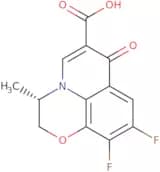
CAS :SW076956 is a potent inhibitor that targets cancer cells. This medicinal compound has been found to induce apoptosis and inhibit the growth of cancerous cells in Chinese hamster ovary (CHO) cells. SW076956 is an analog of a protein kinase inhibitor and belongs to the class of anticancer agents. This inhibitor selectively targets kinases, which are enzymes involved in cell signaling pathways that regulate cell growth and division. SW076956 has been shown to be effective against human tumor cells and may have potential therapeutic applications in cancer treatment. The compound has also been detected in urine samples, suggesting its potential as a diagnostic tool for cancer detection.Formule :C22H21N3O4SDegré de pureté :Min. 95%Masse moléculaire :423.5 g/molLevofloxacin carboxylic acid
CAS :Levofloxacin is a synthetic molecule with an asymmetric carbon atom in its heterocycle. It is synthesized by reacting chloroform with 2-fluoro-5-nitrobenzaldehyde, which reacts further with sodium hydroxide and hydrochloric acid to form the levofloxacin carboxylic acid. Impurities can be found in the reaction product due to chlorine atoms that are formed during the synthesis. The amount of impurities present in the final product can be determined using a titration method or through HPLC analysis. Levofloxacin has been shown to be effective against methicillin-resistant Staphylococcus aureus (MRSA) and Clostridium perfringens, although is not active against acid-fast bacteria such as Mycobacterium tuberculosis or Mycobacterium avium complex.
Formule :C13H9F2NO4Degré de pureté :Min. 95%Couleur et forme :PowderMasse moléculaire :281.21 g/mol4-Oxo valsartan benzyl ester
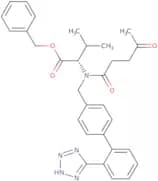
CAS :4-Oxo valsartan benzyl ester is a drug product that is used for research and development purposes. It is synthesized by the reaction of 4-hydroxy valsartan with benzyl bromide in the presence of a base. 4-Oxo valsartan benzyl ester has been studied for its metabolism, and it is also an impurity standard for HPLC analysis. The purity of this compound is >98% and it has CAS number 188240-32-6.
Formule :C31H33N5O4Degré de pureté :Min. 95%Masse moléculaire :539.63 g/molDeterenol-d7 hydrochloride
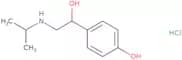
CAS :Deterenol-d7 hydrochloride is a drug product that is an analytical standard. Deterenol-d7 hydrochloride is used in metabolism studies and has been shown to be natural, with the CAS number of 1246817-36-6. Deterenol-d7 hydrochloride also has impurities that are identified as synthetic, which may have an impact on its potency. Deterenol-d7 hydrochloride can be used for Custom synthesis and Drug development, as well as Research and Development. The drug product is a niche compound, with a high purity level of 99%. Deterenol-d7 hydrochloride is a HPLC standard and complies with pharmacopoeia guidelines.Formule :C11H18ClNO2Degré de pureté :Min. 95%Masse moléculaire :238.76 g/mol4-(1,1-Dimethylpropyl)-alpha-methyl-benzenepropanal
CAS :4-(1,1-Dimethylpropyl)-alpha-methyl-benzenepropanal is a synthetic compound that is used as an impurity standard for the measurement of purity in drug products. It can also be used to monitor the metabolism of drugs, and may contribute to their side effects. 4-(1,1-Dimethylpropyl)-alpha-methyl-benzenepropanal has shown little evidence of toxicity in animal studies.Formule :C15H22ODegré de pureté :Min. 95%Masse moléculaire :218.33 g/molTiotropium Bromide EP Impurity G
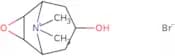
CAS :Tiotropium Bromide EP Impurity G is an anticholinergic bronchodilator that is used in the treatment of asthma. Tiotropium Bromide EP Impurity G has been shown to have long-acting properties, with a half-life of about 20 hours. It has a high affinity for the muscarinic receptor and acts as a competitive antagonist at this site. Tiotropium Bromide EP Impurity G also has a cavity, which may be necessary for its activity.Formule :C9H6BrNO2Degré de pureté :Min. 95%Masse moléculaire :240.05 g/mol(RS)-N-[(1-Ethylpyrrolidin-2-yl)methyl]-2-hydroxy-5-sulphamoylbenzamide
CAS :(RS)-N-[(1-Ethylpyrrolidin-2-yl)methyl]-2-hydroxy-5-sulphamoylbenzamide is a white to off-white crystalline powder. It is soluble in methanol and ethanol, but insoluble in water. It has an assay of >98% (HPLC), and a purity of >99% (HPLC). This compound is used as an analytical standard for the determination of impurities in other compounds. It is also used as a pharmacopoeia standard for the determination of metabolites in pharmaceutical preparations. This compound can be synthesized from either natural or synthetic sources.Formule :C14H21N3O4SDegré de pureté :Min. 95%Masse moléculaire :327.4 g/molo-Desisopropyl-o-ethyl cefpodoxime proxetil
CAS :o-Desisopropyl-o-ethyl cefpodoxime proxetil is a drug product that is used in the treatment of infections caused by bacteria. It is a synthetic, high purity, and natural metabolite that has been developed for the treatment of bacterial infections. This drug product has been shown to have an analytical purity of >99.5% and a pharmacopoeia purity of >99%. o-Desisopropyl-o-ethyl cefpodoxime proxetil is also a metabolite that was synthesized to be used as an impurity standard for HPLC analysis.Formule :C20H25N5O9S2Degré de pureté :Min. 95%Masse moléculaire :543.60 g/mol(5E)-2,2-Dimethyl-7-[(1-naphthalenylmethyl)amino]-5-hepten-3-ynoic acid
CAS :The compound (5E)-2,2-dimethyl-7-[(1-naphthalenylmethyl)amino]-5-hepten-3-ynoic acid is a chiral antifungal agent. It was developed to be used as an analytical tool for the determination of plasma concentrations and it can be used in profiling and chiral chromatography. This compound has been shown to have excellent solubility in water and good stability in most organic solvents. The compound is metabolized by the liver and excreted via the kidneys, with a half life of approximately 6 hours. The compound also shows linearity over a wide concentration range, which makes it useful for measuring quantitative changes in plasma concentrations.Formule :C20H21NO2Degré de pureté :Min. 95%Masse moléculaire :307.39 g/mol
![N,N'-Bis[3-acetyl-4-[3-[(1,1-dimethylethyl)amino]-2-hydroxypropoxy]phenyl]-urea](/_next/image/?url=https%3A%2Fstatic.cymitquimica.com%2Fproducts%2F3D%2Fthumb-webp%2FAFA57940.webp&w=3840&q=75)

![(3R)-3-Amino-1-[5,6-dihydro-3-(trifluoromethyl)-1,2,4-triazolo[4,3-α]pyrazin-7(8H)-yl]-4-(2,3,5-tr…](/_next/image/?url=https%3A%2Fstatic.cymitquimica.com%2Fproducts%2F3D%2Fthumb-webp%2FIA183165.webp&w=3840&q=75)



![(RS)-N-[(1-Ethylpyrrolidin-2-yl)methyl]-2-hydroxy-5-sulphamoylbenzamide](/_next/image/?url=https%3A%2Fstatic.cymitquimica.com%2Fproducts%2F3D%2Fthumb-webp%2FIE145489.webp&w=3840&q=75)
![(5E)-2,2-Dimethyl-7-[(1-naphthalenylmethyl)amino]-5-hepten-3-ynoic acid](/_next/image/?url=https%3A%2Fstatic.cymitquimica.com%2Fproducts%2F3D%2Fthumb-webp%2FID21358.webp&w=3840&q=75)