APIs pour la recherche et les impuretés
Sous-catégories appartenant à la catégorie "APIs pour la recherche et les impuretés"
- Acides Aminés et Dérivés(12.440 produits)
- Anthraquinones et Dérivés(407 produits)
- Dérivés du Benzimidazole et de l’Imidazole(10.464 produits)
- Dérivés des Benzodiazépines(335 produits)
- Glucides et Glycoconjugués(5.388 produits)
- Esters et Dérivés(42.306 produits)
- Acides Gras et Dérivés Lipidiques(32.486 produits)
- Flavonoïdes et Polyphénols(17.100 produits)
- Radicaux Libres et Agents Oxydants/Réducteurs(214 produits)
- Cétones et Dérivés(2.692 produits)
- Antibiotiques Naturels et Semi-Synthétiques(6.409 produits)
- Nitriles et Dérivés Cyano(3.070 produits)
- Nitrosamines et Dérivés(55 produits)
- Nucléosides et Nucléotides(3.492 produits)
- Phosphates et Phosphonates Organiques(1.203 produits)
- Sulfonates et Sulfates Organiques(10.451 produits)
- Composés Organométalliques(4.425 produits)
- Autres(6.340 produits)
- Peptides et Protéines(3.164 produits)
- Polymères et Dérivés(100 produits)
- Dérivés des Purines et Pyrimidines(8.974 produits)
- Dérivés de Quinazoline et de Quinoléine(66.218 produits)
- Quinones et Dérivés(24.378 produits)
- Sels et Dérivés d’API(92.894 produits)
- Stéroïdes et Dérivés(4.987 produits)
- Sulfamides et Dérivés(2.607 produits)
- Terpénoïdes et Dérivés(3.860 produits)
- Thiazolidinediones et Thiopyranes(2.755 produits)
- Composés β-Adrénergiques(231 produits)
66870 produits trouvés pour "APIs pour la recherche et les impuretés"
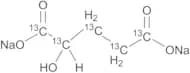
2-Hydroxyglutarate-13C5 Disodium Salt
CAS :Produit contrôléApplications 2-Hydroxyglutarate-13C5,d8 is used in the 13C NMR detection of 2-hydroxyglutarate in tissue extracts from isocitrate dehydrogenase-mutated gliomas.
References Pichumani, K., et al.: Anal. Biochem., 481, 4 (2015)Formule :C5H6Na2O5Couleur et forme :NeatMasse moléculaire :197.041-{4-[(4-methyl-1,4-diazepan-1-yl)methyl]phenyl}methanamine
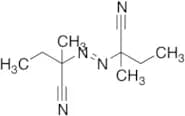
CAS :Masse moléculaire :233.358993530273442,2'-Azobis-(2-methylbutyronitrile)
CAS :Applications 2,2'-AZOBIS-(2-METHYLBUTYRONITRILE) (cas# 13472-08-7) is a useful research chemical.
Dangerous Goods Info This compound is forbidden to ship by air under IATA regulations.Formule :C10H16N4Couleur et forme :White to Off-White SolidMasse moléculaire :192.27(1S,2S,3R,5S)-3-[7-[[(1R,2S)-2-(2,3-Difluorophenyl)cyclopropyl]amino]-5-(propylthio)-3H-1,2,3-triazolo[4,5-d]pyrimidin-3-yl]-5-(2-hy droxyethoxy)-1,2-cyclopentanediol
CAS :Please enquire for more information about (1S,2S,3R,5S)-3-[7-[[(1R,2S)-2-(2,3-Difluorophenyl)cyclopropyl]amino]-5-(propylthio)-3H-1,2,3-triazolo[4,5-d]pyrimidin-3-yl]-5-(2-hy droxyethoxy)-1,2-cyclopentanediol including the price, delivery time and more detailed product information at the technical inquiry form on this page
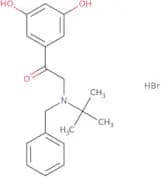
Formule :C23H28F2N6O4SMasse moléculaire :522.57 g/molTerbutaline impurity D
CAS :Produit contrôléTerbutaline Impurity D is a synthetic drug with the CAS number 94109-61-2. This product has been developed as an impurity standard for Terbutaline, which is a drug product that has been approved by the United States Pharmacopoeia (USP). Terbutaline Impurity D can be used to study the metabolism of Terbutaline in animals. It is also used to develop new drugs by chemists and other scientists.
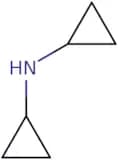
Formule :C19H23NO3Degré de pureté :Min. 95%Masse moléculaire :313.39 g/molDicyclopropylamine
CAS :Dicyclopropylamine is a molecule that has been clinically developed as a drug. It is an inhibitor of the enzyme tyrosinase, which is involved in the production of melanin, and has been shown to have anti-cancer properties. Dicyclopropylamine hydrochloride has been shown to be effective against aliphatic hydrocarbons such as hexane and cyclohexane, as well as aromatic compounds such as benzene and toluene. This drug can also bind to coordination complexes with high kinetic energy, which may be useful for tumor treatment. Dicyclopropylamine hydrochloride can be used for the clinical treatment of human epidermoid carcinoma.
Formule :C6H11NDegré de pureté :Min. 95%Masse moléculaire :97.16 g/molTrazodone hydrochloride impurity C
Trazodone is a psychotropic agent that belongs to the group of antidepressants. Trazodone hydrochloride impurity C is a metabolite of trazodone and can be used as an impurity standard for the drug product in pharmacopoeia. Trazodone hydrochloride impurity C has been found in urine, blood, and saliva after administration of trazodone. It is also found in the plasma of pregnant women who are taking trazodone to treat depression or anxiety during pregnancy.
Trazodone hydrochloride impurity C is synthesized using a custom synthesis with high purity. It has been shown to have a niche market as an analytical reference material for HPLC standards.Formule :C19H23Cl2N5ODegré de pureté :Min. 95%Masse moléculaire :408.32 g/molCetirizine propanediol ester impurity
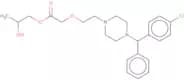
Cetirizine is a drug product that is metabolized to cetirizine propanediol ester. This impurity has been identified in the drug and is not expected to cause any adverse effects in humans. Cetirizine propanediol ester can be synthesized and purified through high-purity, analytical, and natural methods. The pharmacopoeia defines cetirizine propanediol ester as a metabolite of cetirizine. It can also be used as an impurity standard for HPLC analysis.
Formule :C24H31ClN2O4Degré de pureté :Min. 95%Masse moléculaire :446.97 g/molEverolimus O-ethyl impurity
CAS :Everolimus is an immunosuppressant that belongs to the group of rapamycin analogs. It is a synthetic drug and has been shown to be effective in preventing rejection of transplanted organs, such as kidneys, livers, and hearts. Everolimus O-ethyl impurity is a metabolite of everolimus that can be used as a standard for HPLC analysis. The CAS number for this impurity is 1704711-12-5. Everolimus O-ethyl impurity can also be used as a reference material in metabolism studies.
Formule :C54H85NO14Degré de pureté :Min. 95%Masse moléculaire :972.25 g/molTrazodone Hydrochloride Impurity G
Trazodone Hydrochloride Impurity G is a synthetic compound that is an impurity found in Trazodone Hydrochloride, CAS No. 77893-17-6. This compound has the following physical properties: MW = 284.27, mp = 227-229°C, [α] D = -33.5° (c 1.0 in water), and UV max (λ max ) = 228 nm. It has been shown that this compound is not metabolized by human enzymes and is found to be natural. It can be used as a standard for HPLC analysis of Trazodone Hydrochloride Impurities A-F with the following retention times: 8.7 min for Impurity A, 9.2 min for Impurity B, 9.9 min for Impurity C, 10.4 min for Impurity D, 11.1 min for Impurity E, and 12.3 min for Impurity F.BR>BR
Formule :C17H27ClN2O·HClDegré de pureté :Min. 95%Masse moléculaire :347.32 g/mol11-(1-Piperazinyl)dibenzo[b,f][1,4]thiazepine hydrochloride
CAS :11-(1-Piperazinyl)dibenzo[b,f][1,4]thiazepine hydrochloride is a drug product that is used as an impurity standard in the manufacture of 11-aminoundecanoic acid. It is also used to study the metabolism of this compound. This drug product is not intended for use in humans or animals.
Formule :C17H18ClN3SDegré de pureté :Min. 95%Couleur et forme :PowderMasse moléculaire :331.9 g/molDecitabine impurity 12
Decitabine Impurity 12 is an analytical standard that is used in the research and development of drug products. It is a high purity, HPLC-grade impurity that complies with USP/NF requirements. Decitabine Impurity 12 has been shown to be a metabolite of decitabine, which is an anti-cancer drug used in the treatment of myelodysplastic syndrome (MDS) and acute myeloid leukemia (AML). This impurity has also been shown to have pharmacopoeia value as an impurity standard for drug products.
Formule :C4H6N6O2Degré de pureté :Min. 95%Masse moléculaire :170.13 g/molAtropine impurity D
Atropine impurity D is a drug product that is an analytical standard for the metabolism studies of atropine. It is a natural API that belongs to the group of drugs and has CAS number 72-48-0. This drug has been synthesized from the synthetic process and then purified by HPLC. The purity of this drug exceeds 99%. Atropine impurity D is used as an impurity standard in pharmacopoeia, research and development, and drug development.
Degré de pureté :Min. 95%Rotigotine Impurity 7
CAS :Rotigotine Impurity 7 is an impurity that has been identified in the synthesis of rotigotine. Rotigotine Impurity 7 is a synthetic compound with a CAS number of 1229620-82-9. It is intended for use as an analytical standard and as a component in the manufacture of rotigotine, which is indicated for the management of Parkinson's disease. This product has not been tested in animals or humans, and it should be handled with care.
Formule :C21H28ClNO2SDegré de pureté :Min. 95%Masse moléculaire :393.97 g/mol(3R)-3-Amino-1-[5,6-dihydro-3-(trifluoromethyl)-1,2,4-triazolo[4,3-α]pyrazin-7(8H)-yl]-4-(2,3,6-trifluorophenyl)-1-butanone
CAS :Please enquire for more information about (3R)-3-Amino-1-[5,6-dihydro-3-(trifluoromethyl)-1,2,4-triazolo[4,3-α]pyrazin-7(8H)-yl]-4-(2,3,6-trifluorophenyl)-1-butanone including the price, delivery time and more detailed product information at the technical inquiry form on this page
Formule :C16H15F6N5ODegré de pureté :Min. 95%Masse moléculaire :407.31 g/molTrazodone hydrochloride impurity H
Trazodone hydrochloride impurity H is an impurity of the drug product Trazodone hydrochloride. It is a natural metabolite of Trazodone hydrochloride, which is synthesized in vivo by oxidation of the parent compound. Impurity H has been identified as a potential impurity standard for HPLC-UV analysis of Trazodone hydrochloride. The purity of this compound is 98.3% and it is available on a custom synthesis basis.
Formule :C23H30Cl2N4·HClDegré de pureté :Min. 95%Masse moléculaire :469.88 g/molRifaximin Impurity 1
CAS :Rifaximin Impurity 1 is a synthetic impurity standard for Rifaximin. It is a metabolite of rifaximin and is used in research and development to test the purity of drug products. It has a molecular weight of 314.2 g/mol and molecular formula C9H16N4O4S. This product is not manufactured by or for the original equipment manufacturer (OEM).
Formule :C43H49N3O11Degré de pureté :Min. 95%Masse moléculaire :783.86 g/mol


![1-{4-[(4-methyl-1,4-diazepan-1-yl)methyl]phenyl}methanamine](/_next/image/?url=https%3A%2Fstatic.cymitquimica.com%2Fproducts%2F10%2Fthumb-webp%2FF518958.webp&w=3840&q=75)

![(1S,2S,3R,5S)-3-[7-[[(1R,2S)-2-(2,3-Difluorophenyl)cyclopropyl]amino]-5-(propylthio)-3H-1,2,3-tria…](/_next/image/?url=https%3A%2Fstatic.cymitquimica.com%2Fproducts%2F3D%2Fthumb-webp%2FID184387.webp&w=3840&q=75)


![11-(1-Piperazinyl)dibenzo[b,f][1,4]thiazepine hydrochloride](/_next/image/?url=https%3A%2Fstatic.cymitquimica.com%2Fproducts%2F3D%2Fthumb-webp%2FIN181068.webp&w=3840&q=75)

![(3R)-3-Amino-1-[5,6-dihydro-3-(trifluoromethyl)-1,2,4-triazolo[4,3-α]pyrazin-7(8H)-yl]-4-(2,3,6-tr…](/_next/image/?url=https%3A%2Fstatic.cymitquimica.com%2Fproducts%2F3D%2Fthumb-webp%2FIA183166.webp&w=3840&q=75)