APIs pour la recherche et les impuretés
Les principes actifs pharmaceutiques (API) sont les substances présentes dans les médicaments qui sont responsables de leurs effets thérapeutiques. Dans cette section, vous trouverez une grande variété d'API destinés à un usage de recherche. Ces composés sont essentiels pour le développement, les tests et la validation de nouvelles formulations pharmaceutiques. Chez CymitQuimica, nous proposons des API de haute qualité pour soutenir la recherche dans la découverte et le développement de médicaments.
Sous-catégories appartenant à la catégorie "APIs pour la recherche et les impuretés"
- Acides Aminés et Dérivés(12.327 produits)
- Anthraquinones et Dérivés(405 produits)
- Dérivés du Benzimidazole et de l’Imidazole(10.433 produits)
- Dérivés des Benzodiazépines(335 produits)
- Glucides et Glycoconjugués(5.014 produits)
- Esters et Dérivés(42.245 produits)
- Acides Gras et Dérivés Lipidiques(32.393 produits)
- Flavonoïdes et Polyphénols(17.085 produits)
- Radicaux Libres et Agents Oxydants/Réducteurs(213 produits)
- Cétones et Dérivés(2.401 produits)
- Antibiotiques Naturels et Semi-Synthétiques(6.376 produits)
- Nitriles et Dérivés Cyano(3.067 produits)
- Nitrosamines et Dérivés(55 produits)
- Nucléosides et Nucléotides(3.431 produits)
- Phosphates et Phosphonates Organiques(1.202 produits)
- Sulfonates et Sulfates Organiques(10.433 produits)
- Composés Organométalliques(4.422 produits)
- Autres(6.291 produits)
- Peptides et Protéines(3.143 produits)
- Polymères et Dérivés(100 produits)
- Dérivés des Purines et Pyrimidines(8.948 produits)
- Dérivés de Quinazoline et de Quinoléine(65.924 produits)
- Quinones et Dérivés(24.344 produits)
- Sels et Dérivés d’API(79.624 produits)
- Stéroïdes et Dérivés(4.973 produits)
- Sulfamides et Dérivés(2.592 produits)
- Terpénoïdes et Dérivés(3.845 produits)
- Thiazolidinediones et Thiopyranes(2.752 produits)
- Composés β-Adrénergiques(230 produits)
Affichez 21 plus de sous-catégories
56931 produits trouvés pour "APIs pour la recherche et les impuretés"
Trier par
Degré de pureté (%)
0
100
|
0
|
50
|
90
|
95
|
100
Aflatoxin B1 8,9-Epoxide
CAS :Produit contrôléFormule :C17H12O7Degré de pureté :>80%Couleur et forme :NeatMasse moléculaire :328.271-{4-[(4-methyl-1,4-diazepan-1-yl)methyl]phenyl}methanamine
CAS :Masse moléculaire :233.3589935302734415-O-Demethyl Tacrolimus
CAS :<p>Tacrolimus is a macrolide that is used as an immunosuppressive drug. It has been shown to bind to the FK-binding protein, which in turn inhibits calcineurin. This prevents the release of IL-2, TNF-α and other cytokines. The immunosuppressive effects of tacrolimus have been evaluated using analytical methods such as coefficients, affinity, and monitoring techniques such as immunoassays and agglutination. These techniques are used to evaluate the plasma concentration of tacrolimus. Tacrolimus also binds to proteins in the blood samples and can be detected by turbidimetric or electrochemiluminescence immunoassay reagents.</p>Formule :C43H67NO12Degré de pureté :Min. 95%Masse moléculaire :789.99 g/molRotigotine Impurity 7
CAS :<p>Rotigotine Impurity 7 is an impurity that has been identified in the synthesis of rotigotine. Rotigotine Impurity 7 is a synthetic compound with a CAS number of 1229620-82-9. It is intended for use as an analytical standard and as a component in the manufacture of rotigotine, which is indicated for the management of Parkinson's disease. This product has not been tested in animals or humans, and it should be handled with care.</p>Formule :C21H28ClNO2SDegré de pureté :Min. 95%Masse moléculaire :393.97 g/molDecitabine impurity 14
CAS :<p>Decitabine impurity 14 is an impurity of decitabine. It is a stable, natural product that has been synthesized for use as an analytical standard and pharmacopoeia reference material. Decitabine impurity 14 is a white crystalline powder with a melting point of about 152°C. It is soluble in water, ethanol and ether. The chemical name for this compound is 2-amino-4,6-dihydroxypyrimidine-5-carbonitrile hydrochloride.</p>Formule :C5H11NO3Degré de pureté :Min. 95%Masse moléculaire :133.15 g/molN-Desmethyl trimeprazine
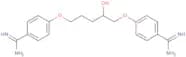
CAS :<p>N-Desmethyl trimeprazine is a synthetic compound, which is an impurity of the drug product. It is not active and does not possess any biological activity. It is a metabolite of the parent drug, Trimeprazine. N-Desmethyl trimeprazine has been studied for its pharmacological properties and metabolism in the body, but no conclusive results have been found. The chemical structure and purity of N-Desmethyl trimeprazine are not listed in the USP or BP. This compound can be custom synthesized on request.</p>Formule :C17H20N2SDegré de pureté :Min. 95%Masse moléculaire :284.40 g/mol1,5-Bis(4-amidinophenoxy)-2-pentanol
CAS :<p>Please enquire for more information about 1,5-Bis(4-amidinophenoxy)-2-pentanol including the price, delivery time and more detailed product information at the technical inquiry form on this page</p>Formule :C19H24N4O3Degré de pureté :Min. 95%Masse moléculaire :356.4 g/molPirtenidine
CAS :<p>Pirtenidine is a potent and selective kinase inhibitor that has been shown to inhibit the activity of cyclin-dependent kinases. It has demonstrated promising results in preclinical studies as an anticancer agent, inducing apoptosis in cancer cells. Pirtenidine is an analog of protein kinase inhibitors, which have been used to treat various types of tumors. It has been found to be effective against human cancer cell lines and has shown significant tumor growth inhibition in animal models. Pirtenidine has also been reported to be a potent urine inhibitor of Chinese hamster ovary cells, making it a promising candidate for the treatment of urinary tract cancers.</p>Formule :C21H38N2Degré de pureté :Min. 95%Masse moléculaire :318.5 g/molSinalexin
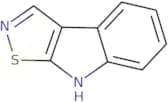
CAS :<p>Sinalexin is an anticancer drug that targets human protein kinases. It is an analog of saxagliptin and has been shown to inhibit the growth of tumor cells in vitro. Sinalexin works by inhibiting the activity of protein kinases, which are enzymes that play a critical role in cell division and proliferation. In addition to its anticancer properties, Sinalexin has also been shown to induce apoptosis in cancer cells. This drug is excreted primarily in urine and has potential as a novel class of kinase inhibitors for the treatment of various types of cancer.</p>Formule :C9H6N2SDegré de pureté :Min. 95%Masse moléculaire :174.22 g/molFonofos
CAS :<p>Fonofos is a potent inhibitor that has been shown to induce apoptosis in Chinese hamster ovary cells. It is also known to inhibit chitin kinase, a protein that plays an important role in the biosynthesis of chitin, which is essential for the formation of cell walls in fungi and insects. Fonofos has medicinal properties and has been studied as a potential anticancer agent due to its ability to inhibit tumor growth. In vitro studies have shown that Fonofos can inhibit the growth of human cancer cells by inhibiting heparin-binding proteins. Additionally, it has been found to have inhibitory effects on several other enzymes involved in cancer development and progression. Although not approved for use in humans, Fonofos may hold promise as a therapeutic agent for the treatment of certain cancers.</p>Formule :C10H15OPS2Degré de pureté :Min. 95%Masse moléculaire :246.3 g/molNP-AHD-13C3
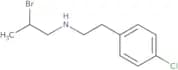
CAS :<p>Please enquire for more information about NP-AHD-13C3 including the price, delivery time and more detailed product information at the technical inquiry form on this page</p>Formule :C10H8N4O4Degré de pureté :Min. 95%Masse moléculaire :251.17 g/mol2-Bromo-N-(4-chlorophenethyl)propan-1-amine hydrobromide
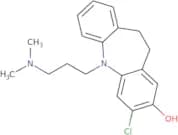
CAS :<p>Please enquire for more information about 2-Bromo-N-(4-chlorophenethyl)propan-1-amine hydrobromide including the price, delivery time and more detailed product information at the technical inquiry form on this page</p>Formule :C11H15BrClNDegré de pureté :Min. 95%Masse moléculaire :276.6 g/mol3-Chloro-2-hydroxyimipramine
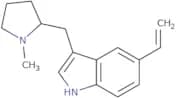
CAS :<p>3-Chloro-2-hydroxyimipramine is a potent anticancer agent that has shown promising results in preclinical studies. This compound is a kinase inhibitor that targets cancer cells and induces apoptosis, leading to tumor regression. It has been found in urine samples of Chinese medicinal herb users and shows an analog structure to imipramine, an antidepressant drug. 3-Chloro-2-hydroxyimipramine inhibits kinases involved in cell proliferation and survival, making it a potential treatment option for various types of cancer in humans. Its anti-cancer properties make it an attractive candidate for further research and development as a potential therapeutic agent.</p>Formule :C19H23ClN2ODegré de pureté :Min. 95%Masse moléculaire :330.8 g/mol(R)-3-((1-Methylpyrrolidin-2-yl)methyl)-5-vinyl-1H-indole
CAS :<p>Please enquire for more information about (R)-3-((1-Methylpyrrolidin-2-yl)methyl)-5-vinyl-1H-indole including the price, delivery time and more detailed product information at the technical inquiry form on this page</p>Formule :C16H20N2Degré de pureté :Min. 95%Masse moléculaire :240.34 g/molXanthoxin
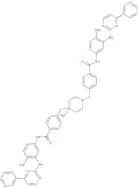
CAS :<p>Xanthoxin is a medicinal compound with potent anticancer properties. It has been shown to induce apoptosis, or programmed cell death, in cancer cells. Xanthoxin has been tested in various cancer cell lines, including Chinese and human cells, and has demonstrated strong inhibitory effects on the tumor cycle. This compound works by inhibiting kinases and other proteins involved in cancer cell growth and proliferation. Xanthoxin is also known to be an inhibitor of certain urinary proteins that are associated with cancer progression. Overall, Xanthoxin shows great potential as a natural product for the development of novel anticancer therapies.</p>Formule :C15H22O3Degré de pureté :Min. 95%Masse moléculaire :250.33 g/molDes(methylpiperazinyl) imatinib dimer piperazinium chloride
CAS :<p>Please enquire for more information about Des(methylpiperazinyl) imatinib dimer piperazinium chloride including the price, delivery time and more detailed product information at the technical inquiry form on this page</p>Formule :C53H51N12O2Degré de pureté :Min. 95%Masse moléculaire :888 g/mol(1-Ethyl-1-methylpropyl)benzene
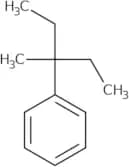
CAS :<p>(1-Ethyl-1-methylpropyl)benzene is an impurity of some drugs. It is a metabolite of the drug, and can be found in urine or blood samples as a result of its excretion from the body. (1-Ethyl-1-methylpropyl)benzene is used as an analytical standard for HPLC analysis. This chemical is not on the USP list of impurities, but it is listed on the pharmacopoeia. The CAS number for (1-Ethyl-1-methylpropyl)benzene is 1985-97-3.</p>Formule :C12H18Degré de pureté :Min. 95%Masse moléculaire :162.27 g/mol




![1-{4-[(4-methyl-1,4-diazepan-1-yl)methyl]phenyl}methanamine](/_next/image/?url=https%3A%2Fstatic.cymitquimica.com%2Fproducts%2F10%2Fthumb-webp%2FF518958.webp&w=3840&q=75)