Acides aminés (AA)
Les acides aminés (AA) sont les éléments constitutifs fondamentaux des protéines, jouant un rôle crucial dans divers processus biologiques. Ces composés organiques sont essentiels pour la synthèse des protéines, les voies métaboliques et la signalisation cellulaire. Dans cette catégorie, vous trouverez une gamme complète d'acides aminés, y compris des formes essentielles, non essentielles et modifiées, qui sont vitales pour la recherche en biochimie, biologie moléculaire et sciences de la nutrition. Chez CymitQuimica, nous fournissons des acides aminés de haute qualité pour soutenir vos besoins en recherche et développement, garantissant précision et fiabilité dans vos résultats expérimentaux.
Sous-catégories appartenant à la catégorie "Acides aminés (AA)"
- Dérivés d'acides aminés(3.955 produits)
- Acide aminé et composés apparentés aux acides aminés(3.461 produits)
- Acides aminés avec de l'oxygène ou du soufre(168 produits)
- Boc- Acides aminés(351 produits)
- Acides aminés avec groupes protecteurs(1.710 produits)
38244 produits trouvés pour "Acides aminés (AA)"
Trier par
Degré de pureté (%)
0
100
|
0
|
50
|
90
|
95
|
100
Gly-Asp-OH
CAS :<p>Gly-Asp-OH is a medicine that has proliferative activity. It is also an immunoregulatory and biologically active substance, which suppresses the production of cytokines IL-10 in mononuclear cells. Gly-Asp-OH is a synthetic compound with medicinal properties. The structure of this compound was elucidated by chemical analysis and spectroscopic methods. It can be used as an anti-inflammatory agent or to prevent cell death induced by necrosis or apoptosis.</p>Formule :C6H10N2O5Degré de pureté :Min. 95 Area-%Couleur et forme :PowderMasse moléculaire :190.15 g/molDL-Proline
CAS :<p>DL-Proline is a biological molecule that has been shown to bind to the DNA binding domains of proteins. This binding can be seen with the crystal structures of DL-proline and protein. The reaction mechanism for DL-proline is as follows:<br><br>DL-Proline + Protein → Proline + Protein<br><br>The equilibrium constant for this reaction is 1.0 at 298 K. The pKa value for the amide group in DL-proline is 4.8, which means that it will react with water and form an amine group at physiological pH levels. DL-Proline has been shown to have metabolic disorders.</p>Formule :C5H9NO2Degré de pureté :Min. 95%Couleur et forme :PowderMasse moléculaire :115.13 g/molPoly ε L-lysine HCl - Average MW 2000~4700Da
CAS :<p>Antimicrobial cationic peptide; used for microscopy glass slides coating</p>Formule :(C6H12N2O•HCl)nDegré de pureté :Min. 95 Area-%Couleur et forme :White Yellow Powder1-(3,4-Methylenedioxyphenyl) 2-nitropropene
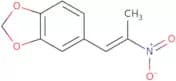
CAS :<p>1-(3,4-Methylenedioxyphenyl) 2-nitropropene (1-MPNP) is a phosphatase inhibitor that is active against gram-negative bacteria by inhibiting enterotoxins and chlamydia. 1-MPNP inhibits the activity of tyrosine phosphatases, which are enzymes that play a major role in bacterial virulence. 1-MPNP competitively inhibits the activity of tyrosine phosphatases and prevents them from catalyzing the hydrolysis of polyphosphate substrates. This inhibition leads to an accumulation of polyphosphates in the bacterial cell membrane, which disrupts its permeability and leads to cell death.</p>Formule :C10H9NO4Degré de pureté :Min. 97.5 Area-%Couleur et forme :Yellow PowderMasse moléculaire :207.18 g/mol3,4-Methylenedioxy propiophenone
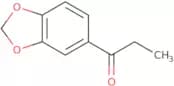
CAS :Produit contrôlé<p>3,4-Methylenedioxy propiophenone is a synthetic compound with a fatty acid chain. It has been shown to have potent activity against leishmania and has been used as an intermediate in the synthesis of other drugs. 3,4-Methylenedioxy propiophenone can be synthesized by acylation reactions with chloride and acetylcholinesterase inhibition. This product also has molecular docking properties, which have been analyzed using computational methods, such as profiling and profile analysis.</p>Formule :C10H10O3Degré de pureté :Min. 98 Area-%Couleur et forme :Slightly Brown PowderMasse moléculaire :178.18 g/mol(Z)-Ethyl 2-((2S,4R,5S)-4,5-Dihydroxy-2-methoxydihydro-2H-pyran-3(4H)-ylidene)acetate-13C3
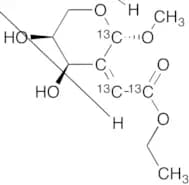
Produit contrôlé<p>Applications (Z)-Ethyl 2-((2S,4R,5S)-4,5-Dihydroxy-2-methoxydihydro-2H-pyran-3(4H)-ylidene)acetate-13C3 is a by-product intermediate in synthesizing Patulin-13C3 (P206502), a labelled Patulin (PAT). It is a mycotoxin produced by certain species of Penicillium, Aspergillus, and Byssochlamys, is mainly found in ripe apple and apple products. Patulin-induced genotoxicity and modulation of glutathione in Hep G2 cells. Antibiotic.<br>References Scott, P., et al.: J. Agric. Food Chem., 20, 450 (1972); Aden, D., et al.: Nature, 282, 615 (1979); Surralles, J., et al.: Mutat. Res., 341, 169 (1995); Alves, I., et al.: Mutagenesis, 15, 229 (2000); Liu, B., et al.: Toxicol. Appl. Pharmacol., 191, 255 (2003)<br></p>Formule :C3C7H16O6Couleur et forme :NeatMasse moléculaire :235.2083-Acetylthio-2-methylpropanoic Acid-d5
CAS :Produit contrôlé<p>Applications 3-Acetylthio-2-methylpropanoic Acid-d5 (cas# 1189969-31-0) is a compound useful in organic synthesis.<br></p>Formule :C6H5D5O3SCouleur et forme :NeatMasse moléculaire :167.245-Hydroxy-7-methoxy-2,2-dimethyl-4H-benzo[d][1,3]dioxin-4-one-d3
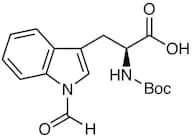
CAS :Produit contrôlé<p>Applications 5-Hydroxy-7-methoxy-2,2-dimethyl-4H-benzo[d][1,3]dioxin-4-one-d3 is an intermediate for the synthesis of Alternariol Monomethyl Ether-d3 (A575771), labelled methyl este analog fo Alternariol. An alternaria mycotoxin and genotoxin, found in common edible crops. It inhibits the activity of various DNA-topoisomerases, increasing the rate of DNA strand breaks.<br>References Asam, S., et al.: J. Agric. Food Chem., 57, 5152 (2009); Fehr, M., et al.: Mol. Nut. Food Res., 53, 441 (2009); Tiemann, U., et al.: Toxicol. Lett., 186, 139 (2009)<br></p>Formule :C11D3H9O5Couleur et forme :NeatMasse moléculaire :227.228Nα-(tert-Butoxycarbonyl)-N1-formyl-L-tryptophan
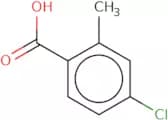
CAS :Formule :C17H20N2O5Degré de pureté :>98.0%(T)Couleur et forme :White to Light gray to Light yellow powder to crystalMasse moléculaire :332.364-Chloro-2-methylbenzoic acid
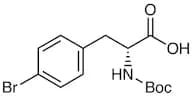
CAS :<p>4-Chloro-2-methylbenzoic acid is a high quality chemical that is used as an intermediate in the preparation of other compounds. It belongs to the group of complex compounds and has CAS No. 7499-07-2. This reagent can be used to synthesize speciality chemicals, research chemicals, and versatile building blocks. 4-Chloro-2-methylbenzoic acid is also useful as a reaction component for the synthesis of fine chemicals, pharmaceuticals, and agrochemicals.</p>Formule :C8H7ClO2Degré de pureté :Min. 95%Masse moléculaire :170.59 g/molN-(tert-Butoxycarbonyl)-4-bromo-D-phenylalanine
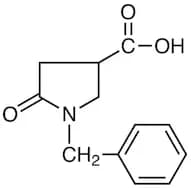
CAS :Formule :C14H18BrNO4Degré de pureté :>98.0%(HPLC)Couleur et forme :White to Almost white powder to crystalMasse moléculaire :344.211-Benzyl-5-oxopyrrolidine-3-carboxylic Acid
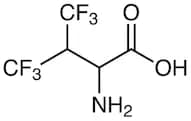
CAS :Formule :C12H13NO3Degré de pureté :>98.0%(GC)(T)Couleur et forme :White to Almost white powder to crystalMasse moléculaire :219.244,4,4,4',4',4'-Hexafluoro-DL-valine
CAS :Formule :C5H5F6NO2Degré de pureté :>98.0%(T)Couleur et forme :White to Almost white powder to crystalMasse moléculaire :225.09FMOC-N-Trityl-L-Asparagine (FMOC-Asn(Trt)-OH) extrapure, 99%
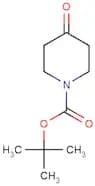
CAS :Formule :C38H32N2O5Degré de pureté :min. 99%Couleur et forme :White to off-white, Crystalline powderMasse moléculaire :596.671-BOC-4-Piperidone extrapure, 99%
CAS :Formule :C10H17NO3Degré de pureté :min. 99%Couleur et forme :White to pale yellow to brown, Crystalline powderMasse moléculaire :199.255-Hydroxy-L-Tryptophan extrapure, 98%
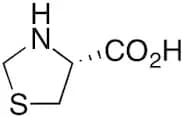
CAS :Formule :C11H12N2O3Degré de pureté :min. 99%Couleur et forme :White to off - white to pale brown, PowderMasse moléculaire :220.23L-Thioproline extrapure, 98%
CAS :Formule :C4H7NO2SDegré de pureté :min. 98%Couleur et forme :White to off - white, Crystalline powderMasse moléculaire :133.172-Chloro-N-cyclohexyl-N-phenylpropanamide
<p>Please enquire for more information about 2-Chloro-N-cyclohexyl-N-phenylpropanamide including the price, delivery time and more detailed product information at the technical inquiry form on this page</p>Degré de pureté :Min. 95%3-((2-Chlorothiazol-5-yl)methyl)-5-methyl-1,3,5-oxadiazinan-4-imine Hydrochloride
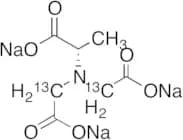
CAS :Produit contrôlé<p>Applications 3-((2-Chlorothiazol-5-yl)methyl)-5-methyl-1,3,5-oxadiazinan-4-imine Hydrochloride is an intermediate for the synthesis of N-(3-((2-Chlorothiazol-5-yl)methyl)-5-methyl-1,3,5-oxadiazinan-4-ylidene)benzenesulfonamide (C385860), which is an impurity of Thiamethoxam (T344180), a neonicotinoid insecticide.<br>References Oliver, J., et al.: J. Environ. Horticult., 28, 135 (2010), Ghosh, A., et al.: J. Entomol. Res., 34, 35 (2010), Chem. and Eng. News 90: 10 (2012)<br></p>Formule :C8H11ClN4OS·ClHCouleur et forme :NeatMasse moléculaire :283.178N,N-Bis(carboxymethyl-13C)-L-alanine
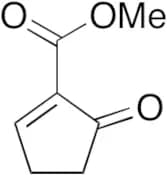
CAS :Produit contrôléFormule :C513C2H11NO6Couleur et forme :Off White SolidMasse moléculaire :273.102-Methoxycarbonylcyclopent-2-enone
CAS :Produit contrôléFormule :C7H8O3Couleur et forme :NeatMasse moléculaire :140.137N,N-[Iminobis(trimethylene)]bis-D-gluconamide
CAS :Produit contrôlé<p>Applications N,N-[Iminobis(trimethylene)]bis-D-gluconamide (cas# 86303-20-0) is a compound useful in organic synthesis.<br></p>Formule :C18H37N3O12Couleur et forme :NeatMasse moléculaire :487.50Diazald-d3
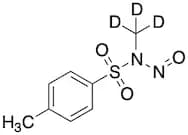
CAS :<p>Applications N-Methyl-d3-N-nitroso-p-toluenesulfonamide is the labeled version of Diazald; Diazomethane precursor.<br>References Takizawa, et al.: J. Pharm. Soc. Jpn., 70, 490 (1950)<br></p>Formule :C8D3H7N2O3SCouleur et forme :Pale Yellow to Light Yellow SolidMasse moléculaire :217.060042-(1-Cyano-1-methylethyl)azocarboxamide
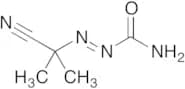
CAS :<p>Applications 2-(1-Cyano-1-methylethyl)azocarboxamide, cna be used in the synthesis of azobenzene side chain polymers derived from the bifunctional fumaric acid and itaconic acid.<br>References Kim, s. et al.: Polymer, Vol 55. P: 871-877 (2014);<br></p>Formule :C5H8N4OCouleur et forme :Light Yellow SolidMasse moléculaire :140.141,1-Dichloro-1-fluoro-methanesulfenylchloride
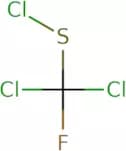
CAS :<p>1,1-Dichloro-1-fluoro-methanesulfenylchloride is a hazardous chemical that belongs to the group of chlorine compounds. It has been used as an antibacterial agent in the past and has been shown to be effective against nematodes, helminths, and some microorganisms. It is also used as a solvent in the production of dyes and perfumes. 1,1-Dichloro-1-fluoro-methanesulfenylchloride is not active against bacteria that are resistant to sulfonic acids or amines.</p>Formule :CCl3FSDegré de pureté :Min. 95%Couleur et forme :Clear LiquidMasse moléculaire :169.43 g/molDiethoxy-Methyl-Thioxo-Phosphorane
CAS :Produit contrôlé<p>Diethoxy-methyl-thioxo-phosphorane is a chemical compound that is used in the manufacture of industrial chemicals. It has a vapor pressure of 0.0014 mmHg at 25°C, and can be quantified by chemical ionization with gas chromatography/mass spectrometry. Diethoxy-methyl-thioxo-phosphorane reacts with radiation to produce reactive oxygen species and other free radicals, which can damage DNA and cause cancer. The reaction rate is rapid, with an analogy to humans being exposed to nitrate compounds. Diethoxy-methyl-thioxo-phosphorane is also used in devices such as radiators and heaters, where it causes damage when combined with nitrates.</p>Formule :C5H13O2PSDegré de pureté :Min. 95%Masse moléculaire :168.2 g/mol4-Methylpentanoic acid
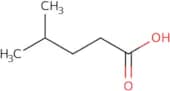
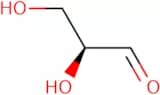
CAS :<p>4-Methylpentanoic acid is a fatty acid that is the product of anaerobic fermentation in the colon and can be found as an end product in the body. It can be used as a substrate in film tests for detecting bacteria, such as Escherichia coli, which are associated with bowel diseases. 4-Methylpentanoic acid has been shown to have inhibitory effects against nuclear dna replication, mitochondrial membrane potential, and energy metabolism. 4-Methylpentanoic acid also has antiinflammatory properties and has been shown to decrease body mass index. The 6-Fluoro-3-indoxyl-beta-D-galactopyranoside is an antituberculosis drug that belongs to the class of rifamycins. It is the most active of the rifamycins for the treatment of tuberculosis. Rifapentine inhibits bacterial growth by binding to DNA-dependent RNA polymerase, thereby preventing transcription</p>Formule :C6H12O2Degré de pureté :Min. 95%Masse moléculaire :116.16 g/molL-(-)-Glyceraldehyde - Technical grade aqueous solution
CAS :<p>Please enquire for more information about L-(-)-Glyceraldehyde - Technical grade aqueous solution including the price, delivery time and more detailed product information at the technical inquiry form on this page</p>Formule :C3H6O3Degré de pureté :Min. 95%Couleur et forme :Clear Viscous LiquidMasse moléculaire :90.08 g/mol4-Chloro-2-(methyl-phenyl-sulfamoyl)-benzoic acid methylester
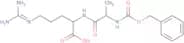
CAS :<p>4-Chloro-2-(methyl-phenyl-sulfamoyl)-benzoic acid methylester is an industrial chemical that is used in the production of other chemicals. It can be produced by the esterification of 4-chlorophenylacetic acid with methyl phenyl sulfonyl chloride, followed by diazotization and chlorination. This chemical also has the ability to form a condensation product with hydrazine.</p>Formule :C15H14ClNO4SDegré de pureté :Min. 95%Masse moléculaire :339.79 g/molZ-Ala-Arg-OH
CAS :<p>Z-Ala-Arg-OH is a low molecular weight carboxylate that has an acidic, hydrophobic side chain. The chemical formula for Z-Ala-Arg-OH is C11H18N4O6. The chemical structure of Z-Ala-Arg-OH can be found in the figure below:<br>Z-Ala-Arg-OH is an ionizable, acidic compound with a pKa of 3.5. The functional groups on Z-Ala-Arg-OH are shown in the figure below:<br>The carboxylate group and the amine group are present in this molecule.<br>Z-Ala-Arg-OH is a transpeptidase, which catalyses the posttranslational modification of proteins by transferring amino acids from one protein to another during translation or after translation. Transpeptidases are important enzymes in bacterial cell wall synthesis because they catalyze peptide bond formation between two amino acid</p>Formule :C17H25N5O5Degré de pureté :Min. 95%Masse moléculaire :379.41 g/molRef: 3D-FA111433
Produit arrêtéC3d Peptide P16
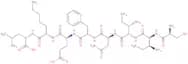
CAS :<p>C3d Peptide P16 H-Lys-Asn-Arg-Trp-Glu-Asp-Pro-Gly-Lys-Gln-Leu-Tyr-Asn-Val-Glu-Ala is a molecule that can be used as a diagnostic tool for cancer and other diseases. It is a hydroxylated analog of the amino acid Lysine, and has been shown to bind to tumor vasculature. C3d Peptide P16 H Lys Asn Arg Trp Glu Asp Pro Gly Lys Gln Leu Tyr Asn Val Glu Ala OH is a β amino acid with a carboxy terminal hydroxyl group. The reactive hydroxyl group reacts with other molecules in order to form conjugates, which are then attached to polymer surfaces for diagnostic purposes. C3d Peptide P16 H Lys Asn Arg Trp Glu Asp Pro Gly Lys Gl</p>Formule :C86H131N25O27Degré de pureté :Min. 95%Masse moléculaire :1,947.11 g/molOvalbumin (257-264) (chicken) trifluoroacetate salt
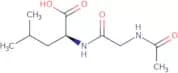
CAS :<p>Please enquire for more information about Ovalbumin (257-264) (chicken) trifluoroacetate salt including the price, delivery time and more detailed product information at the technical inquiry form on this page</p>Formule :C45H74N10O13·C2HF3O2Degré de pureté :Min. 95%Masse moléculaire :1,077.15 g/molAc-Gly-Leu-OH
CAS :<p>L-phenylalanine is an amino acid that has a sweet taste. It is one of the 20 amino acids encoded by the universal genetic code, and is classified as a polar amino acid because it has a hydroxyl group on its side chain. L-Phenylalanine is used in the food industry as a sweetener and to enhance salty or acidic flavors. Phenylalanine has been shown to be an important precursor for several important neurotransmitters in the brain. This includes serotonin, dopamine, and norepinephrine. Phenylalanine also plays a role in protein metabolism and enzyme activity, including aminopeptidases and racemases, which are enzymes that catalyze reactions involving racemic mixtures.</p>Formule :C10H18N2O4Degré de pureté :Min. 95%Masse moléculaire :230.26 g/molBoc-Ala-Ala-Pro-Ala-pNA
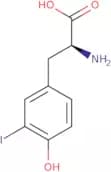
CAS :<p>Boc-Ala-Ala-Pro-Ala-pNA is a synthetic peptide analog of the amino acid sequence Pro-Gly-Arg. It has been shown to inhibit the proliferation of prostate cancer cells, as well as to inhibit tumor growth in animals. This peptide also inhibits protease activity in subtilisin and has been used to study the inhibition of angiogenesis by endothelial cell proliferation. The peptide is an inhibitor of ion exchange and has been used to study the effects of fatty acids on carcinoma cell lines. Boc-Ala-Ala-Pro-Ala-pNA has also been shown to be active against other animal cells and could be used for research purposes.</p>Formule :C25H36N6O8Degré de pureté :Min. 95%Masse moléculaire :548.59 g/mol3-Iodo-L-tyrosine
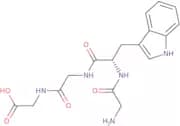
CAS :<p>Please enquire for more information about 3-Iodo-L-tyrosine including the price, delivery time and more detailed product information at the technical inquiry form on this page</p>Formule :C9H10INO3Degré de pureté :Min. 96.0 Area-%Couleur et forme :PowderMasse moléculaire :307.09 g/molH-Gly-Trp-Gly-Gly-OH
CAS :<p>Please enquire for more information about H-Gly-Trp-Gly-Gly-OH including the price, delivery time and more detailed product information at the technical inquiry form on this page</p>Formule :C17H21N5O5Degré de pureté :Min. 95%Masse moléculaire :375.38 g/molPeptide YY (3-36) (human) trifluoroacetate salt
CAS :<p>Peptide YY (3-36) (human) trifluoroacetate salt H-Ile-Lys-Pro-Glu-Ala-Pro-Gly-Glu-Asp-Ala-Ser-Pro-Glu-Glu-Leu-Asn -Arg -Tyr -Tyr -Ala -Ser -Leu -Arg <br>Peptide YY (3.36) is a peptide hormone that is secreted by L cells in the small intestine and colon. It has been shown to be an effective treatment for obesity, type 2 diabetes, and other metabolic disorders. Peptide YY (3.36) has been shown to increase insulin sensitivity, reduce food intake and body weight, increase metabolic rate, and improve glucose homeostasis in animal studies. In humans, it has been found to have similar effects on postprandial plasma levels of peptide YY (3.</p>Formule :C180H279N53O54Degré de pureté :Min. 95%Masse moléculaire :4,049.47 g/mol(Ala31, Aib 32)-Neuropeptide Y (porcine) trifluoroacetate salt
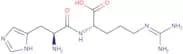
CAS :<p>Please enquire for more information about (Ala31, Aib 32)-Neuropeptide Y (porcine) trifluoroacetate salt including the price, delivery time and more detailed product information at the technical inquiry form on this page</p>Formule :C187H281N55O56Degré de pureté :Min. 95%Masse moléculaire :4,195.57 g/molH-His-Arg-OH
CAS :<p>H-His-Arg-OH is a synthetic peptide that has been shown to have cytotoxic effects on mammalian cells. The H-His-Arg-OH peptide can be used for the treatment of heart disease and autoimmune diseases, such as rheumatoid arthritis. This peptide has been found to be resistant to congestive heart failure, which is caused by a number of factors, including hypertension and valvular stenosis. It has also been shown to have an immunoglobulin G1 (IgG1) genotype.</p>Formule :C12H21N7O3Degré de pureté :Min. 95%Masse moléculaire :311.34 g/mol(H-Arg-Gly-Phe-Ala-Phe-Val-Thr-Phe)8-MAP
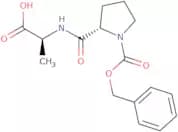
<p>Please enquire for more information about (H-Arg-Gly-Phe-Ala-Phe-Val-Thr-Phe)8-MAP including the price, delivery time and more detailed product information at the technical inquiry form on this page</p>Formule :C421H595N103O81Degré de pureté :Min. 95%Masse moléculaire :8,394.87 g/molZ-Pro-Ala-OH
CAS :<p>Z-Pro-Ala-OH is a carboxypeptidase enzyme that catalyzes the hydrolysis of the amide bond between the carboxyl group of glutamic acid and the amino group of proline. This enzyme can be found in wheat (Triticum aestivum), where it is present at high concentrations, and has a specificity for Z-Pro-Ala. The enzyme is active in muscle tissue, as well as in brain and cardiovascular tissues. It has been shown to have beneficial effects on cerebral cortex function and cardiovascular diseases. The enzyme is also specific to erythrocytes and plasma samples, with high activity levels observed in homogenates of both tissues.</p>Formule :C16H20N2O5Degré de pureté :Min. 95%Masse moléculaire :320.34 g/mol
![2-[4-(methylamino)-3-nitrobenzoyl]benzoic acid](/_next/image/?url=https%3A%2Fstatic.cymitquimica.com%2Fproducts%2F10%2Fthumb-webp%2FF518183.webp&w=3840&q=75)





![5-Hydroxy-7-methoxy-2,2-dimethyl-4H-benzo[d][1,3]dioxin-4-one-d3](/_next/image/?url=https%3A%2Fstatic.cymitquimica.com%2Fproducts%2FTR%2Fthumb-webp%2FH446716.webp&w=3840&q=75)





![N,N-[Iminobis(trimethylene)]bis-D-gluconamide](/_next/image/?url=https%3A%2Fstatic.cymitquimica.com%2Fproducts%2FTR%2Fthumb-webp%2FI400500.webp&w=3840&q=75)