Acides aminés (AA)
Les acides aminés (AA) sont les éléments constitutifs fondamentaux des protéines, jouant un rôle crucial dans divers processus biologiques. Ces composés organiques sont essentiels pour la synthèse des protéines, les voies métaboliques et la signalisation cellulaire. Dans cette catégorie, vous trouverez une gamme complète d'acides aminés, y compris des formes essentielles, non essentielles et modifiées, qui sont vitales pour la recherche en biochimie, biologie moléculaire et sciences de la nutrition. Chez CymitQuimica, nous fournissons des acides aminés de haute qualité pour soutenir vos besoins en recherche et développement, garantissant précision et fiabilité dans vos résultats expérimentaux.
Sous-catégories appartenant à la catégorie "Acides aminés (AA)"
- Dérivés d'acides aminés(3.978 produits)
- Acide aminé et composés apparentés aux acides aminés(3.477 produits)
- Acides aminés avec de l'oxygène ou du soufre(168 produits)
- Boc- Acides aminés(351 produits)
- Acides aminés avec groupes protecteurs(1.710 produits)
38329 produits trouvés pour "Acides aminés (AA)"
Trier par
Degré de pureté (%)
0
100
|
0
|
50
|
90
|
95
|
100
Ovalbumin (257-264) (chicken) trifluoroacetate salt
CAS :<p>Please enquire for more information about Ovalbumin (257-264) (chicken) trifluoroacetate salt including the price, delivery time and more detailed product information at the technical inquiry form on this page</p>Formule :C45H74N10O13·C2HF3O2Degré de pureté :Min. 95%Masse moléculaire :1,077.15 g/molAcetyl-(Cys(Acm)33·42)-EGF (33-42) amide (mouse)
CAS :<p>Please enquire for more information about Acetyl-(Cys(Acm)33·42)-EGF (33-42) amide (mouse) including the price, delivery time and more detailed product information at the technical inquiry form on this page</p>Formule :C51H82N16O17S2Degré de pureté :Min. 95%Masse moléculaire :1,255.43 g/molPeptide YY (3-36) (human) trifluoroacetate salt
CAS :<p>Peptide YY (3-36) (human) trifluoroacetate salt H-Ile-Lys-Pro-Glu-Ala-Pro-Gly-Glu-Asp-Ala-Ser-Pro-Glu-Glu-Leu-Asn -Arg -Tyr -Tyr -Ala -Ser -Leu -Arg <br>Peptide YY (3.36) is a peptide hormone that is secreted by L cells in the small intestine and colon. It has been shown to be an effective treatment for obesity, type 2 diabetes, and other metabolic disorders. Peptide YY (3.36) has been shown to increase insulin sensitivity, reduce food intake and body weight, increase metabolic rate, and improve glucose homeostasis in animal studies. In humans, it has been found to have similar effects on postprandial plasma levels of peptide YY (3.</p>Formule :C180H279N53O54Degré de pureté :Min. 95%Masse moléculaire :4,049.47 g/molEndothelin-1 (human, bovine, dog, mouse, porcine, rat) acetate
CAS :<p>Endothelin-1 (ET-1) is a peptide that is produced by the endothelium. ET-1 is involved in numerous biological processes, including vasoconstriction, inflammation, and cell proliferation. Endothelin-1 (human ET-1) acetate salt H-Cys-Ser-Cys-Ser-Ser-Leu-Met-Asp-Lys-(Glu)-Cys-(Val)-Tyr-(Phe)-Cys-(His)-Leu -Asp(-Ile)-Ile(-Trp)) acetate salt is a recombinant protein that has been shown to significantly upregulate the production of endothelin in primary pulmonary hypertension. It also plays an important role in bowel disease, where it may be involved in the development of chronic inflammatory bowel disease.</p>Formule :C109H159N25O32S5•(C2H4O2)xDegré de pureté :Min. 95%Masse moléculaire :2,491.91 g/molAcetyl-(3,4-dehydro-Pro1,4-fluoro-D-Phe2,D-Trp3·6)-LHRH trifluoroacetate salt
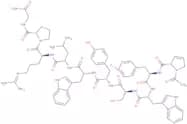
CAS :<p>Please enquire for more information about Acetyl-(3,4-dehydro-Pro1,4-fluoro-D-Phe2,D-Trp3·6)-LHRH trifluoroacetate salt including the price, delivery time and more detailed product information at the technical inquiry form on this page</p>Formule :C69H85FN16O13Degré de pureté :Min. 95%Masse moléculaire :1,365.51 g/molN-(2-Amino-ethyl)-2-(benzyl-phenyl-amino)-acetamide
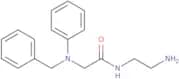
CAS :<p>Please enquire for more information about N-(2-Amino-ethyl)-2-(benzyl-phenyl-amino)-acetamide including the price, delivery time and more detailed product information at the technical inquiry form on this page</p>Formule :C17H21N3ODegré de pureté :Min. 95%Couleur et forme :White PowderMasse moléculaire :283.37 g/mol1,2-Distearoyl-sn-glycero-3-phosphoethanolamine-N-[amino(polyethylene glycol) 2000] (ammonium salt)
CAS :<p>1,2-Distearoyl-sn-glycero-3-phosphoethanolamine-N-[amino(polyethylene glycol) 2000] (ammonium salt) is a PEG compound with two different functional groups (also known as heterobifunctional). Unlike homobifunctional PEG compounds (same functional group on both ends), this type of compounds are more versatile as have two different anchor points. 1,2-Distearoyl-sn-glycero-3-phosphoethanolamine-N-[amino(polyethylene glycol) 2000] (ammonium salt) is used as a linker and spacer to add a PEG moiety, via pegylation (a bioconjugation technique) to proteins, peptides, oligonucleotides, small molecules and nanoparticles.</p>Formule :(C2H4O)nC44H87N2O10P•H3NDegré de pureté :Min. 95%Couleur et forme :White PowderRef: 3D-FD157101
Produit arrêtéPerfluoro-N-(4-methylcyclohexyl)piperidine
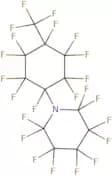
CAS :Produit contrôlé<p>Perfluoro-N-(4-methylcyclohexyl)piperidine (4-FPP) is a fluorine compound that has been shown to inhibit the enzymatic activity of tyrosine kinases. It is a potent inhibitor of both human and murine tyrosine kinases, but it does not bind to bacterial tyrosine kinase domains. 4-FPP has been used in clinical studies as an anti-cancer drug, although it's clinical relevance remains unclear. It has also been shown to be effective against the influenza virus by inhibiting the synthesis of viral proteins that are involved in replication. The chemical structure of 4-FPP contains a carbonyl group that can react with other compounds through a photochemical process. This reaction is thought to result in the development of new drugs with similar biochemical properties to 4-FPP.</p>Formule :C12F23NDegré de pureté :Min. 95%Couleur et forme :Clear LiquidMasse moléculaire :595.1 g/molAc-Phe-Lys-OH
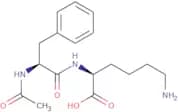
CAS :<p>Ac-Phe-Lys-OH is a synthetic peptide that mimics the lysine side chain of L-lysine. It has been shown to be cytotoxic to cancer cells and cardiac cells, with the formation rate of Ac-Phe-Lys-OH being dependent on the concentration of glycolaldehyde. The reaction yield for Ac-Phe-Lys-OH is also dependent on creatine kinase activity. Acetylation of Ac-Phe-Lys-OH reduces its cytotoxicity and increases its solubility in water.</p>Formule :C17H25N3O4Degré de pureté :Min. 95%Masse moléculaire :335.4 g/mol



![1,2-Distearoyl-sn-glycero-3-phosphoethanolamine-N-[amino(polyethylene glycol) 2000] (ammonium salt)](/_next/image/?url=https%3A%2Fstatic.cymitquimica.com%2Fproducts%2F3D%2Fthumb-webp%2FFD157101.webp&w=3840&q=75)