Acides aminés (AA)
Les acides aminés (AA) sont les éléments constitutifs fondamentaux des protéines, jouant un rôle crucial dans divers processus biologiques. Ces composés organiques sont essentiels pour la synthèse des protéines, les voies métaboliques et la signalisation cellulaire. Dans cette catégorie, vous trouverez une gamme complète d'acides aminés, y compris des formes essentielles, non essentielles et modifiées, qui sont vitales pour la recherche en biochimie, biologie moléculaire et sciences de la nutrition. Chez CymitQuimica, nous fournissons des acides aminés de haute qualité pour soutenir vos besoins en recherche et développement, garantissant précision et fiabilité dans vos résultats expérimentaux.
Sous-catégories appartenant à la catégorie "Acides aminés (AA)"
- Dérivés d'acides aminés(3.955 produits)
- Acide aminé et composés apparentés aux acides aminés(3.465 produits)
- Acides aminés avec de l'oxygène ou du soufre(168 produits)
- Boc- Acides aminés(351 produits)
- Acides aminés avec groupes protecteurs(1.710 produits)
38248 produits trouvés pour "Acides aminés (AA)"
Trier par
Degré de pureté (%)
0
100
|
0
|
50
|
90
|
95
|
100
4-Methoxyphenylacetic Acid
CAS :Produit contrôlé<p>Applications 4-Methoxyphenylacetic Acid is a compound that was found from microbial phenolic metabolites in human feces after the consumption of gin, red wine and dealcholized red wine.<br>References Jimenez-Giron, A., et. al.: J. Arg. Food Chem., 61, 3909 (2013);<br></p>Formule :C9H10O3Couleur et forme :NeatMasse moléculaire :166.175-Aminolevulinic Acid Methyl Ester Hydrochloride
CAS :Produit contrôlé<p>Applications 5-Aminolevulinic Acid Methyl Ester Hydrochloride, is the methyl ester of Aminolevulinic Acid (ALA) (A611780), which has been shown to have higher lipophilicity, and to be highly efficient at inducing protoporphyrin IX (PpIX) production in cell culture.<br>References Morrow, D. I. J., et al.: J. Pharmac. Sci., 99, 3486 (2010); Peng, Q., et al.: Cancer, 79, 2282 (1997);<br></p>Formule :C6H11NO3·HClCouleur et forme :NeatMasse moléculaire :181.622-Amino-5-chloro-3-methylbenzoic Acid
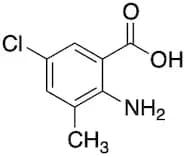
CAS :Produit contrôlé<p>Applications 2-Amino-5-chloro-3-methylbenzoic Acid is a useful research chemical for the preparation of benzoyl urea containing anthranillic acid groups with insecticidal activity.<br>References Peng, Y., et al.: Nongyao, 48, 326 (2009);<br></p>Formule :C8H8NO2ClCouleur et forme :NeatMasse moléculaire :185.6L-Proline-2,5,5-d3
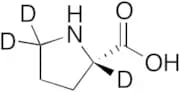
CAS :Produit contrôléFormule :C5D3H6NO2Couleur et forme :NeatMasse moléculaire :118.149α-Methyl-L-phenylalanine
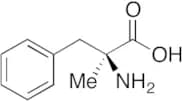
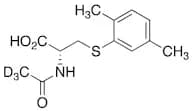
CAS :Produit contrôlé<p>Applications α-Methyl-L-phenylalanine is used to prepare hippuryl-α-methylphenylalanine and hippuryl-α-methylphenyllactic acid as substrates for carboxypeptidase A. It is also used in the synthesis of high affinity tachykinin NK2 receptor antagonists.<br>References Lee, M., et al.: Bioorg. Med. Chem., 8, 815 (2000); Boyle, S., et al.: Bioorg. Med. Chem., 2, 101 (1994)<br></p>Formule :C10H13NO2Couleur et forme :NeatMasse moléculaire :179.22N-Acetyl-S-(2,5-dimethylbenzene)-L-cysteine-d3
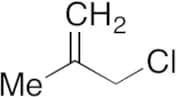
CAS :Produit contrôlé<p>Applications N-Acetyl-S-(2,5-dimethylbenzene)-L-cysteine-d3 (cas# 1331909-07-9) is a compound useful in organic synthesis.<br>References Gonzalez-Reche, L., et al.: Arch. Toxicol., 77, 80 (2003),<br></p>Formule :C13H14D3NO3SCouleur et forme :NeatMasse moléculaire :270.363-Chloro-2-methyl-1-propene
CAS :<p>Applications 3-Chloro-2-methyl-1-propene has been used in the synthesis of 2-S-substituted pyrimidines as antimetabolites of nucleic acid precursors for cancer therapy.<br> Not a dangerous good if item is equal to or less than 1g/ml and there is less than 100g/ml in the package<br>References Kaldrikyan, M.A., Melik-Ohanjanyan, R.G.: Hayastani Kimiakan Handes, 67, 321 (2014)<br></p>Formule :C4H7ClCouleur et forme :NeatMasse moléculaire :90.55C2 Ceramide
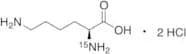
CAS :Produit contrôlé<p>Stability Moisture Sensitive<br>Applications A biologically active, cell permeable, but nonphysiologic ceramide analog. It inhibits cell proliferation and induces monocytic differentiation of HL-60 cells and induces apoptosis. It stimulates protein phosphatase 2A and activates MAP Kinase2.<br>References Inoue, T., et al.: J. Biol. Chem., 284, 9566 (2009), Kang, J., et al.: Bioorg. Med. Chem., 17, 1498 (2009), Rath, G., et al.: Int. J. Biochem. Cell Biol., 41, 1165 (2009),<br></p>Formule :C20H39NO3Couleur et forme :Off White PowderMasse moléculaire :341.53L-Lysine-15N Dihydrochloride Salt
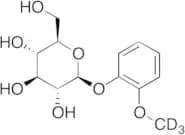
CAS :Formule :C6H14N15NO2•2(HCl)Couleur et forme :NeatMasse moléculaire :147.1823646Guaiacol-β-D-glucopyranoside-d3
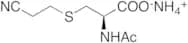
CAS :Produit contrôlé<p>Stability Hygroscopic<br>Applications Guaiacol-beta-D-glucopyranoside-d3, is a labeled analogue of Guaiacol-beta-D-glucopyranoside (G245565), a Guaiacol Conjugate, that has shown to present in fermentation of grapes that had been exposed to bushfire smoke and can potentially yield unpalatable, smoke-affected wine.<br>References Hayasaka, Y.m et al.: J. Arg. Food Chem., Vol. 58, Issue 4, P: 2076; 2081 (2010);<br></p>Formule :C13H15D3O7Couleur et forme :NeatMasse moléculaire :289.3N-Acetyl-S-(2-cyanoethyl)-L-cysteine Ammonium Salt
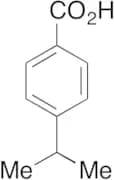
CAS :<p>Stability Hygroscopic<br>Applications N-Acetyl-S-(2-cyanoethyl)-L-cysteine Ammonium Salt is a metabolite of Acrylonitrile (AN) and acrylamide (AM); and are commonly used in the synthesis of plastics and polymers.<br>References van Bladeren, P., et al.: Drug Metab. Dispos., 9, 246 (1981), Guengerich, F., et al.: Chem. Res. Toxicol., 4, 168 (1991),<br></p>Formule :C8H11N2O3S·H4NCouleur et forme :SolidMasse moléculaire :233.294-(1-Methylethyl)benzoic Acid
CAS :<p>Applications 4-(1-Methylethyl)benzoic Acid is used in the synthesis of quinuclidine benzamides as agonists for nicotinic acetylcholine receptors. Also used in the synthesis of nifuroxazide analogues showing antimicrobial activity against methicillin-resistant Staphylococcus.<br>References Bodnar, A. et al.: J. Med. Chem., 48, 905 (2005); Masunari, A. et al.: Bioorg. Med. Chem. Lett., 15, 4229 (2007);<br></p>Formule :C10H12O2Couleur et forme :NeatMasse moléculaire :164.25-Methyl-4,5,6,7-tetrahydrothiazolo[5,4-c]pyridine-2-carboxylic Acid Hydrochloride
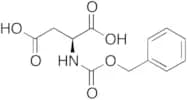
CAS :Produit contrôlé<p>Stability Hygroscopic<br>Applications 5-Methyl-4,5,6,7-tetrahydrothiazolo[5,4-c]pyridine-2-carboxylic Acid Hydrochloride is used as a reagent in the synthesis of N-(2-acylaminobenzyl or 2-acylaminoheterocyclylmethyl)thiophene-2-carboxamide derivatives as antithrombotics. It is also used as a reagent in the synthesis of diamide derivatives as FXa inhibitors. 5-Methyl-4,5,6,7-tetrahydrothiazolo[5,4-c]pyridine-2-carboxylic Acid Hydrochloride is an intermediate for Edoxaban (E555520).<br>References Mochizuki, A., et al.: Jpn. Kokai Tokkyo Koho. JP 2010120852 A 20100603. Jun 3, 2010; Mochizuki, A., et al.: PCT Int. Appl. WO 2008123017 A1 20081016. Oct 16, 2008<br></p>Formule :C8H11ClN2O2SCouleur et forme :Light BrownMasse moléculaire :234.7N-Cbz-L-aspartic Acid
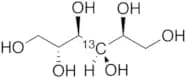
CAS :Produit contrôlé<p>Applications N-Cbz-L-aspartic acid is an N-Cbz-protected form of L-Aspartic acid (A790024). L-Aspartic acid is a nonessential amino acid that is used to biosynthesize other amino acids within the human body. L-Aspartic acid also increases membrane conductance of mammalian neurons by voltage-dependent means, causing depolarization and nerve impulses that travel to key areas of the central nervous system.<br>References Anderson, H., et al.: J. Nutr., 99, 82 (1969); Honey, C., et al.: Neurosci. Lett., 61, 135 (1985); MacDonald, J., et al.: Brain Res., 237, 248 (1982)<br></p>Formule :C12H13NO6Couleur et forme :White To Off-WhiteMasse moléculaire :267.23D-Glucitol-3-13C
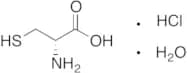
CAS :Produit contrôlé<p>Applications Isotope labelled D-Glucitol is a sugar alcohol obtained from the reduction of glucose and is naturally found in various fruits such as apples, pears and peaches. D-Glucitol has been widely used as a sweetener, laxative, various medical applications and in cosmetic products.<br>References Wang, Z.J., et al.: Anal. BIoanal. Chem., 405, 3899 (2013); Vinarta, S.C., et al.: Carb. Poly., 92, 1107 (2013); Kaumanu, M.L., et al.: Soil. Biol. Biochem., 57, 644 (2013); Hailu, T., et al.: Anal. Biochem., 434, 181 (2013);<br></p>Formule :CC5H14O6Couleur et forme :NeatMasse moléculaire :183.164D-Cysteine Hydrochloride Monohydrate
CAS :Produit contrôlé<p>Applications D-Cysteine Hydrochloride Monohydrate is used as a reactant in the expedient synthesis of electronically modified luciferins for bioluminescence imaging.<br>References McCutcheon, D., et al.: J. Am. Chem. Soc., 134, 7604 (2012);<br></p>Formule :C3H7NO2S·HCl·H2OCouleur et forme :NeatMasse moléculaire :121.16+(36.46)+(18.02)D-Glutamic Acid 1-tert-Butyl Ester
CAS :Produit contrôlé<p>Applications D-Glutamic acid 1-tert-butyl ester is a protected form of D-Glutamic acid (G596965). D-Glutamic acid is an unnatural isomer of L-Glutamic acid (G596960), and is found in bacterial cell wall peptidoglycan of gram-positive and gram-negative bacteria. D-Glutamic acid also occurs as poly-gamma-Glutamic acid, which is a weak immunogen but is capable of acting as a hapten (a small molecule that induces the production of antibodies, as well as binding to them).<br>References Dougherty, T., et al.: J. Bacteriol., 175, 111 (1993); Goodman, J. & Nitecki, D.: Immunology, 13, 577 (1967); Robinson, T.: Life Sci., 19, 1097 (1976)<br></p>Formule :C9H17NO4Couleur et forme :NeatMasse moléculaire :203.24(S)-2-Amino-4-methylpentanol
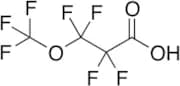
CAS :Produit contrôlé<p>Applications (S)-2-Amino-4-methylpentanol is a starting material for the synthesis of aminopeptidase N and phospholipase A2 inhibitors.<br>References Fournié-Zaluski, M., et al.: J. Med. Chem., 35, 1259 (1992); Bennion, C., et al.: J. Med. Chem., 35, 2939 (1992)<br></p>Formule :C6H15NOCouleur et forme :NeatMasse moléculaire :117.189Perfluoro-3-methoxypropanoic Acid
CAS :<p>Applications Perfluoro-3-methoxypropanoic acid (cas# 377-73-1) is a useful research chemical.<br> Not a dangerous good if item is equal to or less than 1g/ml and there is less than 100g/ml in the package<br></p>Formule :C4HF7O3Couleur et forme :NeatMasse moléculaire :230.04Ac-Glu-OMe
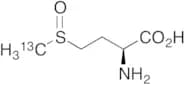
CAS :Produit contrôlé<p>Applications Ac-Glu-OMe (cas# 17015-15-5) is a useful research chemical.<br></p>Formule :C8H13NO5Couleur et forme :NeatMasse moléculaire :203.19L-Methionine Sulfoxide,13C
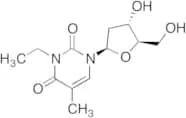
CAS :Produit contrôlé<p>Applications L-Methionine Sulfoxide 13C1 is a labelled analogue of L-Methionine Sulfoxide ( M260450). L-Methionine Sulfoxide ( M260450) an intermediate in the synthesis of the acyclic amino carboxylic acid L-Methionine sulfoximine.<br>References Lee, B., et al.: J. Biol. Chem., 283, 28361 (2008), Nordqvist, A., et al.: Bioorg. Med. Chem., 16, 5501 (2008);Balog, E., et al.: Biochem., 48, 3005 (2009);<br></p>Formule :CC4H11NO3SCouleur et forme :White To Off-WhiteMasse moléculaire :166.203N3-Ethylthymidine
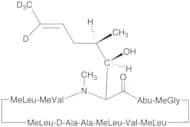
CAS :Produit contrôlé<p>Applications E677525<br>References Shimizu, T., et al.: Chem. Pharm. Bull., 53, 313 (2005)<br></p>Formule :C12H18N2O5Couleur et forme :NeatMasse moléculaire :270.12157Cyclosporin A-d4 (Major)
CAS :Produit contrôlé<p>Applications An immunosuppressant that has revolutionized organ transplantation through its use in the prevention of graft rejection.A group of nonpolar cyclic oligopeptides with immunosupppressant activity.<br>References van Wartburg, A., et al.: Prog. Med. Chem., 25, 1 (1988), Jorgensen, K.A., et al.: Scand. J. Imunol., 57, 93 (2003), Vollenbroeker, et al.: Transplant. Proc., 37, 1741 (2005),<br></p>Formule :C62H107D4N11O12Couleur et forme :NeatMasse moléculaire :1206.66Nateglinide-d5
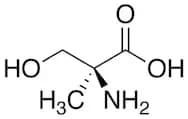
CAS :Produit contrôlé<p>Applications A labelled version of Nateglinide, an amino-acid derivative that stimulates insulin secretion which is used as an antidiabetic.<br>References Shinkai, H., et al.: J. Med. Chem., 32, 1436 (1989), Sato, Y., et al.: Diabetes Res. Clin. Pract., 12, 53 (1991), Vicent, D., et al.: J. Clin. Invest., 111, 1373 (2003), Ceriello, A., et al.: Diabet. Med., 21, 171 (2004),<br></p>Formule :C192H5H22NO3Couleur et forme :NeatMasse moléculaire :322.45α-Methyl-L-serine
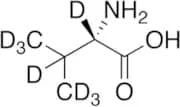
CAS :<p>Applications A potential chiral building blocks for the synthesis of different α -methyl α -amino acids.<br>References Rew, Y., et al.: J. Med. Chem., 45, 3746 (2002),<br></p>Formule :C4H9NO3Couleur et forme :Off-WhiteMasse moléculaire :119.119L-Valine-d8
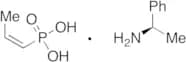
CAS :Produit contrôlé<p>Applications Labelled analogue of L-Vailne. L-Valine is an essential amino acid and one of 20 proteinogenic amino acids. L-Valine cannot be manufactured by the body and must be acquired through diet or supplementation. L-valine is found in grains, dairy products, mushrooms, meats, peanuts and soy proteins. L-Valine has been used in studies to attenuate arrhythmias and induce hypotensive effects.<br>References Choi, C.W. et al.: Anim. Feed Sci. Technol., 102, 15 (2002); Kolarski, D. et al.: Krmiva, 30, 155 (1988); Oba, M. et al.: J. Dairy Sci., 93, 2044 (2010); Mitrega, K. et al.: Pharmacol. Res., 64, 218 (2011);<br></p>Formule :C52H8H3NO2Couleur et forme :NeatMasse moléculaire :125.20cis-Propenylphosphonic Acid (R)-(+)-α-Methylbenzylamine Salt
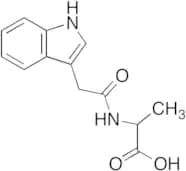
CAS :Produit contrôlé<p>Applications cis-Propenylphosphonic Acid (R)-(+)-α-Methylbenzylamine Salt is used as a reagent in the microbial production of Fosfomycin (F727505); a compound used as an antibiotic in the treatment of urinary tract infections.<br>References Watanabe, M., et al.: Appl. Environ. Microb., 65, 1036 (1999); Itoh, N., et al.: Appl. Microbiol. Biot., 43, 394 (1995); White, R.F., et al.: Appl. Microbiol., 22, 55 (1971); Keating, G. et al.: Drugs, 73, 1951 (2013); Demir, T. et al.: Int. J. Infect. Dis., 17, e966 (2013)<br></p>Formule :C3H7O3P(C8H11N)Couleur et forme :NeatMasse moléculaire :243.10243Indole-3-acetic-L-alanine
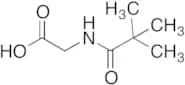
CAS :Produit contrôlé<p>Applications Indole-3-acetic-L-alanine is a derivative of the phytohormone indole-3-acetic acid (I577340) used in studies for the isolation and characterization of Arabdopsis thaliana mutants.<br>References Rampey, R.A., et al.: G3 (Bethesda), 3, 131-141 (2013)<br></p>Formule :C13H14N2O3Couleur et forme :NeatMasse moléculaire :246.26N-Pivaloylglycine
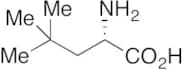
CAS :Produit contrôlé<p>Applications N-Pivaloylglycine is used in the biological study between dogs and rats. In a high dose toxicity study of pivalic acid (PA), PA caused skeletal muscle disorder in dog, and a significant increase of pivaloyl carnitine (PC) was observed in canine muscle, but not in rat muscle.<br>References Yamaguchi, T., et al.: Toxicol. Appl. Pharmacol., 214, 61-68 (2006)<br></p>Formule :C7H13NO3Couleur et forme :NeatMasse moléculaire :159.18L-Leucine
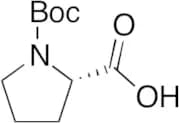
CAS :Produit contrôlé<p>Applications L-Leucine is an essential amino acid. L-Leucine acts as a nutrient signal to stimulate protein synthesis. It has also activates the mammalian target of rapamycin kinase that regulates cell growth.<br>References Demant, T. et al.: Am. J. Physiol., 270, E1022 (1996); Diraison, F. et al.: Am. J. Physiol., 277, E529 (1999); Suryawan, A. et al.: J. Anim. Sci., 89, 2004 (2011); Peyrollier, K. et al.: Biochem. J., 350, 361 (2000);<br></p>Formule :C6H13NO2Couleur et forme :NeatMasse moléculaire :131.17N-Boc-L-proline
CAS :Produit contrôlé<p>Applications N-Boc-L-proline is a useful synthetic intermediate. It is used to synthesize Daclatasvir (D101500) which nhibits the HCV protein NS5A. Daclatasvir (D101500) can be used as a drug candidate for the treatment of hepatitis C (HCV).<br>References Gao, M., et al.: Nature, 465(7294), 96 (2010); Bell, T. W., Chem. Med. Chem., 5(10), 1663 (2010);<br></p>Formule :C10H17NO4Couleur et forme :NeatMasse moléculaire :215.25(2R)-2-Hydroxyglutaric Acid Disodium Salt
CAS :<p>Stability Hygroscopic<br>Applications A potential inhibitor of glutamate carboxypeptidase.<br>References Wolcott, T.G., et al.: Biochem. Biophys. Res. Commun., 57, 709 (1974), Knowles, P.F., et al.: Eur. J. Biochem., 114, 139 (1981),<br></p>Formule :C5H6O5·2NaCouleur et forme :NeatMasse moléculaire :192.08N-Acetyl-L-alanine
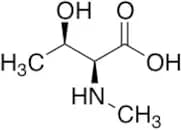
CAS :Produit contrôlé<p>Applications N-Acetyl-L-alanine is used as a biomarker for prostate cancer.<br>References Jansen, R., et al.: Clin. Biochem., 38, 362 (2005),<br></p>Formule :C5H9NO3Couleur et forme :NeatMasse moléculaire :131.13H-L-MeThr-OH
CAS :Produit contrôlé<p>Applications H-L-METHR-OH (cas# 2812-28-4) is a useful research chemical.<br></p>Formule :C5H11NO3Couleur et forme :NeatMasse moléculaire :133.15Oleoyl-L-carnitine
CAS :Produit contrôlé<p>Stability Hygroscopic<br>Applications Oleoyl-L-carnitine is a long-chain fatty ester of carnitine which is accumulated and released into the circulation, in fatty-acid oxidation defects. Pattern of Oleoyl-L-carnitine can be diagnostic for a number of ß-oxidation defects.<br>References Adams, S., et al.: J. Nutrition, 139, 1073 (2009); Ventura, F., et al.: Clinica Chimica Acta, 281, 1 (1999); Pourfarzam, M., et al.: Clinical Chem,, 40, 2267 (1994); Schaefer, J., et al.: Pediatric Res., 37, 354 (1995)<br></p>Formule :C25H47NO4Couleur et forme :NeatMasse moléculaire :425.64Methyl 2-Bromo-2-methylpropanoate
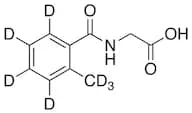
CAS :Produit contrôlé<p>Applications Methyl 2-bromo-2-methylpropanoate (cas# 23426-63-3) is a useful research chemical.<br></p>Formule :C5H9O2BrCouleur et forme :ColourlessMasse moléculaire :181.022-Methyl Hippuric Acid-d7
CAS :Produit contrôlé<p>Applications The main labelled metabolite of o-xylene.<br>References Gregus, Z., et al.: Drug Metab. Dispos., 26, 1082 (1998), Gregus, Z., et al.: Xenobiotica, 29, 547 (1999), Gonzalez-Reche, L., et al.: Arch. Toxicol., 77, 80 (2003),<br></p>Formule :C10D7H4NO3Couleur et forme :NeatMasse moléculaire :200.24trans-Glutaconic Acid
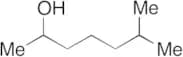
CAS :Produit contrôlé<p>Applications trans-Glutaconic Acid is used in the synthesis of iso and azokainoids which act as agonists for glutamate receptors. E-isomer of Glutaconic Acid (G596945).<br>References Felluga, F. et al.: Chirality, 24, 112 (2012); Wang, W. et al.: Bioorg. Med. Chem. Lett., 23, 1949 (2013);<br></p>Formule :C5H6O4Couleur et forme :White To Light BrownMasse moléculaire :130.16-Methyl-2-heptanol
CAS :Produit contrôlé<p>Applications 6-Methyl-2-heptanol is an intermediate used to prepare tri- and tetrasubstituted imidazoles as highly potent and specific ATP-mimetic inhibitors of p38 MAP kinase.<br>References Laufer, S., et al.: J. Med. Chem., 51, 4122 (2008)<br></p>Formule :C8H18OCouleur et forme :NeatMasse moléculaire :130.234-[2-(4-Hydroxyphenyl)-4-methylpentan-2-yl]phenol
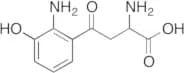
CAS :<p>Applications 4-[2-(4-Hydroxyphenyl)-4-methylpentan-2-yl]phenol could be a useful reagent for making visible-transparent aromatic polymers.<br> Not a dangerous good if item is equal to or less than 1g/ml and there is less than 100g/ml in the package<br>References Agou, T., et al.: Macromolecules (Washington, DC, U. S.), 53, 2942 (2020)<br></p>Formule :C18H22O2Couleur et forme :Off-WhiteMasse moléculaire :270.373-Hydroxy-DL-kynurenine
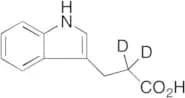
CAS :<p>Stability Hygroscopic<br>Applications 3-Hydroxy-DL-kynurenine is a tryptophan metabolite. Could be associated with symptoms in Parkinson's disease.<br>References Heilman, P. L., et al.: Movement Disorders, 35, 2028 (2020)<br></p>Formule :C10H12N2O4Couleur et forme :NeatMasse moléculaire :224.213-Indolepropionic-d2 Acid
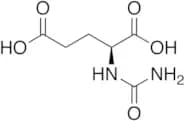
CAS :Produit contrôlé<p>Stability Hygroscopic<br>Applications 3-Indolepropionic-d2 acid is deuterium labelled 3-Indolepropionic acid (I627170). 3-Indolepropionic acid is a deamination product of Tryptophan (T947200) that protects the hippocampus (studied in gerbils) from ischemic damage and oxidative stress. It’s ability to protect the neurons in this way is attributed to its potent antioxidative effects. 3-Indolepropionic acid is also hypothesized to have protective effects on the thyroid gland.<br>References Hwang, I., et al.: J. Neurosci. Res., 87, 2126 (2009); Karbownik, M., et al.: J. Cell. Biochem., 95, 131 (2005)<br></p>Formule :C11D2H9NO2Couleur et forme :NeatMasse moléculaire :191.22N-Carbamyl-L-glutamic Acid
CAS :Produit contrôlé<p>Applications N-Carbamyl-L-glutamic Acid has been shown to have protective effects against ammonia intoxication and is used in the treatment of acute hyperammonemia.<br>References Paik, W.K. et al.: Life Sci., 15, 1189 (1974); O'Connor, J.E. et al.: Eur. J. Pediat., 148, 540 (1989); Lee, J.H. et al.: Biochem. Biophys. Res. Chem., 248, 391 (1998);<br></p>Formule :C6H10N2O5Couleur et forme :NeatMasse moléculaire :190.152-(1-((tert-Butoxycarbonyl)amino)ethyl)benzoic acid
CAS :Degré de pureté :95%Masse moléculaire :265.30899047851564-[4-(dimethylamino)benzoyl]-8-methyl-1-oxa-4-azaspiro[4.5]decane-3-carboxylic acid
CAS :Degré de pureté :95.0%Masse moléculaire :346.4270019531258-ethyl-4-(naphthalene-1-carbonyl)-1-oxa-4,8-diazaspiro[4.5]decane-3-carboxylic acid
CAS :Degré de pureté :95.0%Masse moléculaire :368.43301391601564-(2,3-dichlorophenyl)-3H,4H,5H,6H,7H-imidazo[4,5-c]pyridine-6-carboxylic acid
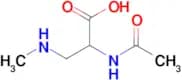
CAS :Degré de pureté :95.0%Masse moléculaire :312.14999389648442-Acetamido-3-(methylamino)propanoic acid
CAS :Degré de pureté :97.0%Masse moléculaire :160.17300415039062



![5-Methyl-4,5,6,7-tetrahydrothiazolo[5,4-c]pyridine-2-carboxylic Acid Hydrochloride](/_next/image/?url=https%3A%2Fstatic.cymitquimica.com%2Fproducts%2FTR%2Fthumb-webp%2FM330085.webp&w=3840&q=75)









![4-[2-(4-Hydroxyphenyl)-4-methylpentan-2-yl]phenol](/_next/image/?url=https%3A%2Fstatic.cymitquimica.com%2Fproducts%2FTR%2Fthumb-webp%2FB434508.webp&w=3840&q=75)


![4-[4-(dimethylamino)benzoyl]-8-methyl-1-oxa-4-azaspiro[4.5]decane-3-carboxylic acid](/_next/image/?url=https%3A%2Fstatic.cymitquimica.com%2Fproducts%2F10%2Fthumb-webp%2FF525610.webp&w=3840&q=75)
![8-ethyl-4-(naphthalene-1-carbonyl)-1-oxa-4,8-diazaspiro[4.5]decane-3-carboxylic acid](/_next/image/?url=https%3A%2Fstatic.cymitquimica.com%2Fproducts%2F10%2Fthumb-webp%2FF525686.webp&w=3840&q=75)
![4-(2,3-dichlorophenyl)-3H,4H,5H,6H,7H-imidazo[4,5-c]pyridine-6-carboxylic acid](/_next/image/?url=https%3A%2Fstatic.cymitquimica.com%2Fproducts%2F10%2Fthumb-webp%2FF522516.webp&w=3840&q=75)