Acides aminés (AA)
Sous-catégories appartenant à la catégorie "Acides aminés (AA)"
- Dérivés d'acides aminés(4.016 produits)
- Acide aminé et composés apparentés aux acides aminés(3.490 produits)
- Acides aminés avec de l'oxygène ou du soufre(168 produits)
- Boc- Acides aminés(351 produits)
- Acides aminés avec groupes protecteurs(1.710 produits)
38369 produits trouvés pour "Acides aminés (AA)"
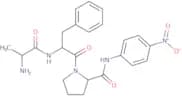
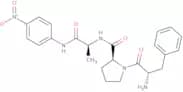
H-Ala-Phe-Pro-pNA
CAS :Please enquire for more information about H-Ala-Phe-Pro-pNA including the price, delivery time and more detailed product information at the technical inquiry form on this page
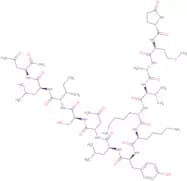
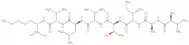
Formule :C23H27N5O5Degré de pureté :Min. 95%Masse moléculaire :453.49 g/mol(Pyr 16)-VIP (16-28) (human, mouse, rat)
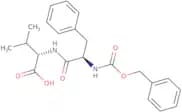
CAS :Please enquire for more information about (Pyr 16)-VIP (16-28) (human, mouse, rat) including the price, delivery time and more detailed product information at the technical inquiry form on this pageFormule :C68H114N18O18SDegré de pureté :Min. 95%Masse moléculaire :1,503.81 g/molZ-D-Phe-Val-OH
CAS :N-hydroxysuccinimide is a reactive, nucleophilic compound that is used in the synthesis of peptides and other biologically active molecules. It reacts with carboxylic acids to form esters and with amines to form amides. N-hydroxysuccinimide is also used as an additive in organic reactions, such as carbodiimide coupling or benzoin condensation.
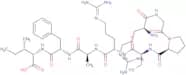
Formule :C22H26N2O5Degré de pureté :Min. 95%Masse moléculaire :398.45 g/molUrinary Trypsin Inhibitor Fragment
CAS :Urinary Trypsin Inhibitor Fragment H-Arg-Gly-Pro-Cys-Arg-Ala-Phe-Ile-OH is a synthetic peptide that is used as a diagnostic agent. It has been shown to inhibit proinflammatory cytokines in vitro and in vivo. This peptide binds to the amino acid sequences of phospholipase A2, which are found in tumor cells, and can be used for cancer diagnosis. Urinary Trypsin Inhibitor Fragment H-Arg-Gly-Pro-Cys-Arg-Ala-Phe-Ile-OH also binds to DNA methylation, which may be useful for studying DNA methylation patterns in cancer cells.
Formule :C40H66N14O9SDegré de pureté :Min. 95%Masse moléculaire :919.11 g/molProlactin-Releasing Peptide (12-31) (human)
CAS :Please enquire for more information about Prolactin-Releasing Peptide (12-31) (human) including the price, delivery time and more detailed product information at the technical inquiry form on this page
Formule :C104H158N32O26Degré de pureté :Min. 95%Masse moléculaire :2,272.57 g/molH-Tyr-Leu-OH
CAS :H-Tyr-Leu-OH is a peptide that has been shown to have regulatory effects on the synthesis of dopamine and 5-hydroxytryptamine (5HT), which is responsible for mood, appetite, and sleep. H-Tyr-Leu-OH is an orally active compound that has antidepressant-like activity in animals. It has also been shown to have antiobesity effects by regulating the secretion of proctolin from the pancreas. H-Tyr-Leu-OH has a pH optimum of 7, which is neutral. This compound can be used in cell culture experiments to study the effect of pH on enzyme preparations.
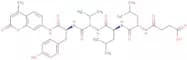
Formule :C15H22N2O4Degré de pureté :Min. 95%Masse moléculaire :294.35 g/molSuc-Leu-Leu-Val-Tyr-AMC
CAS :Suc-Leu-Leu-Val-Tyr-AMC is a cyclin D2 inhibitor that binds to the proteasome and inhibits its function. It has been shown to be useful for the treatment of cancerous tissues as it inhibits the production of prostaglandin J2, which is involved in the progression of cancer cells. Suc-Leu-Leu-Val-Tyr-AMC has also been shown to have antioxidant properties and can inhibit oxidative injury. This drug may be used to prevent or treat various diseases such as Parkinson's disease, Alzheimer's disease, Huntington's disease, diabetes mellitus type II, amyotrophic lateral sclerosis (ALS), multiple sclerosis (MS), and septic shock.
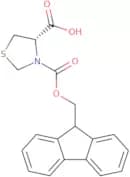
Formule :C40H53N5O10Degré de pureté :Min. 95%Couleur et forme :PowderMasse moléculaire :763.88 g/molFmoc-D-thiazolidine-4-carboxylic acid
CAS :Please enquire for more information about Fmoc-D-thiazolidine-4-carboxylic acid including the price, delivery time and more detailed product information at the technical inquiry form on this page
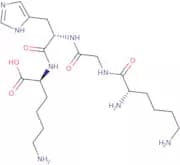
Formule :C19H17NO4SDegré de pureté :Min. 95%Masse moléculaire :355.41 g/molSPARC (119-122) (mouse) acetate salt
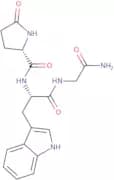
CAS :SPARC (119-122) (mouse) is an acetate salt of H-Lys-Gly-His-Lys-OH. SPARC (119-122) has been shown to be a mimetic of the c-terminal region of the protein SPARC and can bind to many metal ions including Zn2+, Mn2+, Cu2+, Co2+, Ni2+ and Mg2+. The binding affinity for these metals is dose dependent, with saturation occurring at high concentrations. This property may make this compound a therapeutic target for drug discovery strategies.Formule :C20H36N8O5Degré de pureté :Min. 95%Masse moléculaire :468.55 g/molPyr-Trp-Gly-NH2
CAS :Please enquire for more information about Pyr-Trp-Gly-NH2 including the price, delivery time and more detailed product information at the technical inquiry form on this page
Formule :C18H21N5O4Degré de pureté :Min. 95%Masse moléculaire :371.39 g/molBeta-Ala-Lys(AMCA)
supplied as the trifluoroacetate salt.
Formule :C21H28N4O6Degré de pureté :Min. 95%Couleur et forme :Yellow PowderMasse moléculaire :432.47 g/molH-Asp-Asp-Asp-Asp-OH
CAS :Please enquire for more information about H-Asp-Asp-Asp-Asp-OH including the price, delivery time and more detailed product information at the technical inquiry form on this page
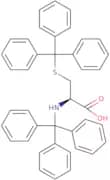
Formule :C16H22N4O13Degré de pureté :Min. 95%Masse moléculaire :478.37 g/molTrt-Cys(Trt)-OH
CAS :Trt-Cys(Trt)-OH is a selective dicyclohexyl carbodiimide reagent for the synthesis of amides from carboxylic acids. It is used as an intermediate in the synthesis of glutathione and other nitrogen-containing compounds. Trt-Cys(Trt)-OH reacts with hydrochloric acid to form a salt, which can be saponified to release the desired product. The hydrochloric acid converts the ester into a carboxylic acid, while the amine group on the glycine reacts with the carboxylic acid to form an amide. Trityl is also produced during this reaction, which can be removed by reduction with hydrogen gas and palladium on charcoal.
Formule :C41H35NO2SDegré de pureté :Min. 95%Masse moléculaire :605.79 g/molCalcium-Like Peptide
CAS :Please enquire for more information about Calcium-Like Peptide including the price, delivery time and more detailed product information at the technical inquiry form on this page
Formule :C40H75N9O10Degré de pureté :Min. 95%Masse moléculaire :842.08 g/molAutocamtide-2-Related Inhibitory Peptide
CAS :Please enquire for more information about Autocamtide-2-Related Inhibitory Peptide including the price, delivery time and more detailed product information at the technical inquiry form on this page
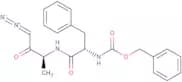
Formule :C64H116N22O19Degré de pureté :Min. 95%Masse moléculaire :1,497.74 g/molZ-Phe-Ala-diazomethylketone
CAS :Z-Phe-Ala-diazomethylketone is a molecule that belongs to the class of hydrolase inhibitors. It has been shown to have inhibitory properties against trichomonas vaginalis and proteolytic activity against liver cells. Z-Phe-Ala-diazomethylketone also has a kinetic energy of 11.2 kcal/mol, which is higher than most protease inhibitors. This molecule has been shown to be effective as a cell vaccine in wild-type mice and as a protease inhibitor in brain cells. The optimal ph for this molecule is 7.5, which corresponds to its pKa value of 5.1.
Formule :C21H22N4O4Degré de pureté :Min. 95%Masse moléculaire :394.42 g/molH-Phe-Pro-Ala-pNA
CAS :Please enquire for more information about H-Phe-Pro-Ala-pNA including the price, delivery time and more detailed product information at the technical inquiry form on this page
Formule :C23H27N5O5Degré de pureté :Min. 95%Masse moléculaire :453.49 g/molH-Phe-Arg-Arg-OH acetate salt
CAS :The H-Phe-Arg-Arg-OH acetate salt is a reversible (acetylcholinesterase inhibitor). It reversibly binds to the enzyme, acetylcholinesterase and blocks the breakdown of acetylcholine, which is an important neurotransmitter. The H-Phe-Arg-Arg-OH acetate salt has been shown to be effective against rat hearts that have been damaged by lysosomal enzymes. This drug can also act as an endogenous buffer in the blood plasma, preventing changes in pH due to acidosis or alkalosis. The H-Phe-Arg-Arg-OH acetate salt is a subcomponent of citrate and myocardial proteins, which are essential for biosynthetic processes in the body. It has been shown to be maximally additive with other drugs that affect cardiac function, such as beta blockers and digitalis glycosides. Proteolysis is maximally inhibited by this drug when it
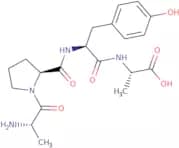
Formule :C21H35N9O4Degré de pureté :Min. 95%Masse moléculaire :477.56 g/molH-Ala-Pro-Tyr-Ala-OH
CAS :Acetylation is the process of reacting an organic compound with acetic acid to produce an ester and water. Acetylation is one of the most common reactions in organic chemistry. Acetylating agents, such as acetic anhydride or acetyl chloride, are often used in chemical synthesis because they react selectively with primary and secondary alcohols to form esters. The acetylation reaction can be used to modify proteins by attaching an acetyl group to the amine group of a lysine residue. This modification prevents the protein from binding to other proteins and can alter its function. Acetylation also has been implicated in several diseases, such as hepatitis and inflammatory bowel disease.
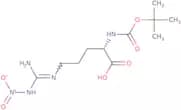
Formule :C20H28N4O6Degré de pureté :Min. 95%Masse moléculaire :420.46 g/molBoc-L-Nitroarginine
CAS :Boc-L-Nitroarginine is a nitric oxide synthase inhibitor that belongs to the class of drugs called nitric oxide inhibitors. It is a potent inhibitor of nitric oxide synthase, preventing the production of nitric oxide from arginine. The drug has been shown to have therapeutic effects in the treatment of cancer, diabetes mellitus, and other diseases. Boc-L-Nitroarginine inhibits tumor angiogenesis by blocking endothelial cell proliferation and migration. It also inhibits insulin secretion, leading to an improved glycemic control in diabetic patients. Boc-L-Nitroarginine can be used as a hydrogenation reducing agent for the synthesis of imatinib and palladium catalysts for hydrogenation reactions.
Formule :C11H21N5O6Degré de pureté :Min. 95%Couleur et forme :PowderMasse moléculaire :319.31 g/mol