


Substrats d'enzymes
Sous-catégories appartenant à la catégorie "Substrats d'enzymes"
1528 produits trouvés pour "Substrats d'enzymes"
6-Chloro-3-Indoxyl-a-D-Glucopyranoside (Salmon-a-D-Glc) extrapure, 98%
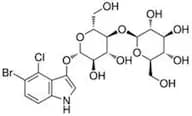
CAS :Formule :C14H16ClNO6Degré de pureté :min. 98.0%Couleur et forme :White to off-white, Powder, Clear, Colourless to Pale yellowMasse moléculaire :329.745-Bromo-4-Chloro-3-Indolyl-ß-D-Glucuronide Sodium Anhydrous (X-Gluc Sodium) extrapure, 98%
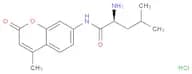
CAS :Formule :C14H12BrClNNaO7Degré de pureté :min. 98%Couleur et forme :White, PowderMasse moléculaire :444.59L-Leucine 7-Amido-4-Methylcoumarin Hydrochloride Salt extrapure, 98%
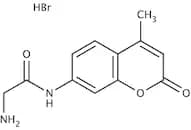
CAS :Formule :C16H21ClN2O3Degré de pureté :min. 98%Couleur et forme :White to off-white, PowderMasse moléculaire :324.8Glycine-7-Amido-4-Methylcoumarin Hydrobromide Salt extrapure, 98%
CAS :Formule :C12H13BrN2O3Degré de pureté :min. 98%Couleur et forme :White, PowderMasse moléculaire :313.24-Methylumbelliferyl-b-D-Glucuronide Trihydrate (MUG) extrapure, 99%
CAS :Formule :C16H22O12Degré de pureté :min.99%Couleur et forme :White, Crystalline powderMasse moléculaire :406.34a-Ketoglutaric Acid Disodium Dihydrate extrapure, 98%
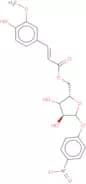
CAS :Formule :C5H4O5Na2·2H2ODegré de pureté :min.98%Couleur et forme :White to off-white, Crystalline Powder, ClearMasse moléculaire :226.094-Nitrophenyl 5-O-trans-feruloyl-a-L-arabinofuranoside
CAS :4-Nitrophenyl 5-O-trans-feruloyl-alpha-L-arabinofuranoside is a chromogenic substrate for alpha-L-arabinofuranosidase. Upon hydrolysis, para-nitrophenol is released yielding a yellowish colour. 4-Nitrophenyl 5-O-trans-feruloyl-alpha-L-arabinofuranoside is used in different applications such as the Plant cell wall degradation assays, bacterial enzyme profiling
Formule :C21H21NO10Degré de pureté :Min. 95%Couleur et forme :PowderMasse moléculaire :447.4 g/molCrimson-Gal
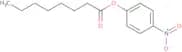
Crimson-Gal (Crimson-beta-D-galactopyranoside) is a chromogenic indicator for beta-galactosidase activity. The colorless product is cleaved by lactose-utilizing bacteria in liquid media or on agar plates and yields a crimson colored precipitate. Crimson-Gal can also be used as detecting agent for beta-galactosidase activity in reporter gene assays or for identification of positive transformants on agar plates when using the α-complementation approach. Read more in the Application Notes.Masse moléculaire :360.96 g/mol4-Nitrophenyl caprylate
CAS :Chromogenic substrate targeting lipase, C8 esteraseFormule :C14H19NO4Degré de pureté :Min. 95 Area-%Couleur et forme :Slightly Brown Yellow Clear LiquidMasse moléculaire :265.31 g/mol5-Bromo-4-chloro-3-indolyl 2-Acetamido-2-deoxy-α-D-galactopyranoside
CAS :Produit contrôléApplications A histochemical substrate for a-N-acetyl-galactosaminidase.
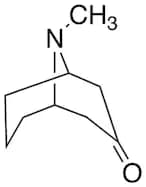
References Zhu, et al.: Gene, 137, 309 (1994)Formule :C16H18BrClN2O6Couleur et forme :NeatMasse moléculaire :449.68Pseudopelletierine
CAS :Produit contrôléApplications It was found in the root bark of Punica granatum L., Punicaceae. Used as a enzyme substrate.
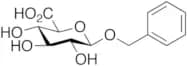
References Hunt, R., et al.: J. Pharm. Pharmacol., 22, 29S (1970), Hashimoto, T., et al.: Plant Physiol., 100, 836 (1992), Boswell, H., et al.: Phytochemistry, 52, 855 (1999),Formule :C9H15NOCouleur et forme :NeatMasse moléculaire :153.22Benzyl β-D-Glucopyranosiduronic Acid
CAS :Produit contrôléStability Hygroscopic
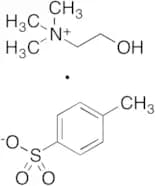
Applications Protected Glucopyranosiduronic Acid.Formule :C13H16O7Couleur et forme :NeatMasse moléculaire :284.26Choline p-Toluenesulfonate Salt
CAS :Applications Choline p-Toluenesulfonate Salt is a useful intermediate as well as a choline acetyltransferase (CHAT) substrate.
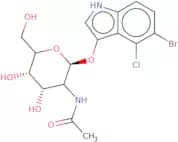
References Brockerhoff, H., et al.: N.K.N., Lipids, 14, 88 (1979);Formule :C7H7O3S·C5H14NOCouleur et forme :NeatMasse moléculaire :275.365-Bromo-4-chloro-3-indolyl 2-acetamido-2-deoxy-a-D-glucopyranoside
5-Bromo-4-chloro-3-indolyl 2-acetamido-2-deoxy-a-D-glucopyranoside is a fluorogenic substrate that reacts with horseradish peroxidase to produce light. It is used in the detection of β-galactosidase activity in food testing, staining, and environmental testing. This product is also used as a chromogenic substrate for the determination of β-galactosidase activity in immunological assays. 5BICAPG is a conjugate that can be used as a diagnostic ligand for the detection of β -galactosidase enzyme activity. This product has been shown to react with horseradish peroxidase and produce chemiluminescence or bioluminescence when exposed to oxygen. 5BICAPG has also been found to be an excellent enzyme substrate for various enzymes including alkaline phosphataseFormule :C16H18BrClN2O6Degré de pureté :Min. 95%Masse moléculaire :449.68 g/molAldol® 515 propionate, Biosynth Patent: EP 2427431 and US 8940909
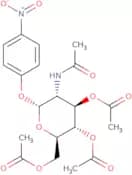
CAS :Aldol® 515 propionate is a chromogenic substrate that is used as a reagent in food testing, diagnostics, and environmental testing. It reacts with an enzyme to form a fluorescent product that can be detected with a spectrophotometer. The substrate has been shown to have high purity and high quality.Formule :C26H24N2O3Degré de pureté :Min. 95.0 Area-%Masse moléculaire :412.48 g/mol4-Nitrophenyl 2-acetamido-3,4,6-tri-O-acetyl-2-deoxy-a-D-glucopyranoside
CAS :4-Nitrophenyl 2-acetamido-3,4,6-tri-O-acetyl-2-deoxy-a-D-glucopyranoside is a synthetic compound with the ability to inhibit the enzyme glutamicum. It is a radionuclide that can be used as a focusing agent for gamma cameras and has been shown to be effective against corynebacterium glutamicum and other organisms. 4NP2AG was synthesized by reacting nitrophenol with acetamide in the presence of an acid catalyst and hydrogenating the product. The synthesis employs precession chemistry, which involves rotating a molecule around its axis at high speed to increase its concentration in one area. This treatment leads to a higher yield of desired product. 4NP2AG contains two acetamido groups on the glucopyranoside moiety, which are esterified with nitrophenol and acetic acid respectively. These moieties are
Degré de pureté :Min. 95%Masse moléculaire :468.41 g/molThymidine 5′-monophosphate p-nitrophenyl ester sodium
CAS :Thymidine 5′-monophosphate p-nitrophenyl ester sodium is a fluorogenic substrate that is used in food testing and environmental testing. It is an important component of the Ligand Assay, a diagnostic test for the detection of antibodies to HIV. Thymidine 5′-monophosphate p-nitrophenyl ester sodium has been shown to be a good substrate for use in enzyme assays, such as DNA polymerase, DNA ligase, and RNA polymerase. This product is also used in bioluminescence and chemiluminescence reactions.Formule :C16H18N3O10P•NaDegré de pureté :Min. 95%Masse moléculaire :466.29 g/mol4-Methylumbelliferyl-a-D-mannopyranoside-2-phosphoethanolamine
4-Methylumbelliferyl-a-D-mannopyranoside-2-phosphoethanolamine is a fluorescent substrate used in enzyme assays. It is an analog of the natural substrate, 4-methylumbelliferyl-alpha-D-mannopyranoside, which is a phosphoethanolamine linked to alpha-D-mannose. This product can be used as a chromogenic or fluorogenic substrate for various enzymes, including beta glucosidase, beta galactosidase, and beta lactonase. 4MUMPE can also be used for bioluminescent studies and has been shown to have high purity and quality.Degré de pureté :Min. 95%4-Nitrophenyl 4,6-benzylidene-2-O-(2,3,4,6-tetra-O-[4-methoxybenzyl]-a-D-glucopyranosyl)-a-D-glucopyranoside
4-Nitrophenyl 4,6-benzylidene-2-O-(2,3,4,6-tetra-O-[4-methoxybenzyl]-a-D-glucopyranosyl)-a-D-glucopyranoside is a fluorogenic substrate that is used in diagnostic assays to measure the activity of enzymes such as β–galactosidase and β–glucuronidase. It is also an enzyme substrate for culture media and chemiluminescence. This product has a CAS number of 57316-92-8.Degré de pureté :Min. 95%Masse moléculaire :1,088.02 g/molAldol® 450 acetate, Biosynth Patent: EP 2427431 and US 8940909
CAS :Aldol® 450 acetate is an enzyme substrate that is used in the detection of aldolase activity. Aldol® 450 acetate has been shown to be a useful alternative to the traditional bioluminescence and chemiluminescence methods for detecting aldolase activity. It has also been shown to be effective as a fluorogenic substrate for detecting aldolase activity in food products. Aldol® 450 acetate can be conjugated with other compounds, such as ligands and dyes, to enable it to detect different enzymes.
Aldol® 450 acetate has an absorption maximum at 450 nm and fluoresces blue-green under longwave UV light excitation. It is soluble in water and exhibits excellent stability at high temperatures (up to 50°C) and pH (1-14).Formule :C27H19NO3Degré de pureté :Min. 95.0 Area-%Masse moléculaire :405.44 g/mol








![4-Nitrophenyl 4,6-benzylidene-2-O-(2,3,4,6-tetra-O-[4-methoxybenzyl]-a-D-glucopyranosyl)-a-D-gluco…](/_next/image/?url=https%3A%2Fstatic.cymitquimica.com%2Fproducts%2F3D%2Fthumb-webp%2FEN04828.webp&w=3840&q=75)
