Substrats d'enzymes
Les substrats enzymatiques sont des molécules sur lesquelles les enzymes agissent pour catalyser des réactions chimiques. Le substrat se lie au site actif de l'enzyme, où il subit une transformation spécifique pour former le produit de la réaction. Les substrats enzymatiques sont des outils essentiels dans la recherche pour étudier la cinétique enzymatique, la spécificité et le mécanisme d'action. Ils sont également utilisés dans les essais diagnostiques et les études biochimiques. Chez CymitQuimica, nous offrons une sélection diversifiée de substrats enzymatiques de haute qualité pour soutenir vos recherches en enzymologie et biochimie.
Sous-catégories appartenant à la catégorie "Substrats d'enzymes"
1527 produits trouvés pour "Substrats d'enzymes"
Trier par
Degré de pureté (%)
0
100
|
0
|
50
|
90
|
95
|
100
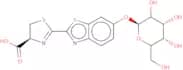
D-Luciferin-6-O b-D-glucopyranoside
<p>Chemiluminescent substrate for beta-D-glucosidase</p>Degré de pureté :Min. 95%Masse moléculaire :442.47 g/molH-Pro-Arg-4mbna
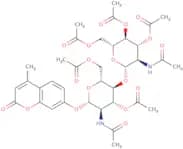
CAS :<p>H-Pro-Arg-4mbna is a chromogenic substrate that is specifically cleaved by trypsin, a serine protease involved in protein digestion, and thrombin, that cleave peptide bonds. Upon hydrolysis, the bond between the proline and arginine is cleaved, releasing 4MβNA. This leads to a colorimetric change that can be detected spectrophotometrically. This substrate is commonly used in the study of trypsin activity, as well as in the development of assays for the diagnosis and monitoring of pancreatic diseases, such as pancreatitis and cystic fibrosis, which are associated with trypsin dysfunction.</p>Formule :C22H30N6O3Degré de pureté :Min. 95%Masse moléculaire :426.5 g/mol4-Methylumbelliferyl-b-D-cellobiose heptaacetate
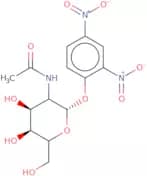
CAS :<p>4-Methylumbelliferyl-beta-D-cellobioside heptaacetate is a fluorogenic substrate for beta-D-glucosidase and can be used to detect this enzyme in the presence of other glycosidases. It is also used as a chromogenic substrate for beta-galactosidase, alpha-mannosidase, alpha-fucosidase, and alpha-N-acetylgalactosaminidase. 4MMB Cellobiose Haptaacetate is a conjugate that can be used to measure the activity of beta-glucuronidase and beta-xylosidase. This product is suitable for use in diagnostics, ligands, food testing, environmental testing, and culture media.</p>Degré de pureté :Min. 95%Masse moléculaire :794.71 g/mol2,4-Dinitrophenyl 2-acetamido-2-deoxy-b-D-glucopyranoside
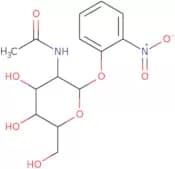
<p>2,4-Dinitrophenyl 2-acetamido-2-deoxy-b-D-glucopyranoside is a fluorogenic substrate for use in diagnostic testing. It reacts with the enzyme β -galactosidase to produce a blue color. This product is used as an indicator of β -galactosidase activity in bacterial cultures or as an indicator of the presence of this enzyme in food or other materials. It can be used to detect and measure the level of β -galactosidase in a sample. The reaction can be monitored by measuring light emission at 450 nm.<br>2,4-Dinitrophenyl 2 acetamido 2 deoxy b D glucopyranoside has a CAS number of 47868-87-0 and is available in high purity (>97%).</p>Degré de pureté :Min. 95%Masse moléculaire :387.31 g/mol2-Nitrophenyl 2-acetamido-2-deoxy-a-D-galactopyranoside
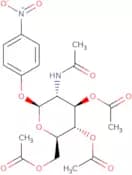
CAS :<p>2-Nitrophenyl 2-acetamido-2-deoxy-a-D-galactopyranoside is a fluorogenic substrate that is used in enzyme assays. It can be used as a chromogenic substrate or conjugate with an enzyme to detect the presence of glucose.</p>Degré de pureté :Min. 95%Masse moléculaire :342.3 g/mol4-Nitrophenyl 2-acetamido-3,4,6-tri-O-acetyl-2-deoxy-b-D-glucopyranoside
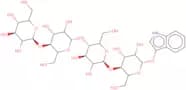
CAS :<p>4-Nitrophenyl 2-acetamido-3,4,6-tri-O-acetyl-2-deoxy-b-D-glucopyranoside is an extracellular nucleic acid molecule that is produced by the bacterium Corynebacterium glutamicum. This compound has been shown to inhibit cancer cells by blocking the transport of glucose through the cell membrane and may be a potential drug target for cancer treatment. 4NPTAPG has also been shown to have diagnostic properties and can identify corynebacterium glutamicum strains. It is a fluorescent molecule that can be used to detect the presence of this bacterium in culture media.</p>Degré de pureté :Min. 95%Masse moléculaire :468.41 g/mol3-Indolyl b-D-cellotetraoside
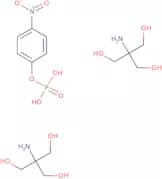
<p>3-Indolyl b-D-cellotetraoside is a chemiluminescent substrate that is used as an indicator in the detection of aminoglycosides. The ligand is a cell wall component that has been shown to bind specifically to the active site of bacterial β-lactamases, which are enzymes that catalyze the hydrolysis of β-lactam antibiotics. 3-Indolyl b-D-cellotetraoside can be used for bacterial identification and enumeration, food testing, and enzyme substrate for diagnostics. It fluoresces in response to electron excitation with a wavelength of about 590 nm.</p>Degré de pureté :Min. 95%Masse moléculaire :781.71 g/mol4-Nitrophenyl phosphate bis(tris) salt
CAS :<p>Substrate for alkaline phosphatase</p>Formule :C6H6NO6P•(C4H11NO3)2Degré de pureté :(%) Min. 99%Couleur et forme :PowderMasse moléculaire :461.36 g/mol4-Nitrophenyl 2-O-(a-D-glucopyranosyl)-a-D-glucopyranoside
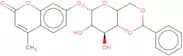
CAS :<p>4-Nitrophenyl 2-O-(α-D-glucopyranosyl)-α-D-glucopyranoside is a specialized chromogenic pNP substrate featuring dual glucose-linked moieties, designed for accurate detection and quantification of specific glycosidase enzymes. Upon cleavage by target enzymes, this substrate releases 4-Nitrophenol, which can be easily monitored spectrophotometrically as a yellow color change. This advanced substrate offers enhanced specificity and sensitivity in enzyme assays, facilitating cutting-edge research in biochemistry, enzymology, and other related fields.</p>Degré de pureté :Min. 95%Masse moléculaire :463.39 g/mol4-Methylumbelliferyl 4,6-O-benzylidene-b-D-galactopyranoside
<p>4-Methylumbelliferyl 4,6-O-benzylidene-b-D-galactopyranoside is a fluorogenic substrate that is used in the detection of galactosidases. It has been shown to be a potent inhibitor of these enzymes and can be used to study the activity of various galactosidases. This substrate is used in the measurement of carbohydrate metabolism, including glycolysis and glycogenolysis. 4-Methylumbelliferyl 4,6-O-benzylidene-b-D-galactopyranoside has been shown to produce chemiluminescence when reacted with horseradish peroxidase and hydrogen peroxide. It also produces bioluminescence when exposed to luciferase and adenosine triphosphate (ATP).</p>Degré de pureté :Min. 95%Masse moléculaire :426.42 g/mol4-Methylumbelliferyl a-L-idopyranoside
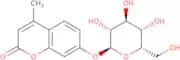
CAS :<p>4-Methylumbelliferyl alpha-L-idopyranoside is a fluorogenic substrate for alpha-L-iduronidase. After enzymatic cleaveage, free 4-methylumbelliferone (also known as hymecromone) is released, exhibiting blue fluorescence upon excitation with UV light. The strongest fluorescence of 4-methylumbelliferone requires deprotonation of the hydroxyl group (thus requires alkaline pH), with a maximal fluorescence intensity obtained with excitation at 350 to 370 nm and emission at 440 to 470 nm. The use of 4-methylumbelliferyl alpha-L-idopyranosideas a substrate for measuring the alpha-L-iduronidase activity is used for Mucopolysaccharidosis I diagnosis and Hurler syndrome screening.</p>Formule :C16H18O8Degré de pureté :Min. 98 Area-%Couleur et forme :White PowderMasse moléculaire :338.31 g/mol4-Nitrophenyl 3-O-(2,3,4,6-tetra-O-acetyl-a-D-mannopyranosyl)-2-O-benzoyl-a-D-mannopyranoside
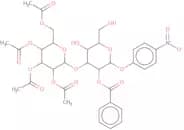
CAS :<p>4-Nitrophenyl 2,3,4,6-tetra-O-acetyl-b-D-glucopyranoside enzyme substrate is a versatile and reliable reagent for measuring glucosidase activity. It is an ideal substrate for use in assays to detect β-glucosidase activity in a variety of applications, including for in vitro and in vivo studies, and it has been widely used in the pharmaceutical and biotechnology industries. This chromogenic pNP enzyme substrate is designed for effective and precise analysis with good sensitivity and low background signals.</p>Degré de pureté :Min. 95%Masse moléculaire :735.64 g/mol2-Nitrophenyl 2-acetamido-2-deoxy-b-D-galactopyranoside
CAS :<p>2-Nitrophenyl 2-acetamido-2-deoxy-b-D-galactopyranoside is a carboxymethyl derivative of the natural substrate of β-galactosidase, which is used as a substrate for the production of recombinant proteins in the corynebacterium glutamicum. The enzyme β-galactosidase hydrolyzes this substrate to produce an acid molecule and a sugar molecule. This product can be used in biotechnological processes for the production of recombinant proteins or other bioactive molecules. It can also be used in the isolation of nucleic acid from bacteria or fungi, or to study bacterial membrane transport systems. 2NPGAG can be expressed as a recombinant protein with expression vectors such as pET21a and pET24a. It has been shown that this product inhibits transport through membranes by binding to cellulose, which may be useful for studies on cellulose biosynthesis</p>Degré de pureté :Min. 95%Masse moléculaire :342.3 g/molAldol® 479 acetate, Biosynth Patent: EP 2427431 and US 8940909
CAS :Produit contrôlé<p>Aldol acetate is a chromogenic substrate that is used in food testing and diagnostics. Aldol acetate can be used in the detection of aminopeptidase and dipeptidyl peptidase activities, as well as in the determination of urinary proteins. Aldol acetate can also be used to detect anaerobic bacteria. This compound is conjugated with various ligands for use in immunoassays, such as beta-galactosidase, beta-glucuronidase, alpha-naphthyl phosphate ester, and phenyl phosphate ester. This product has been shown to be useful for chemiluminescent assays of DNA polymerases and reverse transcriptases in environmental samples. It has also been shown to be useful for bioluminescent assays of DNA polymerases and reverse transcriptases in environmental samples.</p>Formule :C25H22N2O3Degré de pureté :Min. 95.0 Area-%Masse moléculaire :398.45 g/mol2-Nitrophenyl 2,3,4-tri-O-acetyl-b-D-glucuronide methyl ester
CAS :<p>2-Nitrophenyl-2,3,4-tri-O-acetyl-b-D-glucuronide methyl ester is a tri-O-acetylated glucuronide substrate commonly used in chromogenic assays to detect the activity of beta-glucuronidase. Upon hydrolysis by the enzyme, the substrate releases 2-nitrophenol, which can be spectrophotometrically. The substrate is widely used in diagnostic tests to assess bacterial and fungal infections, as well as in drug metabolism studies.</p>Degré de pureté :Min. 95%Masse moléculaire :455.37 g/mol4-Methylumbelliferyl 3,4,6-tri-O-acetyl-2-deoxy-2-trifluoroacetamido-a-D-glucopyranoside
CAS :<p>4-Methylumbelliferyl 3,4,6-tri-O-acetyl-2-deoxy-2-trifluoroacetamido-a-D-glucopyranoside (4MUAA) is a fluorescent dye that is used for the detection of envelopment in cells. This dye binds to cell membranes and can be detected with a fluorescence microscope. 4MUAA can be used to determine the efficiency of an experimental methodology or algorithm by measuring the change in fluorescence intensity as a result of experimental treatment. The use of 4MUAA has been shown to be effective in determining whether or not there is an association between nationwide environmental pollution and cancer rates in Japan.</p>Degré de pureté :Min. 95%Masse moléculaire :559.44 g/molAldol® 491 acetate, Biosynth Patent: EP 2427431 and US 8940909
CAS :<p>Aldol 491 acetate is a food and environmental testing chemical, which can be used for the detection of bacteria. Aldol 491 acetate provides a chromogenic substrate for the detection of enzymes and can be used as a substrate in enzyme-linked immunosorbent assay (ELISA) procedures. Aldol 491 acetate also has chemiluminescent properties and can be used as a fluorogenic substrate.</p>Formule :C22H17NO4Degré de pureté :Min. 95 Area-%Masse moléculaire :359.37 g/mol4-Nitrophenyl β-D-maltotrioside
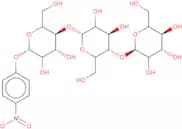
CAS :<p>Chromogenic substrate targeting amylase</p>Formule :C24H35NO18Degré de pureté :Min. 95%Couleur et forme :PowderMasse moléculaire :625.53 g/mol4-Nitrophenyl 2-acetamido-2-deoxy-6-O-trityl-b-D-glucopyranoside
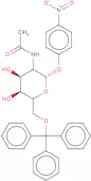
<p>4-Nitrophenyl 2-acetamido-2-deoxy-6-O-trityl-b-D-glucopyranoside offers unmatched versatility as a chromogenic pNP substrate for detecting b-D-glucopyranosidase activity. The substrate is specifically designed to produce a yellow 4-nitrophenol product upon enzyme hydrolysis, which can be measured using absorbance spectroscopy. The unique tritylated glucopyranoside group ensures improved compound stability and selectivity while providing ease of handling. This versatile substrate is ideal for a broad range of biochemical, research, and diagnostic applications.</p>Degré de pureté :Min. 95%Masse moléculaire :584.62 g/molCesium carbonate
CAS :<p>Cesium carbonate is a compound that has various applications in different fields. It is commonly used as an aldehyde scavenger in organic synthesis reactions. Cesium carbonate can also interact with cerebrosides, which are important components of the nervous system, and may have potential therapeutic effects on certain neurological disorders.</p>Formule :CCs2O3Degré de pureté :Min. 99.9%Masse moléculaire :325.82 g/molRef: 3D-J-025376
1kgÀ demander5kgÀ demander10kgÀ demander500gÀ demander2500gÀ demander-Unit-kgkgÀ demander