Substrats d'enzymes
Sous-catégories appartenant à la catégorie "Substrats d'enzymes"
1527 produits trouvés pour "Substrats d'enzymes"
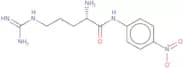
L-Citrulline-p-nitroanilide hydrobromide
CAS :L-Citrulline-p-nitroanilide hydrobromide is a substrate for enzymes such as beta-galactosidase, beta-glucuronidase, and alkaline phosphatase. It is used in biochemical assays for the detection of microorganisms and in medical diagnostics. This compound has been shown to be useful in fluorescence microscopy and bioluminescence. It also has applications in food testing, environmental testing, and high purity research.
Formule :C12H20Br2N6O3Degré de pureté :Min. 95%Masse moléculaire :453.996362-Methyl-4-nitrophenyl b-D-galactopyranoside
2-Methyl-4-nitrophenyl b-D-galactopyranoside is a chemiluminescent substrate that is used in various applications. It is a ligand that binds to the enzyme beta-galactosidase and is used in diagnostics for detecting the presence of the enzyme. 2-Methyl-4-nitrophenyl b-D-galactopyranoside has been shown to be an appropriate substrate for chemiluminescence reactions, such as those used in diagnostic or research applications. The product also has been tested for potential toxicity and found not to be toxic at concentrations up to 100mg/mL. This product can be used in a variety of applications, including food testing, bacterial culture media, and environmental testing.Degré de pureté :Min. 95%Masse moléculaire :315.28 g/mol5-Bromo-6-chloro-1H-indol-3-yl-a-D-mannopyranoside
CAS :5-Bromo-6-chloro-1H-indol-3-yl-a-D-mannopyranoside is a chromogenic substrate that yields a magenta-colored product after cleavage. The chromophore 5-bromo-6-chloro-indoxyl is released, generating the observable color. It is used in lysosomal storage disorder screening.
Formule :C14H15BrClNO6Degré de pureté :Min. 95 Area-%Couleur et forme :White Off-White PowderMasse moléculaire :408.63 g/molAldol® 470 L-alanine ester, hydrochloride, Biosynth Patent: EP 2427431 and US 8940909
CAS :Produit contrôléAldol® 470 L-alanine ester, hydrochloride is a chromogenic substrate that is used as a food testing reagent and enzyme substrate in diagnostics. It is also used to detect the presence of ligands in an environment. Aldol® 470 L-alanine ester, hydrochloride is used in chemiluminescence and bioluminescence reactions.Formule :C26H25ClN2O5Degré de pureté :Min. 95.0 Area-%Masse moléculaire :480.95 g/molAldol® 495 phosphate, disodium salt, Biosynth Patent: EP 2427431 and US 8940909
CAS :Aldol® 495 phosphate is a chromogenic and fluorogenic enzyme substrate used for detection of phosphatase activity. The colorless enzyme substrate is cleaved by acid and alkaline phosphatases secreted by bacteria in liquid or solid media, yielding orange color and green fluorescence. Aldol® 495 phosphate can also be used in Western blots and other immunoassay applications with phosphatase-coupled secondary antibodies. Aldol® 495 phosphate can be used under aerobic and anaerobic conditions.Formule :C20H14ClN2Na2O5PDegré de pureté :Min. 98.0 Area-%Masse moléculaire :474.74 g/mol4-Nitrophenyl 2-acetamido-3-O-(2-O-a-L-fucopyranosyl-b-D-galactopyranosyl)-2-deoxy-a-D-galactopyranoside
CAS :4-Nitrophenyl 2-acetamido-3-O-(2-O-a-L-fucopyranosyl-b-D-galactopyranosyl)-2,6,8,10,12-pentaoxoheptaacetic acid is a chemiluminescent substrate that is used for the detection of peroxidase and other enzymes. The reaction product is a yellow fluorescent product which can be measured using a fluorometer. It is sold as an aqueous solution at 1mg/mL in phosphate buffer at pH 7.4.
Degré de pureté :Min. 95%Masse moléculaire :650.58 g/mol4-Nitrophenyl 2,3,4,6-tetra-O-acetyl-a-D-glucopyranoside
CAS :4-Nitrophenyl 2,3,4,6-tetra-O-acetyl-a-D-glucopyranoside is a useful substrate for enzymatic assays. This high-sensitivity chromogenic pNP substrate offers enhanced selectivity and increased detection ability, allowing for a broad range of applications in the field of glycosidase research. Featuring rapid colorimetric readouts with easily detectable endpoint determination, this substrate delivers clear and accurate results every time.
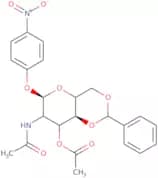
Degré de pureté :Min. 95%Masse moléculaire :469.4 g/mol4-Nitrophenyl 2-acetamido-3-O-acetyl-4,6-O-benzylidene-2-deoxy-a-D-glucopyranoside
CAS :4-Nitrophenyl 2-acetamido-3-O-acetyl-4,6-O-benzylidene-2-deoxy-aDglucopyranoside is a fluorogenic substrate that can be used for the detection of β-glucosidase activity. It is a water soluble substrate with an extinction coefficient of approximately 10,000 M−1 cm−1 at 420 nm. 4NPAABGDG is a chromogenic substrate that can be used to detect β-galactosidase activity. It has an extinction coefficient of approximately 1,700 M−1 cm−1 at 420 nm. The CAS number for 4NPAABGDG is 23262–56–8 and it is sold by Sigma Aldrich under catalog number L4959.Degré de pureté :Min. 95%Masse moléculaire :472.44 g/mol4-Methylumbelliferyl N-acetyl-a-D-neuraminic acid ammonium
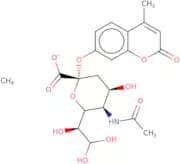
CAS :4-Methylumbelliferyl N-acetyl-alpha-D-neuraminic acid ammonium is a fluorogenic substrate for neuraminidase. After enzymatic cleaveage, free 4-methylumbelliferone (also known as hymecromone) is released, exhibiting blue fluorescence upon excitation with UV light. The strongest fluorescence of 4-methylumbelliferone requires deprotonation of the hydroxyl group (thus requires alkaline pH), with a maximal fluorescence intensity obtained with excitation at 350 to 370 nm and emission at 440 to 470 nm. The use of 4-methylumbelliferyl N-acetyl-alpha-D-neuraminic acid ammoniumas a substrate for measuring the neuraminidase activity is used for detecting the glycoproteins on the surface of influenza A and B viruses, as well as for sialidosis diagnosis.Formule :C21H28N2O11Degré de pureté :Min. 95%Couleur et forme :PowderMasse moléculaire :471.44 g/molAldol® 484 acetate, Biosynth Patent: EP 2427431 and US 8940909
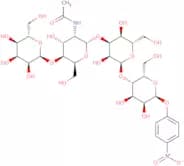
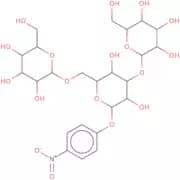
CAS :Produit contrôléAldol® 484 acetate is a chromogenic substrate for carboxylesterases yielding a red precipitate. In contrast to classical indoxyl substrates, Aldol substrates work not only under aerobic but also under anaerobic conditionsFormule :C22H16ClFN2O3Degré de pureté :Min. 95.0 Area-%Masse moléculaire :410.83 g/mol4-Nitrophenyl b-lacto-N-neotetraoside
CAS :4-Nitrophenyl b-lacto-N-neotetraoside is a potent antibiotic that inhibits bacterial growth by binding to the beta subunit of DNA gyrase. This drug has been shown to be effective against methicillin resistant Staphylococcus aureus (MRSA) and Clostridium perfringens, although is not active against acid-fast bacteria such as Mycobacterium tuberculosis or Mycobacterium avium complex. Gatifloxacin has shown anti-inflammatory properties, which may be due to its inhibition of prostaglandin synthesis.Degré de pureté :Min. 95%Masse moléculaire :828.72 g/mol4-Methylumbelliferyl-a-D-mannopyranoside-6-phosphoethanolamine
4-Methylumbelliferyl-a-D-mannopyranoside-6-phosphoethanolamine is a synthetic fluorogenic substrate that can be used in the detection of phosphatases. This substrate is a chromogenic and fluorogenic substrate that reacts when it is cleaved by enzymes. It has been shown to work with a number of different enzyme types, including esterases, phosphatases, and proteases. 4-Methylumbelliferyl-a-D-mannopyranoside-6-phosphoethanolamine has demonstrated high quality for use in bioluminescence, food testing, and environmental testing.4Methylumbelliferyl - a - D - mannopyranoside - 6 - phosphoethanolamine has been assigned CAS No. 81771-07-2.Degré de pureté :Min. 95%4-Methylumbelliferyl 3,4,6-tri-O-acetyl-b-D-galactopyranoside
4-Methylumbelliferyl 3,4,6-tri-O-acetyl-b-D-galactopyranoside is a fluorescent compound that can be used as a substrate for the following enzymes: β-galactosidase, α-galactosidase, and β-glucuronidase. This product is used in diagnostics to measure the activity of these enzymes. It can also be used to detect bacteria in culture media and food testing. 4MUF3,4,6TABG is a high quality product that has been shown to have a high purity level by liquid chromatography. CAS number: 61440-03-2Degré de pureté :Min. 95%Masse moléculaire :464.42 g/mol4-Methylumbelliferyl 3,4,6-tri-O-acetyl-2-azido-2-deoxy-a-D-galactopyranoside
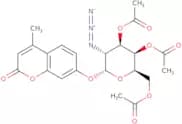
CAS :4-Methylumbelliferyl 3,4,6-tri-O-acetyl-2-azido-2-deoxy-a-D-galactopyranoside is a fluorogenic substrate for the enzyme beta galactosidase. It is used in food testing, environmental testing, and diagnostics. 4MUF3A2DGAL is an enzyme substrate that provides high quality chemiluminescence and bioluminescence signals. This product has a CAS number of 124167-43-7 and is available in both high purity and conjugate forms.Degré de pureté :Min. 95%Masse moléculaire :489.43 g/mol2-Nitrophenyl hexyl ether
CAS :2-Nitrophenyl hexyl ether is a chromogenic substrate commonly used to assay the activity of esterases. Upon cleavage of the ester bond by esterases, the released 2-nitrophenyl group yields a yellow color detectable by spectrophotometry. This substrate has been used in a variety of applications, including environmental monitoring and studies of insecticide resistance. It is particularly useful for screening large numbers of samples because of its rapid reaction rate and high sensitivity. However, it should be noted that some non-specific hydrolysis may occur with this substrate, particularly at high concentrations or in the presence of strong nucleophiles.Degré de pureté :Min. 95%Masse moléculaire :223.27 g/molD-Luciferin-6-O N-acetylneuraminic acid
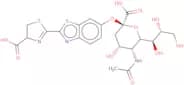
Chemiluminescent substrate for neuraminidaseDegré de pureté :Min. 95%Masse moléculaire :571.58 g/mol4-Nitrophenyl b-D-cellobioside heptaacetate
4-Nitrophenyl b-D-cellobioside heptaacetate is a chromogenic substrate for enzymes that catalyze the hydrolysis of glycosidic bonds. This product is used as a diagnostic tool for identifying and characterizing glycosidases and other enzymes that degrade glycosidic bonds. 4-Nitrophenyl b-D-cellobioside heptaacetate is also used in culture media to measure the activity of cellulase enzymes by measuring the release of reducing sugars. The color change of this substrate can be detected at 405 nm, 490 nm, or 550 nm.Degré de pureté :Min. 95%Masse moléculaire :757.65 g/mol5-Bromo-6-chloro-3-indolyl b-D-cellobiopyranoside
5-Bromo-6-chloro-3-indolyl b-D-cellobiopyranoside is a fluorogenic substrate for the enzyme β-glucuronidase. It is used in diagnostic applications such as food testing, bacterial culture media and environmental testing. The product has CAS number: 123591-77-0.
Degré de pureté :Min. 95%2'-(4-Methylumbelliferyl)-a-D-N-glycolylneuraminic acid
CAS :2'-(4-Methylumbelliferyl)-a-D-N-glycolylneuraminic acid is a fluorogenic substrate that is used for enzymatic labeling of glycolipids. It can be used as a diagnostic or food testing agent, and also has applications in environmental testing. The CAS number for this product is 1434265-32-3.Degré de pureté :Min. 95%Masse moléculaire :483.42 g/mol7-((4'-L-Alaninamido)-rac-(3'-octanoyloxy)butyloxy) coumarin trifluoroacetate salt
CAS :This Clips-O substrate 7-(4'-L-Alaninamido)-rac-(3'-octanoyloxy)butyloxy) coumarin allows the detection of three enzymatic activities (L-alanine aminopeptidase, C8-esterase and oxidation of 4-amino-3-hydroxybutyloxy either enzymatically or by exposure to sodium periodate) with one single substrate and give a positive fluorescent signal only in presence of all activities. The main virtues of Clips-O substrates are an increased stability towards non-enzymatic hydrolysis that results in a reduced background and high sensitivity.
Formule :C26H35F3N2O8Degré de pureté :Min. 95.0 Area-%Masse moléculaire :560.56 g/molp-Nitrophenylphosphorylcholine
CAS :p-Nitrophenylphosphorylcholine is a substrate molecule for enzymes that catalyze phospholipid biosynthesis. It is the most common substrate used to study the enzyme activity of phosphatidylcholine synthase and phospholipase A2 in human serum. The reaction mechanism is not well understood, but it appears to involve autocatalysis and an initial nucleophilic attack by p-nitrophenolate on the carbonyl carbon atom of the choline moiety. p-Nitrophenylphosphorylcholine has been shown to exhibit receptor activity on cells, which may be due to its ability to bind with basic proteins. This compound can also inhibit meiosis in Drosophila melanogaster and increase levels of natriuretic peptides in rats, as well as cause cell lysis and polymerase chain reactions in mammalian cells.Formule :C11H17N2O6PMasse moléculaire :304.24 g/molAquaSpark® alpha-D-galactoside, 10 mM in DMSO, Ramot at Tel-Aviv University Ltd. Patent family WO 2017/130191
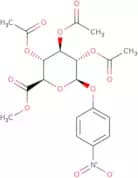
CAS :Substrate for alpha-galactosidaseFormule :C34H39ClO12Degré de pureté :Min. 95%Couleur et forme :Clear LiquidMasse moléculaire :675.12 g/mol4-Nitrophenyl 2,3,4-tri-O-acetyl-b-D-glucuronide methyl ester
CAS :4-Nitrophenyl 2,3,4-tri-O-acetyl-b-D-glucuronide methyl ester is a fluorescent substrate for the beta-glucuronidase enzyme. It can be used to detect the presence of this enzyme in bacteria and other microorganisms by means of fluorometric or colorimetric assays. It has been shown to have an excellent stability in a variety of culture media and food testing applications. This product is available in high purity and quality, with a CAS number of 18472-49-6.Degré de pureté :Min. 95%Masse moléculaire :455.37 g/molAldol® 457 β-D-galactopyranoside, Biosynth Patent: EP 2427431 and US 8940909
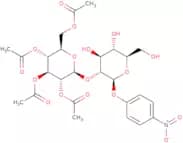
CAS :Aldol 457 Beta-D-galactopyranoside is a chromogenic substrate for beta-galactosidase, which is an enzyme that catalyzes the hydrolysis of the terminal galactose residue in D-galactose to form D-galactitol and D-glucose. Aldol 457 Beta-D-galactopyranoside is used as a reagent for the detection of beta-galactosidase activity in biological samples, such as cultured cells or tissues, and has been shown to be a ligand in binding studies with Galectin 1. This product is also used in diagnostic applications such as food testing, culture media, fluorogenic substrates, environmental testing and more.Formule :C24H28N2O8Degré de pureté :Min. 95.0 Area-%Masse moléculaire :472.49 g/mol4-Nitrophenyl 2-O-(2,3,4,6-tetra-O-acetyl-b-D-glucopyranosyl)-b-D-glucopyranoside
CAS :4-Nitrophenyl 2-O-(2,3,4,6-tetra-O-acetyl-b-D-glucopyranosyl)-b-D-glucopyranoside is a state-of-the-art chromogenic substrate designed for rapid and sensitive enzyme activity detection. As a versatile pNP substrate, it produces a noticeable color change upon enzyme-catalyzed hydrolysis, facilitating easy monitoring and quantification of enzyme levels in research and diagnostic applications. The substrate's acetylated glucose moiety ensures specificity and stability, allowing for precise and reliable results across a range of experimental conditions.Degré de pureté :Min. 95%Masse moléculaire :631.54 g/mol2-Nitrophenyl caprylate
CAS :2-Nitrophenyl caprylate is a potent inhibitor of gram-negative bacteria. It has been shown to inhibit the enzymatic activity of certain bacterial enzymes, such as the modification of cellular fatty acids. 2-Nitrophenyl caprylate has also been shown to inhibit in vitro growth of various gram-negative bacteria, including E. coli and Salmonella enterica serovar Typhimurium, through detergent compositions and enzymatic reactions (e.g., aminopeptidases). 2-Nitrophenyl caprylate may be useful for the treatment of pancreatitis due to its inhibition of pancreatic secretions and inhibition of pancreatic lipase activity. Transposable sequences have been found in the 2-nitrophenyl caprylate gene cluster, which may be related to its regulatory properties.Degré de pureté :Min. 95%Couleur et forme :PowderMasse moléculaire :265.31 g/mol6-Chloro-4-trifluoromethylumbelliferyl b-D-galactopyranoside
6-Chloro-4-trifluoromethylumbelliferyl b-D-galactopyranoside is a chromogenic substrate that can be used in enzyme assays to measure the activity of beta-glucuronidase. This compound is sold as a conjugate with an enzyme, which will not interfere with the assay. The compound has been tested to have high purity and quality.Degré de pureté :Min. 95%6-Bromo-2-naphthalenyl-b-D-mannopyranoside
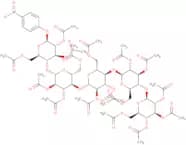
CAS :6-Bromo-2-naphthalenyl-b-D-mannopyranoside is a boronic acid that is used as a universal substrate for the detection of peroxidase activity. This product has been shown to be stable in most culture media and can be used to detect peroxidase activity in food, environmental, and other biological samples. 6-Bromo-2-naphthalenyl-b-D-mannopyranoside also has high purity and is conjugated with various fluorophores for use in chemiluminescence and bioluminescence assays.Formule :C16H17BrO6Degré de pureté :Min. 95%Masse moléculaire :385.21 g/mol4-Nitrophenyl b-D-cellopentaoside hexadecaacetate
CAS :4-Nitrophenyl b-D-cellopentaoside hexadecaacetate is a fluorogenic substrate that is used to study the activity of various enzymes. It reacts with hydrolytic enzymes in the presence of hydrogen peroxide to produce light, and it can be used for food testing, environmental testing, and diagnostics. 4-Nitrophenyl b-D-cellopentaoside hexadecaacetate is a conjugate of 4-nitrophenol and cellobiose pentaacetate that has a high purity and high quality. The CAS number for this compound is 129411-66-1.Degré de pureté :Min. 95%Masse moléculaire :1,622.4 g/molN-Acetyl-L-glutamine p-nitroanilide
CAS :N-Acetyl-L-glutamine p-nitroanilide is a fluorogenic substrate that can be used in the diagnosis of bacterial infections. It is a ligand that can bind to enzymes involved in the production of bioluminescence, such as luciferase, and can be used for the detection of bacteria. It is also used for food testing, environmental testing, and diagnostics. N-Acetyl-L-glutamine p-nitroanilide has high purity and high quality, which makes it suitable for conjugation with other molecules.
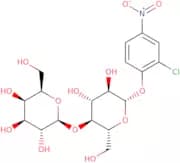
Formule :C13H15N3O6Degré de pureté :Min. 95%Couleur et forme :PowderMasse moléculaire :309.27 g/mol2-Chloro-4-nitrophenyl b-D-lactoside
CAS :2-Chloro-4-nitrophenyl b-D-galactopyranoside is a chromogenic enzyme substrate used to study the activity of beta-lactoside. It produces a yellow color when cleaved by the enzyme, making it a useful tool in enzyme assays and screening experiments.Degré de pureté :Min. 95%Couleur et forme :PowderMasse moléculaire :497.83 g/mol2,4-Dinitrophenyl b-D-cellobioside
CAS :2,4-Dinitrophenyl b-D-cellobioside is a chemiluminescent substrate that is used to detect the activity of enzymes and other proteins. It can be conjugated with an antibody or other ligand for use in diagnostic purposes. 2,4-DNPBC is a pure compound with a high quality that does not contain any other impurities. Its CAS number is 157956-96-2.Degré de pureté :Min. 95%2-Chloro-4-nitrophenyl 2-acetamido-2-deoxy-a-D-glucopyranoside
L-2-Chloro-4-nitrophenyl 2-acetamido-2-deoxy-a-D-glucopyranoside is a chemiluminescent substrate for the detection of aminoglycoside antibiotics. It can be used to determine the concentration of aminoglycosides in blood, urine, and serum. The chemiluminescence reaction is dependent on the presence of oxygen. This product has been shown to have a high quality and purity with environmental testing and staining properties. L-2-Chloro-4-nitrophenyl 2-acetamido-2-deoxy--a--D--glucopyranoside has also been shown to bind ligands such as porphyrins, bilirubin, or hemin with bioluminescence or chromogenic substrates in diagnostics or culture media for food testing. L--2--Chloro--4--Degré de pureté :Min. 95%4-Nitrophenyl 3,4,6-tri-O-acetyl-b-D-galactopyranoside
CAS :4-Nitrophenyl 3,4,6-tri-O-acetyl-b-D-galactopyranoside is a nucleic acid molecule that has been synthesized by recombinant expression in Corynebacterium glutamicum. It is a photosynthetic molecule and can be used to study the molecular basis of photosynthesis. The 4-nitrophenyl group on the sugar moiety confers resistance to degradation by nucleases. 4NP3,4,6GalAc has been shown to be capable of binding to proteins and polypeptides that are important for photosynthesis. This compound also has marginalizing effects on C. glutamicum strains that are used as expression vectors for recombinant protein production.Degré de pureté :Min. 95%Masse moléculaire :427.36 g/mol4-Methylumbelliferyl-b-D-glucose-6-phosphoethanolamine
4-Methylumbelliferyl-b-D-glucose-6-phosphoethanolamine is a fluorescent substrate that can be used to identify the presence of beta-glucosidase in biological samples, such as wine or cheese. It has been shown to offer high purity and quality, with a CAS number of 70750-68-6. This product is often used for diagnosing bacterial infections, as it will fluoresce when hydrolyzed by beta-glucosidase enzymes. 4MMUFBE can also be used for food testing, environmental testing, and chromogenic substrate reactions in the laboratory.Degré de pureté :Min. 95%4-Nitrophenyl 3,6-di-O-(a-D-mannopyranosyl)-b-D-mannopyranoside
4-Nitrophenyl 3,6-di-O-(a-D-mannopyranosyl)-b-D-mannopyranoside is a chemiluminescent substrate that is used in the detection of enzymes. It is also used to measure the activity of beta-glucosidase, alpha-galactosidase, and alkaline phosphatase. The product has been tested for environmental sensitivity and has not shown any effects on bacterial growth. 4-Nitrophenyl 3,6-di-O-(a-D-mannopyranosyl)-b-D-mannopyranoside can be used as a high quality stain for histological sections and immunohistochemical studies. This product has been tested for staining properties with different dyes and has shown no interference with the staining process.Degré de pureté :Min. 95%Masse moléculaire :625.53 g/molLuciferin-caprylate
Luciferin-caprylate is a substrate for chemiluminescence, which is the light produced by a chemical reaction. It has been shown to have high quality and environmental testing as well as being a ligand for bioluminescence. Luciferin-caprylate can be used for diagnostics in the areas of culture media, food testing, and enzyme substrate. This compound can also be used as a fluorogenic substrate or conjugate.Degré de pureté :Min. 95%5-Bromo-4-chloro-3-indoxyl phosphate, p-toluidine salt - micronized
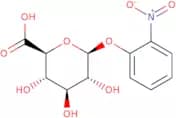
CAS :5-Bromo-4-chloro-3-indoxyl phosphate, p-toluidine salt - micronized is a chemiluminescent substrate used in diagnostic assays. It is an enzyme substrate that is commonly used to detect peroxidase activity and has been shown to be effective in detecting various types of bacteria. This product is a high quality chemical with a purity of at least 98% and has been tested for environmental safety. 5-Bromo-4-chloro-3-indoxyl phosphate, p-toluidine salt - micronized can be used as a fluorogenic substrate for the detection of proteases and aminopeptidases.Degré de pureté :Min. 95%2-Nitrophenyl b-D-glucuronide
CAS :2-Nitrophenyl-b-D-glucuronide is a chromogenic substrate used to detect the activity of beta-glucuronidase in various biological samples. Upon hydrolysis by the enzyme, the substrate releases 2-nitrophenol, which can be spectrophotometrically measured at 405 nm. The substrate is commonly used in clinical assays to evaluate liver and kidney function, as well as in drug metabolism studies. It is also used in environmental monitoring to assess the presence of microbial activity in soil and water samples. Overall, 2-Nitrophenyl-b-D-glucuronide is a widely used substrate with excellent sensitivity and specificity, making it a valuable tool in enzymology research and diagnostic testing.Degré de pureté :Min. 95%Couleur et forme :Off-white solid.Masse moléculaire :315.23 g/molResorufin maltotriose
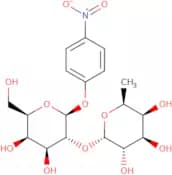
Resorufin maltotriose is an alpha-amylase substrate that releases the dye resorufin with red emission (lmax=585 nm) after enzyme reaction.Formule :C30H47NO18Degré de pureté :Min. 95%Masse moléculaire :709.69 g/mol4-Nitrophenyl 2-O-(α-L-fucopyranosyl)-β-D-galactopyranoside
CAS :4-Nitrophenyl 2-O-(α-L-fucopyranosyl)-β-D-galactopyranoside is a chromogenic enzymatic substrate for the detection and quantification of glycosidases, such as fucosidases and galactosidases. Upon enzymatic cleavage, the substrate releases the p-nitrophenol chromophore, which can be quantified via colorimetric analysis. This pNP-conjugated compound enables the rapid, sensitive, and high-throughput detection of enzyme activity in various applications, including enzymatic assays, inhibitor screening, and mechanistic studies. Its precise specificity for α-L-fucopyranosyl and β-D-galactopyranoside moieties makes it an excellent tool for advancing research in glycobiology and related fields.Formule :C18H25NO12Degré de pureté :Min. 95%Couleur et forme :White Off-White PowderMasse moléculaire :447.39 g/molH-Pro-Arg-4mbna
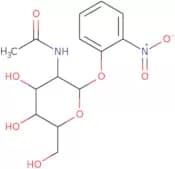
CAS :H-Pro-Arg-4mbna is a chromogenic substrate that is specifically cleaved by trypsin, a serine protease involved in protein digestion, and thrombin, that cleave peptide bonds. Upon hydrolysis, the bond between the proline and arginine is cleaved, releasing 4MβNA. This leads to a colorimetric change that can be detected spectrophotometrically. This substrate is commonly used in the study of trypsin activity, as well as in the development of assays for the diagnosis and monitoring of pancreatic diseases, such as pancreatitis and cystic fibrosis, which are associated with trypsin dysfunction.Formule :C22H30N6O3Degré de pureté :Min. 95%Masse moléculaire :426.5 g/mol2-Nitrophenyl 2-acetamido-2-deoxy-a-D-galactopyranoside
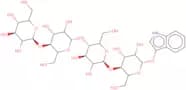
CAS :2-Nitrophenyl 2-acetamido-2-deoxy-a-D-galactopyranoside is a fluorogenic substrate that is used in enzyme assays. It can be used as a chromogenic substrate or conjugate with an enzyme to detect the presence of glucose.Degré de pureté :Min. 95%Masse moléculaire :342.3 g/mol3-Indolyl b-D-cellotetraoside
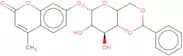
3-Indolyl b-D-cellotetraoside is a chemiluminescent substrate that is used as an indicator in the detection of aminoglycosides. The ligand is a cell wall component that has been shown to bind specifically to the active site of bacterial β-lactamases, which are enzymes that catalyze the hydrolysis of β-lactam antibiotics. 3-Indolyl b-D-cellotetraoside can be used for bacterial identification and enumeration, food testing, and enzyme substrate for diagnostics. It fluoresces in response to electron excitation with a wavelength of about 590 nm.Degré de pureté :Min. 95%Masse moléculaire :781.71 g/mol4-Methylumbelliferyl 4,6-O-benzylidene-b-D-galactopyranoside
4-Methylumbelliferyl 4,6-O-benzylidene-b-D-galactopyranoside is a fluorogenic substrate that is used in the detection of galactosidases. It has been shown to be a potent inhibitor of these enzymes and can be used to study the activity of various galactosidases. This substrate is used in the measurement of carbohydrate metabolism, including glycolysis and glycogenolysis. 4-Methylumbelliferyl 4,6-O-benzylidene-b-D-galactopyranoside has been shown to produce chemiluminescence when reacted with horseradish peroxidase and hydrogen peroxide. It also produces bioluminescence when exposed to luciferase and adenosine triphosphate (ATP).Degré de pureté :Min. 95%Masse moléculaire :426.42 g/molAldol® 479 acetate, Biosynth Patent: EP 2427431 and US 8940909
CAS :Produit contrôléAldol acetate is a chromogenic substrate that is used in food testing and diagnostics. Aldol acetate can be used in the detection of aminopeptidase and dipeptidyl peptidase activities, as well as in the determination of urinary proteins. Aldol acetate can also be used to detect anaerobic bacteria. This compound is conjugated with various ligands for use in immunoassays, such as beta-galactosidase, beta-glucuronidase, alpha-naphthyl phosphate ester, and phenyl phosphate ester. This product has been shown to be useful for chemiluminescent assays of DNA polymerases and reverse transcriptases in environmental samples. It has also been shown to be useful for bioluminescent assays of DNA polymerases and reverse transcriptases in environmental samples.
Formule :C25H22N2O3Degré de pureté :Min. 95.0 Area-%Masse moléculaire :398.45 g/molAldol® 491 acetate, Biosynth Patent: EP 2427431 and US 8940909
CAS :Aldol 491 acetate is a food and environmental testing chemical, which can be used for the detection of bacteria. Aldol 491 acetate provides a chromogenic substrate for the detection of enzymes and can be used as a substrate in enzyme-linked immunosorbent assay (ELISA) procedures. Aldol 491 acetate also has chemiluminescent properties and can be used as a fluorogenic substrate.Formule :C22H17NO4Degré de pureté :Min. 95 Area-%Masse moléculaire :359.37 g/molAldol® 518 β-D-cellobioside, Biosynth Patent: EP 2427431 and US 8940909
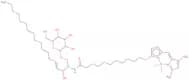
CAS :Aldol® 518 beta-D-cellobioside is a chromogenic substrate for the detection of glycosidases. Aldol® 518 beta-D-cellobioside reacts with enzymes such as alpha-amylase, beta-galactosidase, and alpha-glucosidase to produce a fluorescent product. This product is detected by spectrophotometer, fluorometer, or luminometer. The fluorescence intensity is proportional to the concentration of the enzyme in the sample. It has been shown that Aldol® 518 beta-D-cellobioside can be used as a substitute for conventional substrates in food testing and diagnostics, such as staining and culture media. It also has applications in environmental testing and enzyme substrate assays.Formule :C35H39ClN2O12Degré de pureté :Min. 95 Area-%Masse moléculaire :715.15 g/molN-(4,4-Difluoro-5,7-dimethyl-4-bora-3a,4a-diaza-s-indacene-3-dodecanoyl)sphingosyl 1-b-D-galactopyranoside
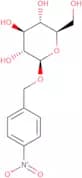
N-(4,4-Difluoro-5,7-dimethyl-4-bora-3a,4a-diaza-s-indacene-3-dodecanoyl)sphingosyl 1bDgalactopyranoside is a fluorescent reagent. It has been used to detect the presence of boron in biological samples and as a substrate for enzymes. This product is also used in the diagnosis of tuberculosis and other bacterial infections. N-(4,4-Difluoro-5,7-dimethyl-4bora3a,4adiazasindacene 3dodecanoyl)sphingosyl 1bDgalactopyranoside is not intended for use in humans or animals and should be handled with care. This product is not available for sale in the state of California.Degré de pureté :Min. 95%Masse moléculaire :861.95 g/mol(4-Nitrophenyl)methyl-b-D-glucopyranoside
CAS :This product is a fluorogenic substrate that is used in the detection of enzymes in biological systems. It is also used as a ligand to study enzyme activity and can be used to quantify enzyme activity. This product is made from high-purity, high-quality reagents and is often used as an enzyme substrate in diagnostic kits for food testing, environmental testing, and detection of bacteria with the help of chemiluminescence. The CAS number for this product is 700368-52-1. This product can be used for fluorescence staining and bioluminescence.Degré de pureté :Min. 95%Masse moléculaire :315.28 g/mol