Substrats d'enzymes
Sous-catégories appartenant à la catégorie "Substrats d'enzymes"
1526 produits trouvés pour "Substrats d'enzymes"
4-Nitrophenyl 2,3-di-O-(2,3,4,6-tetra-O-acetyl-b-D-glucopyranosyl)-b-D-glucopyranoside
4-Nitrophenyl 2,3-di-O-(2,3,4,6-tetra-O-acetyl-b-D-glucopyranosyl)-b-D-glucopyranoside is a fluorogenic substrate that is used in biochemistry as an enzyme substrate. It is a colorless solid that has high purity and high quality. This product is a ligand that binds to the enzyme beta glucosidase. The conjugate of this product with beta glucosidase can be used in diagnostics for the detection of glucose levels in culture media or food testing. This product also has chromogenic and chemiluminescent properties that are used in environmental testing and staining. CAS No.: 54323-05-8
Degré de pureté :Min. 95%Masse moléculaire :961.82 g/mol4-Methylumbelliferyl-phosphoethanolamine
4-Methylumbelliferyl-phosphoethanolamine is a phosphorylated substrate that can be used in the detection of enzymes such as alkaline phosphatase, esterase, and lipase. This compound has been shown to be a fluorescent and chromogenic substrate for many diagnostic purposes. 4-Methylumbelliferyl-phosphoethanolamine is also used as a fluorogenic substrate for chemiluminescent reactions that are found in culture media and environmental testing.
Degré de pureté :Min. 95%5-Bromo-3-indolyl a-D-mannopyranoside
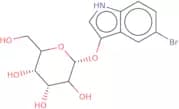
5-Bromo-3-indolyl a-D-mannopyranoside is a chromogenic substrate that is used as an enzyme substrate for various spectrophotometric, fluorometric, or chemiluminescent assays. The 5-bromo group of the dye reacts with the active site of an enzyme to form a product that can be measured by spectrophotometry. This product can also be used as a fluorescent indicator in the presence of luciferase and ATP. 5-Bromo-3-indolyl a-D-mannopyranoside is also used to estimate bacterial counts during culture media preparation and it has been shown to inhibit the growth of Gram negative bacteria such as E. coli and Pseudomonas aeruginosa. This compound does not contain any heavy metals or toxic substances and it is highly soluble in water. It has been found to have no adverse effects on humans and other animals at concentrations up to 100
Formule :C14H16BrNO6Degré de pureté :Min. 95%Masse moléculaire :374.18 g/mol4-Nitrophenyl 6-O-(2,3,4,6-tetra-O-acetyl-a-D-mannopyranosyl)-2,3,4-tri-O-levulinoyl-a-D-mannopyranoside
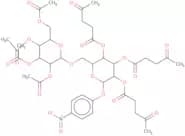
4-Nitrophenyl 6-O-(2,3,4,6-tetra-O-acetyl-a-D-mannopyranosyl)-2,3,4-tri-O-levulinoyl-a-D-mannopyranoside is a fluorogenic substrate that is used in assays for detecting nitrates. This compound reacts with 4-(methylnitrosamino)pyridine (MNAP) to produce an intense light that can be detected by a luminometer. It has been shown to react with the enzyme nitrate reductase and is used in food testing and environmental testing as a means of measuring the amount of nitrates present.Degré de pureté :Min. 95%Masse moléculaire :925.84 g/mol4-Methylumbelliferyl 3-O-(a-L-fucopyranosyl)-b-D-galactopyranoside
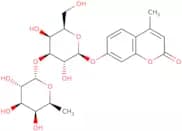
CAS :4-Methylumbelliferyl 3-O-(α-L-fucopyranosyl)-β-D-galactopyranoside is an organic compound that is used as a radioactive marker for DNA. It can be synthesized in the laboratory and its use allows for the tracking of DNA molecules. The production of this marker is achieved by recombinant expression of the gene encoding the enzyme β-D-galactosidase, which hydrolyzes 4-methylumbelliferyl β-D-galactopyranoside to release 4-methylumbelliferone and α-L-fucopyranose. The enzyme uses UDP glucose as a cofactor to catalyse the reaction. This product has been isolated from Corynebacterium glutamicum, with recombinant expression vectors used to produce it in host cells such as Escherichia coli or Corynebacterium glutamicum. It has been found that
Formule :C22H28O12Degré de pureté :Min. 95%Couleur et forme :PowderMasse moléculaire :484.45 g/mol2-Nitrophenyl 2-acetamido-3,4,6-tri-O-acetyl-2-deoxy-b-D-glucopyranoside
CAS :2-Nitrophenyl 2-acetamido-3,4,6-tri-O-acetyl-2-deoxy-b-D-glucopyranoside is a chromogenic substrate used to detect and measure the activity of glycosidase enzymes. Glycosidases are enzymes that hydrolyze glycosidic bonds in carbohydrates, and are produced by many organisms. The substrate is cleaved by glycosidase to release a chromophore, which can be quantified via spectrophotometry analysis. 2-Nitrophenyl 2-acetamido-3,4,6-tri-O-acetyl-2-deoxy-b-D-glucopyranoside is widely used in various applications, including enzyme kinetics studies, inhibitor screening, and the detection of NAGase activity in biological samples, such as serum, urine, and cell lysates. It is also used for the identification and characterization of glycosidases in microorganisms and the study of glycosylation-related processes in cells and tissues.Degré de pureté :Min. 95%Masse moléculaire :468.41 g/mol2-Dodecylresorufin
CAS :2-Dodecylresorufin is a fluorescent probe that reacts with the hydroxyl radicals in the cell, which are generated by the enzyme superoxide dismutase. 2-Dodecylresorufin can be used to measure reactive oxygen species (ROS) and ROS-induced cellular damage. It is also used to study oxidative stress in vitro. The chemical structure of 2-dodecylresorufin contains a linker arm that provides a reversible linkage to the cell surface, allowing for extracellular measurements of reactive oxygen species (ROS). This compound has been shown to have high reactivity, making it useful for studying population dynamics and fluorescent techniques.
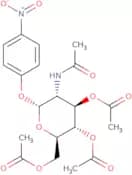
Degré de pureté :Min. 95%Masse moléculaire :381.51 g/mol4-Nitrophenyl 2-acetamido-3,4,6-tri-O-acetyl-2-deoxy-a-D-glucopyranoside
CAS :4-Nitrophenyl 2-acetamido-3,4,6-tri-O-acetyl-2-deoxy-a-D-glucopyranoside is a synthetic compound with the ability to inhibit the enzyme glutamicum. It is a radionuclide that can be used as a focusing agent for gamma cameras and has been shown to be effective against corynebacterium glutamicum and other organisms. 4NP2AG was synthesized by reacting nitrophenol with acetamide in the presence of an acid catalyst and hydrogenating the product. The synthesis employs precession chemistry, which involves rotating a molecule around its axis at high speed to increase its concentration in one area. This treatment leads to a higher yield of desired product. 4NP2AG contains two acetamido groups on the glucopyranoside moiety, which are esterified with nitrophenol and acetic acid respectively. These moieties are
Degré de pureté :Min. 95%Masse moléculaire :468.41 g/mol[2-Methoxy-4-(2-nitrovinyl)phenyl] b-D-glucopyranoside
CAS :[2-Methoxy-4-(2-nitrovinyl)phenyl] beta-D-galactopyranoside is a chromogenic substrate (505 nm) for β-glucosidase.
Degré de pureté :Min. 95%Masse moléculaire :357.31 g/molLuc-phosphate Na enhanced
Luc-phosphate Na enhanced is a chemiluminescent substrate that is used to detect the presence of an enzyme or a protein. This substrate is formed by the combination of luciferin and phosphate, which react with each other to produce light. Luc-phosphate Na enhanced is stable in solution and can be stored at room temperature for up to three months. It has been shown to be particularly effective in detecting the presence of DNAase, an enzyme that breaks down DNA. Luc-phosphate Na enhanced has also been used as a fluorogenic substrate in diagnostics, chromogenic substrate in enzymatic reactions, and conjugate for food testing.
Degré de pureté :Min. 95%Luciferin-caprylate
Luciferin-caprylate is a chemiluminescent substrate that is used in the detection of various substances. It is a high purity compound with CAS No. 583-22-8 and an E number of E711. This product can be used in diagnostic, food testing, and other applications. Luciferin-caprylate has been shown to be an excellent substrate for bioluminescence, fluorescence, and chemiluminescence reactions. It generates light through the oxidation of luciferin by the enzyme luciferase in the presence of oxygen or other oxidizing agents. The light generated by this reaction can be detected using a photomultiplier tube or luminometer, which can then be used to detect substances such as bacteria, protozoa, or fungi.
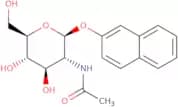
Degré de pureté :Min. 96 Area-%2-Naphthyl 2-acetamido-2-deoxy-β-D-glucopyranoside
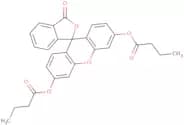
CAS :2-Naphthyl 2-acetamido-2-deoxy-b-D-glucopyranoside is a chromogenic substrate used for staining and diagnostic purposes. It is a ligand that has been shown to bind to certain enzymes and can be used for the detection of those enzymes. This product is also a chemiluminescence substrate, which can be used in bioluminescent reactions. This product has been shown to have high purity and quality, as well as being a conjugate.Formule :C18H21NO6Degré de pureté :Min. 95%Masse moléculaire :347.36 g/molFluorescein dibutyrate
CAS :Fluorogenic substrate targeting esterase and lipase
Degré de pureté :Min. 95%Masse moléculaire :472.49 g/mol2'-(4-Methylumbelliferyl)-α-D-N-acetylneuraminic acid, sodium salt
CAS :2'-(4-Methylumbelliferyl)-alpha-D-N-acetylneuraminic acid, sodium salt is a fluorogenic substrate for alpha-galactosidase. It is used in the analysis of cultured media and as a conjugate for enzyme substrates. This product has been shown to be useful in food testing, diagnostics, and environmental testing. 2'-(4-Methylumbelliferyl)-alpha-D-N-acetylneuraminic acid, sodium salt has been used as a chromogenic substrate for the detection of alpha-galactosidase activity. This product is also used as a bioluminescent substrate for the detection of bioluminescence.
Formule :C21H24NNaO11Degré de pureté :Min. 96.5 Area-%Masse moléculaire :489.42 g/mol3-Indolyl b-D-glucuronide sodium salt
CAS :3-Indolyl b-D-glucuronide sodium salt is a specialized enzyme substrate that features an indole moiety linked to a glucuronide group. This compound is commonly used in various biochemical assays to study the activity of glucuronidase enzymes, which play a crucial role in the metabolism and detoxification of xenobiotics and endogenous compounds. The sodium salt form of this substrate ensures enhanced solubility and stability in aqueous solutions, making it a valuable tool for researchers investigating the function and regulation of glucuronidase enzymes in biological systems. 3-Indolyl b-D-glucuronide sodium salt is also used for the detection of E. coli.Degré de pureté :Min. 95%Couleur et forme :Off-White SolidMasse moléculaire :331.25 g/mol6-Amino-D-luciferin
CAS :Substrate for synthesis of proluminescent bioconjugates
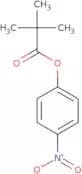
Formule :C11H9N3O2S2Degré de pureté :Min. 95%Couleur et forme :Clear LiquidMasse moléculaire :279.34 g/mol4-Nitrophenyl trimethylacetate
CAS :4-Nitrophenyl trimethylacetate is a cytosolic proteinase inhibitor. It binds to the active site of trypsin and other enzymes that hydrolyze peptide bonds, thereby inhibiting the activity of these enzymes. 4-Nitrophenyl trimethylacetate has been shown to inhibit soybean trypsin, which has led to its use as a model system for studying enzyme inhibition. The binding site on 4-Nitrophenyl trimethylacetate is competitive with respect to substrate binding but not with respect to the enzyme's catalytic triad. This inhibitor also has a high buffer capacity and can be used in low pH systems.
Degré de pureté :Min. 95%Masse moléculaire :223.23 g/mol4-Nitrophenyl b-D-galactopyranoside hydrate
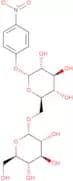
CAS :4-Nitrophenyl b-D-galactopyranoside hydrate is a water-soluble pNP-based enzyme substrate ideal for quantifying b-galactosidase activity in a variety of sample types. This chromogenic substrate features a unique hydrate composition, which allows for enhanced solubility and stability when compared to standard pNP-galactosides. With its high sensitivity and robust performance, this substrate is widely used in biotechnology, biochemistry, and molecular biology fields, including the investigation of enzyme kinetics, characterization of glycoside hydrolase specificity, and assessment of gene expression levels.Degré de pureté :Min. 95%Masse moléculaire :319.27 g/mol4-Nitrophenyl 6-O-(a-D-glucopyranosyl)-a-D-glucopyranoside
CAS :4-Nitrophenyl 6-O-(a-D-glucopyranosyl)-a-D-glucopyranoside is an advanced chromogenic pNP enzyme substrate that delivers unparalleled performance in enzymatic assays. This high-quality substrate is specifically designed for studying glycosidases and other enzymes involved in carbohydrate metabolism. Our 4-Nitrophenyl 6-O-(a-D-glucopyranosyl)-a-D-glucopyranoside is synthesized with the highest quality materials to provide incredible accuracy and reliability in your research applications.
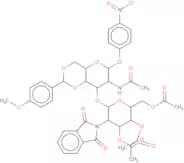
Degré de pureté :Min. 95%Masse moléculaire :463.39 g/mol4-Nitrophenyl 2-acetamido-3-O-(3,4,6-tri-O-acetyl-2-deoxy-2-phthalimido-b-D-glucopyranosyl)-2-deoxy-4,6-O-4-methoxybenzylidene-a-D-g alactopyranoside
4-Nitrophenyl 2-acetamido-3-O-(3,4,6-tri-O-acetyl-2-deoxy-2-phthalimido-b-D-glucopyranosyl)-2-deoxy--4,6--O--4--methoxybenzylidene--a--D--galactopyranoside is a chemiluminescent substrate for the enzyme beta galactosidase. It reacts with this enzyme to form 4 nitrophenol and acetamide. 4 Nitrophenyl 2 acetamido 3 O (3,4,6 tri O acetyl 2 deoxy 2 phthalimido b D glucopyranosyl) 2 deoxy 4 6 O 4 methoxybenzylidene a D galactopyranoside is used as a chromogenic substrate in diagnostics and as an environmental testing agent. It can be used as an imaging
Degré de pureté :Min. 95%Masse moléculaire :877.8 g/mol




![[2-Methoxy-4-(2-nitrovinyl)phenyl] b-D-glucopyranoside](/_next/image/?url=https%3A%2Fstatic.cymitquimica.com%2Fproducts%2F3D%2Fthumb-webp%2FEM06789.webp&w=3840&q=75)